Brass Alloy: Composition, Properties, Grades, and How It Is Machined in Modern Industry
Quick Specs
| Material Type | Copper-Zinc Alloy (Cu-Zn) |
| Copper Content | 55–95% |
| Zinc Content | 5–45% |
| Density | 8.4–8.73 g/cm³ |
| Melting Range | 900–940 °C (1650–1720 °F) |
| Machinability Rating | 30–100 (UNS C26000–C36000) |
| Electrical Conductivity | 26–28% IACS |
| Common Standards | ASTM B36, B134, B135 |
As a versatile metal alloy, brass is one of the most used non-ferrous alloys in manufacturing. Finding its way into plumbing valves, electrical terminals, marine fittings, and precision screw machine work—wherever corrosion resistant, low friction, and tight tolerances are required. The global brass market was valued at $6.83 billion in 2024.
But many technical guides lack the engineering data one wants: UNS compositions, real units of tensile, and detailed machining parameters by grade. This guide provides that. Including brass composition, mechanical properties with CDA related numbers, a six grade comparison table, and wattage based laser cutting parameters—intended for the engineers, machinists, and buyers specifying materials a fiber laser can process.
What Is Brass? — The Copper-Zinc Alloy Explained
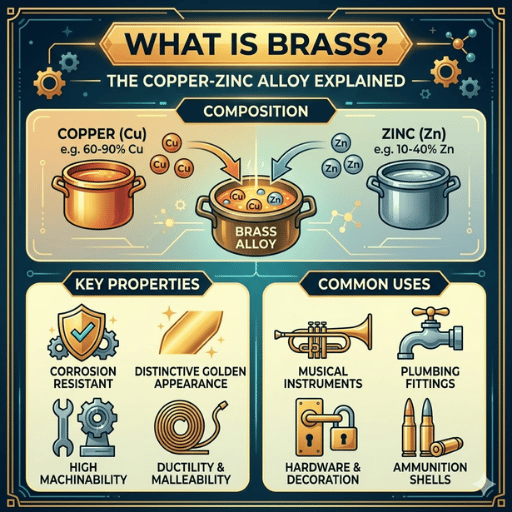
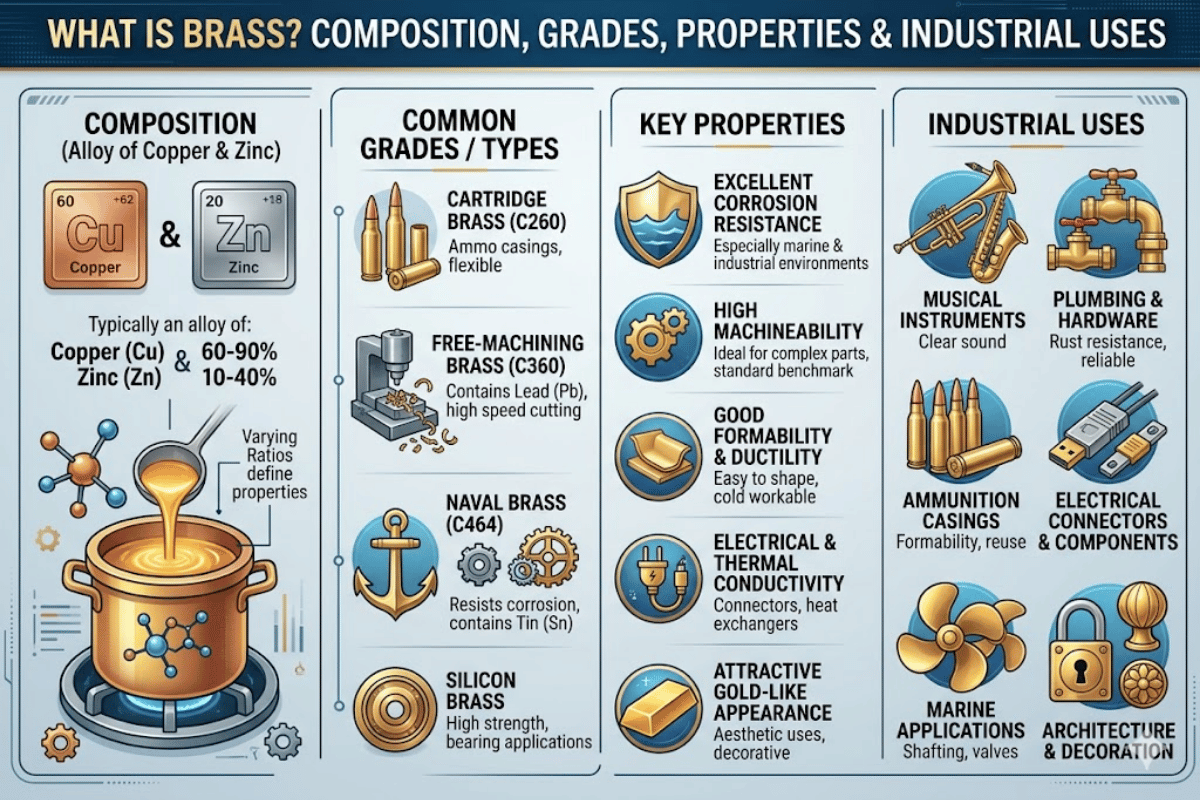
Brass is an alloy of copper and zinc, a metal alloy consisting primarily of Cu and Zn. Copper content ranges from 55% to 95% and the remaining 5-45 % is zinc as specified in the CDA(Copper Development Association). In various grades small quantities of lead, tin or aluminum are added to alter specific properties.
The resulting alloy of copper produces a yellow-gold metal that is easy to work, corrosion resistant, and has electrical conductivity of 26–28% IACS.
Historical records trace the word “brass” back over 2,000 years. Romans used to make brass by smelting copper and zinc ores with calamine (zinc carbonate). According to Encyclopaedia Britannica, by the first century BC this alloy was being traded across the Mediterranean.
It was not until the 18 th century, that metallic zinc was alloyed directly with copper, replacing the cementation method.
Nowadays, brass is in the current UNS (Unified Numbering System) with a range of numbers from C20000 to C49999. Each grade of brass defines a precise percentage of copper, zinc and other elements. It makes a big difference.
Moving 1% zinc level in a composition will alter the properties such as tensile strength, ductility and hardness dramatically. C26000 cartridge brass (70Cu/30Zn) is significantly different from free-cutting brass C36000 (61.5Cu/35.5Zn/3Pb) when boring on a lathe or cutting with laser.
Brass is an alloy that should be distinguished from bronze, where tin (or aluminum) replaces the zinc. Both have a common copper base but vary in strength, hardness and their response to corrosion. A direct comparison with actual MPa values is detailed in section 6 below.
Brass Composition and How It Is Made
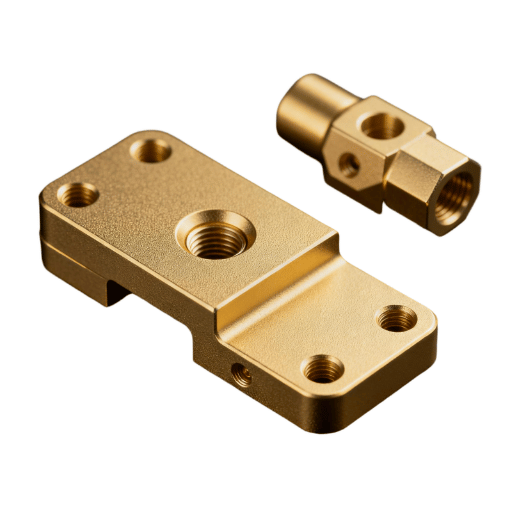
All brass alloys are based on a combination of copper and zinc, with the ratio of the two being carefully controlled. Zinc percentage directly affects the phase structure of the alloy. If less than 37% zinc is used, a single phase alpha structure is present resulting in a very ductile material that is ideal for use with cold working and deep drawing.
If 37%-45% zinc is used a mixed alpha – beta phase structure is achieved which makes for a harder material more suited to hot working using either forging or extrusion.
Some types of brass add other constituents to the mix. 3% Lead in C36000 results in free-cutting brass, which has a machinability of 100 – the standard by which all copper alloys are judged. A 1% addition of tin to the naval brass C44300 enhances its seawater resistance. 0.75% tin in C46400 addresses the needs of the harsher marine environment.
Manufacturing Process
Production follows a five-stage sequence:
- Smelting; copper cathode (99.99% pure) is melted in an induction furnace at 1,085 °C (1,985 °F).
- Alloying: Zinc added to hot liquid copper. Temperature greatly affects quality — C26000 cartridge brass has a liquidus of 955 °C (1,750 °F), solidus of 916 °C (1,680 °F). C36000 free-cutting brass has a tighter range: 885–900 °C (1,630–1,650 °F).
- Casting: Pour into molds or continuously cast into billets, slabs or logs.
- Hot/Cold Working: Extrude, roll or draw billets. Alpha brasses such as C26000 are easily cold-worked. Alpha-beta brasses such as C36000 are best hot-worked at above 700 °C.
- Finishing: Annealing relieves work-hardening. Surface finishes include polished finishes, chemical treatment, lacquering.
C36000’s narrow melting interval — only 15 °C between solidus and liquidus, makes for easier casting, with fewer inclusions and porosity than other alloys. Brass made with this composition is easy to work on screw machines, which explains why C36000 dominates that segment.
Key Properties of Brass — Mechanical, Thermal, and Chemical
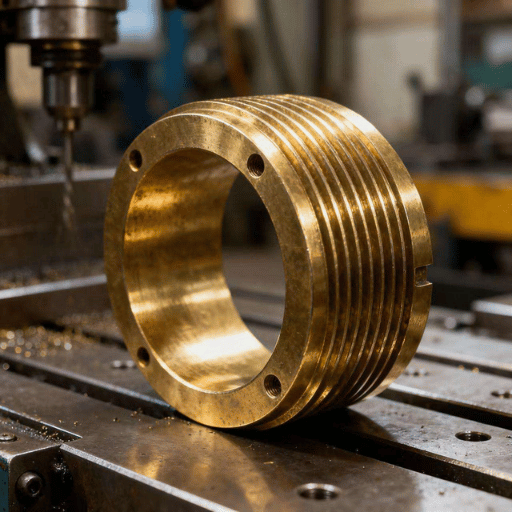
Properties and uses of brass depend largely on grade and temper. The table below uses values from the CDA alloy database for the two most common grades. Units are typical for the equivalent commercial temper – notes vary from CU:CU/IN to YIELD STRENGTH: ksi.
| Property | C26000 (Cartridge) | C36000 (Free-Cutting) |
|---|---|---|
| Tensile Strength | 44–130 ksi (303–896 MPa) | 45–80 ksi (310–552 MPa) |
| Yield Strength | 11–65 ksi (76–448 MPa) | 15–52 ksi (103–358 MPa) |
| Elongation | 3–66% | 4–25% |
| Hardness | Rockwell B 35–82 | Rockwell B 60–65 |
| Machinability Rating | 30 | 100 |
| Electrical Conductivity | 28% IACS | 26% IACS |
| Thermal Conductivity | 70 Btu/sq ft/ft hr/°F | 67 Btu/sq ft/ft hr/°F |
| Density | 8.53 g/cm³ | 8.50 g/cm³ |
C26000 ranges over a wider scope because of its ability to sustain relatively cold work. When annealed, it elongates over 60%, perfect for deep drawing casings, bodies or radiators. Following considerable cold work, it can sustain over 125 ksi breaking point, but its elongation drops to 3%. C36000’s lead content causes superior machining, but hampers ductility. Chips are short, broken and kick out of the cut zone during laser etching on metal surfaces or CNC machining.
📐 Engineering Note
C36000 free-cutting brass thermal conductivity = 115 W/m·K (67 Btu/sq ft/ft hr/°F at 68 °F per CDA). Electrical conductivity = 26% IACS. For heat-sink or electrical connector applications requiring >40% IACS, consider C11000 electrolytic tough pitch copper instead.
High corrosion resistance is evident when brass is submerged in fresh water, in a moist atmosphere, or in most industrial chemicals — a property that makes brass known for wide range of applications in plumbing and marine environments. However, high-zinc brass (over 15% Zn) can suffer from dezincification, a type of preferential dissolution of zinc, leaving a weak permeable copper residue. Dezincification can be accelerated at over 60 °C in chloride-rich environments, but it can be avoided by specifying a dezincification resistant grade such as C35330 or with addition of arsenic inhibitors.
Common Brass Grades and Types
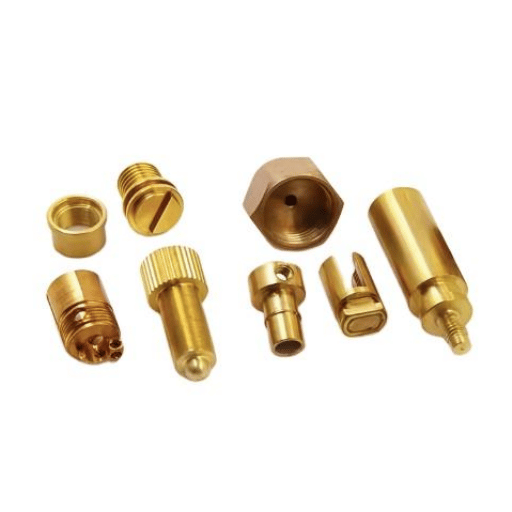
Different types of brass alloys are assigned a UNS number which restricts the allowable compositions. Available grades range from red brass to naval brass, each with specific copper content optimized for ideal applications. The table below lists the six grades most commonly specified in manufacturing. Data is from CDA sheet – engineers working with leading CNC machine manufacturers encounter these grades regularly.
| Grade | UNS | Cu % | Zn % | Other | Machinability | Primary Use |
|---|---|---|---|---|---|---|
| Cartridge Brass | C26000 | 70 | 30 | — | 30 | Deep drawing, ammunition casings |
| Yellow Brass | C27200 | 63 | 37 | — | 40 | Architectural hardware, fasteners |
| Free-Cutting Brass | C36000 | 61.5 | 35.5 | 3% Pb | 100 | Screw machine parts, valves |
| Admiralty Brass | C44300 | 71 | 28 | 1% Sn | 30 | Heat exchangers, marine condensers |
| Naval Brass | C46400 | 60 | 39.25 | 0.75% Sn | 30 | Marine hardware, propeller shafts |
| Red Brass | C23000 | 85 | 15 | — | 30 | Plumbing pipe, decorative trim |
Phase Classification
Alpha brasses contain less than 37% zinc. They exhibit one-phase face-centered cubic(FCC) lattice arrangement. Their ductility is superb – C26000 can be drawn, spun, stamped and hammered without cracking. They yellow easily and flat-polished.
Alpha-beta brasses contain 37 – 45 % zinc. The second phase (beta) has a body-centered cubic (BCC) structure and is harder. They work better at temperature. C27200 yellow brass is alpha-beta at 37 % zinc – offering strength with formability. C46400 naval brass is alpha-beta for greater yield strength in marine structural use.
Free-cutting brass C36000 is technically alpha-beta. Its 3% lead addition influences machinability more than phase structure. Lead particles act as chip breakers and internal lubricant, minimizing tool wear and allowing high speed automatic screw machine manufacture. C36000 is therefore defined as a machining benchmark of 100 for machinability (compared to other brass grades), the lead-free common brass C26000 is graded at only 30. Brass has excellent machinability across its grade range.
Industrial Applications of Brass
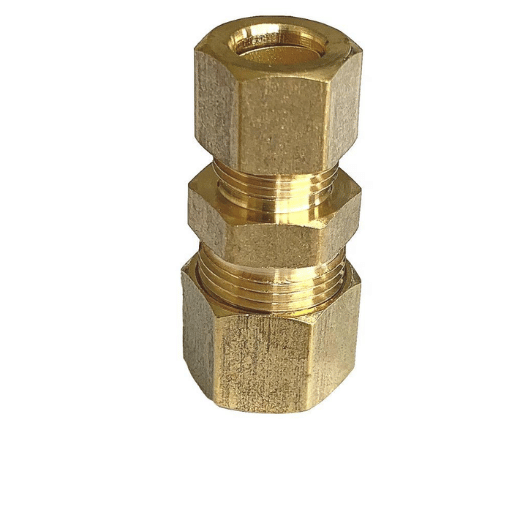
Global brass market value reached $6.83 billion in 2024. It is expected to reach US $10.69 billion by 2033 growing at a CAGR of 5.1 % (SkyQuest Technology Consulting). The global brass valves market alone stood at $14.8 billion in 2025, leading the growth by infrastructure upgrade of water and increased requirement for HVAC systems globally. Asia pacific is expected to have the largest share of the brass market, followed by North America and Europe.
Five major industries consume the bulk of global brass output:
Plumbing and Water Systems.One major use of brass is in fittings, valves and pipe connectors that dominate residential and commercial plumbing. Brass is used extensively because its corrosion resistance makes it suitable for water contact. C23000 red brass holds an advantage in potable water lines, thanks to its 85% copper which discourages dezincification. Leadfree grades, which meet NSF/ANSI 61 requirements in the US and EU, are now common.
Electrical and Electronics.Brass terminals, connectors and socket contacts rely on 26-28 % IACS conductivity. While copper is a better for electrical conduction, brass is excellent for interlocking and contributing to spring temper in electronic connectors that undergo multiple insertion cycles. Understanding how copper and brass respond to laser processing is important when manufacturing these parts.
Marine and Defense.C44300 admiralty brass is used to line heat exchanger tubes in ships. C46400 naval brass is used for marine hardware, propeller shafts, castings and turnbuckles. Tin in both grades addresses the additional corrosion resistance needs in saltwater.
Automobile. The automotive industry uses brass for radiator cores, transmission valve bodies, thermostat housings and synchronizer rings due to its heat conductivity, wear and corrosion resistance and workability. About 15 % of global brass consumption is attributable to the automotive industry.
Decorative applications and musical instruments. Brass is often used in hinges, door handles, wall fixtures, and cabinet pulls for their attractive luster and durability. Musical instruments like trumpets and trombones use C26000 cartridge brass for bell flares — its deep drawing properties make it suitable for forming complex shapes. Knowing the differences between laser marking and engraving helps manufacturers add serial numbers and branding to these products without damage.
✔ Advantages
- Machinability rating up to 100 (C36000 baseline)
- Corrosion resistance in freshwater and atmospheric exposure
- Low friction coefficient for bearing/valve applications
- 100% recyclable with no property loss
- Lower melting point than steel (easier casting)
⚠️ Limitations
- Dezincification risk in high-chloride water above 60 °C
- Lead content in free-cutting grades (C36000) restricted by RoHS/REACH
- Lower tensile strength than bronze or steel
- Susceptible to stress corrosion cracking in ammonia environments
- Reflective surface complicates CO2 laser processing
Brass vs Bronze — Key Differences
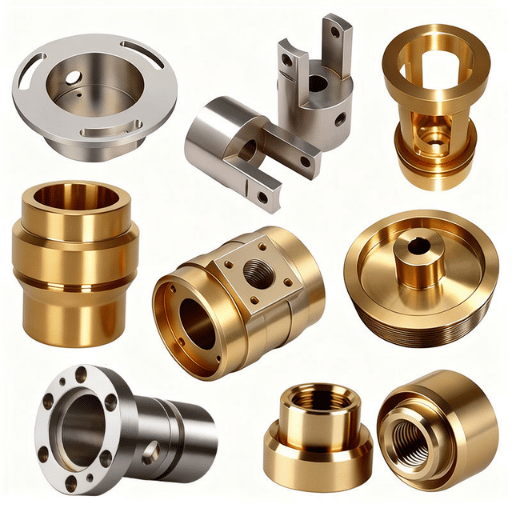
Although both the alloys originate in copper, their differing alloying would lead to different applications. They have a differential impact on strength, hardness, corrosion resistance and of course, cost. Brass use zinc as an alloying element. Bronze uses tin, aluminum or silicon. Historical preserved documents indicate the alloys account for specific activities – weapons and implements in bronze, coins and ornaments in brass.
| Property | Brass (C26000) | Bronze (C95400 Aluminum Bronze) |
|---|---|---|
| Composition | Cu + Zn | Cu + Sn (or Al) |
| Tensile Strength | 315–510 MPa | 550–690 MPa |
| Brinell Hardness | 100 HB | 170 HB |
| Machinability | 30–100 | 20–50 |
| Melting Point | 900–940 °C | 950–1,050 °C |
| Corrosion (Saltwater) | Moderate (dezincification risk) | Excellent |
| Typical Color | Gold-yellow | Reddish-brown |
| Cost (relative) | Lower | Higher |
Hardness and strength differences are sizable. While C95400 aluminum bronze attains 550-690 MPa of tensile strength (and roughly 75 % of this in yield strength), its brass counterpart ranks at just 315-510 MPa (and correspondingly 75 %). Bronze can also reach 170 HB on the Brinell hardness scale, against brass at 100 HB. For marine propellers, heavy-duty bearings and pump impellers, bronze is hardier.
Where machinability, cost, and formability matter most, brass is commonly used. C36000 free-cutting brass machines at a rating of 100. Even the best bronze grades only reach a score of 50. Melting points for most brasses range from 900–940 °C, while bronze grades generally range from 950–1,050 °C, reducing energy costs in casting. Brasses are indicated where plumbing fittings, electrical connectors and decorative hardware are required but where maximum strength, corrosion and wear resistance are unnecessary.
In regards to corrosion behavior in different environments, brass and bronze behave differently in freshwater and atmospheric conditions versus seawater, which is significant, since the risk of dezincification exists when brasses are exposed to the latter. Aluminum bronze and tin bronze show excellent saltwater corrosion properties with no leaching of metals, whereas other bronze types are very likely to experience this form of corrosion. Marine engineers almost always specify bronze alloys for submerged components.
How Brass Is Machined — CNC, Laser, and Extrusion Methods
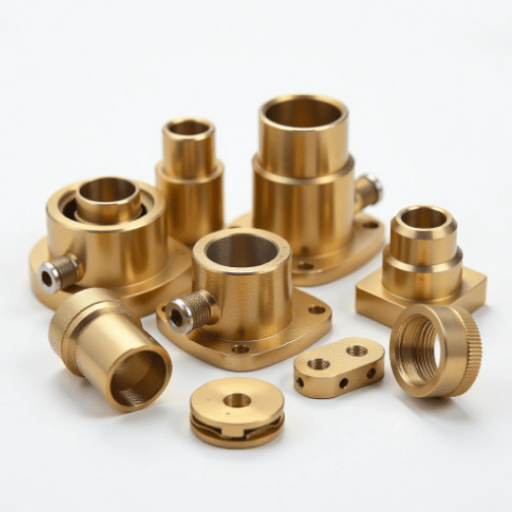
CNC Machining
C36000 free-cutting brass is used as the basis for the machinability rating system, where other copper alloys are rated according to relative performance. This type of brass contains 3% lead, which provides internal lubrication and chip-breaking action. Typical CNC cutting parameters for brass include feeding carbide tools at 200-300 m/min while turning and 50-80 m/min for milling, and 6-10 m/min while drilling. C26000 cartridge brass has a rating of 30, but tends to produce stringy chips and requires slower feed to prevent clogging.
Extrusion is a common manufacturing process for brass sections including rods, bars, tubes and complex profiles. Alpha-beta brasses (C36000, C46400) exhibit good extrudability due to beta phase amorphous flow above 700 °C. Cast section extrusion can be achieved with ram or extrusion press speed ranges from 10-30 meters per minute with complex-shaped sections depending on alloy and profile structure and size. Twin-screw extruder systems designed for compound processing handle brass sections at comparable speed ranges.
Laser Cutting Brass
Brass reflects light at the 10.6 μm wavelength used by CO2 lasers. Back-reflection risk is high, and damage to the laser resonator can occur. Fiber lasers operating at 1.06 μm absorb far more efficiently into brass, and have become the standard in brass production and brass manufacturing. Nitrogen assist gases prevent the formation of oxides on cut edges through brass casting and sheet metal processing. The table below indicates the laser power ranges available to produce different sheet thicknesses in accordance with B36/ B36M.
| Laser Power | Max Brass Thickness | Cutting Speed (1 mm) | Assist Gas |
|---|---|---|---|
| 1,000 W | 6 mm | 10–15 m/min | N₂, 10–15 bar |
| 3,000 W | 8 mm | 20–30 m/min | N₂, 12–18 bar |
| 6,000 W | 12 mm | 35–50 m/min | N₂, 15–20 bar |
Laser Marking and Engraving
Laser marking and cutting systems using 30–60 W fiber sources engrave brass plates effectively. It can produce serial numbers, logos, and data matrix codes much faster and easier than traditional printing techniques with no degradation of substrate quality. The choice of fiber laser engraving equipment depends on whether parts are homogenous in shape, mixed in production, or in high volume. When controlling laser marking depth on brass, the general range is between 0.01 mm for surface annealing marks to 0.5 mm for deep engraving at slower laser speeds.
Frequently Asked Questions About Brass
Is brass magnetic?
No, it is not. Brass is made from non-magnetic elements and as such will not be attracted to magnets and won’t be influenced by magnetic fields. This makes it perfect for electronic housings, sensor mounts, and instrument parts where magnetic effects would interfere with operation.
Does brass rust or tarnish?
Brass doesn’t rust because there’s no iron. It can tarnish, however. When exposed to the atmosphere and humid conditions a patina develops a dull brownish or greenish surface film; a relatively thin coating of copper oxide and zinc carbonate. This is not necessarily detrimental since it is immune to further attack and acts as a barrier to the corrosion process. Lacquer coatings or the polishing with a mild dilute acid solution (lemon juice and bicarbonate of soda) will prevent tarnish build-up, if a polished finish is necessary.
Which is stronger, brass or bronze?
Bronze is generally stronger. C95400 Aluminum Bronze provides 550-690 MPa tensile strength, relative to 315-510 MPa for C26000 cartridge brass. Bronze provides 170 HB Brinell hardness as opposed to 100 HB for brass. Use bronze in situations where high strength and resistance to saltwater corrosion are important.
What is the melting point of brass?
It depends on the grade. C26000 cartridge brass melts between 916–955 °C (1,680–1,750 °F). C36000 free-cutting brass has a narrower melting range of 885–900 °C (1,630–1,650 °F). Higher zinc content generally lowers the melting point.
Is brass safe to use in food and water applications?
Lead-free brass grades such as C27450 (EnviroBrass) meet NSF/ANSI 61 and NSF/ANSI 372 standards for drinking water contact. In the EU, EN 1982 and the Drinking Water Directive limit lead content to 0.25% for water fittings. RoHS restricts lead to 0.1% by weight in electronics. For potable water systems, specify C23000 red brass (85% copper, lead-free) or bismuth-containing alternatives that replace lead as a machinability agent.
Can brass be laser cut and engraved?
Removing lead limits the suitability for potable drinking water and contact with food. C27450, for example, has been awarded certified NSF / ANSI 61 (American National Standard for Drinking Water System Components). Traditional brasses containing lead such as C36000 (3% Pb) do not comply with the more recent requirements; neither do brasses in the EU under the RoHS regulations, where the permissible lead limit is defined at 0.1% by weight. In the U.S. under the Safe Drinking Water Act, “lead free” brass (0.25% weighted average lead content) is the stipulated standard for all fittings and components in contact with potable water. Please check your specific unwanted UNS grade against these requirements before specifying brass for potable drinking water and food contact applications.
Need Laser Equipment for Brass Processing?
From fiber laser markers to high-power cutting systems, we supply machines built to handle reflective metals like brass and copper.
About This Guide
This brass alloy guide was written for engineers, machinists, and procurement teams evaluating copper-zinc alloys for CNC, laser cutting, and extrusion applications. UD Machine supplies fiber laser cutting, marking, and engraving systems used to process brass, copper, and other reflective metals. All property data in this article comes from ASTM standards, the Copper Development Association, and peer-reviewed metallurgical references — not from internal testing.
References & Sources
- C36000 Alloy Data — Copper Development Association
- C26000 Alloy Data — Copper Development Association
- ASTM B36/B36M Standard Specification for Brass Plate, Sheet, Strip, and Rolled Bar — ASTM International
- Brass | Definition, Properties, & Facts — Encyclopaedia Britannica
- Global Brass Market Report 2024 — SkyQuest Technology Consulting