Polycarbonate: The Virtually Unbreakable Plastic Behind Safety Glass, Lenses, and Industrial Panels
Quick Specs: Polycarbonate (PC)
| Chemical Name | Bisphenol A Polycarbonate (BPA-PC) |
| Density | 1.²0–1.22 g/cm³ |
| Izod Impact Strength (Notched) | 600–850 J/m (ASTM D256) |
| Light Transmission | 88–92% (3 mm sheet) |
| Glass Transition Temp (Tg) | 147 °C (297 °F) |
| Service Temperature Range | −40 °C to 130 °C continuous |
| Refractive Inde× | 1.584–1.586 |
| UL 94 Flammability | V-2 (standard grades); V-0 (flame-retardant grades) |
Polycarbonate ranks among the most widely used engineering thermoplastics in the world, with roughly one billion kilograms produced every year. It sits behind bulletproof glass, safety glasses, automotive headlamp lenses, and greenhouse roofing panels — anywhere a material is used to absorb sudden impact without cracking or breaking. This guide covers the properties of polycarbonate at the molecular level, how it compares to acrylic and glass with real test data, and the extrusion and laser cutting processes used to shape it into finished products.
What Is Polycarbonate?
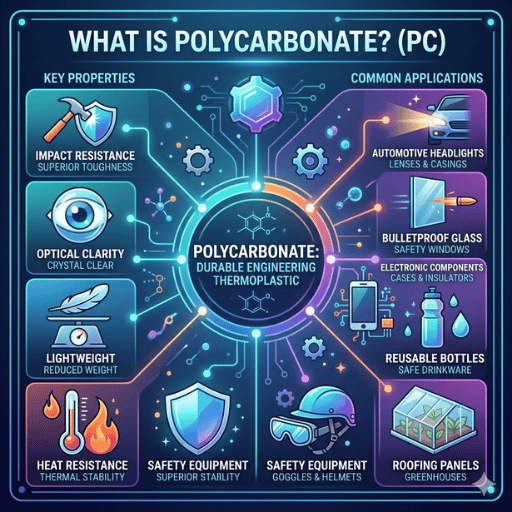
polycarbonate(PC), a thermoplastic polymer, has carbonate groups (-O-CO-O-) incorporated into its backbone. Its repeating unit has the chemical formula (C₁₆H₁₄O₃)ₙ, and it belongs to the polyester family of plastics.
Majority of commercial made polycarbonate begins with bisphenol A (BPA) and phosgene which go through a polycondensation step. BPA gives the chain the aromatic rings that impart the stiffness and high Tg, while the carbonate linkages inbetween give enough flexibility in the overall molecule to enable the material to deform rather than break when pressed. It is this balance of rigid aromatic segments and flexible carbonate links that allows polycarbonate plastic to be transparent while appearing almost unbreakable.
First prepared in 1953 by Hermann Schnell at Bayer in Uerdingen, Germany, the same week Daniel Fox at General Electric released it via Pittsfield, Massachusetts. Bayer’s trade name Makrolon was introduced in 1955 with commercial production starting in 1958. US ‘Lexan; trade name from GE was launched in 1960 (now owned by SABIC).
These are still the 2 best-known trade names in the polycarbonate world (apart from Covestro – owners of the Makrolon line). Remarkably, the same basic chemistry that Schnell and Fox first tried back in 1953, BPA plus phosgene, is still the way commercial polycarbonate is made.
Key Properties of Polycarbonate
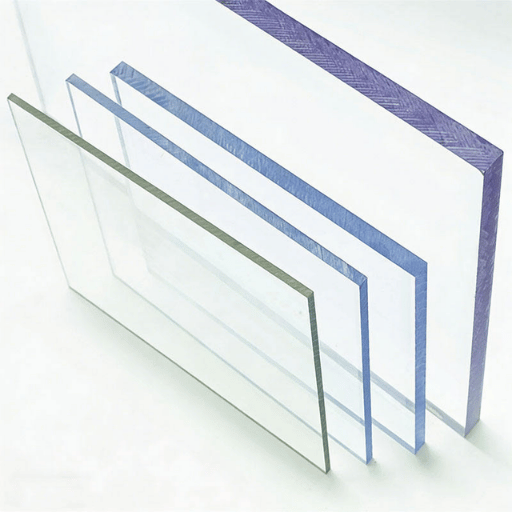
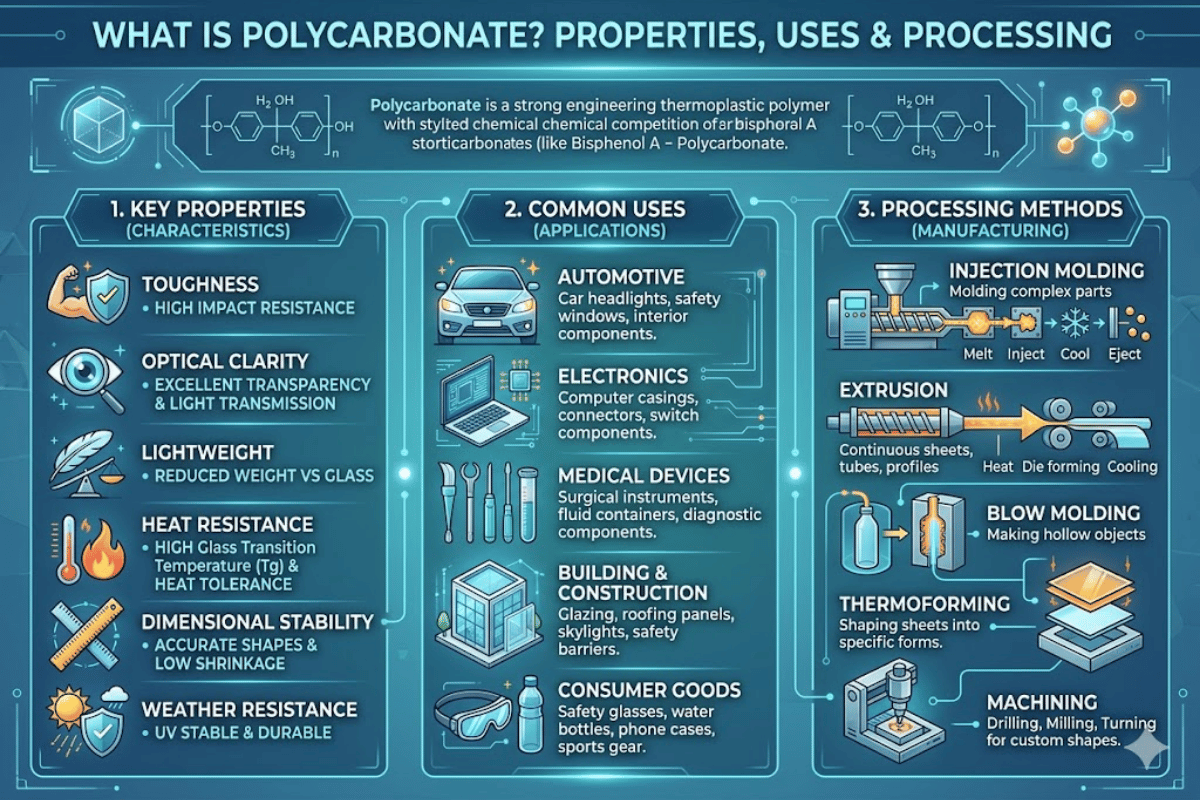
Polycarbonate properties span an unusual combination: high impact resistance, optical clarity, thermal stability, and electrical insulation — all in a material that weighs roughly half as much as glass.
| Property | Value | Test Standard |
|---|---|---|
| Izod Impact Strength (Notched) | 600–850 J/m | ASTM D256-24 |
| Light Transmission | >90% (3 mm sheet) | — |
| Tensile Strength | 55–75 MPa | ASTM D638 |
| Young’s Modulus | 2.0–2.4 GPa | — |
| Glass Transition Temperature | 147 °C (297 °F) | DSC |
| Heat Deflection (1.8 MPa) | 128–138 °C | ASTM D648 |
| Volume Resistivity | 10¹²–10¹⁴ Ω·m | IEC 60093 |
| Thermal Conductivity | 0.19–0.22 W/(m·K) | — |
Impact resistance is the catchall property. PC delivers 250 times the impact resistance of standard glass — roughly 30 times stronger than acrylic, as measured by notched Izod testing as per ASTM D256. Simply put, a 3 mm polycarbonate sheet can sustain a blow from a hammer without cracking or breaking — a test that completely destroys glass and acrylic sheets of equivalent thickness.
Optical clarity runs higher than most people expect. Amorphous polycarbonate transmits over 90% of visible light through a 3 mm sheet, comparable to float glass. With a refractive index of 1.584–1.586, the material handles controlled light bending well enough for eyewear lenses and camera lenses where optical precision matters.
The operating window covers −40 °C to 130 °C in continuous service. With a Tg of 147 °C, polycarbonate won’t truly melt until well above 155 °C, which is far hotter than acrylic. This gives polycarbonate a significant thermal performance edge over acrylic, which begins softening at around 80 °C.
A second high performance element to PC is electrical insulation. With a volume resistivity of 10¹²–10¹⁴ Ω·m and a dielectric constant of 2.9 at 1 MHz, polycarbonate acts as an effective electrical insulator in product enclosures, capacitor films, and LED diffuser panels.
📐 Engineering Note
UV radiation is the primary durability threat. Uncoated polycarbonate exposed to unfiltered sunlight will begin yellowing within 5-7 years as UV radiation breaks polymer chains at the surface. For any installation in external sunlight – roofing, glazing, greenhouse panels – request UV-stabilized grades or sheets with co-extruded UV-protection coatings to ASTM G154. UV-coated panels not only last eight years longer – they retain visual clarity indefinitely from the order.
Polycarbonate vs Acrylic vs Glass
The selection criteria over acrylic, glass and polycarbonate hinges on which property is most critical – the following table shows actual test data, not subjective rankings.
| Property | Polycarbonate | Acrylic (PMMA) | Float Glass |
|---|---|---|---|
| Izod Impact (Notched) | 600–850 J/m | 16–22 J/m | 2–3 J/m |
| Light Transmission (3 mm) | 88–92% | 92% | 90% |
| Tensile Strength | 55–75 MPa | ~80 MPa | 30–90 MPa (varies) |
| Density (g/cm³) | 1.20 | 1.18 | 2.50 |
| Max Service Temp | 130 °C | 80 °C | 300 °C+ |
| Scratch Resistance | Low (needs hard coat) | Moderate | High |
| UV Resistance (uncoated) | Poor — yellows in 5–7 yr | Good — inherent UV stability | Excellent |
A couple of facts that pan out many times in the field: in terms of tensile strength (~80 MPa) and flexural strength (~115 MPa), acrylic actually exceeds polycarbonate (~55-75 MPa tensile, ~90 MPa flexural). Impact strength is 30-40x better, but for static loads acrylic can be the better choice. Where strength and transparency both matter under sustained static loads, acrylic may replace glass more effectively than polycarbonate.
📐 Engineering Note
polycarbonate is often called ” unbreakable “, but under certain chemicals this would be incorrect. Aromatic solvents (toluene, acetone, MEK) and some basic solutions can induce environmental stress cracking without any added mechanical stress. Confirm chemical compatibility before designing PC parts for exposure to potentially incompatible environments. If chemical exposure may occur, consider glass or acrylic.
Advantages and Limitations of Polycarbonate
✔ Advantages
- 250× glass impact resistance (Izod notched)
- Over 90% light transmission — optical clarity approaching glass
- Wide service range: −40 °C to 130 °C
- Half the weight of glass at equal thickness
- Thermoformable, injection-moldable, and extrudable
- Flame-retardant grades available (UL 94 V-0)
- Effective electrical insulator (10¹²–10¹⁴ Ω·m)
⚠ Limitations
- Scratches more easily than glass or acrylic without hard coating
- UV degradation causes yellowing in 5–7 years (uncoated)
- Contains BPA — regulatory restrictions tightening (see below)
- Attacked by aromatic solvents, alkaline cleaners, ammonia
- Higher cost than commodity plastics (PE, PP, PVC)
- Lower tensile and flexural strength than acrylic
The BPA question. polycarbonate made from bisphenol A has been questioned as possible food contact material. The U.S. FDA considers BPA in certified-grade polycarbonate as safe at current levels of food exposure but has ruled that polycarbonate may not be used in infant feeding bottles and cups for health reasons. European nations announced a formal ban of BPA in food contact material in 2024 the most aggressive worldwide ruling on this substance. For applications outside of food contact there is, presently, no regulatory concern. For food contact purposes, BPA-free polycarbonate alternatives and copolyester resins such as Eastman Tritan have largely replaced traditional polycarbonate.
A common specifications failure: request standard polycarbonate not realizing that any extrusions or panels in outside glazing or roofing applications will be yellowing after two or three years and glass light transmission performance drops. Industry sources conclude that once a panel has proven yellow it is too late. The yellowing is >permanent and the only option is to replace the entire panel. Always specify a UV stabilized grade.
Common Applications of Polycarbonate
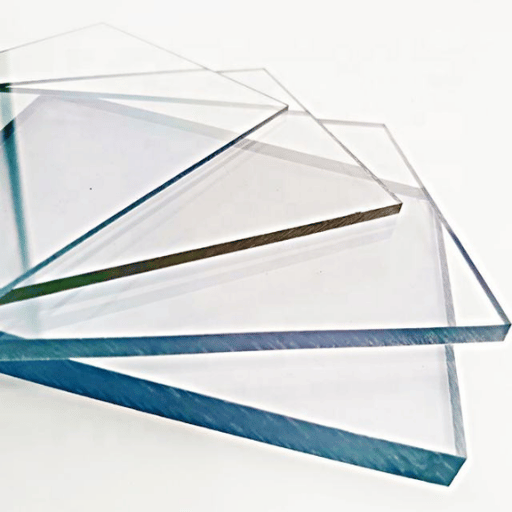
Polycarbonate is commonly used across many industries requiring a combination of transparency and impact strength, thermal stability, or electrical insulation. Due to its impact resistance, PC is used in many applications — construction, automotive, safety equipment, electronics, and medical devices among them. Globally, the polycarbonate market stood at about USD 20.6 billion in 2024 and electronics and electrical components was the largest end-use segment.
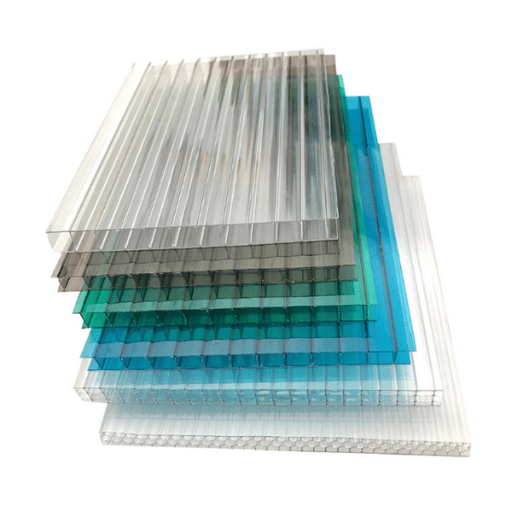
Building and architecture: Polycarbonate sheeting and polycarbonate panels act as roofing for greenhouses, carports, skylights, covered walkways. Multi-wall extruded sheets offer thermal insulation properties much superior to single pane glass and at one third the weight. Noise barrier walls running along highways also often use polycarbonate panels.
Automotive: Headlamp lenses, tail light housings, instrument clusters, and sunroof panels are all automotive components manufactured from polycarbonate because the material survives stone impacts that would shatter glass. PC can be injection molded into complex curved shapes while retaining optical clarity, which is why PC dominates transparent automotive parts.
Safety and security: The common Bulletproof glass is made up of laminated stacks of polycarbonate and glass layers. Products such as Riot shields, safety goggles, Face shields and machine guards all depend on PC to absorb high energy impacts for no cracking or breaking. PC is commonly used in personal protective equipment because it meets the impact criteria of standards like ANSI Z87.1.
Electronics: Electrical enclosures, LED diffuser panels, capacitor film, and connector housings benefit from polycarbonate’s high productivity in terms of flame retardance (V-0 grades), electrical insulation, and stability at higher temperature.
Optical: Eyewear lenses, camera lenses, and optical discs (CD, DVD, Blu-ray) use polycarbonate because of its high optical clarity and refractive index of 1.584. A polycarbonate lens is 10 times more impact-resistant than a typical CR-39 plastic lens, which is why PC is the standard choice for children’s eyewear and safety glasses.
Medical: Medical grade polycarbonate is used in medical applications such as surgical instruments, housing for dialysis machines, drug delivery applications and oxygenator housing. It can tolerate sterilization by (up to 25 kGy), steam autoclaving and ethylene oxide sterilizing procedures.
Application Selection Framework
- Impact priority (safety glass, machine guards, PPE) → Polycarbonate
- Farlig rusftet nedis. Ridoduz + vejret (signering, udstillingen, akvarium osv.) Akryl
- Temperatura + resistenza chimica (forni, attrezzature da laboratorio) Vetro temperato
- Impact + impact + weight saving (auto, airlt): polycarbonate
- Cost-sensitive indoor glazing (picture frames, retail displays) → Acrylic
How Polycarbonate Is Processed
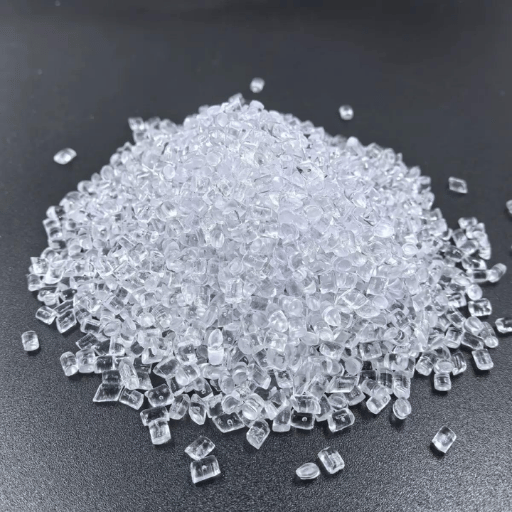
Polycarbonate is produced as pellets or granules that are then shaped into sheets, profiles, films, and molded parts using several standard thermoplastic processing methods. This material is used in many applications because it can be easily worked through extrusion, injection molding, thermoforming, and laser cutting. One universal requirement across all methods: polycarbonate must be thoroughly dried before processing. Residual moisture above 0.02% causes hydrolysis during melt processing, resulting in splay marks, reduced impact strength, and surface defects.
| Method | Melt/Barrel Temp | Typical Products |
|---|---|---|
| Sheet/Film Extrusion | 230–280 °C | Flat sheets, multi-wall panels, film |
| Profile Extrusion | 250–300 °C | Tubes, channels, custom profiles |
| Injection Molding | 280–320 °C | Lenses, enclosures, gears, connectors |
| Thermoforming | 180–210 °C (sheet temp) | Machine guards, covers, skylights |
| CO₂ Laser Cutting | 50–100 W (beam power) | Cut sheets up to 3 mm, edge finishing |
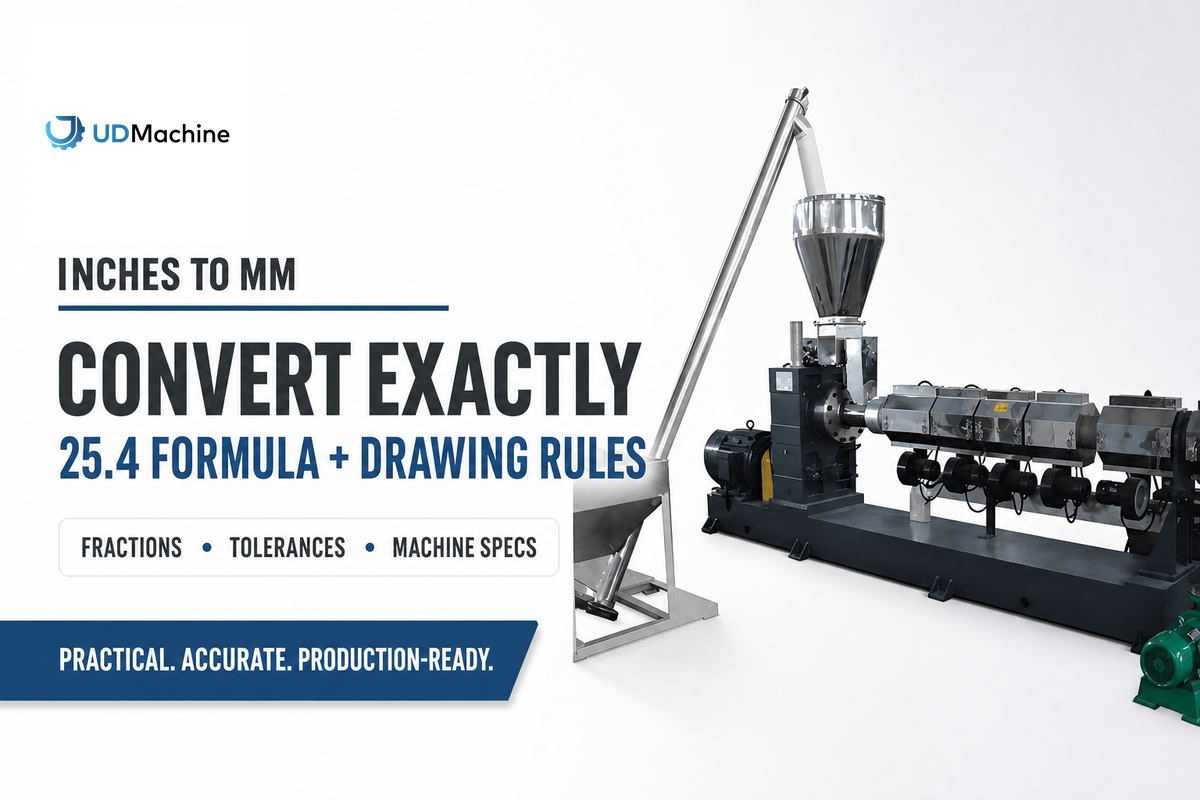
polycarbonate sheets, multi-wall system and continuous profiles are all extrusion processed. For typical extrusion processing, the common extruder employed is a single screw extruder with twin transition metering screw (in the range 25-30 L/D and 2.25:1 compression ratio), barrel heaters maintain from 230 C to 300 C depending on product and grade formulates. The DHD is used prior to feeding into the extruder; a minimum of four hours pre-drying at 120 C by dehumidifying dryer (in dew point of 12 C).
In order to obtain proper compound homogenization, intensive residence time by twin-screw is employed for intensive mixing of PC and moderate dispersion with selected additives such as glass fiber, fire retardant, and ABS.
injection molding used for polycarbonate parts with complicated 3D geometry: headlamp lenses, electrical enclosures, housings for medical devices. Melt temperatures are 280-320 C., mold temperatures are 80-120 C. higher mold help desirable surface finish and lower internal stress (important for transparent optical).
thermoforming in college, is where extruded PC sheet is formed over molds at 180-210 C. This is used for commonly used for Machine Guards, Skylights and Large Perspex covers where the injection molding tooling costs would be uneconomical.
Standard laser cutting with CO2 lasers produces clean, accurate cuts in polycarbonate sheet up to about 3 mm thickness. Power levels in the range of 50-100 W did not cause discoloration of the edges when combined with a treaverse speed of around 70 mm/s. Air assis during the cutting process also reduced the amount of charring of the edges.
Cutting multiple passes at a low power level over a thicker sheet produced cleaner results than cutting a single pass at a slow traverse speed.
Undried polycarbonate is also by far the largest cause of defective parts in the extrusion and injection molding processes. Silver streaks (splay marks), bubbles or lower impact strength in finished parts, are indicative of a dryer problem and should lead to a dryer investigation. Even a moisture level of 0.03% will be enough to initiate hydrolytic degradation during melt processing.
Frequently Asked Questions
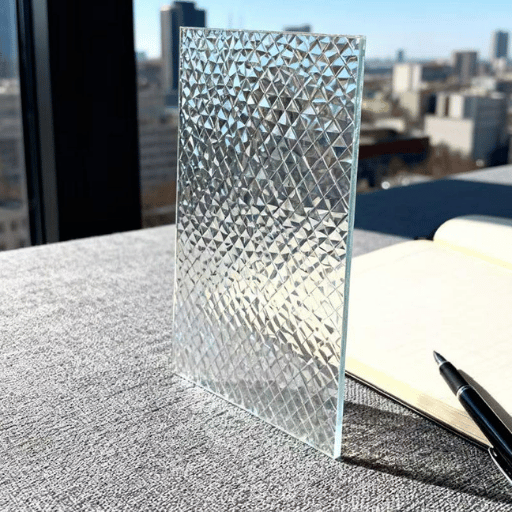
Q: Is polycarbonate just plastic?
View Answer
Q: What are the disadvantages of polycarbonate?
View Answer
Q: Is polycarbonate harmful to humans?
View Answer
Solid polycarbonate used for non-food items (windows, lenses, enclosures), including in direct contact with food, represents no health threat. The question is whether BPA leaching from polycarbonate containers into our food and drinks, such as for high temperatures. At standard contact levels, the U.S.
FDA states BPA is safe while in the EU it was banned from all food in 2024. For food-contact uses, copolyester free of BPA have nearly replaced polycarbonate.
Q: Can polycarbonate be recycled?
View Answer
Q: Will polycarbonate turn yellow over time?
View Answer
Q: Can polycarbonate be laser cut?
View Answer
Need equipment for polycarbonate compounding or sheet production?
About This Material Guide
This polycarbonate information sheet was prepared from published ASTM test data, polymer reference tables, FDA regulatory filings and processing data from the Society of plastics Engineers (SPE) Extrusion Division. Property numbers indicate typical ranges for general purpose BPA polycarbonate, specific blends, additives and UV stabilizers will affect the properties. To specify equipment sizes for extrusion and compounding, feed us your target production volume and product shape.
References & Sources
- Polycarbonate — Wikipedia — Polymer properties, history, and production data
- ASTM D256-24: Standard Test Methods for Determining the Izod Pendulum Impact Resistance of Plastics — ASTM International
- Bisphenol A (BPA): Use in Food Contact Application — U.S. Food and Drug Administration
- Polycarbonate (PC) Market Size & Share Analysis — Mordor Intelligence
- Polycarbonate Extrusion Processing Guide — Society of Plastics Engineers (SPE) Extrusion Division
- Correlation of Abbe Number, Refractive Index, and Glass Transition Temperature in Polycarbonate Polymers — National Institutes of Health (PMC)
Related Articles
- Twin-Screw Extruder for Polymer Compounding – Equipment specifications for polycarbonate blend processing