Industry Overview: The pulp and paper industry is going through a technological revolution that is changing and improving paper machine operations. Implementation of advanced control systems is expected to lead to the benefits of increased efficiency, improved product quality, and less harm to the environment. The pressure for eco-friendly production is rising and at the same time the manufacturing processes are becoming much more cunning and nimble, thus the companies are pouring money into up-to-date technologies to keep their innovations and set the art in the market.
Understanding Advanced Paper Machine Control

Control Systems: Definition and Core Function
Industrial control systems in paper mills are sophisticated automated frameworks that regulate and optimize various production processes. These systems maintain optimal machine performance by controlling critical factors including temperature, pressure, and moisture levels while simultaneously enhancing overall product quality.
🔑 Key Benefits
- Operational Efficiency: Significantly improved production performance and throughput
- Energy Conservation: Reduced energy consumption through intelligent optimization
- Waste Reduction: Minimized material waste leading to cost savings
- Environmental Responsibility: Enhanced sustainability through eco-friendly practices
- Predictive Capabilities: AI and IoT integration enables maintenance forecasting
The Critical Role of Advanced Control in Operations
Advanced control technology is the basis of real-time optimization of mass balance, overall output, and economic performance in papermaking. The production chain, in its entirety, is subjected to smooth and accurate control due to the real-time data processing and predictive analytics working together.
Integrated sensing abilities and data analytics tools give the operators insights that have never been seen before. It is this knowledge that allows the operators to make well-thought-out decisions about issues like production adjustments, new product development, and material supply management. The combining of advanced control technologies with intelligent data usage is changing the paper processing industry into a faster, more competitive, and eco-friendly sector.
Key Components of Paper Machine Control Systems

| Component | Function & Benefits |
|---|---|
| Distributed Control Systems (DCS) | Enables centralized monitoring and control of the entire production process. Continuously maintains temperature, pressure, and flow rates at optimal levels. |
| Quality Control Systems (QCS) | Focuses on final product quality by monitoring moisture, thickness, and coating evenness. Ensures products meet industry standards and customer expectations. |
| Process Automation Tools | Includes programmable logic controllers (PLCs) and machine learning algorithms that automate complex machinery functions and enhance efficiency. |
| Data Integration Platforms | Combines real-time sensor data with external insights such as consumer demand trends to optimize production priorities and resource allocation. |
| Energy Management Systems | Monitors and controls energy usage throughout the process, reducing consumption, operational costs, and environmental impact. |
Applications of Advanced Control in Paper Manufacturing

Optimizing Wet End Processes
The integration of market intelligence data with advanced control systems enables manufacturers to make real-time adjustments in chemical dosing, water management, and fiber distribution. This ensures maximum efficacy and product uniformity while responding dynamically to market demand trends.
💡 Strategic Advantages
- Proactive decision-making based on real-time data
- Reduced resource consumption and operational costs
- Enhanced alignment with consumer preferences for sustainability
- Ability to rapidly adjust to specialty paper demands
- Minimized waste through demand-driven production
Enhancing Quality Control Systems
Modern quality control systems leverage real-time consumer insights to identify specific product characteristics that buyers prioritize, such as durability, eco-friendly materials, or contemporary designs. Quality control processes synchronize with this data, enabling rapid standard improvements that exceed evolving consumer expectations.
Automation in the Paper Industry
The automation of the industry has changed the face of the manufacturing process and drastically improved the productivity while at the same time reducing the costs of the operation. Automation through robotics and intelligent machines works equally good and gives the same quality in the processes of pulp, paper and packaging.
Besides, consumers’ needs derived from the intelligence of the market come from the manufacturers’ understanding of trends and preferences better. The growing demand for “green” and recycled paper materials, for instance, forces the producers to go with the flow and switch to earth-saving ways of production, thus, the whole supply chain has become more e-friendly.
Measurement Techniques in Paper Machine Control
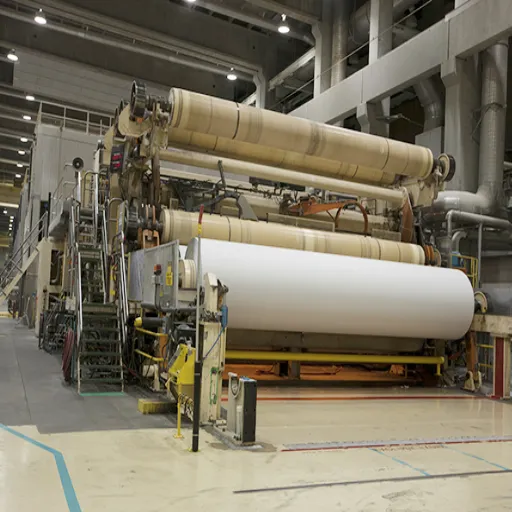
Critical Metrics for Process Control
Continuous monitoring and control of specific metrics is essential for optimal efficiency in paper machine operations. These metrics significantly affect paper quality and performance in downstream applications.
Basis Weight
Ensures consistent paper structure and uniform density throughout production runs.
Moisture Content
Provides stability and longevity while preventing dimensional changes in the final product.
Fiber Orientation
Enhances paper strength and determines directional properties for specific applications.
Thickness Variations
Controls surface finish quality and ensures uniformity across the paper sheet.
Advanced Measurement Technologies
Modern measurement technologies incorporate cutting-edge tools and systems that optimize production processes while maintaining consistent quality standards. Through integrated sensors, automation, and real-time data analysis, manufacturers achieve unparalleled accuracy in monitoring key parameters at every production stage.
⚡ Technology Integration Benefits
- Precise control of material composition and surface characteristics
- Real-time assessment of consumer trends and market preferences
- Enhanced decision-making through predictive analytics
- Customized product manufacturing aligned with demand
- Rapid innovation cycles and sustainable production practices
Reducing Variability in Pulp and Paper Processes
The management of variability is a major issue for the whole industry since it has a direct effect on the efficiency of the operation, quality of the product, and costs of the operation. Companies that are using the latest predictive analytics, real-time monitoring, and market intelligence data together can already notice a significant improvement in their competitive position.
The analysis of the market trends shows particular paper grades that are or environmentally friendly options that are on their way to be more popular. It is the production process that companies have to change to match the market data, and the raw materials can be changed accordingly, chemical usage can be optimized, and machines can be calibrated to the exact consumers’ preferences. The combination of the production data and the external insights leads to greater consistency, less waste, and more environmental friendliness.
Best Practices for Implementation and Startup

Steps for Successful Installation of Control Systems
- Assessment of Requirements
Conduct systematic evaluation of the production environment and control system needs. Analyze existing equipment, operational objectives, and required capabilities based on current standards and industry requirements. Leverage consumer preference data to align the control system with market demands. - Selecting the Right Technology
Choose control systems that meet company size requirements and industry standards. Research and implement solutions aligned with Industry 4.0 frameworks, ensuring scalability and future-proof capabilities. - Integration with Existing Systems
Create seamless integration by mapping current infrastructure and identifying potential gaps. Use modern interoperability standards to connect legacy systems with new technology. Ensure compatibility with cloud services, IoT devices, and real-time data processing. - Data-Driven Planning and Customization
Utilize actionable market intelligence data to configure systems that mirror end-user demand. If consumers emphasize sustainability, calibrate production to minimize waste and enhance energy efficiency. - Testing and Optimization
Prioritize comprehensive testing post-installation to verify optimal component efficiency. Confirm that control systems accurately regulate preset parameters and deliver intended outputs. Rely on data analytics for continuous performance improvement. - Training and Support
Train operators and maintenance technicians to collaborate efficiently with new systems. Provide online resources and support channels for rapid problem resolution and smooth operations. - Ongoing Maintenance and Data Monitoring
Post-installation, prioritize regular system maintenance and continuous data monitoring. Evaluate production trends and adopt proactive changes. Track market intelligence data to rapidly respond to changing needs, enhancing long-term system performance.
Overcoming Common Startup Challenges
| Challenge | Solution Strategy |
|---|---|
| Lack of Market Intelligence | Analyze market trend data to identify high-demand areas, narrow target audiences, and customize products accordingly. |
| Financial Resource Management | Implement strict budgeting, invest in profitable projects, and explore alternative financing such as crowdfunding or strategic partnerships. |
| Brand Recognition in Crowded Markets | Apply keyword tracking tools and SEO optimization to enhance online presence and customer reach. |
| Operational Inefficiencies | Monitor production trends continuously and identify the most efficient marketing channels for better ROI. |
Future Trends and Innovations in Paper Machine Control

The Impact of Industry 4.0 on Pulp and Paper
Industry 4.0 introduction represents a paradigm shift for the pulp and paper sector, enhancing operations through advanced technologies including the Internet of Things (IoT), Artificial Intelligence (AI), and big data analytics. The sector increasingly prioritizes sustainability and digital transformation to maintain competitive positioning.
🚀 Industry 4.0 Implementation Benefits
- Predictive Maintenance: Anticipate equipment failures before they occur
- Real-Time Monitoring: Continuous visibility into production processes
- Energy-Efficient Solutions: Reduced consumption and operational costs
- Eco-Friendly Production: Alignment with global environmental goals
- Market Responsiveness: Rapid adaptation to consumer demand shifts
Emerging Technologies in Machine Control
The modern machine control technology that employs AI, machine learning, and the Internet of Things (IoT) is bringing industries to a whole new level with its precise automation and smart capabilities based on data. The manufacturing process is made smoother and faster by AI in the form of predictive analytics since it allows machines to predict issues and resolve them in advance of the production. The IoT connects the various machines, thus enabling them to communicate with each other immediately, and, in this way, creating smart networks that boost the overall productivity of the entire plant.
The combination of AI and machine learning and the data from different sources gives industries the power to solve their problems in no time at all. The modern machine controls are able to tap into the global databases to get quick solutions, and also for the purposes of optimizing the workflows, and improving the performance of the whole system. This mixture sets new benchmarks for the industry with respect to precision, environmental-friendliness, and operational inventiveness.
Maximizing Efficiency and Sustainability
The efficiency and sustainability of paper manufacturing can be increased dramatically by the use of real-time data analysis on high-level platforms. The world-wide observation of the energy consumption pattern finds the areas where it is possible to switch to cleaner and more energy-efficient technological options. Following the real-time metrics of the supply chain, firms can decrease their transportation emissions and also do more responsible procurement of raw materials.
Data analytics alongside advanced algorithms can mimic the production steps with the best environmental and operational attributes, thus arriving at the situation where one has both a minimal negative impact on the environment and a maximum production.
Frequently Asked Questions
What are advanced paper machine control systems?
The advanced paper machine control systems utilize advanced mathematical models and state-of-the-art technology to improve the quality and quantity of paper produced. Such systems comprise a wide range of different parts such as sensors, actuators, and machines controlled by computers that together to supervise the whole paper-making process in detail. The successful control measures filter out variances and disturbances leading to production of the same class of products in terms of quality.
How does advanced control impact paper machine operations?
Advanced control technology directly impacts operations by optimizing the entire production process. It enables real-time monitoring and precise parameter adjustment for factors like moisture content and sheet thickness. This minimizes risks of sheet breaks and other disruptions. Multivariable control strategies provide better management of complex system interactions, allowing manufacturers to produce more and better products while maintaining increased adaptability to market demands.
What is the role of quality control systems in paper production?
The production of paper is heavily reliant on quality control systems which not only maintain product standards but also guarantee market trust. The systems are in place to control parameters at every production stage, right from pulp making to the final drying process. State-of-the-art quality control systems issue alerts in real-time for any misalignments, thus giving the operators a chance to do immediate adjustments for maximum efficiency. This kind of action taken in advance minimizes the chances of getting defective products and at the same time raises the standard of the overall product.
What are the benefits of automating paper machine operations?
Automation delivers numerous benefits including enhanced efficiency, reduced labor costs, and improved safety. Automated systems monitor and manage various production facets, enabling immediate responses to disturbances and variations. Advanced control systems provide greater flexibility in adapting to changing market conditions. Automation also streamlines startup and shutdown processes, reducing downtime and increasing overall production output.
How does process knowledge contribute to advanced control?
Expert knowledge of papermaking processes is critical for successful advanced control implementation. This knowledge encompasses machine settings, raw material properties, and other production-influencing factors. Process expertise enables development of efficient, tailored control strategies specific to each operation. It facilitates identification of optimal operating conditions and disturbance reduction, creating robust and flexible operations capable of adapting to demand fluctuations.
🎯 Conclusion
The control of advanced paper making machines is a future feature of the pulp and paper industry, which integrates the most modern technologies with eco-friendly practices. By adopting the Industry 4.0 technologies such as AI, IoT, and big data analytics, the manufacturers will not only be able to satisfy the ever-changing market requirements but they will also get to minimize their negative impact on the environment. The combination of advanced control systems, predictive analytics, and real-time monitoring, creates operations that are not only more efficient and profitable but also more environmentally friendly. The companies that choose to install these advanced control solutions now will be the ones that lead the industry tomorrow, i.e. they will be able to produce superior products and, at the same time, participate in the creation of a more sustainable future.
📚 Reference Sources
- Stanford University: The Paper Machine Problem – Discusses actuator use in papermaking for cross-directional profile control Read the paper here
- Stanford University: Tuning Feedback Controller of Paper Machine – Explores optimization methods for feedback controllers in cross-directional control systems Explore the details
- Harvard ADS: Advanced Process Control by Machine Learning – Highlights machine learning-based systems for enhancing process capability and reducing variations View the abstract
- Leading paper making machine Manufacturers in China