Weld Titanium: Techniques and Insights for Modern Welders
Titanium welding is yet one of the most challenging and rewarding skills in modern fabrication. Titanium is a material of choice in aerospace, automotive, and medical manufacturing. titanium boasts the best strength-to-weight ratio of any given material, corrosion resistance, and a very long service life. Welding titanium requires a skill set, a degree of precision, and thorough knowledge of its unique property characteristics to yield high-quality and non-defective results.
Introduction to Welding Titanium
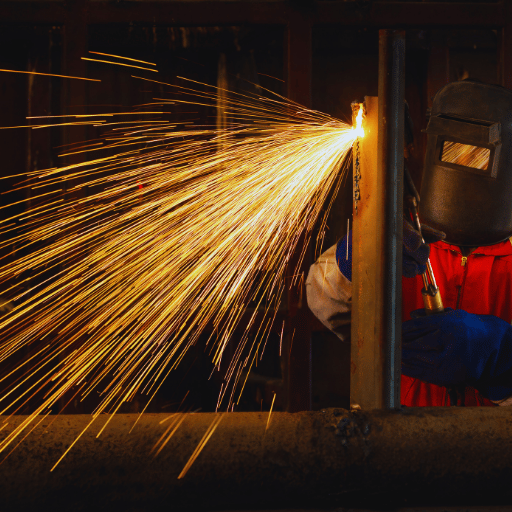
Titanium, being an expensive metal, is sought after by welders for its properties of strength, corrosion resistance, and durability with a favorable strength-to-weight ratio. Welding, drilling, or any sort of fabrication of metals using titanium demands ample preparation and precision to prevent contamination and the presence of structural defects.
Key Success Factors:
- Cleanliness of the workplace-chosen applications
- Shielding amalgam gases for argon, then correctly used
- Heat-input control until oxidation with distortion
Overview of Titanium and Its Properties
Titanium is a lightweight metal that offers high strength, platinum corrosion resistance, and biocompatibility. The natural oxide layer on titanium presents a wonderful barrier against oxidation and corrosion, even under extremely stressful conditions.
Titanium Characteristics Checklist:
- ✓ High strength-to-weight ratio
- ✓ Excellent corrosion resistance
- ✓ Biocompatibility for medical applications
- ✓ Non-magnetic property
- ✓ Low thermal expansion
- ✓ Possess good mechanical properties under elevated temperatures
Why Weld Titanium?
The welding of titanium creates strong and lightweight joints that resist corrosion in high-tech applications. Being able to maintain its mechanical properties under extreme conditions renders this metal and mechanism a must for aerospace and medical manufacturers, where precision and durability are essential.
Titanium vs. Steel: Welding Comparison
| Parameter | Titanium | Steel |
|---|---|---|
| Reactivity | Highly reactive | Less reactive |
| Thermal Conductivity | Low, challenging heat control | Higher, easier heat management |
| Shielding Needs | Requires precise inert gas | Standard shielding sufficient |
| Heat Sensitivity | Very sensitive | Less sensitive |
| Ease of Welding | Difficult, specialized skills | Easier, forgiving |
| Cost | High | Lower |
| Applications | Aerospace, medical, marine | Construction, tools, machinery |
Essential Tools and Equipment for Titanium Welding
Types of Welding Machines: MIG vs. TIG Comparison
| Parameter | MIG Welding | TIG Welding |
|---|---|---|
| Electrode | Consumable wire, such as titanium filler, is essential for effective welding | Non-consumable tungsten |
| Shielding Gas | Argon + CO2 mix | Pure Argon |
| Material Suitability | Thick materials | Thin materials |
| Precision | Moderate | High |
| Speed | Fast | Slow |
| Ease of Use | Easy | Difficult |
| Aesthetics | Moderate | High |
| Cost | Lower | Higher |
| Applications | Industrial, repairs | Aerospace, artwork |
Laser Welding Equipment for Titanium
The laser welding of titanium is a specialty that demands very specific equipment to generate controlled laser beams containing immense energy. Fiber and Nd-YAG lasers are featured for this service due to their precision and ability to make perhaps reliable welds without causing too much thermal distortion.
Equipment Requirements:
- There should be a supply of good-quality shielding gas, such as argon
- Power control systems should be very precise
- According to standards, there must be a provision for adequate cooling
- Full automation and/or programming option
Necessary Accessories and Safety Gear
Must-Have Tools for Any Welder:
- ✓ Welding clamps
- ✓ Torch of a very fine build
- ✓ Sturdy, heat-resistant workbench
- ✓ Continuous, reliable supply of inert shielding gas (argon)
- ✓ Correct-filler rods
Safety Requirements for Equipment:
- Auto-darkening welding helmet
- Heat-resistant gloves
- Heat-resistant welding jacket
- Steel-toe boots
- Proper ventilation or fume extractor
Techniques for Successful Titanium Welding

TIG Welding Process and Polarity
TIG welding, also called GTAW, is known as one of the most precise and high-quality welding processes, especially when utilized for titanium. The process uses a non-consumable tungsten electrode to make the weld, while an inert gas is passed over the weld area to shield it from atmospheric contamination, with argon or helium usually being the choice of gas.
Polarity in TIG Welding
Polarity Settings:
- Direct Current Electrode Negative (DCEN): Welding titanium parts is preferred. It focuses around 70% of the heat on the workpiece, guaranteeing better penetration and less erosion of tungsten.
- Direct Current Electrode Positive (DCEP): Hardly ever used for titanium. Since the heat distribution is reversed, the electrode gets damaged very quickly.
- Alternating Current (AC): Since no surface oxide layer requires cleaning action, it’s not gen
Key Parameters for Titanium TIG Welding
| Parameter | Specification | Notes |
|---|---|---|
| Amperage Settings | 30-50 amps (thin sheets) 70-120 amps (thick materials) |
Depends on material thickness |
| Gas Flow Rate | 15-20 CFH argon | Consistent flow for optimum shielding |
| Electrode Tip Geometry | 30-60 degree taper angle | Sharpened tungsten for arc stability |
| Critical Temperature | 800°F (427°C) maximum | Above this causes discoloration/degradation |
MIG Welding Techniques for Titanium
The heat input volume must be controlled with good accuracy during MIG welding of titanium, along with the scrupulous shielding from atmospheric contamination.
Key MIG Welding Methods
- Shielding Gas: Argon must be 100% pure or mixed with helium.
- Torch Handling: Keep short arc length and resist torch-angle variation.
- Pre-Weld Preparation: Clean with stainless-steel wire, brushing the surface of titanium thoroughly.
- Heat Management: Use a moderate speed of travel and, if required, provide a heat sink.
Choosing the Right Filler Metal and Alloys
When selecting filler metals for the welding of titanium and its alloys, the principal factor to be considered is their compatibility with the base material in question. To ensure equal strength and corrosion resistance, filler metals of similar chemical composition to the titanium alloy being welded should be selected.
Filler Metal Selection Guides:
- ✓ Commercially pure titanium
- ✓ Variety of alloys such as Ti-6Al-4V
- ✓ Per AWS or ISO standards
- ✓ As per manufacturer specifications
Common Challenges and Solutions in Titanium Welding
Managing Contamination Issues
| Contamination Type | Problem | Solution |
|---|---|---|
| Oxygen Contamination | Oxidation, brittle and discolored weldments | Proper shielding gas coverage, minimize air exposure |
| Nitrogen Absorption | Reduced ductility and weld strength | Use pure shielding gases like argon or helium |
| Hydrogen Contamination | Porosity and cracking in molten titanium | Thoroughly clean workpiece and filler material |
| Tool Contamination | Iron or reactive elements contaminate surfaces | Ensure all equipment is well-maintained and clean |
| Improper Gas Purging | Atmospheric gases contaminate weld zone | Proper purging techniques, consistent gas flow |
| Surface Contamination | Dirt, grease, oils compromise weld quality | Thorough surface preparation and degreasing |
Addressing Heat Affected Zones
Affected Zones are prime examples of base metal areas that undergo microstructural alterations caused by heat input during welding. Such changes may adversely affect the mechanical properties of a component and reduce its strength, making it more brittle or susceptible to corrosion.
Critical Point: Proper control of heat input is essential to mitigate the effects of welding titanium and its alloys.
Common Mistakes and How to Avoid Them
| Mistake | Impact | Solution |
|---|---|---|
| Excessive Heat Input | Distortion | Control heat and cool the molten titanium effectively |
| Contamination | Weak weld | Clean thoroughly |
| Poor Shielding Gas | Oxidation | Correct flow, check coverage |
| Wrong Filler Material | Weak joint | Match specifications |
| Poor Technique | Irregular weld | Practice, train |
Safety Precautions When Welding Titanium
Protective Equipment and Best Practices
Basic EPP:
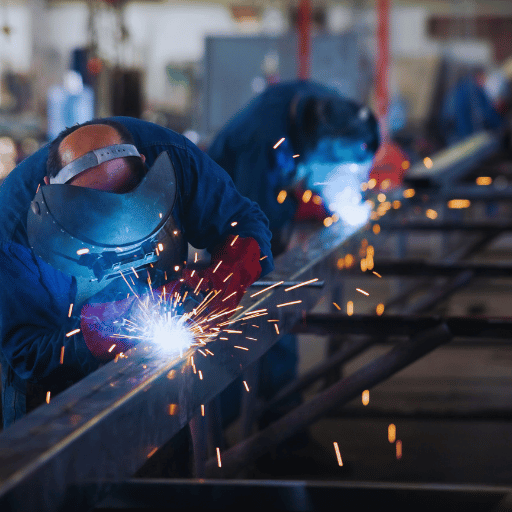
- Respiratory Protection: The use of a respirator or an appropriate and properly functioning ventilator.
- Eye Protection: Welding helmet with correct filter shade.
- Heat-Resistant Gloves: Insulated welding gloves.
- Protective Clothing: Flame-resistant clothing.
Best practice for safety:
- Ensure that one works in a clean, controlled, and dry environment.
- Maintain adequate shielding gas coverage with high-purity argon high purity.
- Scrub the materials ahead of time to rid them of contaminants.
- Heat should be applied only as precisely as is necessary to avoid microstructural damage.
Handling and Storing Titanium Safely
Safe Handling and Storage List:
- ✓ A clean and dry storage environment is preferred
- ✓ Use racks with a non-abrasive surface for the material
- ✓ Handle with clean gloves or tools
- ✓ Store apart from steel or aluminum metals
- ✓ Avoid any moisture or corrosive substances
- ✓ Keep away from scratches or any damage to the surface.
Recognizing and Mitigating Hazards
Start by performing a complete risk assessment to spot potential hazards in the environment, equipment, or processes. The focus should first be on those risks that are more likely and more severe.
Hazard Control Measures:
- Set up adequate ventilation systems
- Wear the necessary PPE
- Put up safety signs clearly
- Conduct routine inspections and maintenance on the equipment
- Provide safety training for all personnel
Expert Tips for Efficient Titanium Welding
Innovations in Titanium Welding Technology
Recent Technological Advances:
- Welding wires made of titanium alloys
- Laser welding in serum mediums
- Advanced HP GTAW™ with high-purity argon as shielding gas
- Enhanced precision and quality control systems
Case Studies of Successful Titanium Welding Projects
| Key Point | Details |
|---|---|
| Project Name | Leonardo, TISICS, CAV Advanced Technologies |
| Industry | Aerospace, Construction, Medical |
| Material | Titanium alloys, Titanium Matrix Composites |
| Techniques | Laser welding, Robotic welding, Deep penetration welding |
| Benefits | Reduced weight, cost savings, improved efficiency |
| Challenges | Welding defects, heat input, and material availability |
| Applications | Aircraft components, medical implants, architectural structures |
| Outcomes | 30% time reduction, 20% cost savings, enhanced durability |
Resources for Continued Learning and Improvement
Books and Publications
- “Titanium Alloys and Their Welded Microstructures” by Andrzej Zieliński – the seat of much knowledge about welding technology and the behavior of the material.
- “Advances in Laser Welding” by C. W. Thayer – a thorough investigation into the applications and operating techniques of laser welding.
Online Training Programs
- AWS-Welding: It offers courses, including Laser Welding Fundamentals and Robotic Welding Essentials.
- edX and Coursera: Here, you might find highly specialized modules and courses on modern welding technologies and material sciences.
Research Journals and Articles
- The Welding Journal is a publication where peer-reviewed research papers on the newest and foremost in welding methods and innovations are presented.
- The Journal of Materials Engineering and Performance considers the publication of works on titanium composites and welding optimization.
Professional Organizations
- Society of Manufacturing Engineers (SME)
- International Institute of Welding (IIW)
- Provide networking opportunities and access to technical resources
Conclusion and Call to Action

Encouraging Further Exploration of Titanium Welding
Titanium welding offers several unique challenges and tremendous opportunities due to its lightweight nature, high strength, and corrosion resistance. To benefit from this field, one should look for practical knowledge and credible resources, such as the industry standards and manuals issued by bodies such as AWS (American Welding Society).
Key Areas for Advancement:
- Explore the progressions in gas tungsten arc welding (GTAW).
- Master the applications within aerospace, medical, and chemical processing fields.
- Utilize continuous learning sources.
- Focus on practical exposure to titanium welding challenges.
Resources and Services for Welders
These sites offer welders resources and services such as training, certifications, videos, and industry knowledge. They include:
- MillerWelds
- American Welding Society
- Lincoln Electric
- Other specialized online guides
Final Thoughts on the Future of Titanium Welding
Titanium welding carries brilliant prospects due to its rising demand in high-performance industries. The experiences in welding technologies, alongside some solid-developed techniques like laser welding and friction stir welding, are making it more precise and efficient to work with titanium.
Future Outlook:
- Sustained emphasis on applications of sustainability and of lightweight materials
- Training programs and certifications
- Technological advancements coupled with human skill
- Cutting-edge applications in aerospace, medical devices, and more
Frequently Asked Questions (FAQs)
Q: What is the best way to TIG weld titanium?
A: TIG welding (or Gas Tungsten Arc Welding- GTAW) is considered the best option, given its capability to make good welds on titanium. An inert atmosphere for the weld zone or inert gas shielding from the weld zone is necessary to prevent contamination. Proper technique and parameter settings are thus crucial in ensuring a clean weld free of titanium oxide formation.
Q: What doesan inert gas do in the welding of titanium?
A: Inert gas is crucial to prevent contamination of the weld pool by atmospheric contaminants. Argon is the most commonly preferred type, although helium can increase heat input and penetration. The proper shielding gas will keep the weld clean from oxidation.
Q: How does welding Ti compare to stainless steel?
A: Titanium and stainless steel undergo vastly different welding procedures due to the former’s high reactivity at elevated temperatures. Stainless steel acquisition is welded by conventional methods; however, welding titanium involves specialized means, usually TIG welding, for the best finishes. Besides, titanium serves in many applications due to its greater corrosion resistance compared to stainless steel.
Q: Which gases can be used for titanium welding?
A: Argon is the gas used for titanium welding because of its inert characteristics. It will be beneficial, mainly when welding thick sections, as helium produces more heat. Argon-helium mixtures can be conceived to complement the weld pool characteristics and assist penetration.
Q: What is TIG welding polarity, and why is it relevant to titanium?
A: TIG welding polarity refers to the direction of electrical current in the welding circuit. For titanium, direct current electrode negative (DCEN) is considered better for arc stability and control of the weld puddle as compared to steel. This permits cleaner welds and also contamination.
Q: How can one prevent contamination while welding titanium?
A: Keeping the work area clean will avoid contamination when welding titanium. Cleaning of the base metal must be done with stainless steel brushes, and it must be ensured that there is nothing contaminating the weld area. To reassure weld integrity, allow inert gas to shield the weld puddle while it avoids coming into contact with moisture and air.
Q: For what reason are titanium alloys employed in welding?
A: Titanium alloys have many advantages when it comes to welding, such as strength, resistance to corrosion, and being lightweight. When titanium alloys are welded, proper welding procedures must be employed so as to meet weld quality criteria. Due to their applicability in adverse environments, these alloys find use in fields like aerospace and marine.
Q: What function does filler metal serve in titanium welding?
A: The filler metal introduces additional elements into the weld and alters the weld’s chemical composition, whereas the final mechanical properties can differ between a weld and the original base metals. Enhancement of the weld joint’s mechanical properties can be procured by the introduction of filler metals. The rods utilized for titanium welding fill and bridge the weld joint so as to form a strong bond between the base metals. It is very important to select the filler metal to maintain compatibility or otherwise avoid weld problems such as contamination.
Q: Is it possible to weld titanium with automated welding systems?
A: Yes, automated systems of welding may be used for titanium welding. The systems guarantee a consistent weld-quality over greater productivity. It is necessary to check whether the shielding gas is properly protected by the automated welding system from exposure to contaminants so that contamination does not occur.
Reference Sources
- Friction Stir Welding and Processing of Titanium Alloys
Read the Paper
The joining technique being analyzed by this paper is the friction stir welding technique used on titanium alloys, a solid-state joining method. - Effects of Titanium on the Toughness of Submerged-arc Weld Metal
Study the document.
It has been discussed that titanium has effects on the toughness of submerged-arc weld metal. - Welding
- Titanium