Overview of Laser Welding
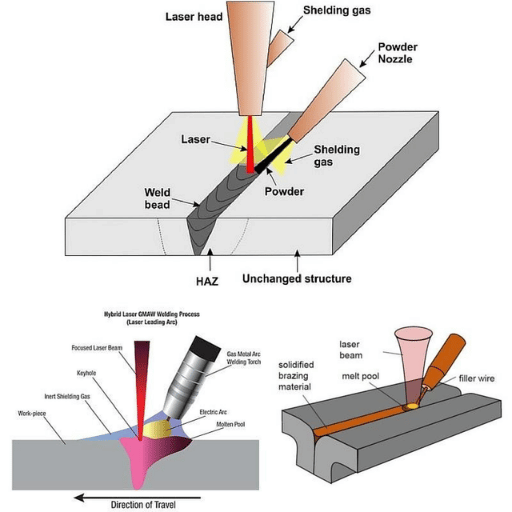
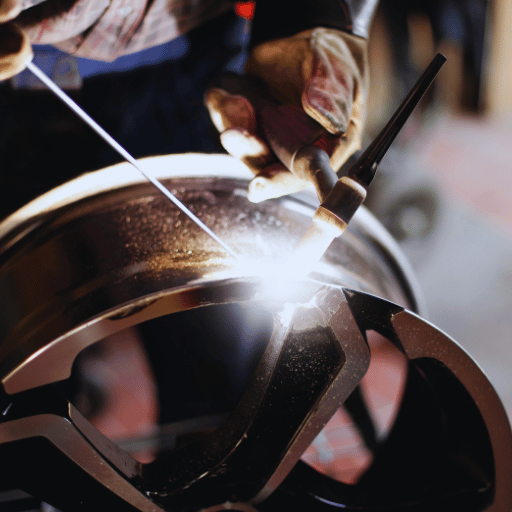
Utilizing laser beams to perform welding is a very new technique. The key advantage is that it is able to provide a greater amount of energy to the focal point, where the energy is required. With this, it can produce a more concentrated beam and, with no or very minimal material distortion, provide the required penetration. Utilizing it for Aluminum manufacturing provides, in addition to the reduced material waste and faster production, even greater value as the savings are much larger on the waste of aluminum compared to traditional methods.
Principles and Definition of Laser Welding
Highly focused laser beams are employed for the purpose of knitting. Because of the focusing of this energy at a single point, a localized carbonization process takes place. As a result, the welds formed are very complex and extremely detailed. This precise process is mostly needed in the aerospace and electronics sectors, because much attention is required there.
Challenges in Welding Aluminum Alloys
Common Welding Issues
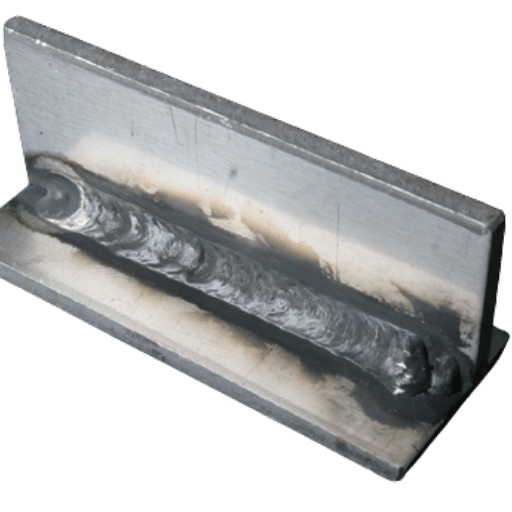
- High Speed of Conduction: One challenge that arises while trying to manage the work pool of Aluminum is that the heat gets dissipated at a swift rate.
Oxidation Problems: The formation of Aluminum oxide not only requires removal, but also a level of control for proper bonding to occur.
Hot Galling: In Alloys that have a high content of silicon or magnesium, hot galling is especially challenging.
Key Benefits of Laser Welding for Aluminum
🎯 Focus on Specificity and Neat Delivery
Use of directed energy ensures controlled and accurate welding, which is ideal for thin aluminium sheet due to the reduced distortion.
⚡Energy and Quick Delivery
Focused energy makes it possible for specific regions to be heated and therefore requires less energy, saving a lot of production time and energy.
🔥 Reduced Heat-Affected Zone
Minimal thermal impact preserves mechanical properties and reduces warping in precision applications.
💪 Strong, Clean Welds
High-quality joints with excellent structural integrity and minimal defects when properly executed.
🔧 Geometric Flexibility
Capability to handle complex component geometries without compromise in weld quality.
🤖 Automation Compatible
Easy integration into automated systems for large-scale aluminum component production.
Specific Advantages in Aluminum Welding
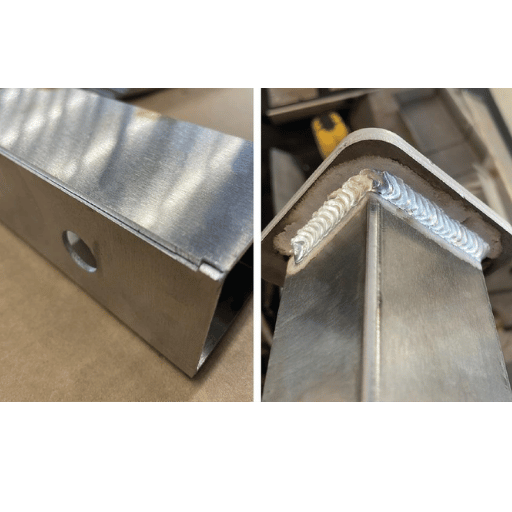
Reduced Warping in Welds
Laser welding’s concentrated heat application minimizes warping compared to traditional methods. The precise energy distribution within a smaller heat-affected zone ensures better dimensional accuracy, crucial for applications requiring tight tolerances.
Enhanced Joint Strength and Reliability
The process creates deep, uniform weld seams that significantly improve joint durability. Concentrated energy delivery reduces residual stresses and thermal degradation, maintaining essential properties throughout the welding process.
Challenges and Solutions in Laser Welding Aluminum Alloys
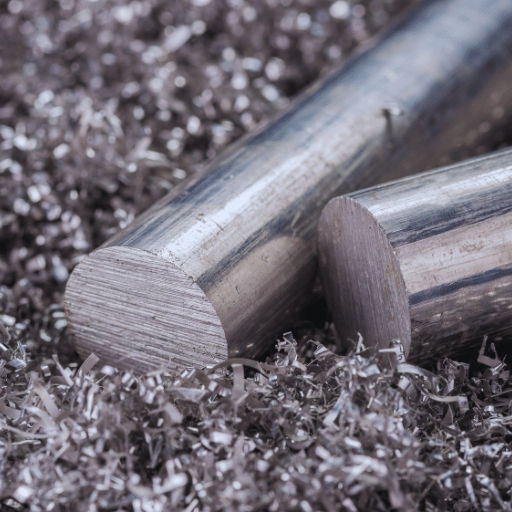
Crack Sensitivity in Aluminum Alloys
Problem: Aluminum alloys with high silicon or magnesium content exhibit increased sensitivity to hot cracking during rapid cooling phases of laser welding.
Solutions:
- Thermal treatments before and after welding
- Use the right type of filler metal that is like the base metal
- Control of welding speed and power schedules, and also of the type of beam streams
High Reflectivity and Thermal Conductivity
Problem: Aluminum’s high reflectivity reduces laser beam absorption, while rapid heat conduction prevents achieving required penetration temperatures.
Solutions:
- Advanced beam focusing techniques
- Shorter pulse duration for concentrated energy delivery
- Optimized laser wavelength selection
Gap Tolerance Management
Problem: Large gaps between components require careful management of filler materials and welding parameters.
Solutions:
- Proper joint preparation to minimize gap variations
- Dynamic laser power adjustment across gap distances
- Optimized focus positioning and feed speeds
Applications Across Industries
🚗 Automotive Applications
Precise welding for structural automotive frames requiring intricate connections
Secure enclosure welding and electrical connection assembly
Airbag housings and sensor systems for enhanced safety standards
Precision sealing for fuel injectors and common rail systems
Headlamp and rear light housing assembly with automated precision
Welding different material thicknesses for optimized component design
✈️ Aerospace Industry Applications
Deep penetration welding for critical pressure-containing components
Lightweight aluminum structures for improved fuel efficiency
Precision repair patches for damaged aluminum aircraft components
Joining techniques for enhanced durability under extreme conditions
📱 Electronics & Consumer Goods
Lightweight, protective electronics enclosures
High-performance heat sink fabrication
Specialized components for LCD and OLED displays
Smartphones, laptops, and smartwatch component assembly
Battery system welding and energy storage solutions
Technological Advancements
Fiber Lasers in the Modern World
Fiber lasers have incredibly altered aluminum welding since they can combine high optical power and exceptional beam quality. Moreover, fiber laser technology generates systems that positively impact efficiency by delivering minimal thermal input, making them the perfect solution for aerospace and automotive industries where granular precision is of utmost importance.
Fiber Lasers in the Advanced Modern World
Laser welding systems in this age have expanded to encompass high-level automation and optimised beam control for successful results. These advanced systems work best in combination with smart software to control quality, analytics, and monitoring.
Multi-Spot Diode Laser Benefits
Better heat distribution throughout the weld zone
Increased welding speed and quality control
Even heat dispersion minimizes material distortion
Consistent results with reduced inspection requirements
Compatible with various materials and joint designs
Optimized power consumption and extended equipment life
Best Practices for Laser Welding Aluminum Alloys
📋 Preparation and Setup Checklist
✅ Surface Preparation
- Thorough cleaning with stainless steel brush
- Chemical cleaning for oxide removal
- Ensure completely passivation-free surfaces
🌡️ Temperature Management
- Preheat components to 150-200°F when necessary
- Reduces weld cracking probability
- Monitor thermal conditions throughout process
🔧 Material Selection
- Match filler materials to base alloy
- Enhance joint strength and reduce defects
- Consider alloy-specific requirements
⚙️ Parameter Optimization
- Adjust power input for specific grades
- Optimize travel speed and gas rates
- Consider aluminum geometry requirements
🛡️ Shielding Gas
- Pure argon for basic protection
- Argon-helium mixtures for enhanced results
- Prevent oxidation during welding process
🎯 Equipment Selection
- Choose reflectivity-compatible laser systems
- Ensure proper beam focusing capabilities
- Verify aluminum-specific welding features
🎯 Optimization Techniques
Advanced simulators and thorough addressing are what it takes for successful aluminum laser welding, embodying a data-driven philosophy. Superior results can be achieved with thermobalance errors through thermal predictive modeling, making necessary adjustments before welding and seeing the difference.
🔍 Methods to Monitor Quality
- Non-Destructive Inspection: Damaged Parts Can Be Assessed, even with the Use of Ultrasonic or Visual Inspection)
- Continuous Wise Laser Process Monitoring: The monitoring of laser power, battling aero speeds, and the beam alignment can be monitored in a continuous manner
- Data-Driven Quality Control – The process can be monitored with process analytics to ensure the proper functioning of the laser
Case Studies and Real-World Applications
🚗 Automotive Lightweighting Project
Objective:
Reduce vehicle weight by 15% while maintaining structural integrity and safety standards
Methods:
Advanced laser welding techniques with high-performance aluminum alloys and optimized design
Results:
✅ 15% weight reduction achieved
✅ 8% fuel efficiency improvement
✅ Safety regulations compliance maintained
Key Learning:
Critical importance of material selection, process control, and comprehensive testing protocols
✈️ Aerospace Structural Component
Objective:
Enhance aerospace structures balancing strength and weight requirements
Approach:
Advanced composites with carbon fiber-reinforced polymers and specialized manufacturing methods
Impact:
✅ 20% component weight reduction
✅ 10% enhanced load capacity
✅ Extended component lifespan
Key Learning:
Automated testing, interdisciplinary cooperation, and advanced training are essential for aerospace standards
📱 Electronics Manufacturing
| Aspect | Details |
|---|---|
| Material | Aluminum alloys for lightweight electronics |
| Industry | Consumer electronics manufacturing |
Frequently Asked Questions (FAQs)
Q: What is the role of laser-welding in aluminum as it relates to alloys?
A: The use of laser welding in aluminum alloys is to enlist the aid of a well-aligned, high-precision beam in the enrollment of aluminum products. Its greatest enterprise is in the wielding of very thin sheets of aluminum and very complex geometries. The beam weld introduced by a calibrating focusing allows for a heated zone that melts the aluminum with a specific focus as the aluminum is being welded and further strengthens the bond, cooling the aluminum.
Q: Why is it advantageous to use a laser welder in the case of an aluminum welder?
A: In the light of the aluminum welder, advancement of technology allows for manipulating welder parameters, which further allows manufacturing of quite strong joints and ensures clean and accurate joints. Furthermore, it can be used to maneuver different types of specific aluminum, such as 6061, 1060, which explains why it is commonly used in existing welding applications.
Q: What are some of the chief functions, and where laser laser-wielding for aluminum applied?
A: Laser outing the aluminum layers covers a considerable scope, which is automobile manufacturers, designing the aircourse engines and quick expedition chambers, and handling the fabricación making lightweight assemblies. Laser applications and speed are the requisite features and much-needed strength of the outgoing solutions.
Q: How to operate a laser used for aluminum welding?
A: Laser aluminum welding operations position and soak the components to be bonded, clean the surfaces, and access the torch by robot or manual operations. The thin aluminum is quickly melted to the joint with the torch and forms a united immersed zone. For thin-walled and different alloys, the method is easily adaptable.
Q: What matters in welding laser welding of aluminum?
A: Melting and laser power of aluminum laser weld glide and off speed any any of alloy to aluminum welding determines the overall speed of the welding process and degree of the weld. Precision alloy and assist weld prep is very involved with and to ensure further the strength and reliability of the weld, prompt welding of the alloy is necessary.
Q: Can laser welding work with disparate alloy types such as aluminum?
A: Absolutely, because laser welding is a type of fusion welding that can be utilized with many types of aluminum, including pure aluminum as well as automotive aluminum. Different types of aluminum require different compositions of alloys and lasers to fuse-weld the appropriate aluminum in the respective application. It facilitates welding in the production of vehicles.
Q: What is the function of a welding machine that uses a laser in the welding of aluminum?
A: Laser welding equipment is the primary source for aluminum welding and modification, and offers precise welding. All portions of the welding, the alignment, and the setup used laser beams, all require laser control to new levels. Adjusting the aluminum melting and the united parts’ weld changes utilizing laser beams can be overly confusing and require utmost care.
Q: How is a laser welding solution beneficial compared to a traditional welding solution?
A: Laser welding has some important advantages over traditional forms of welding, such as MIG and TIG welding. First of all, it is significantly faster for laser welding thin parts and minimizes the heat-affected zone. Secondly, fiber laser welding leads to a high degree of precision on thin and light materials with very little distortion. It also cumulatively improves the mechanical properties of the welded joint and eliminates extensive post-welding treatment.
Reference Sources
1. Laser Welding of Aluminum and Aluminum Alloys (MIT) – A study on the use of laser welding in connection with aluminum alloys.
2. Laser Welding of Aluminum Alloys (UNT Digital Library) – A paper on the development of consistent laser welding of 5000 series aluminum alloys.
3. Welding