What Does “DP” Stand For in Electrical?
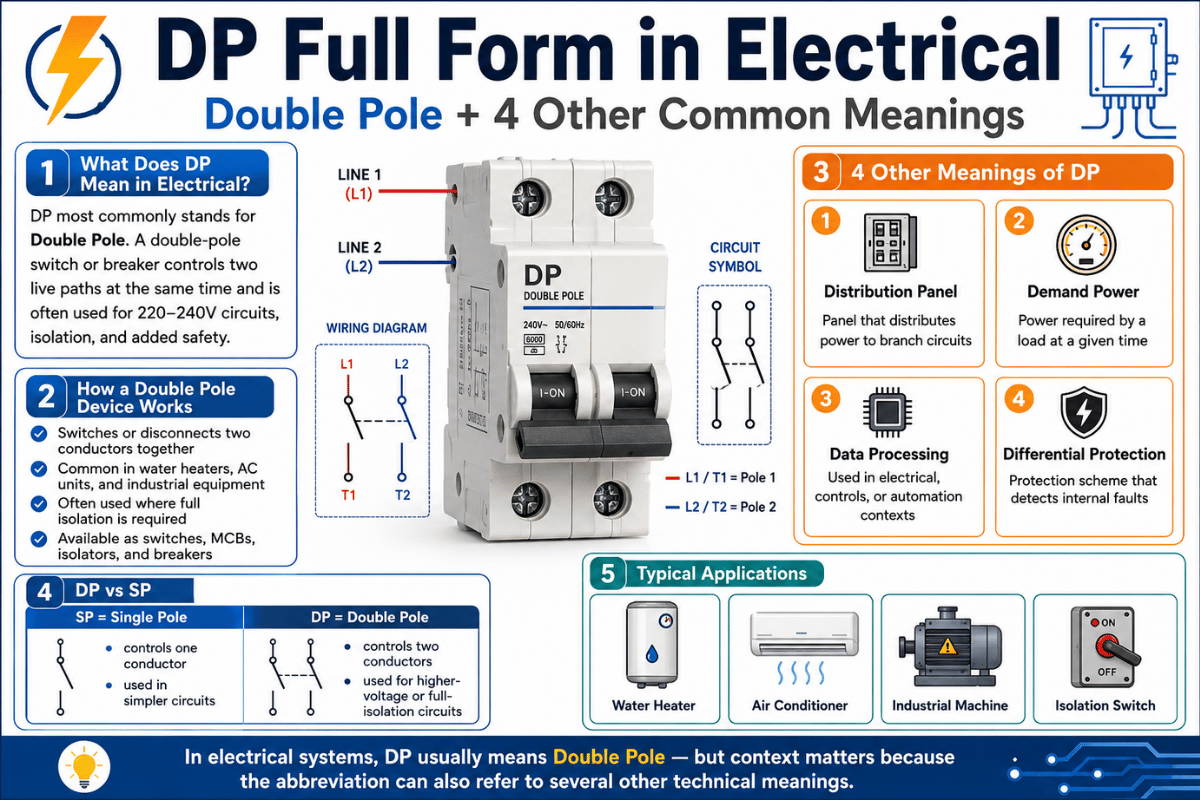
In electrical work, DP stands for Double Polea switch, circuit breaker, or isolator that makes and breaks two conductors at once. The same two letters carry a few other meanings depending on context, so the first job is telling them apart. The table below, our DP 5-Meaning Disambiguatorlists each one and where you actually see it.
| DP stands for | Field | Where you see it |
|---|---|---|
| Double Pole (primary) | Power wiring | DP switch, DP MCB, DP RCBO, DP isolator |
| Differential Pressure | Instrumentation | DP sensor, DP switch, DP transmitter |
| Distribution Panel (DB) | Power distribution | “The DP is in the basement” (the board) |
| Dynamic Positioning | Marine / offshore | DP vessels, DP system power |
| Display Picture (not electrical) | Social media | “profile DP” — ignore in any wiring context |
If the word sit next to a breaker, switch, or panel, read it as Double Pole. If it sits next to a sensor or gauge, it’s Differential Pressure. If it names the enclosure on the wall, it’s a Distribution Panel. (The two-pole devices behind the term are the same multi-pole units described in device standards such as IEEE Std 3004.5.) The rest of this guide works through each one, starting with the meaning you came for.
DP = Double Pole: How a Double Pole Device Works
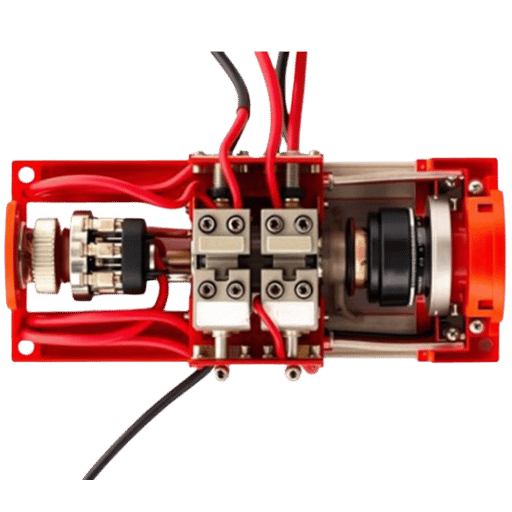
A double pole device has two switched “poles,” so it opens and closes two conductors together as a single action. Where a single pole (SP) device controls only one conductor, a DP device controls two, which is why it’s the default for higher-power and safety-critical circuits. The reason matter more than the label, and it’s captured in one rule.
Break every conductor that can stay live. A single pole device breaks the line only; a double pole device breaks both conductors, so nothing downstream remains energised when it is off.
Why two poles improve safety
Breaking both conductors removes residual voltage. Per OSHA’s lockout/tagout standard (29 CFR 1910.147), a true disconnecting means disconnects a circuit from all ungrounded supply conductors, with no pole operated independently. A double pole device meets that test; a single pole one doesn’t, because the second conductor can stay live.
Note the wording: it covers the ungrounded (live) conductors, in US split-phase wiring those are the two hot legs, and the grounded neutral is generally not switched, whereas IEC-style DP devices do break the neutral too.
A regional catch: “double pole” means different things in the US and UK
This trips up a lot of readers. In the UK, India, and most IEC-based wiring, a double pole device switches line + neutral. In the US split-phase system, a “double pole” breaker usually switches two hot legs (L1 + L2) to feed a 240 volt load such as a range or water heater. Same words, different conductors, always check which system you are reading about.
A handle-tie is not quite the same as a true double pole breaker, but the difference is subtler than “never use it.” The US NEC (210.4) does permit two single pole breakers joined by an identified handle-tie to feed a multi-wire branch circuit, and the tie guarantees they switch off together. What a plain handle-tie does not guarantee is common trip — both poles tripping when only one sees a fault. Where a single-pole fault must clear both conductors, choose a two-pole common-trip device rather than relying on a handle-tie alone.
SP vs DP vs TP vs 4P: The Pole Family Explained
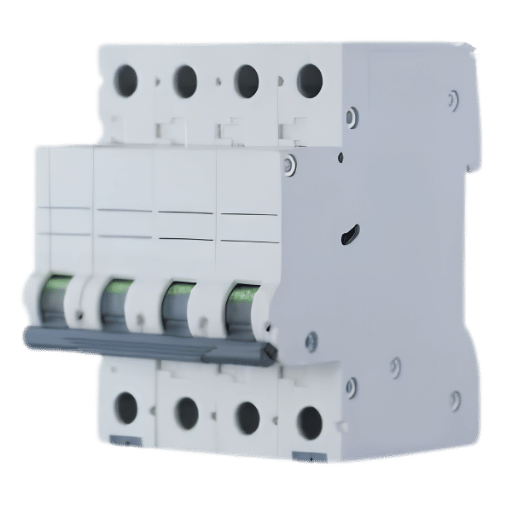
“Poles” count how many conductors a device switches; an added “N” means the neutral is switched too. Engineers build multi-pole devices by effectively ganging single poles so they operate togetherIEEE Std 3004.5-2014 notes that small multi-pole moulded-case breakers are made by joining single-pole units in one frame. Use the escalation below to read any pole abbreviation at a glance.
| Abbrev. | Name | Poles switched | Neutral switched? | Typical system |
|---|---|---|---|---|
| SP | Single Pole | 1 line | No | Single-phase lighting |
| SPN | Single Pole + Neutral | 1 line (neutral linked) | Switched, not protected | Single-phase final circuits |
| DP | Double Pole | 2 (line + neutral, or 2 hots in US) | Yes | High-load single-phase / 240 V |
| DP+SN | Double Pole, switched neutral | 2 (both protected) | Yes, protected | Where full neutral protection is required |
| TP | Triple Pole | 3 lines | No | Three-phase motors / loads |
| TPN | Triple Pole + Neutral | 3 lines (neutral linked) | Linked, not protected | Three-phase + neutral distribution |
| 3P+N | Three Pole + switched Neutral | 3 lines + neutral | Yes | Three-phase, neutral isolated |
| 4P | Four Pole | 3 lines + neutral (all) | Yes, full | Generators, TT systems, mains tie |
| FP | Four Pole isolator | 4 (full isolation) | Yes | Main switch-disconnectors |
Pole/neutral conventions per IEC device families; “N” denotes a switched or linked neutral.
One nuance worth keeping straight: an SPN device switches both line and neutral but only protects the line, whereas a true DP device protects both poles. That difference is why SPN suits ordinary lighting circuits and DP suits heavy loads.
DP in Switches & Relays: DPST, DPDT and “Throw” Counts
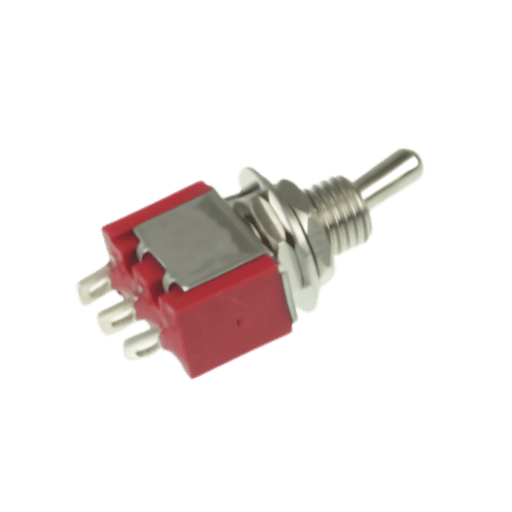
On switch and relay datasheets, DP combines with a “throw” count. A pole is how many separate circuits the device switches; a throw is how many positions each pole can connect to. So DP just means two poles, and the throw tells you what each pole does.
- ✔ SPSTsingle pole, single throw: one circuit, simple on/off.
- ✔ SPDTsingle pole, double throw: one circuit routed to either of two outputs.
- ✔ DPSTdouble pole, single throw: two circuits switched on/off together (a basic DP switch).
- ✔ DPDTdouble pole, double throw: two circuits each routed to two outputs (changeover/reversing).
It’s the same DP idea as a breaker, two poles moving together, just expressed in control and electronics language rather than power wiring. The two-pole contact mechanisms behind these devices appear in patents such as US 2015/0077199 (double-break contact system).
DP Switch vs DP MCB: Ratings & When You Actually Need One
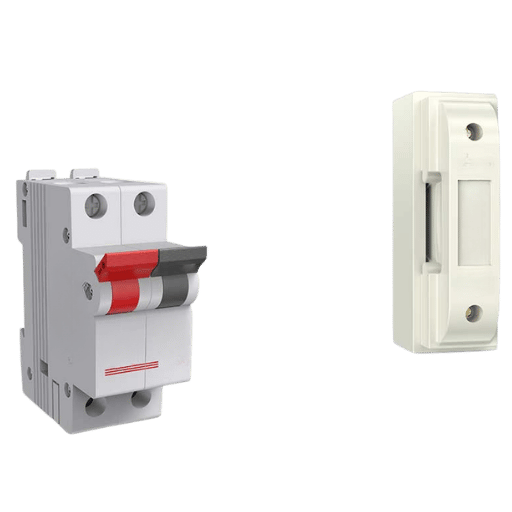
People mix these up constantly, but the difference is simple: a DP switch isolates, a DP MCB isolates and protects. A double pole switch is a manual isolator, it breaks both conductors when you operate it, but it doesn’t detect faults. A double pole MCB (or RCBO) adds automatic overload and short-circuit protection on top. One question settles which you need.
The Switch-or-Protect Test
Ask two questions
- Do you need a guaranteed way to fully disconnect for safety or servicing? → You need a DP switch / isolator.
- Do you need automatic overload and short-circuit protection? → You need a DP MCB (or a DP RCBO for earth-leakage too).
A DP switch isn’t a breaker. If the only device on a heavy circuit is a DP switch, the circuit has isolation but no fault protection.
The standards back this split: switch-disconnectors fall under IEC 60947-3, domestic MCBs under IEC 60898-1, and industrial breakers under IEC 60947-2. Integrated two-pole protection, combining trip mechanisms in one body, is documented in patents such as US 6,052,046. The table below maps the common DP devices you will meet in a board.
The 9-Device DP Family at a Glance
| DP device type | Function | Protects? | Typical rating | Standard |
|---|---|---|---|---|
| DP switch / isolator | Manual two-pole isolation | No | 16–63 A | IEC 60947-3 |
| DP MCB | Overload + short-circuit | Yes | 6–63 A | IEC 60898-1 |
| DP RCCB | Earth-leakage only | Leakage | 25–100 A | IEC 61008-1 |
| DP RCBO | Overload + short-circuit + leakage | Yes (all) | 6–63 A | IEC 61009-1 |
| DP isolator (DC) | Solar/DC two-pole isolation | No | 16–40 A | IEC 60947-3 |
| DP changeover | Mains/generator transfer | No | 40–100 A | IEC 60947-3 |
| DP contactor | Remote two-pole switching | No | 16–63 A | IEC 60947-4-1 |
| DP main switch | Whole-board isolation | No | 63–100 A | IEC 60947-3 |
| DP socket-outlet | Switched two-pole outlet | No | 13–45 A | Local wiring rules |
Do you need a DP switch for an AC or water heater?
For high-load 230/240 V appliances the answer is usually yes. Sizing follows the load: a 4,500 watt water heater on a 240 V circuit draws 4,500 ÷ 240 = 18.75 A, so it’s wired to a 20 A or 25 A double pole device, and a 32 A DP switch is common for larger heaters and air-conditioners.
A DP switch beside the appliance lets a technician isolate both conductors before servicing, while a DP MCB in the board handles fault protection.
📐 Engineering Note
Match the device rating to the calculated load current with headroom, not to the appliance label alone. For a 240 V load: current (A) = power (W) ÷ 240. Then choose the next standard DP rating (6, 10, 16, 20, 25, 32, 40, 63 A) above it, and confirm the breaking capacity (typically 6 kA domestic, up to 25 kA industrial) suits the board.
DP = Differential Pressure (The Other Big “DP”)
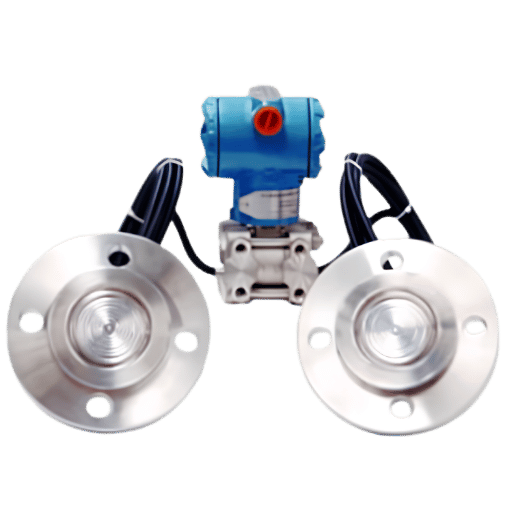
Outside the consumer unit, “DP” often means Differential Pressureand this is the meaning most “DP full form” articles skip. A differential pressure switch uses a sensing diaphragm to detect the pressure difference between two points and acts when that difference crosses a set value. It’s still an electrical device, it just measures pressure instead of switching power.
You’ll meet differential-pressure “DP” as three instruments: a DP sensor or DP transmitter that outputs a signal proportional to the pressure gap, and a DP switch that trips a contact at a threshold. They monitor clogged HVAC filters, pump head, cleanroom room-to-room pressure, and flow across an orifice. So if a drawing shows “DP” wired to a sensor or a 4–20 mA loop, it’s Differential Pressure, not Double Pole.
DP = Distribution Panel (DB): Where Power Splits
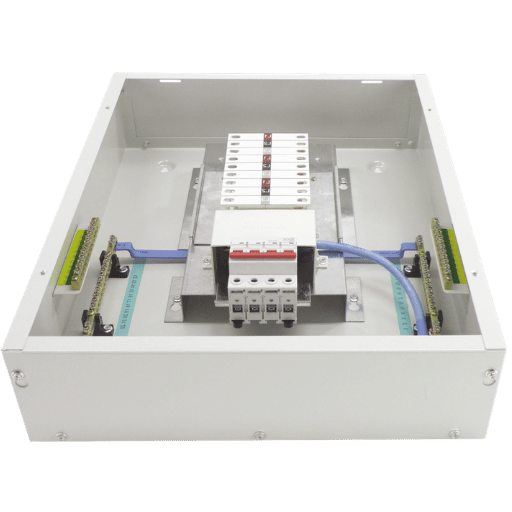
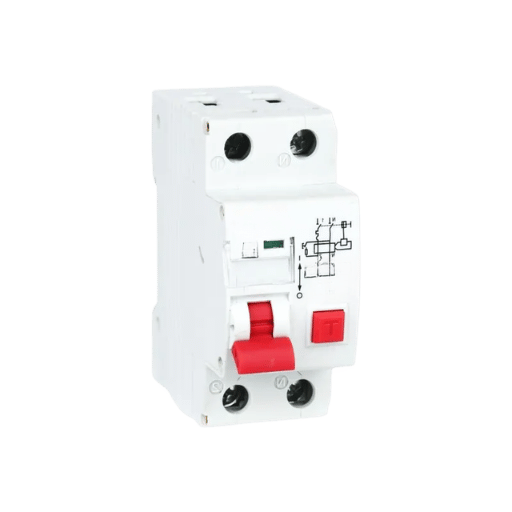
A third meaning: DP can stand for Distribution Panel, also called a distribution board (DB), breaker panel, or load centre. It’s the enclosure that take incoming supply and divides it into protected final circuits. A main busbar feeds a row of branch devices, many of which are the DP MCBs and RCBOs described above, so a “DP” can literally be full of “DP” devices.
Residential distribution panels typically carry 10–30 ways; commercial boards run to 30-plus circuits; industrial panels handle three-phase supplies and large motors. Newer solid-state designs connect directly to the panelboard busbar, as described in patents such as WO 2020/252118. When someone says “it’s in the DP,” they mean the board on the wall, context, again, tells you which DP is meant.
DP Isolators and Safe Disconnection
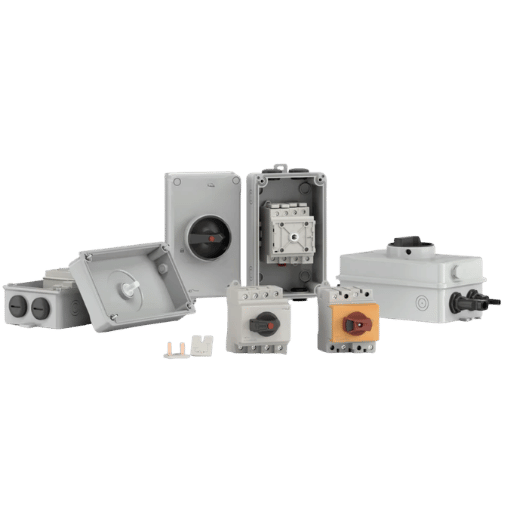
A double pole isolator exists for one job: making a circuit safe to work on. By breaking both conductors it leaves nothing live downstream, which is exactly what safe-isolation procedures require. Under OSHA’s control-of-hazardous-energy (lockout/tagout) rules, equipment is only treated as de-energised once it’s positively disconnected and locked out, a two-pole isolator is what makes that disconnection complete.
“A disconnecting means [is one] by which the conductors of a circuit can be disconnected from all ungrounded supply conductors, and in addition, no pole can be operated independently.”
OSHA, 29 CFR 1910.147 (Control of Hazardous Energy)
Double pole isolators show up as appliance switches, main switch-disconnectors, and, increasingly, as DC isolators on solar PV arrays, where both DC conductors must be broken to make panels safe. A DP isolator isn’t a breaker, so pair it with a DP MCB or RCBO when the circuit also needs fault protection.
Where DP Shows Up in Industrial Machinery
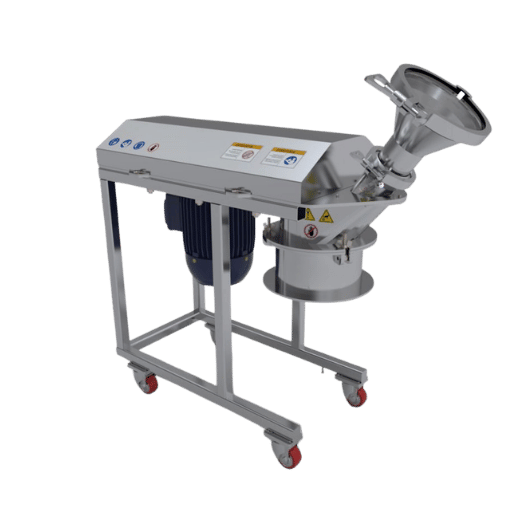
Both electrical meanings of DP turn up on the factory floor. The machines we build are a good example of each. On our plastic extrusion lines, a differential-pressure (DP) sensor reads the pressure drop across the screen-pack and breaker plate; as the screen blinds with contaminant, that DP climbs, and the rise is what tells the operator to schedule a screen change before melt quality suffers.
The same line also depends on the other DP. Power reaches a twin-screw extruder, a CNC station, or any heavy machine through a distribution panel (DP), with double pole isolators so a technician can lock off both conductors before maintenance. Whether you’re wiring a workshop or specifying a production line, “DP” usually means one of these two things, a pressure reading or a two-pole disconnect. Both matter to anyone running industrial machinery.
How Double-Pole Protection Is Evolving: RCBO, AFDD and Solid-State
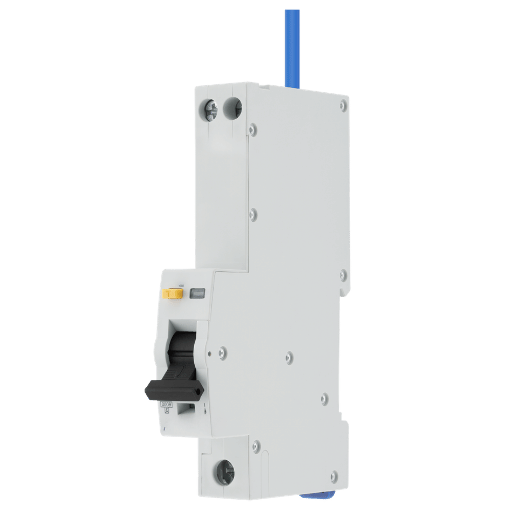
The double pole breaker isn’t standing still. Three shifts are reshaping how two-pole protection is specified today: protection types are consolidating into a single body, arc-fault detection is becoming mandatory in more circuits, and solid-state designs are starting to replace the mechanical contact altogether. Each one change what you should fit in a new board.
- ✔ RCBO consolidationa DP RCBO combines an MCB and an RCCB in one two-pole body, covering overload, short-circuit and earth-leakage together.
- ✔ Arc-fault detection (AFDD)an AFDD pairs a DP RCBO with arc-detection. The device itself conforms to IEC 62606; the duty to fit one comes from the wiring rules, under the UK’s BS 7671 (now the 2018+A4:2026 edition, which superseded the earlier Amendment 2; Regulation 421.1.7), AFDDs are required for certain single-phase final circuits.
- ✔ Solid-state breakerssemiconductor breakers switch electronically; manufacturers claim around 100× faster interruption than electro-mechanical types, with arc-free operation and digital metering at the pole.
Market-research estimates put the low-voltage circuit breaker market at roughly USD 13 billion in 2025 with high single-digit annual growth, driven largely by this move to combined and connected protection. The practical takeaway: when you upgrade a board, specifying DP RCBOs for high-load final circuits future-proofs them for both leakage and arc requirements.
Frequently Asked Questions
Q: What is the DP full form in electrical?
View Answer
Q: What is the full form of DP in MCB?
View Answer
Q: Is a DP switch required for an AC?
View Answer
Q: What is the difference between a DP switch and a DP MCB?
View Answer
Q: What is a 32A DP switch used for?
View Answer
Q: DP vs SPN, which should I use?
View Answer
Q: Does DP always mean Double Pole in electrical?
View Answer
Q: Is a Distribution Panel (DP) the same as the main panel?
View Answer
Why We Wrote This Guide
We build extrusion and processing machinery, not electrical switchgear, so we wrote this as a plain-English reference rather than a sales page. The electrical facts here are drawn from IEC standards, OSHA, and engineering references; the differential-pressure example comes from our own extrusion lines, where DP across the screen-pack is a daily reading. Reviewed by the Suzhou UDTECH Technology Co., Ltd. technical team.
References & Sources
- OSHA 29 CFR 1910.147, Control of Hazardous Energy (Lockout/Tagout)U.S. Occupational Safety and Health Administration
- OSHA, Control of Hazardous Energy overviewU.S. Occupational Safety and Health Administration
- IEEE Std 3004.5-2014multi-pole moulded-case circuit breaker construction
- Differential Pressure Switch, ScienceDirect Topicsengineering reference
- EN/IEC 62606, Arc Fault Detection Devices (AFDD)standard
- US Patent 6,052,046, Double pole circuit breaker with arc & ground fault protectionUSPTO