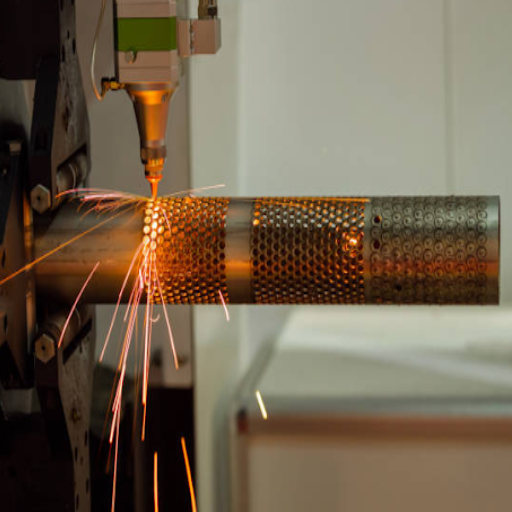
Fiber lasers represent the limitless breakthrough-into laser technology which has revolutionized every industry, manufacturing among them. Now what on earth are fiber lasers, and how do they function? This article looks inside the realm of fiber laser technology, unraveling its complex mechanics and exploring why it is preferred for precision, efficiency, and reliability. Whether you are a curious technician interested in incorporating fiber lasers into your system or just someone with a general interest in new-age technologies, this will give you a clear image of how they work, what benefits they offer, and the spheres in which they can be applied. Prepare to be amazed as we go stepwise through this convoluted innovation.
Introduction to Fiber Lasers
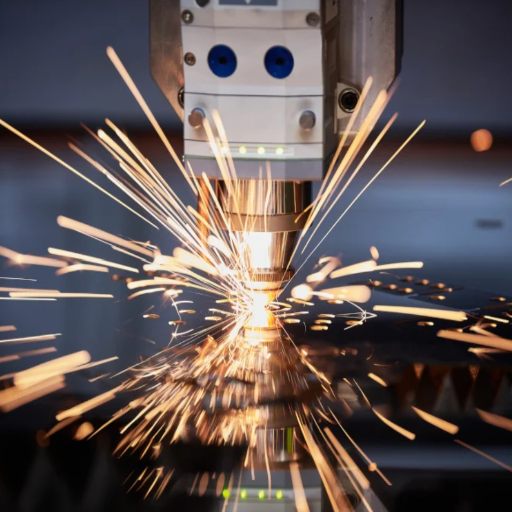
A General Summary of Fiber Laser Technology
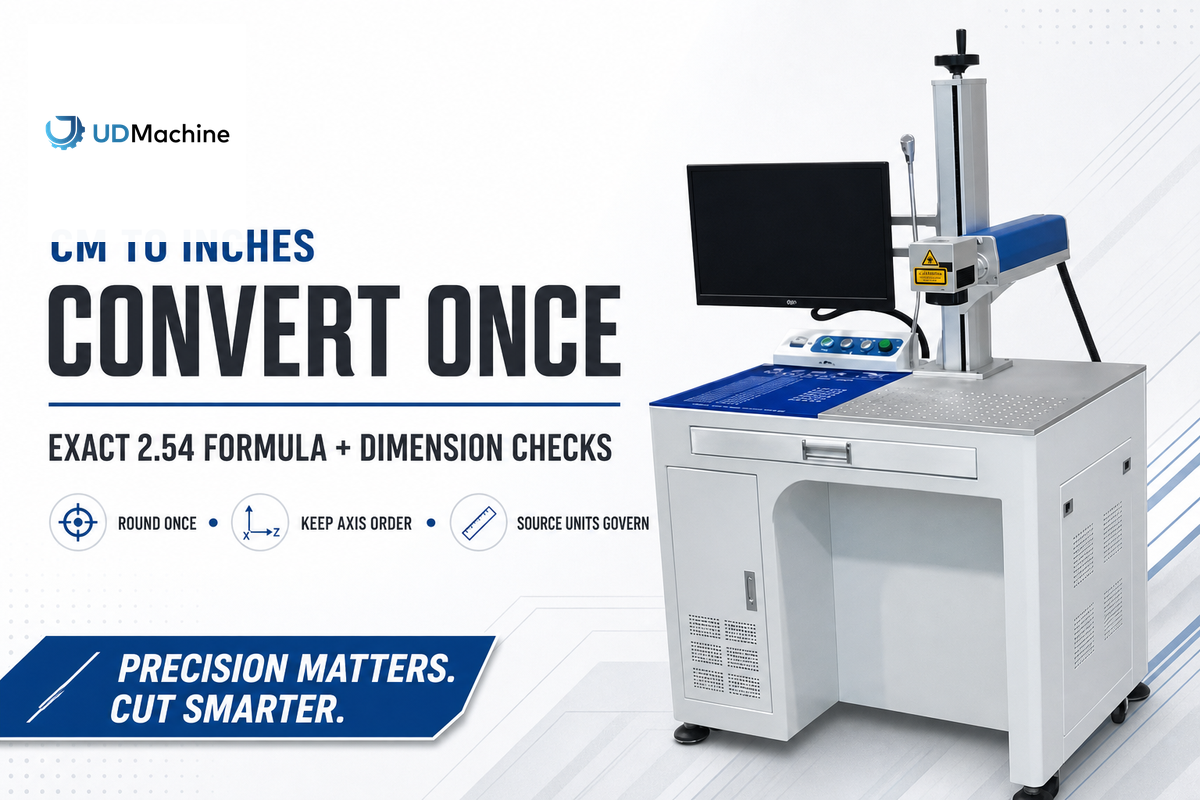
Fiber laser technology is a modern development in lasers, with properties for high precision, energy efficiency, and multi-functionality. Unlike normal lasers, fiber lasers have an optical fiber as the gain medium, which is doped with rare earth elements for example ytterbium or erbium. This allows the laser to produce a very focused and high power beam with minimal energy loss being dissipated therein. Fiber lasers have become known for their long life-span and less maintenance requirement mainly because of their solid-state nature and as there are no moving mechanical parts involved.
Some applications of fiber lasers range from various types of industrial material processing including cutting and welding to engraving, to high-end scientific research, and even into the medical sphere. Their small size and adaptivity give them the advantage of being used in most industries. According to recent data, the use of fiber lasers is growing with more enterprises looking at efficient and environmentally friendly options for precision work. The capabilities of fiber lasers, as with any other laser, keep increasing with time, thereby placing them at the heart of any modern innovation.
Importance of Fiber Lasers in the Modern Industries
Fiber lasers play a major role in modern industries because of their versatility, precision, and efficiency. They are used in manufacturing for cutting, welding, and engraving, with unrivaled precision for intricate designs. Industries such as automotive, aerospace, and electronics rely heavily on fiber lasers to boost production speeds and product quality. According to the latest search data, interest in fiber lasers has consistently increased, with queries focusing on energy efficiency and capability upgrades. This shows some level of awareness of and demand for high-quality, sustainable solutions. As time progresses, fiber laser remains indispensable in both pushing innovations forward and satisfying the vast requirements of different industries.
What Is the Article For?
The article aims to look at the increasing importance of fiber lasers in different industries, especially in the aspects of efficiency and the newer technologies. By analyzing patterns from the recent search data, the article attempts to answer the most pertinent question: Why are fiber lasers the top choice for businesses searching for sustainable and high-performance manufacturing solutions? Thus, this analysis stands to offer a comprehensive overview of the advantages and application areas of fiber lasers, the forces that propel their growing success, and how they prepare the ground for the industrial applications of the future.
What is a Fiber Laser?
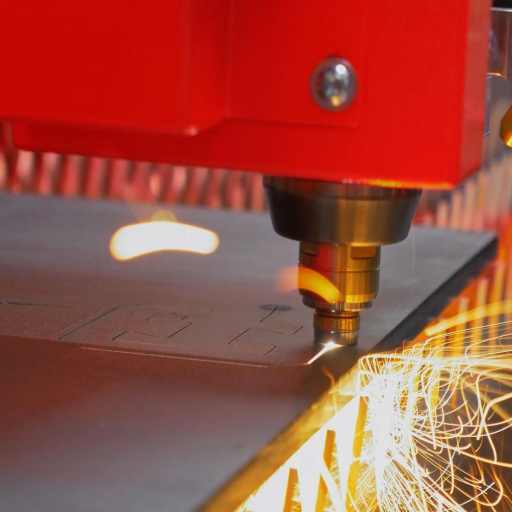
Definition and Basic Working Principle
A fiber laser is a laser wherein the laser active medium is an optical fiber doped with rare-earth elements, such as ytterbium-gain fiber, erbium-gain fiber, or neodymium-gain fiber. Typically, a laser is made using substances wherein the active medium used is gaseous, liquid, or crystalline. Fiber optic lasers take advantage of fiber optic technology. Pumped through a diode, it amplifies light in the doped fiber to produce an extremely intense coherent beam; hence, very good beam quality, the highest efficiency, and low maintenance are the trademarks of fiber lasers.
Based upon latest search trends, the ever-growing interest in fiber laser applications is due to precision, energy efficiency, and its adaptability to various industrial tasks. Businesses are increasingly looking for sustainable practices; therefore, fiber lasers provide saving of energy and less waste during processing of materials. Especially with their ability to cut, weld, and mark materials ranging widely, fiber lasers are now indispensable in aerospace, automobile manufacturing, and electronics. This widespread adoption through the global market is thereby motivated by such techno-environmental consciousness.
Key Components of Fiber Lasers
The different key components of fiber lasers work together in providing a high-quality laser beam. These consist of the following:
- Active Fiber: It is the core of the laser system and is usually doped with rare-earth elements such as ytterbium or erbium. This medium is responsible for amplifying the light when energy is induced.
- Pump Source: It normally consists of laser diodes and is used to provide pump energy to excite the active ions in the fiber, thus setting off the lasing process.
- Fiber Bragg Gratings: These are the mirrors that are written into the optical fiber to help trap and reflect the light of a specified wavelength-that-is-the-feedback-needed-for-laser-oscillation.
- Optical Isolation System: This prevents back reflections that would interfere with efficient laser operation.
- Cooling System: Owing to the high energy densities involved, heat dissipating and pumping are often necessary to assure optimum performance and life.
By integrating these highly sophisticated engineering components, fiber lasers are designed for precise and dependable working results in industrial applications. Their combination of energy efficiency and rugged performance continues to revolutionize industrial manufacturing processes.
Comparison with Other Types of Lasers
Distinguished for greater efficiency, versatility, and ruggedness, fiber lasers contrast with other types of lasers in respect to CO2 and solid states. The CO2 laser uses a gas medium, whereas fiber lasers use optical fibers doped with rare-earth elements that allow for a better energy efficiency and comparatively low operating cost. Laser cutting on a wider range of materials offers greater precision than CO2 lasers and is superior to lasers working on metals with highly reflective surfaces, which is often difficult for CO2 lasers.
Considering solid-state lasers, fiber lasers feature a compact design. The compact configuration is benefited when lasers hide most or all components inside the optical fiber without the bulky external mirrors or cooling systems. Such negligence makes maintenance effort less or devoid and imparts longevity on them. Moreover, fiber lasers would usually attain higher beam quality and power output, making them a favorite in the micro-machining, welding, and cutting industries.
Recent trends reveal the increasing foothold of fiber lasers in industrial applications. According to the latest search data, fiber lasers are considered the foremost innovations for emerging needs, including the need to improve precision in additive manufacturing and medical surgeries. These needs, combined with technological advancements, keep fiber lasers set apart as an invaluable tool in modern manufacturing and beyond.
How Fiber Lasers Work
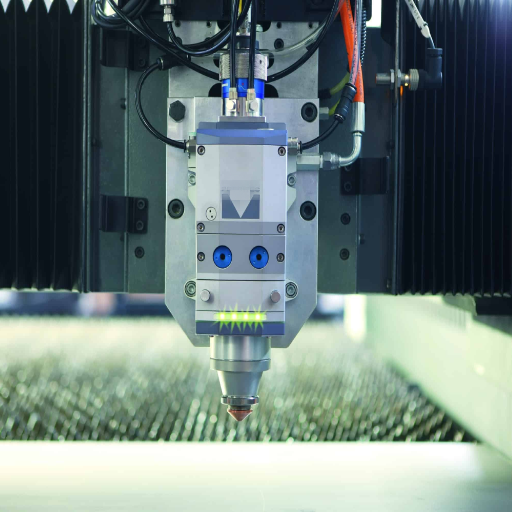
Laser Generation Process With Optical Fibers
Fiber lasers operate by utilizing rare-earth doping in optical fibers, including elements like erbium, ytterbium, or neodymium, to produce high-intensity laser beams. It starts with the pump source, typically the laser diode injecting energy into the optical fiber. The optic fiber provides energy to the doped materials, exciting them to emit photons. These photons are further amplified during their propagation through the fiber core to produce a highly focused laser beam-full of power and precision.
According to the latest search data, fiber lasers are considered the most effective and versatile of their kind. An interesting comparison is between fiber and CO2 lasers in terms of performance. Whereas fiber lasers may offer far superior beam quality and cutting speed, they also demand very little maintenance and consume much less power, therefore posing as an ideal solution for industries considering low capital cost and environmental sustainability as factors.
Rare-Earth Species and Beam Intensity Amplification
The rare-earth elements of ytterbium, erbium, and thulium do the mass-setting in the amplifying laser beam in fiber lasers. They are used as dopants for the fiber core of lasers, generally made of silica glass. The provision of energy to the laser by an external source results in the absorption of energy by rare-earth ions and its emission in the form of highly coherent light, which greatly improves the intensity and quality of the beam. According to the newest search data, ytterbium is by far the most preferred rare-earth element for fiber lasers because it possesses a higher efficiency, broader absorption bands, and can be operational at wavelengths where it is most desired. This makes the laser highly dependable and powerful, with applications ranging from precision cutting to high-end medical technologies.
Benefits of Fiber Optics in Laser Technology
Fiber optics have become pivotal for laser technology in view of their distinctive properties and added advantages. One major merit is that fiber optics can carry strong laser beams over quite a few kilometers of distance without substantial loss of power or quality. This allows fiber optics to shine, so to speak, in cutting, welding, and engraving where industrial applications are concerned. Fiber optic lasers are compact and require very little maintenance so they are highly suitable for pinpoint operations. Furthermore, a flexible and lightweight design allows deployment even in complicated hard-to-reach areas and for those in aerospace, medicine, and other advanced fields. These advantages keep fiber optics on the front of laser technology invention.
Applications for Fiber Lasers
🏭 Industrial Applications
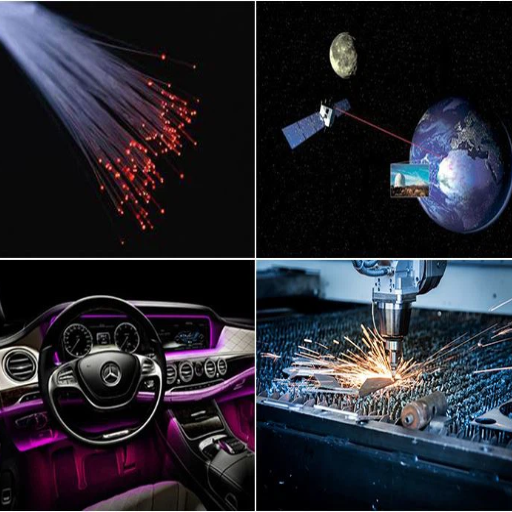
Due to the fiber laser’s high accuracy, energy efficiency, and versatility, various industrial applications find its use. The lasers particularly shine in cutting and welding processes-for metals and alloys-thereby becoming vital in both the automotive and aerospace industries. Furthermore, they are used for marking and engraving, providing unmatchable accuracy to give intricate designs and serial numbers on all types of materials.
They further find applications in microelectronics manufacturings, wherein perfect precision is required for making components for consumer devices such as smartphones and tablets. The ability to perform tough jobs with low wastage and high repeatability further cements fiber lasers as the core with modern manufacturing processes.
🎨 Small-Scale and Artistic Uses
Fiber lasers go beyond being the input in massive industrial settings; their potential is also in creative and small-scale applications. Artists and craftsmen use fiber lasers to create extremely detailed engraving on wood, glass, metal, and leather. The faintness of fiber laser applications allows designers to fabricate highly detailed custom designs in jewelry, personalized gifts, and decorative arts.
In addition, small businesses and startups use fiber lasers as well for prototyping, enabling quick testing and iteration of products. Interest in affordable compact fiber lasers has skyrocketed, indicating this surging demand among hobbyists and entrepreneurs. Such avenues have allowed the emergence of innovations that range from custom artwork applications to low-volume manufacturing and cementing fiber laser versatility even in non-industrial contexts.
🔬 Research and Development Applications
In research and development, fiber lasers have proven the perfect tools for precision and efficiency, meeting the demands of cutting-edge innovation. People often ask whether fiber lasers are useful for cutting-edge R&D applications. The answer is yes with a big bang! Their ability to cut and engrave with precision and to even help in material testing have made fiber lasers invaluable to various industries.
Fiber lasers provide unmatched accuracy and reliability in R&D applications-from new material development to rapid prototyping of complex designs, therefore supporting researchers. This line of thought puts a clear arrow to why the scientific and technological communities continue to witness an ever-rising popularity with fiber lasers.
🛡️ Defense and Aerospace Applications
In the defense and aerospace arenas, fiber laser has proved the most precious tool because of its precision, power, and versatility. One of the key applications is that of directed energy weapons, application of fiber lasers to targets with a high degree of accuracy while minimizing collateral damages. Another application is in high-precision communication systems in aerospace missions for the secure and efficient transmission of data.
They also provide support in advanced vehicle and aircraft manufacture and maintenance by accurately cutting, welding, and surface treating complex materials. Fiber lasers can work in diverse environments and meet strict reliability standards, and those are must-have qualities for any product considered for use in these industries. These benefits leave no question that fiber lasers are at the heart of modern defense and aerospace applications.
Benefits of Fiber Lasers
1
High Precision and Efficiency
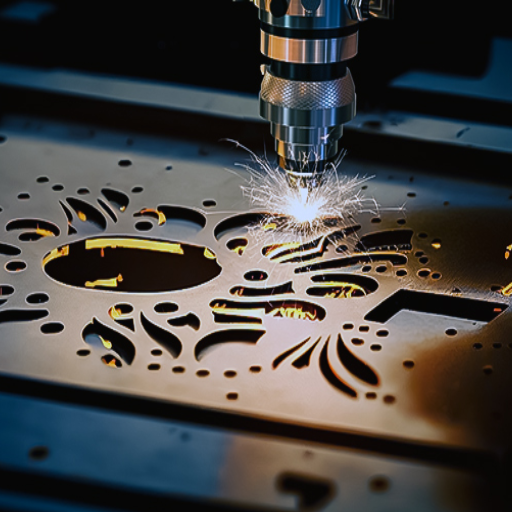
Fiber lasers are known for their superlative precision and efficiency, being paramount to industries where such accuracy is essential. Their capability to concentrate a high-energy beam on an extremely small area of the object brings about an extremely detailed and consistent cut or weld on materials that could be quite complex, such as titanium and composites. Such granularity in focus lays behind minimum wastage in material and guarantees a better result as compared to old laser technologies. Also, fiber lasers are much more efficient when converting electrical energy into laser light, thus lessening power consumption and operating cost. From the latest analyzed data, the fiber lasers are thus getting evolved towards the growing industrial demands on power scaling and beam quality, rendering them quite adaptable to the resultant technologies. The synergy between perfection and efficiency thus augments productivity on one hand and gives a thrust to innovation in fields like automotive, aeronautics, and renewable energy on the other.
2
Low Maintenance and Operational Costs
Overall, fiber lasers are highly cost-efficient yet low maintenance, which places their demand in various industries. By design, they are solid-state lasers and have no moving parts, which minimizes maintenance vis-a-vis traditional laser systems. Long operational life along with high energy efficiency has brought down operating costs in due course. Industries with fiber laser applications enjoy less downtime and repair cost increases productivity overall. Such combinations of reliability and easy maintenance make fiber lasers a sustainable choice for modern manufacturing environments and cutting-edge applications.
3
Material Handling Versatility
Fiber lasers are famous for their versatility when it comes to materials. From metals steel, aluminum, and brass to non-metal materials which include plastics, ceramics, and composites, fiber lasers provide for all sorts of precision and efficiency for their respective applications. Industries like automotive, aerospace, and electronics use this versatility to help process material designs with tight tolerances. The ability to trade smoothly from one material to another ensures manufacturers can cater to different demands arising in production industries while still delivering high-quality outputs; thus, through this, fiber lasers still serve as a state-of-the-art solution in modern industrial processes.
Choosing the Right Fiber Laser
Factors to Consider When Selecting a Fiber Laser
⚡ Power Requirements
Power output of the fiber laser is one of the most essential things to consider. The high-powered lasers are suitable for cutting thicker materials, while the low-powered lasers are suitable for precise work on thin materials.
🔧 Material Compatibility
It is very important to understand what kind of materials one is going to process. Fiber lasers are good with metals like steel, aluminum, and copper, but one needs to ensure compatibility with the specific materials to maximize performance.
🎯 Application Needs
Figure out if the fiber laser will mostly be used for cutting, welding, engraving, or others. Some laser models are better at one job than the other, so it is essential that a machine be chosen whose capabilities complement your kinetic requirements.
🔍 Beam Quality
It determines precision for the laser. Thus, applications that require fine intricate prints or ultra-thin cuts must opt for fiber lasers of excellent beam quality.
💰 Maintenance and Operating Costs
Investment in a fiber laser is more than just a simple purchase cost. Long-time consideration must be given to maintenance needs, energy-efficiency, and running costs concerning a budget.
🤖 Automation and Software Integration
Some fiber lasers integrate with automation, software platforms depending on the latest technologies. In this respect, compatibility with existing systems can help deliver productivity and streamline workflows.
Configurations for selecting a fiber laser balance each factor and customize it with regard to one’s own operation. Thus, by combining the latest trends and innovations in fiber laser technology, industries can choose wisely and adopt solutions that will truly serve their sharply defined manufacturing objectives.
Importance of Brand Reputation and Support
When choosing a fiber laser, brands or manufacturers always come into people’s focus. Trusted brand names with a long-standing historical track are known to deliver high-quality, highly reliable end products through their in-house technical expertise. Thus trust reduces risks-off recently experienced issues of performance, absence of proper functionality, or even recent mismatched expectations.
According to recent data from search engines, most buyers buy a brand because of strong customer reviews, excellent after-sales support, and clear warranty. Good after-sales commitment from the brand ensures that users receive the maximum benefit of their purchase from them through extension trainings and maintenance activities such as support. Well above value-adding partnerships with a widely recognized brand can, in turn, offer additional benefits through software updates and compatibility with new technology. In the end, the reputation of the brand comes with sound support services that make the complete distinction in improving operational ability and customer satisfaction. Those buying should investigate thoroughly on all dimensions and compare feedback to make an informed appraised choice.
Examples of Industries and Use Cases
Industries demand multiple variations to trusted and established brands to give themselves an edge to cater to specific needs. For example:
- Healthcare: Providers rely on medical software and equipment from trusted brands for accurate diagnosis, secure management of patient data, and smooth operational workflows that are critical to improving patient outcomes.
- Manufacturing: Industry leaders need systems for automation, supply chain, management, and quality assurance that are reliable to increase the efficacy of production and minimize wastage.
- Retail: Retailers benefit from next-generation Point of Sales system and analytics software in tracking sale trends, managing inventories, and providing personalized customer experiences.
- Education: Educational institutes utilize easy-to-use learning management systems and content delivery platforms for secure online and hybrid learning models.
- Finance: Banks and financial services are dependent on advanced applications that guarantee compliance, management of transactions, and fraud protection while maintaining the trust of clients.
These real-world use cases magnify the importance of picking a trusted brand that can continue to offer cutting-edge, high-quality solutions. By combining this data and search trends from platforms, it becomes clearer that security, scalability, and ease of integration form the most important criteria by which businesses evaluate a brand for their industry needs.
Frequently Asked Questions (FAQ)
Reference Sources
Kansas State University – Fiber Laser
This page provides an overview of fiber lasers and their amplification process.
University of Central Florida – Fiber Laser Development
This resource discusses the development and applications of fiber lasers in various fields like medical, manufacturing, and telecommunications.
Lawrence Livermore National Laboratory – Fiber Lasers
This site explains the science behind fiber lasers, including their use of optical fibers doped with rare-earth minerals.