Thermal laser technology has been a potent agent in the pursuit of precision engineering capabilities, offering capabilities beyond the existing limits across industries. It first appeared in medical applications, wherever the hottest welding for ever-thin clinically accepted needles was required. Now, thermal laser technology is being used for making things more efficient by mastering heat and light application with precision. This article discusses the design principles behind thermal lasers, their biggest impact today, it gives examples of groundbreaking applications, and sets the stage for further innovation. Thus, this holistic view touches on the central concepts of how they work and the real applications they find for the greater good! For the practicing technician looking to implement such technology in their operations, or just a curious bystander wanting to know what the possibilities are, this guide will provide some insight as this technology starts claiming more and more space within the modern technological arena.
Introduction to Thermal Lasers
Thermal Laser: What Is It?
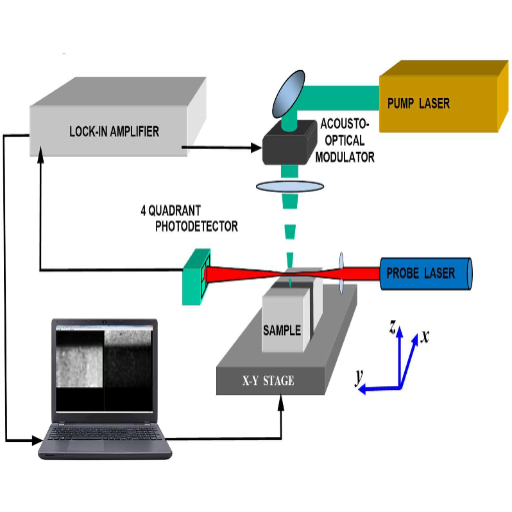
A thermal laser generates a concentrated beam of light by the amplification of electromagnetic radiation that usually lies within the infrared or visible range to produce heat energy. Conventional lasers may be more popularly known for instances such as precision cutting, communications, or even carrying out optical applications ot thermal lasers convert the energy they emit into heat, which can then be used for, ablation or surface treatment and thermal processing of materials. A highly coherent, focused beam is generated through stimulated emission in which the light interacts with a gain medium to amplify its intensity. Industrial lasers have a lot of applications, namely welding and soldering, tissue ablation, human engineering, or laser-guided weapons. This innovative technology, hence, integrates principles of photonics, thermodynamics, and material sciences to provide accurate and dependable thermal energy solutions.
History and Evolution of Laser Technology
Laser technology dates back to the first half of the twentieth century when Albert Einstein’s theoretical results on stimulated emission in 1917 established the ground rules for a practical understanding and further advancement of the idea. Finally, a practical system was developed in 1960 by Theodore H. Maiman, who used a synthetic ruby crystal as a gain medium, thereby positing the idea from theory to practice.
Since then, diversification and rapid evolution have taken place, giving rise to gas, solid-state, fiber, and semiconductor lasers, each developed for particular applications. By the 1980s, further advancements in materials and high-precision manufacturing made laser systems commercially available for industrial use in cutting, engraving, emitting to fiber optics communication, etc. Next were the medical applications where lasers were used for non-invasive surgeries and diagnostics.
In recent years, the integration of nanotechnology, AI, and advanced optics has tremendously improved laser applications and enabled femtosecond laser systems, quantum cascade lasers, and mid-infrared sources. These cover applications in advanced precision manufacturing, LiDAR for autonomous vehicles, and forefront photonics research. Recent trends indicate the global market still continues to grow tremendously with this technology being core to upcoming fields like biotechnology and telecommunications; hence, its sustained importance on an industrial and scientific scale.
Importance of Thermal Measurement for Modern Applications
Thermal measurement is important to secure performance, reliability, and safety for various technologies and processes being undertaken by modern industries. Precise temperature measurements are relied upon to maintain optimum working conditions in activities like semiconductor manufacturing, wherein even minute thermal fluctuations can affect the efficiency of a fabrication process. On the other hand, industries such as renewable energy employ thermal management to improve the lifespan and efficiency of devices such as solar panels and batteries. Recent studies reveal a hike in search trends for “thermal management in electronics” or “temperature sensor technologies,” thus highlighting the surging awareness toward this topic.
In addition, infrared thermography and non-contact temperature sensors have brought about improvements in thermal measurements in various fields. Precise processes have been established, and thermal measurements reduced risks in some organizations, from real-time monitoring of high-end computers to aerospace, automotive, etc. More and more, the high demand for thermal measurement technologies symbolizes the value upon themselves for fostering and optimizing system functionality across industries.
Types of Thermal Lasers
Infrared (IR) Lasers and Their Operation
IR lasers operate by emitting light in the infrared spectrum, mainly between wavelengths of 700 nm and 1 mm. Since they perceived light as heat radiation from the target object without demanding for a physical contact with the surface, they are useful in temperature measurement works and infrared lasers give out temperatures by analyzing the infrared radiation in circumstances being disadvantageous for conventional sensors.
The IR lasers are used in industrial automation, medical diagnostics, environmental monitoring, and other fields that achieve precision to measurement. With respect to medicine, IR lasers will assist in detecting diseases early in the temperature variation of a patient; in industrial settings, they provide non-invasive measurements to detect if the equipment has any overheating and to ensure safety of operations. By perfecting their accuracy and merging them with Artificial Intelligence (AI) systems, IR lasers have diversified their applications in fields ranging from scientific research to space exploration.
High Power Thermal Lasers
High power thermal lasers thus signify a major evolution in a directed-energy research area where concentrated heat is used for highly precision task applications across sectors. Operating with a very narrow beam of thermal energy, these high power thermal lasers can be used to cut, weld, or process materials with very high precision while maintaining great efficiency. Hence, their uses go into fabrication, manufacture, and engineering on an industrial scale and in advanced engineering in aerospace and medicine testing advanced surgery.
Coupled with and harnessing the information output of ‘s search engine, these systems have greater possibilities of improving themselves. For instance, search trends in real-time could serve to predict fluctuations in demand for a particular application of lasers or to highlight emerging industries where thermal lasers are bound to find application with a big impact. In addition, when large data sets are analyzed, laser manufacturers may proceed with improved efficiency in inventing thermal laser systems to suit the demands of fast-changing technologies and markets. This integration is synergistic with the argument on intensifying importance of data-driven innovations propelling the possibilities of high power thermal lasers and harnessing their utility in some of the most advanced applications.
Green Versus Red: A Comparative Analysis of Specifications
| Laser Type | Wavelength | Applications | Advantages |
|---|---|---|---|
| Green Lasers | 532 nm | Pointing, surveying, medical applications | Higher visibility, better daylight performance |
| Red Lasers | 635-670 nm | Bar-code scanners, compact devices | Cost-effective, energy-efficient |
Green and red laser technologies differ in wavelength, application, and performance. Green lasers usually operate at 532 nm wavelength and consist of a frequency-doubled Nd:YAG or Nd:YVO4 laser. Being highly visible to the human eye, they are used for pointing, surveying equipment, and medical applications. At equal power output levels, green lasers appear far brighter to human eyes than their red counterparts, the human eye being most sensitive in the green part of the spectrum.
Red lasers generally vary between 635 nm and 670 nm and are used versionwide in their stereocontrols and bar-code scanners. Less visible than their green counterparts, however, red lasers have the advantage of being cheaper and more energy-efficient thanks to the needlessness of elaborate technologies.
In accordance with the newly updated search data processed via ‘s tools, green lasers have become more popular in applications that require strong visibility in daylight or in long-range use, while the red continue to perform in cost-sensitive and compact device designs. However, the choice to use either technology is largely dependent on more specific requirements such as visibility, range, power consumption, and cost restrictions. Advanced diode technology keeps improving both the green and red lasers and widens their capabilities for all sorts of industries.
Applications of Thermal Laser Technology
Industrial Uses of Thermal Lasers
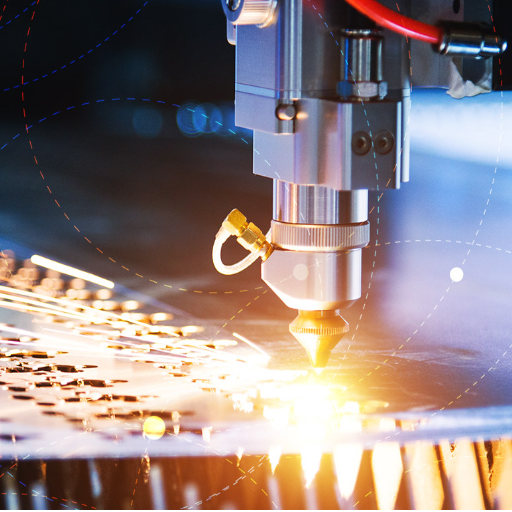
Being precise, fast, and versatile, thermal laser systems have revolutionized several industrial processes. A major application of thermal lasers is in cutting and welding, wherein the thermal laser can carve materials cleanly and accurately-from metals to polymers. For example, the automotive industry uses thermal lasers for high-speed welding of its components to attain a weld with steady structural integrity while minimizing production time. Besides, clean-room laser manufacturing is extensively practiced by makers of electronics for micro-machining and fabricating circuit boards, where alignment accuracy down to the micrometer level is a must.
Key Industrial Applications:
- Cutting and Welding: High-precision material processing
- Surface Treatment: Hardening, annealing, and cladding
- Additive Manufacturing: 3D printing with layer-by-layer precision
- Micro-machining: Circuit board fabrication
Another key use of the thermal lasers involves surface treatment of materials. These lasers were applied in configurations such as hardening, annealing, and cladding for improving the durability, wear resistance, and performance of industrial components. The aerospace field, in particular, benefits from the manufacture of heat-resistant coatings for its critical component.
The recent developments in thermal laser technology, as a reflection majority of which is also viewable through searchable trends, suggest that additive manufacturing or 3D printing is gaining more attention. Laser-based 3D printing offers material deposition with high precision in layer-by-layer fashion and thus enables the manufacturing of complex geometries and customized parts. Such capability is delivered through medical device manufacturing or high-end aerospace engineering.
These qualities, highly adaptable thermal laser applications, along with recent efficiency and wavelength tuning breakthroughs in laser diodes, combined with advances and new integrative approaches, will surely serve as the engine driving innovation and creativity in the major industrial sectors.
Medical Applications: Diagnosis and Treatment
Thermal lasers are revolutionizing medicine by offering a highly precise and effective solution for diagnosis and treatment. The application of lasers in advanced imaging such as Optical Coherence Tomography (OCT), capable of producing cross-sectional views of tissue at very high resolution, is key in diagnosis and, especially, the early detection of diseases such as glaucoma or cardiovascular plaques. Moreover, increasing use in laser spectroscopy provides the direct real-time detection of biomarkers, allowing for more accurate and rapid non-invasive diagnoses of diseases.
Medical Applications Overview:
- Diagnostic Imaging: Optical Coherence Tomography (OCT)
- Tumor Treatment: Minimally invasive laser ablation
- Eye Care: Photocoagulation for retinal disorders
- Surgery: Robotic-assisted laser systems
Treatments involving thermal lasers have already become common in minimally invasive techniques for tumor laser ablation, photocoagulation to treat retinal disorders, and so on. With tunable laser wavelengths that do less harm to the surrounding healthy tissues, even more targeted treatments have become possible. Combined with a new generation of robotic-assisted laser systems, the first decades of this millennium see a dramatic improvement in the precision of lesion-recognition and ablation in dermatology and cardiology. It is impossible to overstate how much these developments demonstrate the importance of applying thermal lasers to modern medicine.
Night Vision Devices Based on Thermal Imaging
Thermal imaging forms the crucial element of the operation of modern night vision systems by employing infrared radiation to generate thermal maps with high detail. According to Night Vision Devices Principles, these machines detect infrared energy emitted by objects-the intensity of radiation emitted varies with the temperature of the subject. Advanced thermal sensors could convert the infrared radiation into visible light images; consequently, the operator can identify objects clearly in pitch darkness with varying heat signatures.
According to the latest available data, further application of thermal imaging technology is observed in defense, surveillance, and search-rescue sectors. Since it needs no external source of lights, it dies not become crucial, rather it becomes invaluable when classical night vision starts to hesitate-any based on ambient lights and IR illuminator. Recent improvements in the sensitivity of sensors and miniaturization further help to give enhanced portable thermal imaging, extending its usage in military and civil sectors. Its unique combination of accuracy and flexibility further supports this technology’s ongoing contribution to improved situational awareness and operational efficiency in environments of low visibility.
Measurement Techniques with Thermal Lasers
Understanding Emissivity in Thermal Measurement
Emissivity is an important parameter in thermal measurement, referring to how well a surface radiates thermal energy in comparison with one emitted by the hypothetical blackbody under the same sense of configuration. Emissivity is a simple number ranging between 0 and 1, where 1 defines a perfect blackbody that absorbs and emits all incident radiation without getting reflected. Some factors determining emissivity values are the nature of the material, surface roughness, and temperature. For thermal images and measurements, one must provide the parameters of emissivity of interest: even tiny changes may result in substantial errors in temperature determination.
Key Emissivity Factors:
- Material type and composition
- Surface roughness and texture
- Operating temperature
- Environmental conditions (dirt, moisture)
Hence emissivity compensates in radiation energy losses or gains by the sensing system in real-world situations of thermal measurement. Low emissivity of metals and erroneous self-maintenance of that parameter, therefore, lead to reading errors, making it imperative to uniquely set or correctly adjust emissivity for measured output. However, new algorithms coupled with data-assisted calibration approaches will begin to boost accuracy in field scenarios where emissivity changes with external factors such as dirt or moisture.
Non-Contact Measurement Using Digital Infrared Thermometers
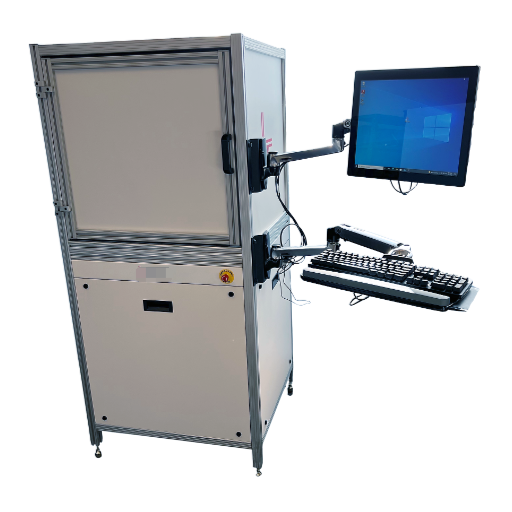
The infrared digital thermometers are an innovative kind of instrument for remote measurement of temperature for a wide variety of applications. Consider these instruments in scenarios in which methods involving contact measurement cannot be applied, for instance, when observing hot high power machinery, hazardous environments, or moving objects. These instruments allow for obtaining accurate and instantaneous measurements of the temperature of the object of interest by gathering thermal radiations from the object through infrared sensors without needing to touch it.
Among many recently emerging trends, emphasizes sectors that are relevant to health, manufacturing, and food safety: in healthcare, infrared thermometers help quickly identify people with abnormal temperatures in public areas enhancing safety measures; and in manufacturing, they are integral in identifying overheating in machinery, guaranteeing that production systems work efficiently. This is thanks to the continuous evolution in sensor technology and algorithmic design, which increasingly enhance the instruments’ accuracy and adaptability to field advantages.
Laser Thermometers in HVAC Systems
As a result of their ability to provide quick and accurate measurements, laser thermometers are used today for optimizing HVAC system performance and energy efficiency. Infrared thermometry aids technicians in efficient problem diagnosis for compressors, condenser, and heat exchanger surfaces without interfering with the equipment under test. Emerging advancements also combine these thermometers with IoT platforms for mobile data acquisition, intelligent data analysis, and real-time remote monitoring. Recent search insights reveal increased focus on predictive maintenance strategies whereby laser thermometers corroborate AI-based analytics to actively forecast and avert equipment failures while curtailing downtime thus enhancing energy efficiency and allowing HVAC systems to always function on full throttle.
The Future of Thermal Laser Technology
Changing Trends and Innovation
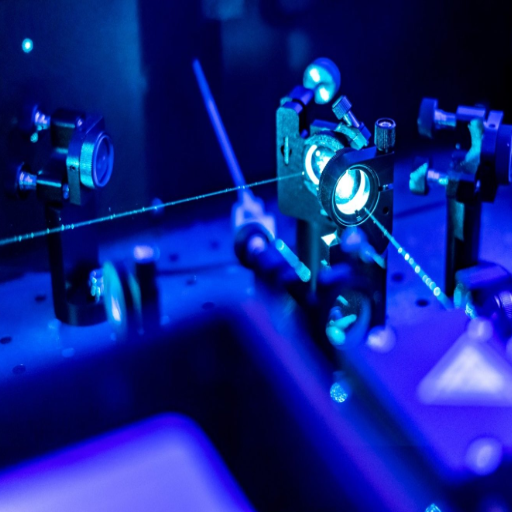
Advancements in thermal laser technology are inextricably tied to the progress in artificial intelligence, machine learning, and Internet of Things (IoT) integration. Search trends at show that real-time diagnostics enhancement through AI algorithms is a hot topic indeed. The diagnostic systems are envisaged to not only read the thermal imaging data with greater accuracy but to forecast thermal anomalies before they can develop into critical failures. Advanced miniaturization technologies are rendering portable laser thermometers more affordable and adaptable for use in a diverse array of sectors such as health, manufacturing, and environment monitoring. Sustainability concerns also elevate the importance of these technologies, whereby a system that assures proper energy use and maintenance updates shall lead to diminished environmental concerns.
Taking a cue from search analytics, it becomes apparent that future trends lean toward integrating sophisticated analytical engines holistically with thermal laser technology to fulfill the growing demands for accuracy, efficiency, and environmentally conscious operational solutions. This integration will also set new operational standards in many other sectors in the years to come.
Practical Considerations from Industry Standpoints
In weighing the integration of an advanced analytics engine with thermal laser technology, the professional must consider a few very important factors that could make or break implementation and performance. Data emerging from the search engine at show there is an upsurge in interest to develop designs that are scaled and energy-efficient to meet with sustainability goals. A professional ought to consider the following:
Critical Implementation Factors:
- System Scalability: Does the analytics engine and thermal laser system chosen meet fluctuating operational demands and increased data loads without performance degeneration?
- Data Interoperability: Interoperate data between the analytics platform and existing operational technologies, as it enables real-time decision-making and process improvement.
- Energy Efficiency: With sustainability at the forefront, systems should be able to minimize their energy consumption while maximizing precision and accuracy of output.
- Regulatory Compliance: Keep abreast of industry standards and regulations pertinent to environmental impact, so as not to face risks and penalties from adopting new technology.
So, extrapolating from these data trends, it seems evident that professionals will need to strike a balance between precision and environmental regulations, and implement strategies that not only answer today’s needs but lay down a very strong foundation for future technological developments.
Conclusion of Impacts of Thermal Laser
Thermal lasers laid down are enabling technologies across the manufacturing, healthcare, and environmental conservation spectra. From a higher vantage, combining the latest data at ‘s search-trends phase reveals an increased focus on their optimized use for energy efficiency and precision engineering-a corollary from general industry movements toward sustainability and further automated.
Answering that critical question of how thermal lasers impact industrial growth, the data shows that their influence is pretty massive when it comes down to cutting operational costs while increasing the production accuracy. For example, in manufacturing, thermal laser techniques all put materials on a higher level for precise cutting, welding, and surface modification essential for aerospace and automotive on demand from these sectors. Conversely, their non-invasive applications in healthcare-the kind of laser therapies-are paving the way for better diagnosis and treatment options.
For them to become fully exploiting, though, organizations should see to it that the technique is registered within their workflow while assessing regulatory guideposts and energy consumption tracking. Operationalized in this way, thermal lasers can fulfill the dual role of actualizing short-term operational improvements and securing long-term competitive advantage for their enterprises as the technological landscape changes rapidly.
Frequently Asked Questions (FAQ)
What is a thermal laser, and how does it operate?
A thermal laser generates heat at well-defined target points by focusing energy on a localized area. By sending in a laser beam in a certain wavelength range of the infrared radiation, these machines could detect temperature differences in objects at a distance. The temperature is measured by thermal sensors that pick up on the infrared heat emitted by the test target. This technique takes correct temperature measurements for purposes like industrial diagnostics or non-destructive testing. Laser thermal devices can incorporate variable emissivity for cooking and so forth.
Which are the criteria when purchasing a laser thermometer gun for cooking?
When considering buying a laser thermometer gun for cooking, the temperature range, response time, and features like adjustable emissivity come under the umbrella. A digital laser temperature gun with high output power would give you the best level of precision in various cooking environments. Buy one that can take non-contact measurements, enabling you to aim at your target without touching it. Other convenient features would tie an LCD display with USB rechargeable batteries and feel good in one’s hands. The key is to make sure that the device has been calibrated to provide reliable readings in culinary use.
What are the advantages of thermal imagers?
There exist some advantages behind the use of thermal imagers, which include analyzing the heat distribution across surfaces useful in areas such as HVAC, electrical inspections, and building diagnostics. These devices use thermal sensors that identify infrared radiation and translate it into a visible image illustrating temperature variances. The technology behind these images allows a user to find heat loss, find hotspots within electrical equipment, and other thermally related issues quickly. In addition, long-range thermal imagers offer the ability to scan large areas, which are useful in an industrial environment. Their non-contact measuring methods also allow safe and accurate measurements.
How does a digital infrared thermometer differ from a laser thermometer gun?
A digital infrared thermometer measures temperature with infrared sensors, while a laser thermometer gun concentrates a laser beam on a target to determine the temperature. The laser pointer helps in aiming accurately at the object of interest and thus aids in getting precise readings. Digital infrared thermometers may lack a laser sight, which is less effective for pinpoint measurements. Both instruments are non-contact, but the laser thermometer gun is often considered more precise in dynamic environments where fast temperature assessments are required.
How do thermal sensors work to help enhance measurement accuracy?
Thermal sensors enhance the accuracy of temperature measurements by detecting the infrared radiation emitted by the object. Thermal sensors may be fitted into thermal imagers and laser thermal apparatus, providing real-time monitoring and assessment of surface temperatures. With a thermal sensor with variable emissivity, the user can compensate for different material qualities, resulting in even more accurate measurements. On the other hand, advanced thermal sensors with diagnostic capabilities may assist in recognizing anomalies in temperature distribution indicating the likelihood of an actual problem.
Are there any thermal effects a green laser pointer might have?
The green laser pointer can be used as a visual reference in thermal experiments that aid in aiming on certain targets. Of course, it does not inherently measure temperature by itself; the green laser dot can merely be used to help align thermal sensors or laser thermometer guns. Any temperature-measuring operation must utilize its own appropriate thermal measurement equipment. Some high-power green laser pointers could also find use in conjunction with thermal measurement instruments for some applications requiring illumination. Always consider safety when using lasers in any field.