How a Paper Machine Works — Types, Components, and Production Process
Quick Specs
| Operating Speed Range | 300–2,200 m/min (varies by paper grade) |
| Machine Width | 2.5–10.5 m (trim width) |
| Daily Output | 50–4,000+ tonnes per day (TPD) |
| Raw Materials | Virgin wood pulp, recycled fiber, non-wood fiber (bagasse, bamboo) |
| Energy Consumption | 9.0–9.8 MWh per tonne of paper (integrated mill) |
| Water Usage | ~19,000 L per tonne (~5,000 gal/ton), 90% recycled |
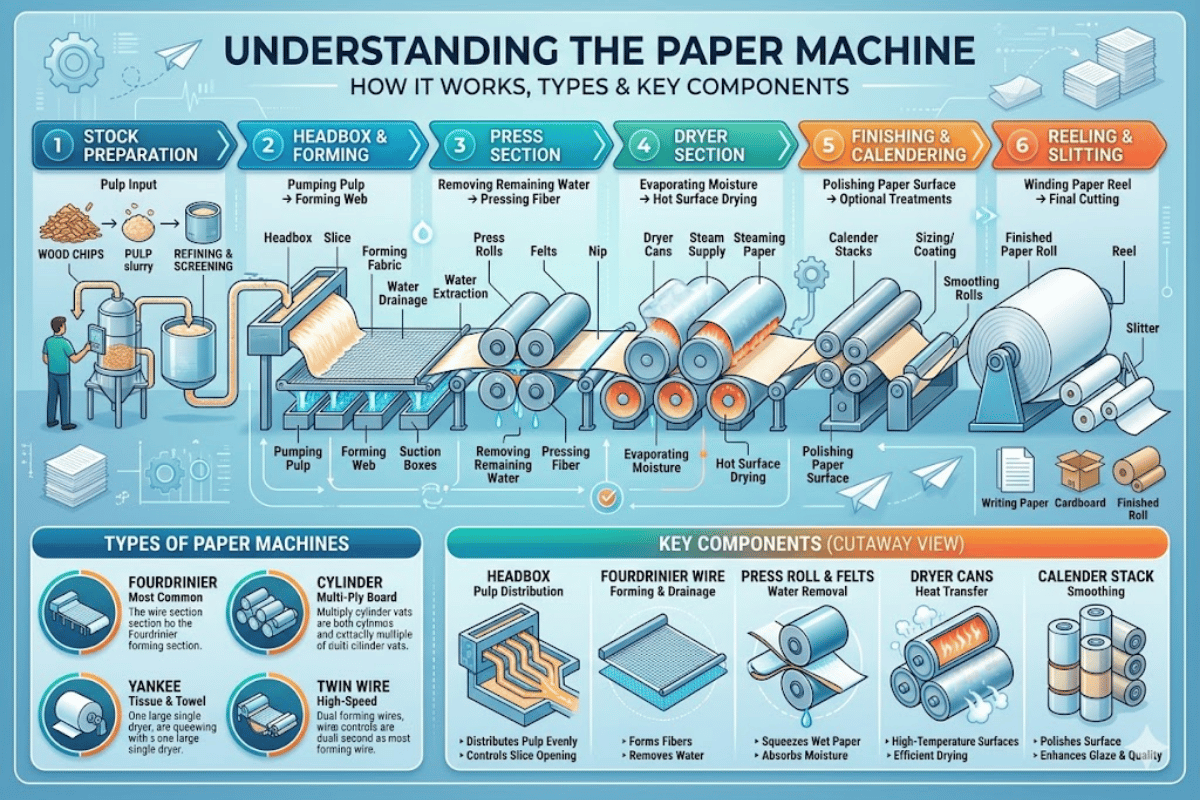
A paper machine transforms raw pulp into finished paper by way of a high-speed serial production line. Paper making machines are the workhorses of the worldwide pulp and paper industry—a market which produced over 420 million tonnes of paper and paperboard in 2023 alone, based on Statista global market data. No matter what the paper machine—light weight tissue converting at 2,200 m/min or heavier containerboard at 600 m/min—you can count on the same process sequences: stock preparation, forming, pressing, drying, and finishing.
Detailed explanation of how paper machines function, breakdown of the various types of machines and provides the engineering details required for the mill spec writers and the purchase personnel to evaluate the various machining choices.
What Is a Paper Machine and How Does It Work?
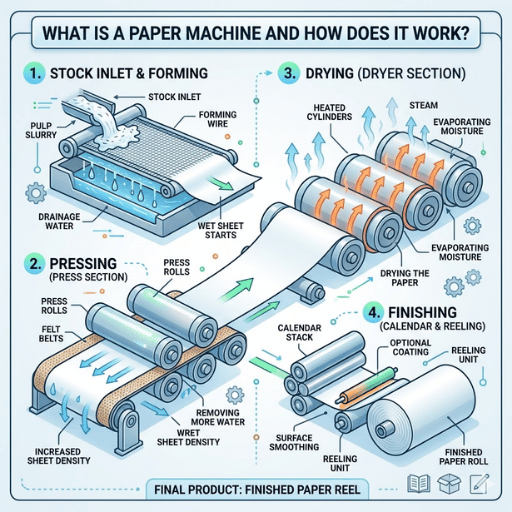
A paper machine is an industrial device that takes a dilute suspension of cellulose fibers (usually below 1% consistency) and forms a dry, finished paper web that is produced at run speeds of from 300 meters per minute to greater than 2,000 meters per minute. The idea goes back to 1799 when the French inventor, Louis-Nicolas Robert received a patent for the first continuous process of paper making. He was then joined later by the Fourdrinier brothers, Bryan Gamble, and Sealy who financed the development of the process for commercial use in England circa 1804 by working with the engineer Bryan Donkin to create usable production machinery.
Six core stages make up the production sequence:
- Stock Preparation – Raw-stock (virgin/recycled) fiber is washed, refined and diluted to a 0.3-1.0% consistency. The fiber in the refiners is milled by the refiners to provide suitable fiber length and fibrillation for the paper sheet.
- Formation (wire section)- The dilute stock delivered from the headbox is deposited on a moving wire mesh. Water leaves through the mesh by gravity and vacuum creating a wet fiber mat 18-22% solids.
- Pressing- The moist web is wetted, passing 2-4 press nips where water is mechanically squeezed out. this increases the consistency to 35-50% each nip comprises a load of 50–150 kN/m linear load.
- Drying – Moisture being released from the paper as it passes through the steam-heated cylinders (K):100-160-deg- C (ballpark); the dryer section consumes 60-70% of the total energy used by the paper machine.
- Calendering — Hard and soft nip calenders improve the sheet appearance and give some control of the thickness variation. Calender roller nip pressures can vary from 20 to 300 kN/m.
- Reeling and Winding — Conveyor systems transport the final web to the reel, where it is wound into large parent rolls and then slit and rewound to the customer’s desired width.
Dryer section is a very important electricity-consuming department on paper machinery. Research published in Energy Efficiency (Springer Nature) says that a web is pressed to higher results in higher consumption of pressure before the dryer section, even as little as 1%, in the form of vapor.
Types of Paper Machines — Fourdrinier vs. Cylinder (High-Speed Print and Packaging)

Two fundamental paper machine architectures exist: the Fourdrinier and the cylinder mould. They differ in the paper forming system, affecting what max speed they can achieve, the sheet structure they produce and the type of paper grades they are best suited to.
Fourdrinier machines remain the dominant papermaking type for today’s commercial production. It features a horizontally moving wire mesh which is used to support the dilute stock jet from the head box. Dewatering occurs via gravity, table rolls and vacuum assisted dryer boxes, resulting in a single layer web with relatively unoriented fibers. For all grades – tissue and newsprint to heavy linerboard – Fourdrinier machines provide the best overall productivity speeds.
Cylinder mould machines, originally designed by John Dickinson in 1809, employ a rotating wire covered cylinder which is partially immersed in a vat of fibre slurry. As water exits through the wire, fibre deposits accumulate on the cylinder. Multiple serially-coupled cylinders will typically stack to form multi-ply boards. Cylinder mould machines are used where multi-ply structures or specialised papers such as banknote stock, filter paper and highly-secure documents are required.
A third category, the twin-wire former, or gap former. Its flexible fibre slurry jet can be injected freely between the converging wires, dewatering at both the top and bottom wire simultaneously. This gives an inherently more symmetrical sheet with improved formation matching the high speeds of a conventional Fourdrinier.
| Parameter | Fourdrinier | Cylinder Mould | Twin-Wire (Gap Former) |
|---|---|---|---|
| Speed Range | 300–1,800 m/min | 15–150 m/min | 800–2,200 m/min |
| Typical Width | 3.5–10.5 m | 1.5–4.5 m | 4.0–10.5 m |
| Output Capacity | 100–3,000 TPD | 5–200 TPD | 500–4,000+ TPD |
| Sheet Structure | Single-layer, uniform fiber orientation | Multi-ply capable, random fiber distribution | Single-layer, symmetric two-sided drainage |
| Best Suited Grades | Newsprint, printing paper, kraft, tissue | Multi-ply board, banknotes, filter paper | High-speed packaging, printing grades |
| Capital Cost (Relative) | Medium | Lower | Higher |
Between the 2 formerly competing types, a modern combination, the twin wire former (or gap former), is now the also prevalent papermaking machine type. It is a logical extension of the traditional Fourdrinier design, injecting fibre between two converged wires which dewater simultaneously top and bottom. This leads to improved formation and symmetrical fibre orientation, at very high speeds exceeding 2000 m/min.
Key Components of a Paper Machine
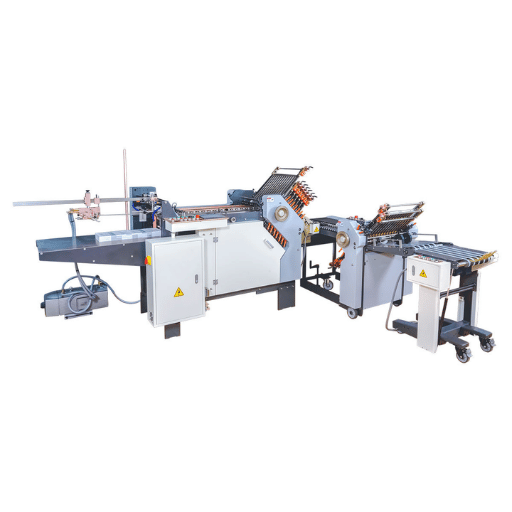
Line speed is not equal to machinery efficiency. Total process energy and specific operating cost relate closely to machine design, applied web tensions, and system efficiencies within each component. Key paper machine components include the headbox, forming section, press section, drying section, and reel and winder.
Headbox
The headbox delivers a standardized, turbulence-controlled jet of dilute stock (basis 1-2% solids) evenly across the entire width of the machine. Today, hydraulic headboxes with adjustable slice openings are capable of controlling the specific consistency of the fibre furnish to well below 0.4% across the cross-machine profile. Distribution systems such as dilution profilometry also have the ability to control the basis weight profile within ±0.5 g/m². Jet-to-wire speed ratio balance (so-called rush/drag ratio) is a major difference for paper machine designers deciding operating parameters – it usually finds a range of ±2% of the wire speed, which will influence fiber orientation and product type.
Forming Section (Wire) — Sheet Formation
Forming is responsible for the removal of free water. “On the Fourdrinier machine, the wire passes successively over table rolls, foils and vacuum shelves”. Advanced “forming fabrics (woven synthetic formed sheets such as nylon or polyester with cell sizes of 60-90/cm) are more durable, wear resistant and easier to clean than wire-based systems”. A Fourdrinier receives a web of approx. 18–22% solids at the former section exit. Paper machine operation involves ongoing expenditures for the replacement of wearing fabric components – forming fabrics, press felts, and dryer fabrics.
Press Section
Papermaking machinery intends to surface a paper web with high moisture content. Press rolls apply mechanical loads to compress the web, raising its solids content to 35–50%. A typical press section contains 2–4 nips, using either straight-through, reverse or combined nip configurations. Shoe press technology extends the nip contact length, resulting in higher exit dryness — often 2–5% above conventional roll presses at equivalent linear load.
Dryer Section
Steam-heated cast iron cylinders (1.5–1.8 m diameter) are used in the drying section to dry the web by contact heat transfer. Most machines run 5–7 independently driven dryer groups, each with individual steam pressure and dryer fabric control. Steam pressures typically vary from 100 to 600 kPa depending on grade and machine speed. Dryer surface temperatures range from 100°C to 160°C.
Calender, Roller, and Reel
Calenders control the surface texture and sheet thickness. Soft “nip” calenders use a nipped roll (polymer covered) against the heated steel roll, while hard “nip” calenders consist of two steel rolls. Finished web is wound into parent paper rolls at the reel and then slit by cutting systems and rewound to order specifications on a dedicated winder.
📐 Engineering Note
The consistency control in the headbox is the most important control variable affecting basis weight distribution. For printing grades, targets are in the range of 0.3-0.5% (measured at the headbox inlet manifold). Engineering guides from ScienceDirect literature suggest that, in order to prevent flocculation, the headbox consistency for long fiber (kraft) pulps must be set lower (0.2-0.4%) than for short fiber (hardwood or recycled) pulps. CD basis weight profile must be controlled within 1.0% (range ±0.5%) of target using dilution profiling actuators spaced at 50-100 mm intervals across the headbox slice.
Paper Making Process — From Pulp to Finished Roll
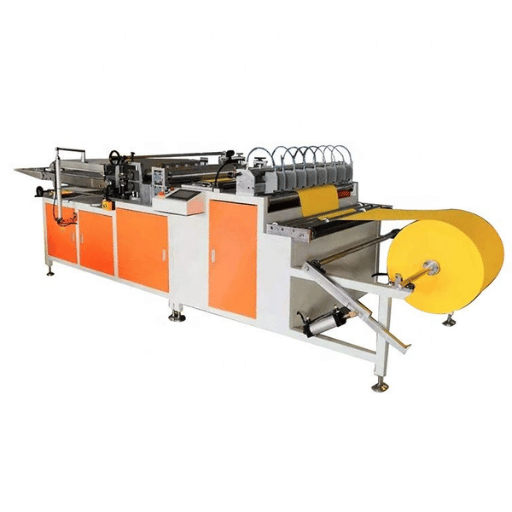
The entire paper making machine from stock preparation to reeling operation runs through a continuous series of controlled transitions. For each stage, key parameters influencing final sheet performance are characterized and studied.
Raw Material Preparation — Kraft, Paperboard, and Recycled Furnish
Pulp stock arrives as either virgin wood pulp (softwood for strength, hardwood for finish), recycled fiber, or non-wood (bamboo, bagasse, wheat straw). Non-wood fiber is a rapidly growing segment of the pulp and paper industry-expected to be valued at $46.92 billion in 2024 and ultimately be worth $70.33 billion by 2034 according to Fortune Business Insights.
Stock preparation steps include pulping (fiber extraction from the solid phase), cleaning (remove contaminants such as sand, staples and plastics), screening (remove oversize particles), and refining (modify fiber bonding potential by mechanical means).
Paper Machine Wet End Operations
Approach flow systems feed the paper machine wet end, introducing refined stock to the forming section at forming consistency (0.3-1.0%) before depositing and distributing to the wire by means of screens and cleaners. On the forming wire, three variations of water removal are provided (in addition to gravity): enhanced drainage forces from foils and table rolls, suction boxes, and suction drums. By the end of wire, the web attains approximately 18-22% solids.
Press and Dryer Operations
Press rolls further develop web consistency to 35-50% by applying mechanical compression. Higher pressing dryness translates directly into energy savings in the following dryer section steam loads. Dryer cylinders remove the remaining moisture through latent and sensible heat transfer. It is estimated that the wet sheet discharge from the dryer section for a 1,000 tonnes/day machine is in the range of about 1,200-1500 tonnes/d.
Finishing, Cutting, and Conversion
After the drying; the web may be operated through a size press (additive such as starch), a coating station (for coated printing grades), and a calender section before it is developed into parent rolls at the reel. From stock preparation to finishing, the entire process runs as continuous production. Modern automatic paper production lines run continuously 24/7 and scheduled shutdowns for maintenance every 4-8 weeks.
Water usage numbers are from the National Academies Press industry benchmark report. 90% water recycling statistic is from the Confederation of European Paper Industries (CEPI) 2023 Key Statistics.
Paper Machine Specifications — Speed, Width, Output, and Capacity by Grade
Not all paper machines are created equal. Kit specifications vary widely depending on the paper grade a machine is designed to make. For a tissue paper machine, operating at 2,200 m/min, the engineering design parameters are profoundly different from a high-capacity containerboard line running at 3,000+ tonnes per day. Below is a range of specifications by grade category.
| Paper Grade | Speed (m/min) | Trim Width (m) | Output (TPD) | Basis Weight (g/m²) |
|---|---|---|---|---|
| Tissue | 1,200–2,200 | 2.5–5.6 | 50–250 | 13–30 |
| Newsprint | 1,000–1,800 | 6.0–10.0 | 500–1,500 | 40–52 |
| Printing & Writing | 600–1,500 | 4.0–9.0 | 200–1,200 | 50–120 |
| Containerboard (Liner/Fluting) | 400–1,200 | 4.5–10.5 | 500–4,000+ | 100–350 |
| Kraft Paper (Sack/Bag) | 400–900 | 3.5–7.0 | 200–800 | 60–120 |
| Paperboard | 200–600 | 3.0–7.0 | 200–1,500 | 150–500 |
When specifying a machine for a new facility or paper machine upgrade, the desired annual production volume — whether for paper roll stock, paper cup board, or complete paper grades — determines the minimum combination of speed and trim width needed. To achieve 1,000 TPD annual containerboard production a mill needs a machine operating at a nominal 800 meters per minute, with a 7+ meter trim width, assuming typical linerboard basis weights.
✔ Advantages of High-Speed Machines (>1,200 m/min)
- Lower unit costs of production – fixed costs distributed over higher output
- Require fewer machines, thereby minimizing plant footprint per tonne of capacity
- Modern drive and control systems maintain quality at speed
- Energy consumption per tonne decreases with increasing production rate
⚠ Limitations of High-Speed Machines
- Higher capital investment — $200M–$1B+ for large high-speed lines
- Reduced ability to switch grades within narrow product ranges – added grade broadness is therefore negatively impacted.
- Increased sensitivity to stock quality variation at high forming speeds
- Increased startup time after sheet break – increased production loss per event
When comparing paper making machine solutions from various equipment suppliers, use rated load capacity and net throughput capacity, not maximum design speed. Actual running efficiencies can be 85-93% of design speed to compensate for differences in weave speed at grade change, sheet break and cleaning events.
Sustainability and Future Trends in Paper Machine Technology
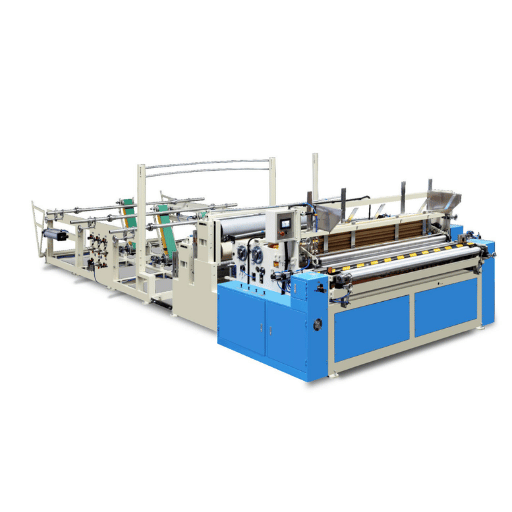
Paper making machine performance is currently emerging along 3 intersecting paths: recycled fiber streams, energy minimization, and digital customization. These are not concepts of the future – they are current investment programs redefining modern paper machines.
Recycled Fiber and Circular Manufacturing
Market research by Future Market Insights indicates annual growth of 5.7% CAGR for the paper recycling industry, to a global size of USD 13.1 billion by 2034. Existing European mills maintain an average fiber recycling rate of approximately 72%. Recycled furnish imposes additional demands on the paper machine, such as higher levels of contaminants, and shorter recycled fibers that induce weaker sheet formation. Virgin fiber must be blended to improve sheet strength characteristics.
Energy Efficiency and Water Reduction
Analysis of Finland and Sweden indicates total primary energy consumed per tonne of paper has fallen from 9.76 MWh/tonne to 9.02 MWh/tonne through a combination of efficiency improvements in the press section, heat recovery installs, and process automation enhancements, as published in Energy Efficiency journal (Springer Nature). Water cycle recycling exceeds 90% from modern closed-loop systems. Contemporary shoe press systems deliver post-press dryness results 2-5% higher, directly saving dryer section thermal energy requirements.
Industry 4.0 and Digital Paper Machines
Manufacturing facilities across Scandinavia and North America are installing a multitude of digital automation concepts, such as interconnected sensor networks, digital personas, and equipment optimization systems driven by artificial intelligence and machine learning. Use of predictive maintenance algorithms to analyze vibrations and temperature of devices such as dryer cylinders or bearings, reduce non-performing equipment. Dynamic controls automatically adapt basis weight, moisture and caliper profiles for optimal production running windows.
Market Outlook
According to Fortune Business Insights, the world market for pulp and paper machinery was $117.92bn in 2025 and predicted to reach $171.05bn by 2034 at a 4.4% CAGR. The American Forest & Paper Association (AF&PA) quotes a rise in US paper and paperboard production of 3.2% in 2024, with containerboard leading the way. Packaging demand (replaced plastics for e-commerce and other applications) remains the main driver for investment to build new paper machine capacity.
Changes to a paper machine to allow for an increased recycled fibre content are not just stock prep modifications – they have downstream consequences for every other machine section. Recycled furnish carries more fines, which blind forming fabrics, lower press felt permeability and increase dryer section contamination. With foresight, the impact on the machine can be planned for before an additional recycled content target increase is reached.
Frequently Asked Questions
Q: What is a paper making machine called?
View Answer
Q: How fast can a paper machine make paper?
View Answer
Q: What is a headbox in a paper machine?
View Answer
Q: What is paper machine clothing?
View Answer
Q: Is paper milling a dying industry?
View Answer
Q: Who invented the paper machine?
View Answer
Need a Paper Machine for Your Production Line?
UDTECH offers a full range of paper making machinery—including stock preparation plants, paper machines and winding finishes. Find out prices and specifications for your ideal paper machine and capacity.
About This Analysis
The contents of this guide were authored by the UDTECH technical content team using published information from the AF&PA, CEPI, Springer Nature and equipment supplier specifications. UDTECH is a UK manufacturer and designer of continuous paper making machinery providing new equipment solutions for kraft, corrugated medium, tissue and cultural paper mills. The speeds and capacities quoted in this article are based on our range of equipment and published industry data.
Related Articles
References & Sources
- Global Paper and Paperboard Consumption 2024-2032 — Statista
- Benchmarking Energy Use in the Paper Industry — Energy Efficiency (Springer Nature)
- Fourdrinier Machine — Encyclopaedia Britannica
- Paper Machine — Engineering Overview — ScienceDirect
- The Pulp and Paper Industry: Industrial Environmental Performance Metrics — National Academies Press
- Key Statistics 2023: European Pulp & Paper Industry — CEPI
- Pulp and Paper Machinery Market Size, Share & Analysis — Fortune Business Insights
- U.S. Paper Production and Capacity Trends — American Forest & Paper Association (AF&PA)
- Paper Recycling Market Size, Share & Forecast to 2036 — Future Market Insights