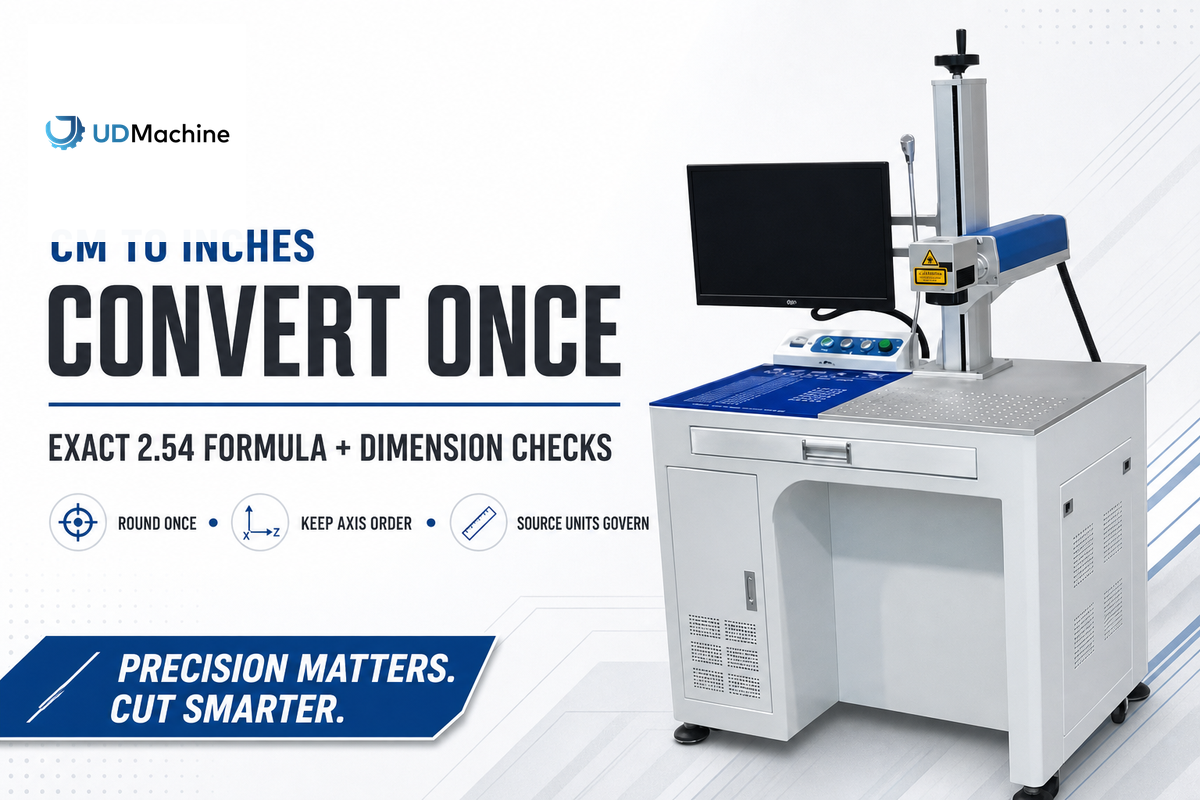
Laser marking technology has transformed product identification, branding, and traceability across the industrial landscape. Among the most innovative developments in this field, rotary laser marking machines stand out for their precision in marking cylindrical and curved objects. From engraving intricate logos on glass to marking serial numbers on metal pipes, these systems deliver extraordinary accuracy and versatility that modern manufacturing demands.
📌 What You’ll Learn in This Guide
- How rotary laser marking technology works and its core components
- Benefits and advantages for various manufacturing processes
- How to choose the right machine for your specific needs
- Techniques for effective marking on cylindrical objects
- Industry applications from aerospace to custom jewelry
Introduction to Rotary Laser Marking
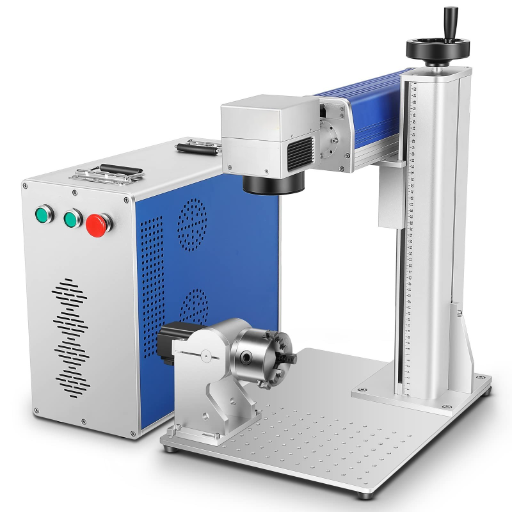
Rotary laser marking represents a specialized laser-based technology engineered to mark or engrave cylindrical and round objects with extreme accuracy. This technique has become indispensable for creating permanent marks—including logos, barcodes, serial numbers, and decorative designs—on diverse materials such as metals, plastics, and ceramics.
The rotating mechanism employed in rotary laser marking ensures uniformity and clarity on rounded surfaces, significantly enhancing the quality and longevity of the markings. This powerful combination of flexibility and precision has driven widespread adoption across sectors including aerospace, automotive, healthcare, and consumer goods manufacturing.
What is Rotary Laser Marking?
Rotary laser marking is one of the most advanced methods for applying precise, permanent marks to round and curved surfaces. Unlike standard laser marking systems, this technology incorporates a revolving axis or mechanism that enables precise marking around an object’s entire circumference.
This process proves ideal for marking objects such as bottles, pipes, rings, and cylindrical components. The technology leverages cutting-edge systems, including fiber and CO2 lasers, to deliver high-speed, non-contact marking with outstanding precision.
🎯 Common Applications
Medical device industry • Automotive parts manufacturing • Consumer goods production • Jewelry and personalization • Industrial components • Beverage and packaging industries.
The method has gained significant traction across various sectors where detailed marking on curved surfaces is essential. Its ability to provide consistent, high-quality outputs makes it invaluable for marking, drawing, and ensuring compliance with industry standards that certify product quality.
Benefits of Using a Laser Marking Machine
Precision & Accuracy
Unmatched precision enables the creation of high-quality marks with wonderful details, even on very small or intricate surfaces.
Durability
Markings produced by laser systems are permanent—impervious to wear, fading, and environmental impact—ensuring long-term legibility.
Versatility
Compatible with a wide variety of substrates, including metals, plastics, ceramics, and glass—applicable across numerous industries.
High Efficiency
High-speed processing capabilities significantly reduce production time, boosting overall efficiency and productivity.
Environmentally Friendly
As a non-contact, chemical-free process, laser marking produces minimal waste—making it an exceptionally eco-friendly solution.
How Fiber Laser Technology Works
Fiber laser technology amplifies light using rare-earth elements—such as ytterbium—embedded in optical fibers. The process begins when a laser diode generates light, which is then fed into the fiber core. This core contains doped material that excites atoms and emits additional photons, thereby amplifying the light. A collimator and focusing lens subsequently direct the amplified light to meet the precision requirements of specific applications, such as marking, cutting, or engraving.
💡 Industry Trend Insight
Recent data reveal significant advances in fiber laser design, leading to major improvements in efficiency and performance. A growing number of industries now seek compact, energy-efficient solutions—precisely the advantages where fiber lasers excel. Their excellent beam quality and minimal maintenance requirements, compared with conventional laser systems, continue to drive adoption across the automotive, aerospace, and electronics sectors.
This technology aligns perfectly with modern manufacturing demands for high accuracy and sustainability. The long-term durability and cost-effectiveness of fiber lasers have established them as the preferred choice in environments prioritizing quality, reliability, and innovation.
Components of Rotary Laser Marking Systems
Rotary laser marking systems comprise several vital components working in concert to deliver high precision and high-speed marking capabilities:
Each of these components plays a crucial role in the system’s reliability and accuracy, which explains why rotary laser marking is used across a wide range of industrial settings.
Understanding the Rotary Attachment
The rotary attachment is an essential component of laser marking systems, enabling the engraving or marking of cylindrical and circular objects. It rotationally processes objects, ensuring accurate, consistent marking across the entire surface.
The device securely grips objects while applying precise motion, enabling the rotary attachment to produce exceptionally high-quality results even on uneven or curved surfaces. This makes the system ideal for applications such as personalizing bottles, tubes, rings, and cylindrical items.
Types of Laser Machines Used
Overview of Fiber Laser Technology
Fiber laser technology has revolutionized numerous fields through its combination of power, accuracy, and flexibility. This method utilizes optical fiber as the laser medium, channeling light into the fiber using diodes to produce an extremely concentrated and stable laser beam capable of cutting, engraving, or marking various materials including metals, plastics, and ceramics.
The technology’s superior beam quality improves accuracy for delicate work, while its compact output makes it more environmentally friendly. Fiber lasers have become the reference standard across production processes—from initial manufacturing steps through packaging—in the automotive, electronics, and medical product industries, where high quality and rapid production rates are essential.
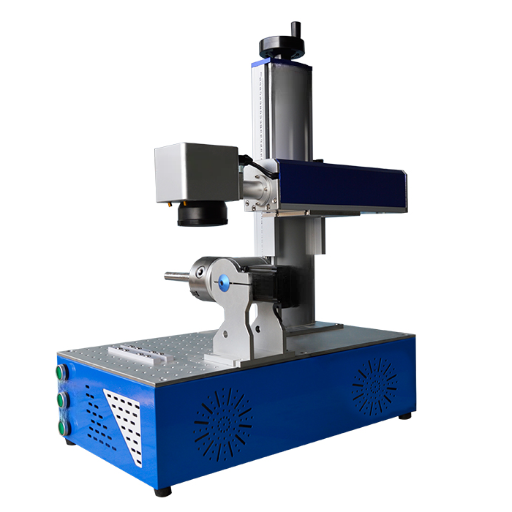
How to Choose the Right Rotary Laser Marking Machine
✅ Essential Selection Checklist
- Material Compatibility: Ensure the machine can effectively mark materials such as metals, plastics, and ceramics.
- Rotary Capability: Look for innovative rotary features that can handle cylindrical or irregularly shaped objects.
- Precision and Speed: Evaluate marking accuracy and speed to ensure synchronization with production requirements without compromising quality.
- Software and Connectivity: Choose a machine with intuitive software that integrates seamlessly with existing systems.
- Durability and Maintenance: Select robust, easy-to-maintain equipment to minimize downtime and operational costs.
- Power and Wavelength: Determine appropriate laser power and wavelength for your specific applications.
- Budget and Support: Balance cost considerations with manufacturers offering excellent customer support and warranty coverage.
Key Features to Consider
High Precision & Accuracy
Clear, detailed engravings on different materials
Material Versatility
Capability to mark metals, plastics, ceramics, and more
Ease of Use
User-friendly interface reduces operator learning time
Durability & Build Quality
Reliable long-term performance in demanding environments
Speed & Efficiency
High marking speeds without quality compromise
Comparing Fiber Laser Marking Machines
When evaluating fiber laser marking machines, focus on these critical comparison criteria:
- Power and Wattage Options: Higher power enables faster marking and greater depth—advantageous for metal marking or high-volume production.
- Marking Area Dimension: Consider the marking field size to ensure alignment with project requirements, whether small precision markings or larger surface areas.
- Software Compatibility: Confirm compatibility with user-friendly software that supports customization and accepts a range of file formats.
- Maintenance Requirements: Machines that require less maintenance and have longer lifespans reduce downtime and operational costs.
- Cost and Budget Alignment: Compare models based on the best value across features, lifespan, and operating costs.
Importance of the Rotary Axis Attachment
The rotary axis attachment is an essential component of rotary laser marking machines, particularly when marking cylindrical or round objects such as pipes, bottles, or rings. This attachment rotates materials during marking, ensuring seamless, precise, and consistent engraving across the entire surface while eliminating distortions that flat marking systems can cause.
⚙️ Practical Benefits
From a practical standpoint, the rotary-axis attachment improves workflow efficiency by enabling automatic rotation, reducing manual adjustments and errors. Its compatibility with different materials—from metals to plastics—expands its applications across industries including automotive, jewelry, and medical device manufacturing. Laser marking solutions with rotary capabilities meet high-volume production demands while delivering intricate, professional-grade results.
Techniques for Effective Laser Marking on Cylindrical Objects
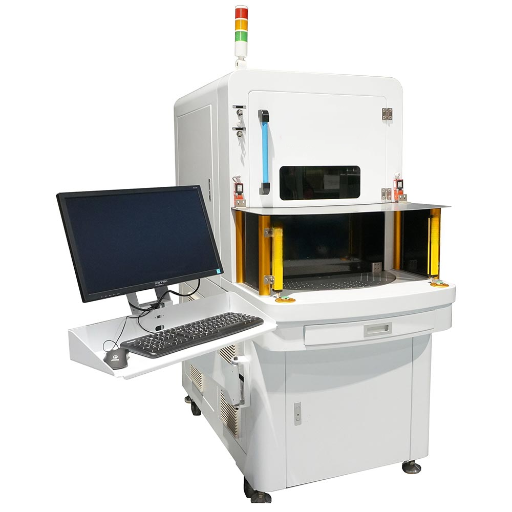
Effective laser marking on cylindrical objects requires precise alignment of the laser beam relative to the object. Using a rotary attachment ensures even rotation, enabling proper marking along the entire circumference. Maintaining the correct focal distance between the laser head and the curved object prevents image distortion.
Additionally, selecting appropriate laser settings—including power, speed, and frequency—optimizes marking quality for specific materials. Regular machine calibration combined with test runs further improves accuracy and consistency.
Marking on Bottles and Round Parts
Achieving consistent results when marking bottles and round parts requires precise alignment and stabilization. A rotary device enables steady rotation during marking, ensuring even application across the surface. The laser focus must be adjusted to account for surface curvature to prevent distortions and uneven markings.
💡 Pro Tip
Selecting the correct laser settings—power, speed, and frequency—for the specific material is crucial for optimal quality. Conducting trial runs on similar surfaces helps refine the process and achieve desired results before production marking begins.
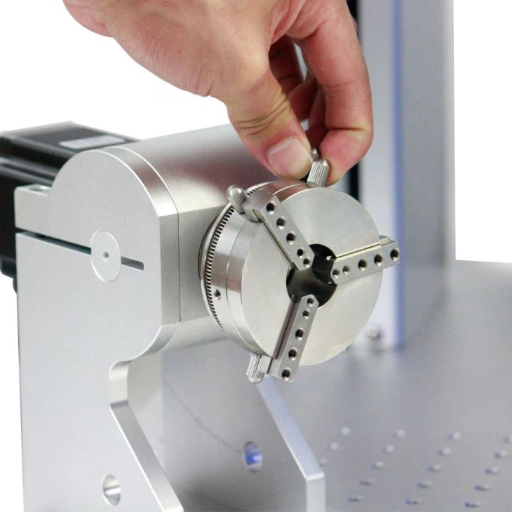
Using a 3-Jaw Chuck for Precision Engraving
A 3-jaw chuck is essential for precise engraving of cylindrical parts. It securely grips the workpiece, preventing movement during engraving and allowing the piece to rotate evenly around the axis. This ensures consistent marking while minimizing errors from movement or mispositioning.
Before beginning the process, verify the chuck’s alignment and balance to ensure maximum performance. A high-quality rotary axis system can further improve precision, even for wonderful details or intricate designs. Regular maintenance and cleaning of the chuck prevent accuracy disruptions over time.
Best Practices for Laser Engraving on Metal
Achieving optimal results when laser engraving metal requires adherence to industry-proven best practices and understanding of modern technology. Fiber lasers are widely regarded as optimal for metal engraving due to their high beam quality and efficiency.
📋 Metal Engraving Best Practices
To achieve high contrast, selecting appropriate materials and adjusting speed and power levels are essential. During annealing, lower annealing speeds and lower power intensities can produce dark marks on metals such as stainless steel, creating visible contrasts without removing material layers. When properly controlled, oxidation can also enhance contrast, resulting in clear, long-lasting, and visually appealing final products.
Applications of Laser Marking Rotary in Various Industries
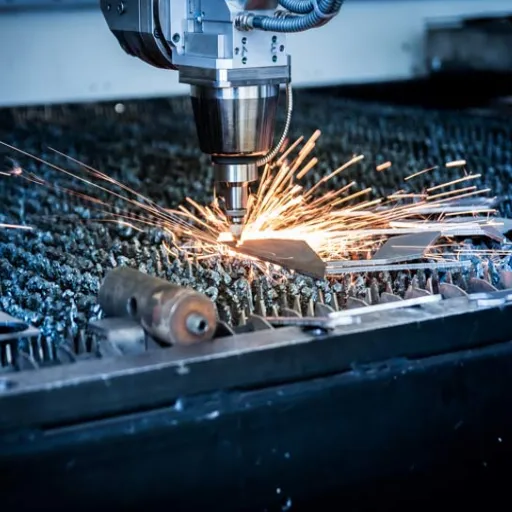
Automotive Industry
Marking engine components, chassis parts, and serial numbers for traceability and enhanced manufacturing precision.
Medical Industry
Marking medical devices, surgical instruments, and implants with unique identification codes and regulatory information for safety compliance.
Aerospace Industry
Labeling critical components like turbine blades and fasteners with durable markings that withstand extreme conditions.
Jewelry & Luxury Goods
High-precision rotary marking for engraving intricate designs, logos, and personalization on jewelry, watches, and premium products.
Electronics Industry
Marking circuit boards, microchips, and electronic components with detailed information for traceability and quality control during production.
Aerospace: Ensuring Safety with Durable Markings
Rotary laser marking technology is indispensable in the aerospace sector, delivering precise, long-lasting markings that ensure safety and regulatory compliance. Critical information, including serial numbers, part IDs, and certification codes, is imprinted on turbine blades, engine parts, and aerospace fasteners.
These markings must withstand the harshest conditions—extreme heat, pressure, and environmental factors—while remaining legible throughout the component’s service life. The accuracy and longevity of laser rotary marking significantly support traceability, maintenance, and quality assurance in aerospace operations, where safety and regulatory compliance are paramount.
Medical Device Manufacturing: Compliance and Traceability
Laser marking rotary systems are indispensable in medical device manufacturing for ensuring compliance and traceability. Under strict regulations imposed by the FDA and the EU MDR, medical devices must bear permanent, legible markings that include unique device identifiers (UDIs), serial numbers, and other critical information.
📜 Regulatory Advantages
Marking enables device tracking throughout the lifecycle—from production to patient use—while providing manufacturer accountability and facilitating recalls when necessary. The rotary laser marking process delivers precise, durable marks on cylindrical or irregularly shaped devices including syringes, implants, and surgical instruments. The non-contact approach ensures no physical stress is applied to sensitive components.
Custom Jewelry: Personalization and Detail
Rotary laser marking has become a prevalent technique in custom jewelry production due to its ability to produce high-quality, lasting engravings. This method enables designers to create personalized rings, bracelets, and other curved items featuring names, dates, or intricate patterns with stunning precision.
The technique’s adaptability ensures exceptional results on various materials, including gold, silver, and platinum, without surface damage. Among modern engraving techniques, rotary laser marking has become the preferred option for custom and intricate jewelry work, offering a delicate touch while maintaining professional-grade personalization capabilities.
Frequently Asked Questions (FAQs)
Reference Sources
-
Laser Cutter Manual | Purdue University
This manual provides insights into laser engraving and cutting, including applications for materials such as metals and plastics. -
Professional Laser Series (PLS) User Guide | UC Berkeley
A detailed guide on laser systems, including their use in workshops and light-duty manufacturing, which can be relevant for rotary laser marking. -
Innovations in Laser Engraving Technology Market Trends | SSRN
This academic paper explores advancements in laser engraving technology, including its applications and market trends. - Top CNC Laser Marking Machine Manufacturer and Supplier in China
Summary
Rotary laser marking technology has established itself as an essential tool across numerous industries—from aerospace and medical device manufacturing to custom jewelry and consumer goods. By understanding the various components, laser types, and best practices outlined in this guide, manufacturers and businesses can make informed decisions when selecting rotary laser marking equipment. Whether your priority is precision, durability, efficiency, or environmental responsibility, the right rotary laser marking solution can significantly enhance your production capabilities while meeting the demanding standards of modern manufacturing.