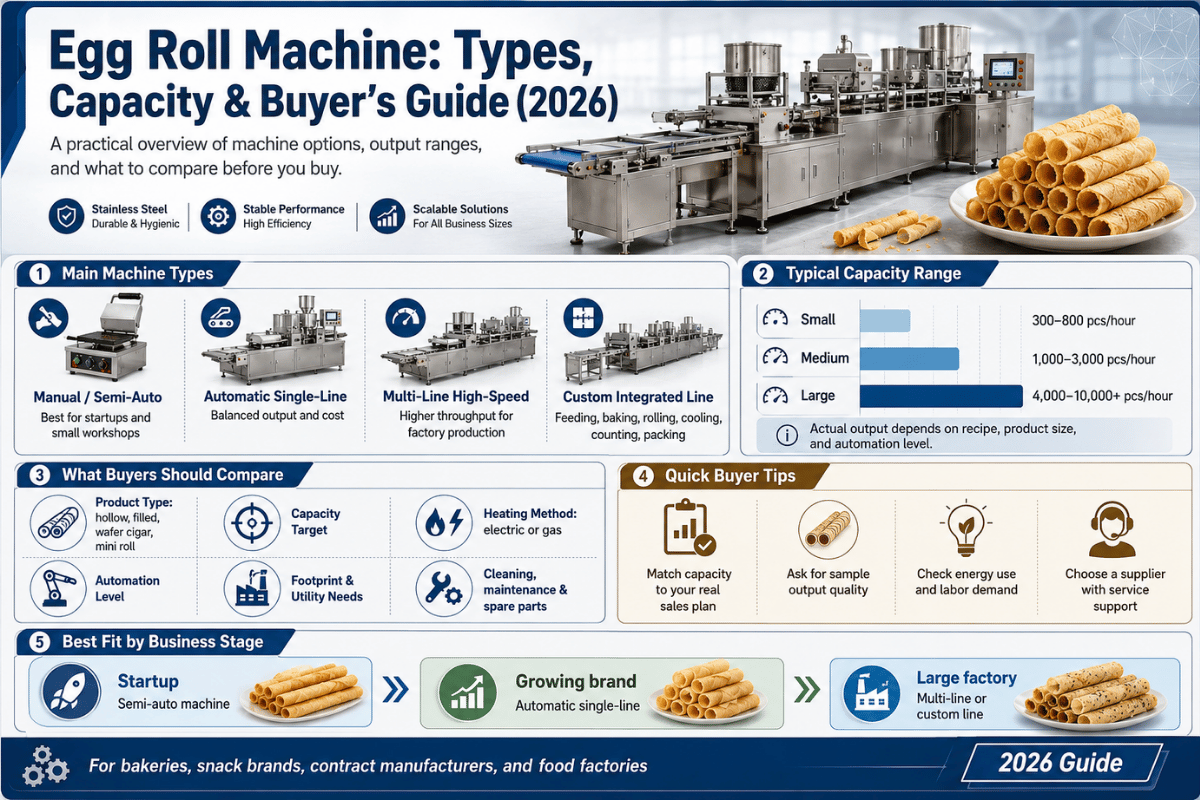
The egg roll machine is no single machine. The term show you an expensive industrial wafer line as well as a $20 kitchen gadget. But these aren’t even vaguely the same product because the term can refer to three unrelated machine types (home electric egg roll maker, savory spring roll forming and filling, and industrial wafer line) each designed for a distinct product, volume, and budget. This guide will save you confusion-and a costly purchase-and clarify what’s what.
The short answer: a “egg roll machine” can mean any of these three machines-a egg roll maker you’d use at home, a spring-roll wrapping machine to make a savory product, or a large-scale wafer-making machine. The machine categories have common terms but varied designs, output ranges (from 1 per round to 19,800 per hour), and prices.
- The biggest issue for buyers of these machines is mistaking one for another. An industrial wafer egg roll machine and a savory wrapper machine, for instance, are built differently and include food-contact surfaces meant for unique ingredients.
- You’ll find industrial wafer lines running into the hundreds of pieces per hour; turntable and kitchen makers don’t come close.
- Price ranges here are on a quote-to-quote basis as factors such as fuel type, control configuration, food safety certification, and other customization details drive a final cost.
- Please note: For new equipment purchased by businesses within the EU, a new machinery Regulation (EU) 2023/1230 supersedes Directive 2006/42/EC, and is effective from 20 January 2027.
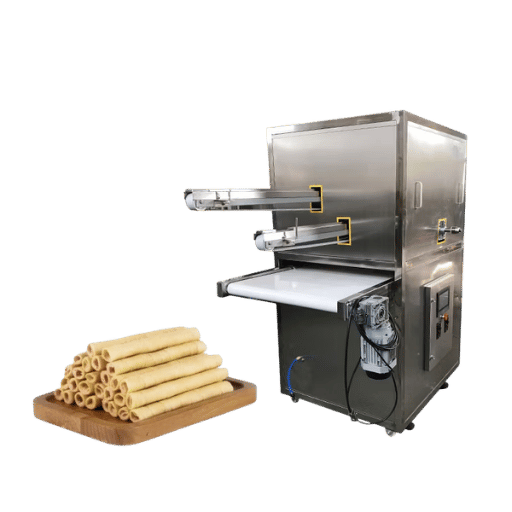
Quick Specs, Industrial Wafer Egg Roll Line
| Throughput | 220–330 pieces/min (13,200–19,800 pieces/hr) |
| Output per 8-hour shift | 600–900 kg |
| Connected power | 9.7–12 kW, multi-fuel (LPG or natural gas) |
| Egg-skin thickness | 0.8–1.4 mm (recipe-dependent) |
| Line voltage | 380 V / 50 Hz (220 V / 60 Hz optional) |
| Typical lead time | 9–13 weeks |
This figure reflects specifications for the UDTECH automatic wafer egg roll machine (UD05).
What Is an Egg Roll Machine? The Wafer, Savory–Home Split
We can better explain a egg roll machine as three product groups that just share a search keyword – let’s call it the “Wafer-Savory-Home Split”: 1. Sweet rolled wafers: an industrial manufacturing line. 2. Savory spring-roll wraps: an industrial manufacturing line. 3. Countertop: a home electrical appliance. Any machine is far better than another if you match family with output, since each uses a distinct forming mechanism and has distinct food-contact surfaces.
A confusing part of searching for these machines is that manufacturers often list their machines under identical terminology. A manufacturer selling a dumpling-and-gyoza-making machine might label it as a “egg roll machine.” Another might advertise a deep-fried savory wrapper under the same moniker. Then, another still will sell a sweet, crispy-wafer-producing unit under the exact same wording. Whether a vendor call it an egg roll making machine, an automatic egg roll making machine, or a roll making machine, the handmade-style result and the target buyer differ wildly. If you haven’t confirmed your product line, make sure to before comparing specs and price.
9 Decision Factors That Separate the Three Egg Roll Machines
| Decision factor | Wafer egg roll line | Savory egg-roll machine | Home electric maker |
|---|---|---|---|
| Product made | Sweet crispy rolled wafer | Filled, fried savory roll | Single rolls / omelettes |
| Forming method | Bake batter on heated mold, then roll-form | Sheet dough, deposit filling, fold & roll | Single non-stick mold |
| Output range | 600–19,800 pcs/hr by class | 2,400–6,000 pcs/hr | One at a time |
| Connected power | 9.7–12 kW (industrial) | 2.4–59 kW by design | ~1 kW |
| Food-contact surface | Heated baking molds | Sheeting + wet-filling depositor | Non-stick plate |
| Typical fillings | Cream core or hollow (sweet) | Cabbage, pork, carrot, vermicelli | Optional |
| Price band | Quoted industrial line | Quoted industrial line | $15–40 retail |
| Certifications | CE / ISO / FDA / HACCP | CE / ISO / FDA / HACCP | Consumer appliance only |
| Typical buyer | Bakeries, contract manufacturers | Frozen-food plants, central kitchens | Households, cafes |
Output and power figures are compiled from manufacturers’ specifications data. The industrial figures are taken from the UDTECH UD05 model.
If your product is sweet and is made from a baked wafer, explore this section then look at the savory section for how those differ from sweet industrial lines.
How a Wafer Egg Roll Machine Works: The Batter-to-Roll Plastic Window
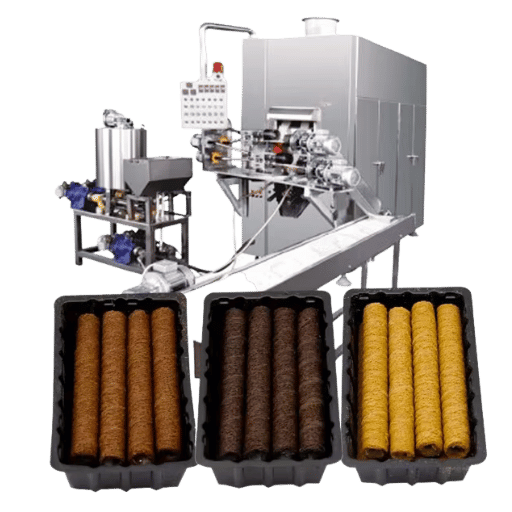
A wafer egg roll machine creates wafers by baking a thin batter and forming it into a hollow shape while still within a narrow temperature range. It’s a phenomenon we’ll call the Batter-to-Roll Plastic Window because for the few seconds of baking, a fragile egg skin sheet is formed but remains elastic, thus remaining strong enough to mold before cracking.
A wafer machine include a five-stage cycle: batter preparation (flour, egg, water, oil), deposit, baking the egg skin, injecting a sweet cream or savory core, then rolling the egg skin into a roll before cooling and a finishing step. Although forming dough into rolls is established technology, patented forms exist (e.g. USPTO patent US8388334B2, a roll-forming method for food dough).
wafer quality aren’t a game of chance but the result of precisely controlled processes. A review of scientific literature about the production of egg wafers was also concluded, “adherence, skin, consistency are the properties that are determined by the material used for the hot baking plates, release agent, temperature and time, and formulation of the batter,” research in the U.S. National Library of Medicine reports. This, therefore, explains why the fixed lines track the hot plate in a small window, instead of following the target.
In an industrial wafer line, the pan surface is held within about ±2–3 °C across the baking area to obtain an even egg skin in the 0.8–1.4 mm range, with the exact target set by your recipe. Operators control the length of roll (commonly from 7 to 14cm) and the thickness of the wrappers, whereas multi-fuel furnaces allow a plant to seamlessly switch from one fuel type ( LPG/natural gas) to another, depending on the price.
“The batter-to-roll window is unforgiving. Hold the baking surface within about ±2–3 °C and the egg skin sets at a steady 0.8–1.4 mm; let it drift and the wafer either cracks on the roll-former or turns chewy. On a UD05-class line running 330 pieces a minute, that tolerance is what separates a sellable roll from scrap.”
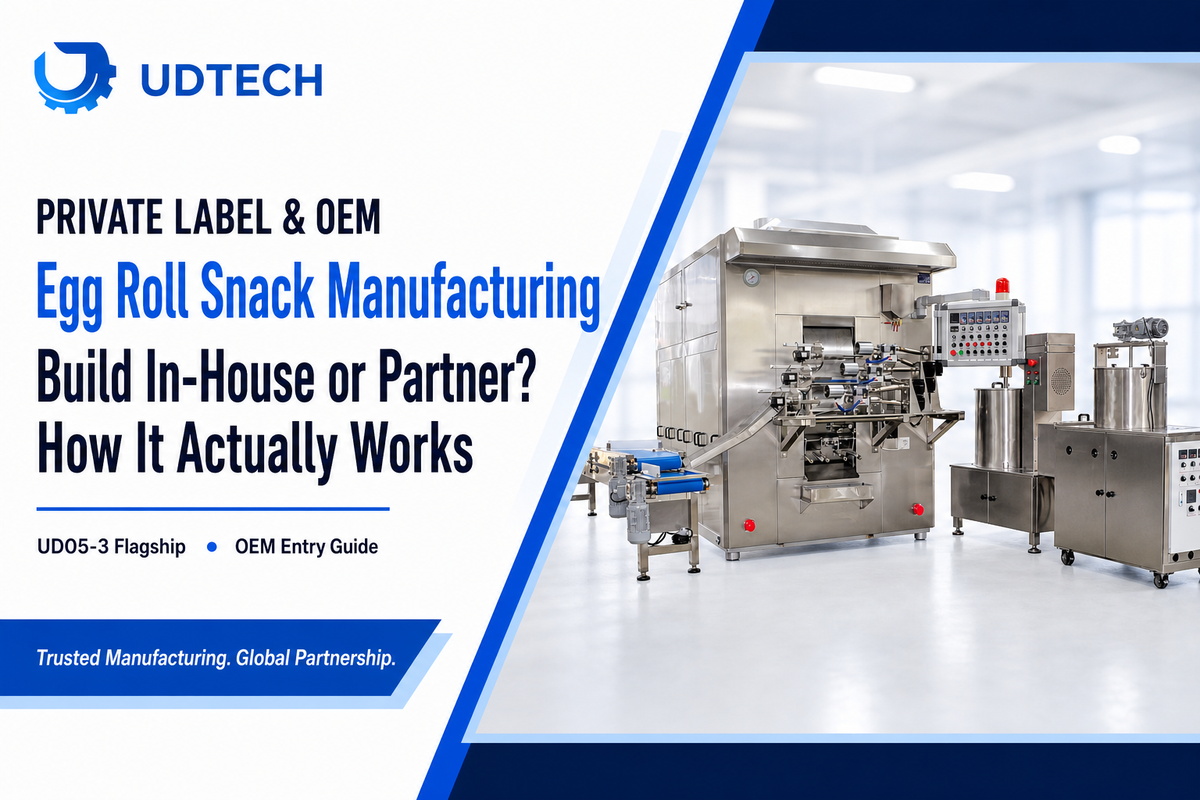
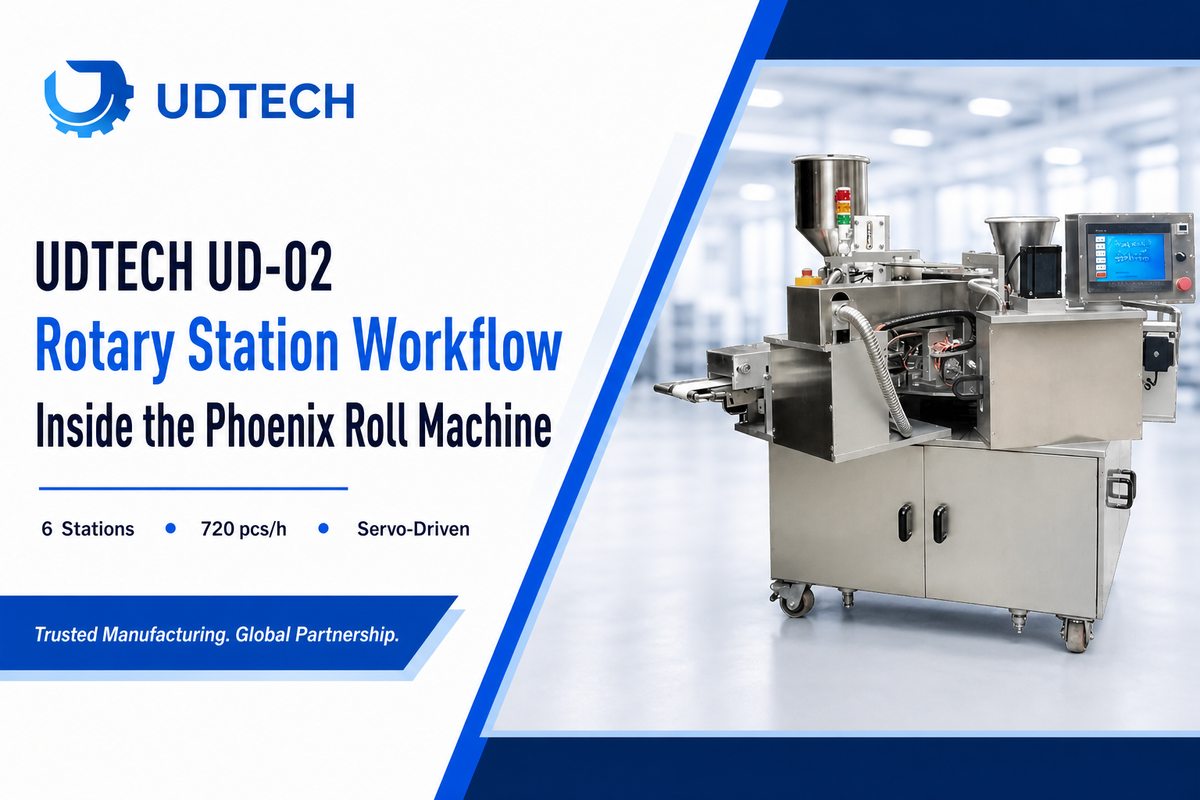
UDTECH builds this category as the automatic wafer egg roll machine (UD05), with sister lines for the seaweed egg roll machine and the phoenix roll machine for filled formats.
How a Savory Egg Roll / Spring Roll Machine Works
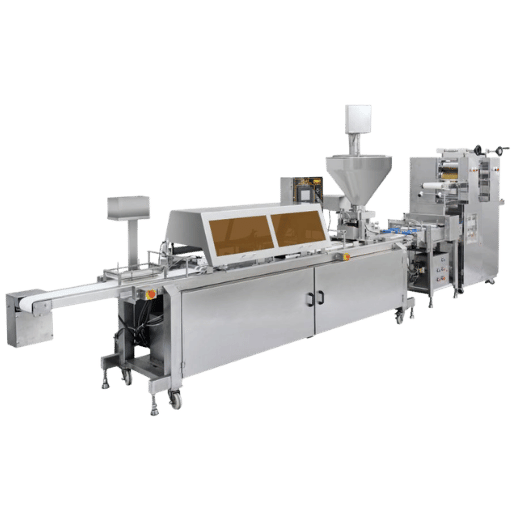
A savory egg roll machine is a more sophisticated process; it sheets a dough and then lays wet filling onto the dough before folding or rolling the dough round the filling. the output isn’t the sweet wafer but, the fried egg roll or spring roll seen in many food establishments, this process also mimics the manual forming of the product rather than baking batter.
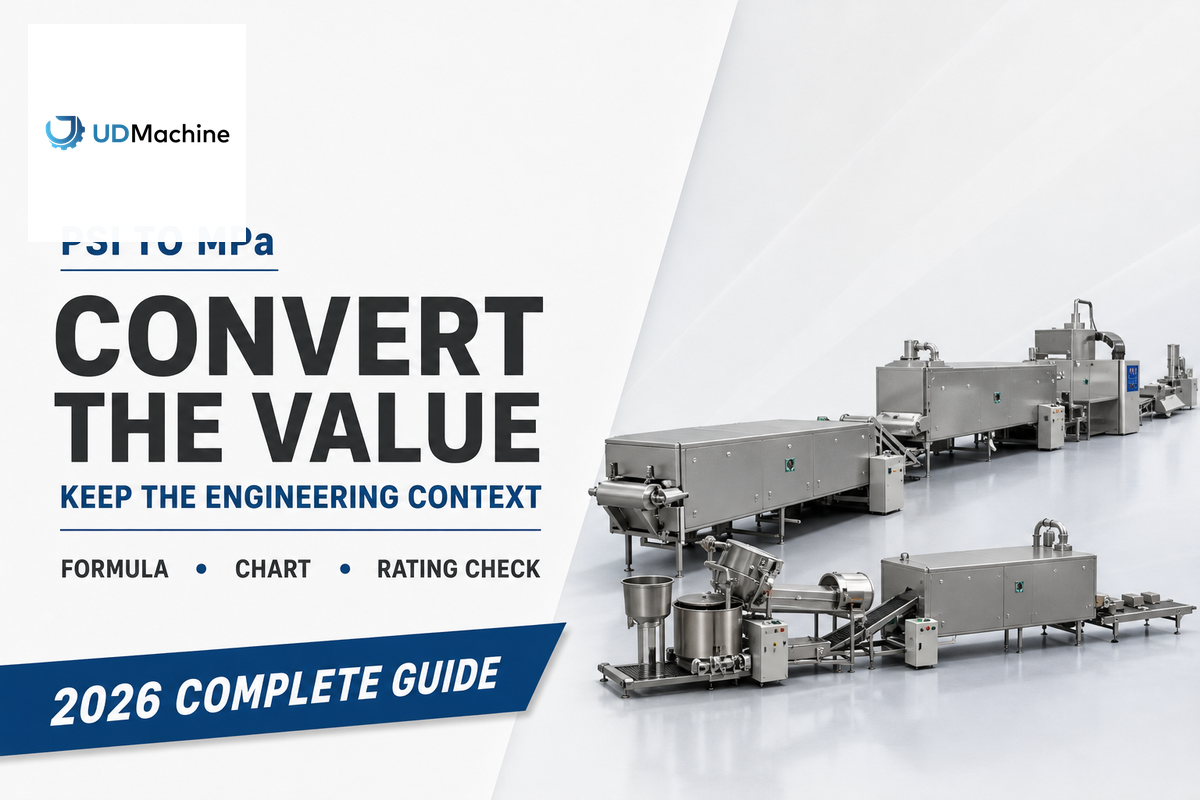
The usual flow for a savory line would be mixing, baking or sheeting, cutting, cooling, filling, folding, and rolling, with potential frying or freezing after it. machines for this product category commonly published would yield approx 2400-6000 pieces/hour with flexible filling depositors for cabbage, minced pork, carrot or vermicelli. machines working via conveyor with continuous-sheet-of-dough systems can be traced back for some decades, with for example USPTO patent US3633517A on an old automatic type.
The folding-and-rolling section, or the rolling machine, that encases the wrapper around the filling, is the part that lends the finished rolls their uniform, home-made look. Best of all for pragmatic purposes: the savory machine require a wet filling depositor, and other food contact surfaces than for a wafer production line. Attempts to manufacture savory sweet wafer rolls on a savory machine will work against you just as effectively as using the same on a sweet version – This is, by far, the most ubiquitous equipment mismatch category-wide.
The same forming machine platform handles related stuffed formats, lumpia, samosa, shumai, and dumplings, which is why one vendor lists a dumpling machine, another a spring roll maker, and a third a pastry line, all under the “egg roll machine” label. A full egg roll production line for spring roll and egg roll output then adds frying and freezing stages downstream. The egg roll wrapper (the dough sheet) feeds from a dough belt, while the wet filling, shredded vegetable, minced meat, or a savory sauce, is deposited before each eggroll is folded and rolled.
The Home Electric Egg Roll Maker (and Why It Isn’t an Industrial Machine)
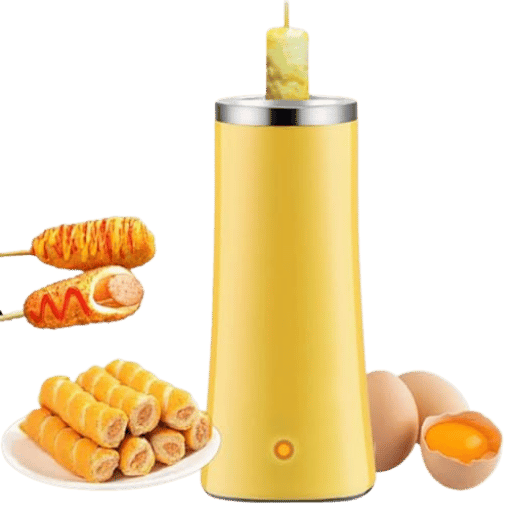
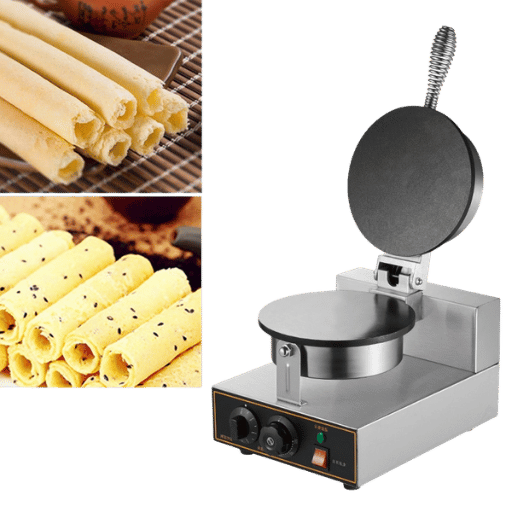
Online, the cheapest “egg roll machine” you’ll see is an electric, countertop egg roll, really a multifunction non-stick maker, an omelette cooker, sausage boiler, waffle maker, waffle iron, waffle cone, ice cream cone, omelet and pancake press rolled into one, with some models even claiming a sushi maker or dessert duty. It may serve as a handy appliance, but it’s no piece of commercial hardware-just a single-serving egg roll on a nonstick pan with a recipe, sans production safety reports.
If volume retail or contract manufacture or central kitchen are your desire, the domestic model (home maker) can never take you to your destination at any price: the restraint isn’t the motor, but the single mold. Great for testing a recipe on small scale – but graduate to a turntable or factory line if you want actual production. Buyers who confuse this step have no one to blame but themselves for lost time when they figure out that the device just won’t work.
Manual vs Automatic: Capacity and the Throughput-per-Operator Yardstick
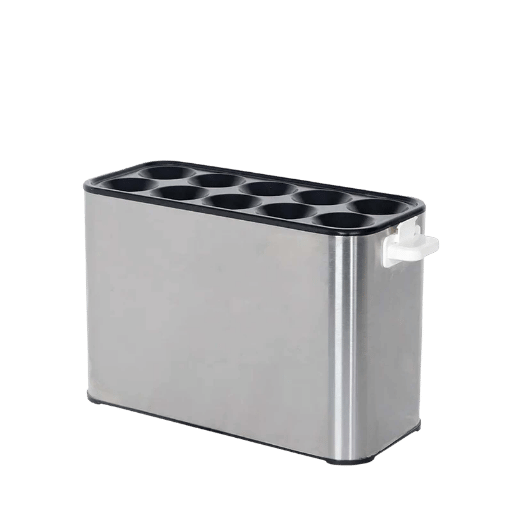
Is an automatic egg roll machine worth it compared to manual?
Whether an automatic egg roll machine is worth it depends on your volume, and the deciding number is rarely raw speed; it’s the Throughput-per-Operator Yardstick, total kilograms produced per shift divided by the number of line workers. A hand or semi-automatic line tops out around 30-60 kg per hour at heavy labor cost.
An automatic wafer line like the UD05-3, by contrast, produces about 900 kg over an 8-hour shift with two to three attendants. That ratio, not the headline pieces-per-hour, is what reworks your cost per kilogram.
| Tier | Throughput | Attendants | Best fit |
|---|---|---|---|
| Manual / semi-auto | ~30–60 kg/hr | High (8–12) | Pilot, market test |
| Turntable wafer unit | 600–1,200 pcs/hr | 1–2 | Small bakery, regional brand |
| Multi-line industrial wafer | up to ~19,800 pcs/hr | 2–3 | Contract / private-label volume |
Table of Turntable and manual lines compiled from cited vendor product-pages data and UDTECH UD05 manufacture data (in the multi-line context).
A recent conversation thread makes the decision logic quite clear. The operator, wrestling with a few dozen kilograms on something that resembles the six-figure machines, concluded: “i wanted a smaller machine and then i could scale from there.” Choosing the tier to match your actual needs-and not just your aspirations-is the major sizing challenge.
Industrial Egg Roll Machine Cost and the ROI Math
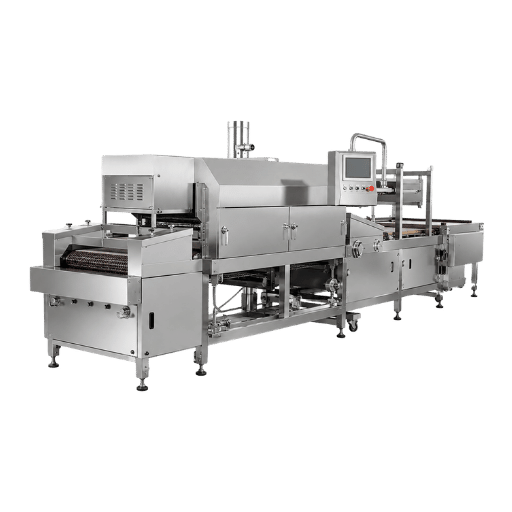
How much does a commercial egg roll machine cost?
There’s no catalog price listed for an industrial egg roll machine; it’s quoted as a configured solution. Model and capacity, plus fuel, control tier, certification documentation package, and anything you plug into the beginning (mixing) and end (packaging) are the primary cost drivers. For two lines churning out pieces per hour at exactly the same rate, when you add in the itemization these options become widely varying. That’s why only a quotation can be a fact.
Regarding ROI: suppliers and industry guides suggest paybacks of about 18-24 months, average annual savings of 25-45 percent, and as much as a 70-percent reduction in labor when you fully integrate packaging. Treat these, though, as rough-order-of-magnitude guide lines, as yours could be wildly different. The honest math is your own: divide added capital cost by annual labor-plus-waste saving. A line that adds \$120,000 of capital but saves \$70,000 a year in labor and scrap pays back in about 20 months. Run that formula with your own wage, scrap-rate, and utilization figures before approving capital.
On energy efficiency, for wafers the easiest standard metric is energy used per piece. A multi-line system like a UDTECH system at around 12 kW to make about 19,800 pieces/hour results in around 0.61 Whr/piece. We can compare it with another wafer line to determine relative efficiency-but to compare with savory wrap and fry machines, remember, will be only an indicative comparison of different product sets made with different machines.
Certifications and Food-Safety Compliance to Demand
On safety standards and quality assurance, machine systems must comply with food-manufacturing industry requirements, in the same manner as any other facility. Always seek clear documentation from a supplier on quality management procedures, safety features, food-contact materials, and product-compliance details, regardless of pricing.
- machine safety (EU Directive 2006/42/EC is the current requirement; a revised EU machinery Regulation 2023/1230 will go into effect on 20 January 2027).
- Hygiene (ISO 14159 design standards for machinery).
- Food-contact materials (US): FDA food-contact material rules, including 21 CFR 175.300 for coatings.
- Food-contact materials (EU): framework Regulation (EC) 1935/2004.
- Quality & process (ISO 9001 quality management standards for machines and HACCP risk analysis).
Food-contact surfaces should be formed from food-grade stainless (generally above 16% chromium and recognized as safe by the FDA). Resinous or polymeric coatings are another matter, subject to the extractive limits of 21 CFR 175.300, but the entire assembly should still meet all the cleaning, corrosion-resistance, and non-toxicity expectations of current GMP practice. Capture the specific certificate numbers and authorities for your audit file, not just an assertion of compliance.
How to Choose an Egg Roll Machine Supplier
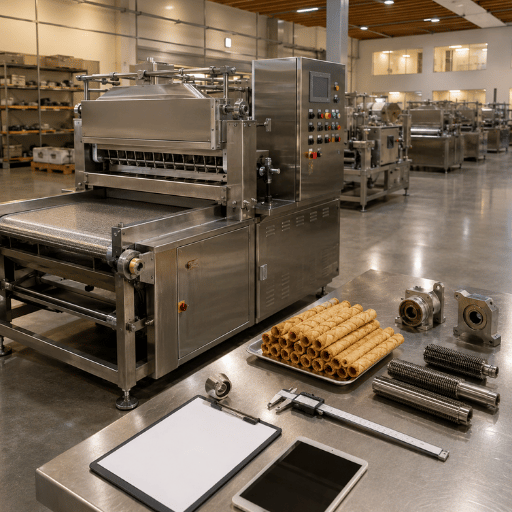
Once you’ve settled your category and your capacity tier, choosing an egg roll machine supplier becomes a repeatable routine rather than a guessing game. Work the six steps below in order, because getting category-fit wrong at the start make every later comparison on price, lead time, or specification meaningless, so confirm the machine family first and weigh the commercial terms only after that.
- Establish category fit – wafer vs savoury vs home to suit the product category
- Set the capacity tier according to throughput per operator, not by its headline speed.
- Verify certifications: CE/regulation, ISO 14159, FDA 21 CFR, ISO 9001, HACCP.
- Check your lead times & min order – Configure industrial line orders usually ship 9-13 weeks vs. the 16-32 for fully custom builds.
- Get a Handle on Training, Recipe support and installation – When they deliver your wrapper, the system should be properly commissioned and not require weeks of tinkering with wrapper formulations.
- Test after-sales & spares by asking what would cause it and ask where spares ship from, and how long would that take.
That last item isn’t theoretical; in fact, we heard of one company whose “egg roll machine broke for a month awaiting a part from USA.” An on-delivery recommended spare-parts kit with a listed support contact is a worthy alternative to a lower upfront price. It’s also reasonable to ask to test the machine with your own recipe before placing the order, and to request help integrating it into your existing food machine production lines. Whether you’re a startup food business or an established frozen food manufacturer scaling production capacity, weigh consultation, the option to customize the line, and after-sales support alongside price, the levers most effective at reducing labor costs and keeping food production reliable, backed by a steady spare-parts supply.
Industry Outlook: Where Egg Roll Machine Automation Is Heading in 2026
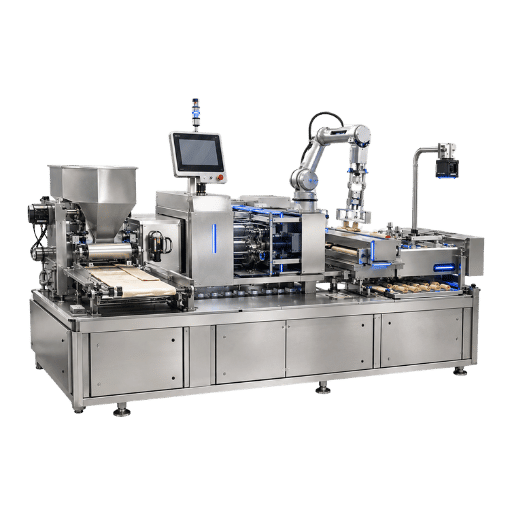
Apush towards greater levels of egg roll automation, alongside wafer and in-line systems, isn’t tied to a spike in demand but to regulations and the workforce.Packaging & processing researchers directly link the growth in the machinery market to automation providing ways to address labor challenges, as consumer demand for food safety levels only increases. (The focus shifted from guide line to a risk-based approach in 2025 for hygienic-design regulations while the EU’s Machinery Regulation tightened machine safety standards).
For buyers, the clock has been stopped since 20 January 2027, where the EU machinery Regulation 2023/1230 supersede 2006/42/EC in its totality. If you’re making a capital purchase for the European market in 2026, secure their plan of action towards the new regulation today – and book capacity now while industrial lead times remain ~9-13 weeks. Market watchers place the general food-automation space in double-digit growth for info only, but the real story is regulatory and operational, not top-line market growth figures.
Frequently Asked Questions
What’s the difference between a wafer egg roll machine and a savory egg roll machine?
View Answer
How much does a commercial egg roll machine cost?
View Answer
Is an automatic egg roll machine worth it compared to manual production?
View Answer
Can I test the machine and make samples before I order?
View Answer
What certifications should an industrial egg roll machine have?
View Answer
Do suppliers provide installation and operator training?
View Answer
UDTECH builds the UD05 industrial wafer egg roll machine for bakeries and contract manufacturers that need retail-scale output, with configured pricing, food-safety certification, and 9-to-13-week delivery. Send your target output, fuel choice, and installation details, and the team will return a configured quote plus a sized ROI worksheet for your line.
About This Guide
Industrial Wafer throughput/power/skin thickness: Taken from UDTECH UD05 specifications for production. Compliancy & bake-science: Based on government, standards and peer-reviewed publications. ROI: These ranges reflect industry auto/plant automation trends; they aren’t a guarantee. UDTECH designs, builds and supports UDTECH wafer egg roll machinery and provides an analysis to scale based on specific quotes rather than static.
References & Sources
- Regulation (EU) 2023/1230, MachineryEU-OSHA / European Commission
- Regulatory Status of Components of a Food Contact MaterialU.S. Food & Drug Administration
- Food Contact Materials, Legislation (Regulation 1935/2004)European Commission
- ISO 14159, Safety of machinery: Hygiene requirementsInternational Organization for Standardization
- Waffle production: influence of batter ingredients on sticking of fresh egg wafersU.S. National Library of Medicine (PMC)
- US8388334B2, Roll-forming method for food doughUSPTO