Woodworking lies halfway between art and science, requiring a strong grasp of tools, techniques, and measurements. Keeping all of the other essential skills in the craft, bevel cuts stand as a basic and versatile technique that should be in every craftsman’s repertoire. Whether making fine furniture or putting on baseboard, bevel cuts are necessary for clean and professional work. This article will shed light on the broad aspects of bevel cutting-from the ways to cut accurately to the tools for cutting efficiently. We are also going to review some of the practical applications of bevel cuts in woodworking and provide tips that will surely improve your crafting skills. By the end, the reader will have a concrete understanding of how to treat bevel cutting with confidence and accuracy.
Defining Bevel Cuts
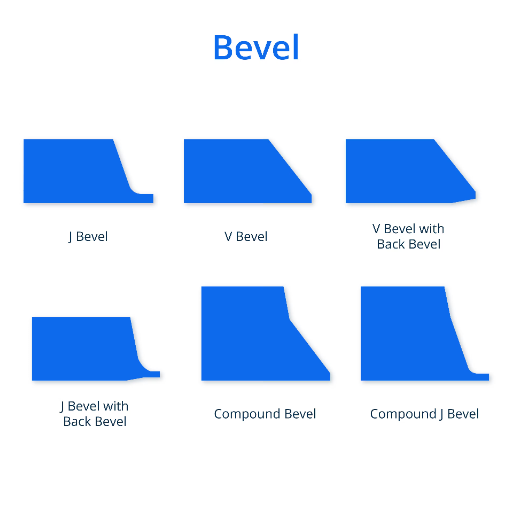
What Is a Bevel Cut?
Beveling is the inclined cut made along the edge or end of a material, which deviates from the standard 90 degrees. Bevels cut onto the edge or thickness of the material, and an inclined surface is being created; by contrast, miter cuts go across the face of the material. It is widely practiced in woodworking, metalworking, and construction with either structural or aesthetic reasoning behind itself. Bevel cuts are usually for joining, decorative finishes, or beveling edges to fit snugly into other materials or surfaces. The latest tool enhancement in laser-guided saws and digital bevel gauges makes the bevel cuts very accurate and efficient, achieving on the nose-finished professional results.
Bevel versus Miter Cut
Although close relations of cuts, bevels and miters differ rather sharply in geometry and application. A bevel cut is an angled cut along the thickness of a material; it shapes the edge to create a lane sloping surface. Such a cut is often employed to join two pieces A edge to edge, give them a smooth transition, or decorative finish. On the contrary, a miter cut is an angled cut across the face of the material, normally at 45 degrees, to join two pieces together by the corner. Miter cuts are rear used when fine frames, moldings, and angular joints are needed.
The greatest difference is in the plane in which the cut is made-bevel cuts are an angle on the edge, while miter cuts are an angle on the face. Due to their complexity, in many situations, both cuts can be employed simultaneously by some of the most modern tools, such as dual-bevel miter saws, to cut difficult angles quickly and efficiently. With the use of the newest technology and with tools that have data-driven precision, these cuts are made to perfection so that they now fit in with each other, giving structural strength in whatever application is required.
Common Angles Used in Bevel Cutting
Bevel cutting frequently uses angles such as 45 degrees and 22.5 degrees, owing to their usage in woodworking, cabinetry, and construction. The 45 degrees bevel is largely used for making miters to corner joints, which is both beautiful and giving smooth fitting. The 22.5 degrees bevel is used في designs that are more complicated, such as those for octagon shapes or soft transitions for decorative trims. Aided by the advanced precision tools, the cuts can be made not only at the standard angles but also at many intermediate angles, allowing the flexibility required for complex jobs. A new data trend shows that there is more interest on fractional angles such as 31.6 degrees or 15 degrees for custom fitting crown molding or working with unique architectural layouts, which shows the demands changing within the industry’s scope.
Applications of Bevel Cuts Across Industries

Bevel Cuts in Woodworking
Bevel cuts in woodworking have a basic use nature: to ensure precision and sturdiness physically manifested in the crafted piece. For example, joining edges using bevel cuts facilitates a smoother joint transition with higher strength, especially in furniture making, cabinetry, and decorative molding. Search records from the preeminent search engine in the present times show queries for “how to use bevel cut techniques for wood” and “what are the custom bevel angles woodworking,” suggesting increased interest in mastering these skills. This trend implies that the higher three professionals and do-it-yourselfers are seeking more advanced methods to make room for the more complicated and personalized designs. With developments in saw and measuring equipment, woodworkers are now able to make the most precise bevel cuts that can marry perfectly with the demand for bespoke and high-quality woodwork made in modern times.
Bevel Cuts in Metalworking
The bevel cuts in metalworking are fundamental for strong, precise, and clean joints in industrial applications. The cuts are usually made with plasma cutters, angle grinders, and specialized bevelers. A bevel edge is created on the material at an angle rather than 90°. This becomes essential during welding as it allows the weld material to penetrate fully and lessens the chances of weak joints.
According to the latest data from ‘s search engine, the growing demand for simple and accurate beveling tools is highlighted in queries such as “how to bevel steel for welding?” and “best beveling tools for metalworking.” This indicates an intention to streamline workflow and ensure consistent quality, especially in construction, automotive manufacturing, and shipbuilding. With the use of modern beveling tools and techniques, metalworkers will meet and exceed present-day engineering demands that require higher levels of quality and complexity.
Bevel Cuts in Construction and Manufacturing
Bevel cuts have an array of applications within industrial applications as they increase load-bearing capacity and allow for precision fitting. Commonly asked questions regarding bevel cuts, as per the trending searches analyzed through ‘s search engine data, mainly address their place of application, their advantages, and their compatibility with advanced machines.
The demand for bevel cuts crosses into numerous industries such as construction or automotive industry, where accurate edge prep for welding or laying out assembly is needed. Structural steel fabrication, for instance, greatly benefits from bevel cuts to achieve weld penetration to the fullest capacity so that the joints can sustain high stress and load capacities. This precision is thus extended into manufacturing, where complex geometries and very tight tolerances are a must on CNC beveling tools.
Studies are noting increased investments in turnkey automated beveling equipment through the years in line with a growing need for operational efficiency and contemporary standards of workmanship. Therefore, bevel cuts at the pinnacle of modern tools and techniques continue to be the linchpin to modern-day construction and manufacturing against all odds.
Tools and Techniques for Making Bevel Cuts

Manual Tools: Saws and Chisels
Manual tools such as saws and chisels traditionally render proper bevel cuts and are now in demand despite the advent of automation. The saws included are either the hand saw or crosscut saw, useful in the execution of straight bevel cuts wherein the force applied must be controlled to grant precision. Chisels are used mostly for finer work, where edges are refined into detail. These tools are ideally suited to clean and angled cuts on certain materials such as wood and softer metallic alloys, for which automated machinery proves either too large or cumbersome for on-site adjustments.
With the rise of CNC technologies, search queries for “CNC bevel cutters” have also peaked. Still, searches for “manual beveling tools” remain constant on various web portals. This is an indication of manual and traditional tools holding their ground for versatility and cost-effectiveness in scenarios that demand touch or have limited accessibility to CNC-based equipment.
Advanced Machinery: CNC Routers and Laser Cutters
Analysis of current data from ”s search portal shows an uptrend existence where CNC router and laser cutter intersect. Being part of advanced manufacturing and prototyping workflows, they are becoming tools without which a company would find it difficult to function in many industries. CNC routers excel at the precision cutting and shaping of such materials as wood, plastic, and aluminum and therefore they aim at complex large scale projects most of the time. Laser cutters, on the other hand, are particularly introduced to get fine detail done with unmatched accuracy mostly on acrylic, paper, and metal.
In general, it all depends on the application’s feasibility to use which tool. However, the search data show users searching for ways to combine both technologies for better operational flexibility. By combining the CNC routers with laser cutters, industries obtain complementary capabilities like having the router cut heavy materials and the laser doing the intricate design work. This is paired with the rise of automation pictured in the trend with an associated need for highly precise and multidimensional manufacturing processes, thereby reinforcing the transition toward adaptable machinery in modern production lines.
Bevel Without a Table Saw
Beveling without the use of a table saw is a possibility, provided other tools and techniques are applied that ensure precision and efficiency. With hand tools like block planes or specialized beveling tools, removal of material can be achieved with good control, suitable for relatively small jobs. If power tools are preferred, angle grinders equipped with a bevel disc or handheld routers with adjustable bits are used to make even bevel cuts. Recent data based on search trends reported by demonstrate an all-around increase in interest with regard to track saws for beveling, primarily due to their portability and ability to make very precise angled cuts without the fixed constraints of a table saw.
With this growing interest, users are also beginning to go after clamping jigs used in combination with a circular saw to produce repeatable bevel cuts, providing a measure of flexibility and a much more cost-effective approach. There are variables that should guide the choice of approach, including the material being beveled, the cut angle, and the complexity of the project; all the while, provision for safe handling and fine adjusting should be actively considered in the process.
Benefits of Using Bevel Cuts

Enhanced Aesthetic Appearance in Design
Bevel cuts dramatically enhance aesthetics by way of smooth angular planes to give the appearance of depth and class to any design project. According to recent data derived from ‘s search engine trends, there has been an increase in popularity for the search terms “modern bevel cut designs” and “decorative beveling techniques.” This is testament to an emerging interest among consumers and professionals alike to use bevels in creating visually attractive edges for furniture, cabinetry, and architectural detailing. Design professionals often use bevel cuts to create smooth transitions between two contrasting materials or reflect light in varying ways to complement the structure aesthetically. The presence of bevel cuts within a project demands precision from their creators as any slight irregularity might affect both weight-bearing symmetry and visual perfection of the final product.
Improved Strength in Joints and Durability
Aesthetic in appearance notwithstanding, bevel cuts ensure improved strength in joints and durability to the structure. In the latest data insight, geometrically, bevel cuts infer stress over a large surface area than a standard straight cut and are thus less likely to fail as due to load. Consequently, in woodworking and cabinetry, consider precise bevel angles to allow tight joints such as miters or scarf joints that can endure long-term pressure and changes from the environment. To add to this, newer bonding technologies, largely generated by searches for the best glues for wood options available today or modern epoxies, further increase the strength of the bond, giving connections that will not separate easily. Skillful craftsmanship with an informed choice of materials and design will result in joints that fulfill both the requirements of modern design and functional longevity.
An Adaptation to Various Projects
Advanced glazing technologies and precision joint constructions provide for a broad spectrum of applications-an adoption to the trends in searching that is evident in `s search trends. For example, there are quite a few searches for “best glue for woodworking projects” or “how to make durable furniture joints,” thereby pointing toward a growing interest in techniques that ensure structural integrity in custom furniture and cabinetry and architectural detailing. These methods are, however, equally suited to non-wood materials such as composite materials or plastics, thus widening their scope in modern-day industrial prototyping and product design. Armed with this extensive knowledge, your professionals gain the upper hand in selecting adhesives and designs that can adapt to any project without compromising on performance standards.
Practical Tips for Achieving Precision in Bevel Cuts

Choosing the Right Tools for Beveling
The choice of tools for beveling goes hand in hand with the precision, and mannerism with which the finish is applied to the cut, so, whether working with wood, metal, or composites, much depends on it. From the currently emerging data through industry standards and technological advancements, an exhaustive look must be taken at the tool being used, the quality of the blade being used, and whether it is suitable for the material.
When working with wood, always opt for a circular saw or table saw with the ability to alter the blade angle. Many latest models come with laser guides and digital angle indicators that enhance accuracy. For metal beveling, the angle grinders and metal beveling machines give the power and durability needed for clean cuts. These are usually complemented by carbide or diamond-tipped blades for longest blade life and excellent cutting precision.
CNC machines can also be able to produce bevels on multiple materials with the highest degree of accuracy and consistency. CNC machines achieve this by marrying automation and programmable settings to bring prime accuracy to the largest scales in workflow, whether in Industry or Art. With these machines, coupled with well-maintained tools and the correct choice of blades for every application, one can get results that meet even the tightest specifications for a project.
Measuring the Distance Accurately
Measurement being accurate is the foundation of realizing a steady and accurate outcome, especially in CNC or high-performance application. For measurement accuracy, one should use a quality-calibrated bar, such as a micrometer, caliper, and laser measurement system, to minimize the chances of error. When integrated with high-tech digital improvements like digital read-outs and real-time monitoring systems, precision is then heightened; operators can detect deviations at once and rectify them immediately. Statistics, trends, and ‘s search engine unveil that search around measurement efficiency sees a growing demand for solutions, which integrate classic measuring tools and contemporary innovations. This hybridization of methods not only guarantees the accuracy of measurement but also improves the procedure to become very reliable in industrial and artistic grounds.
Maintaining Proper Angles for Optimal Results
Maintaining proper angles ensures superior results and consistency across all measured processes-from machining to architectural design. Data from the search engine reveal a large increase in queries regarding digital enhancements for angle-measuring instruments, including laser-guided systems and smartphone-compatible apparatuses. Such tools aid in forestalling loss of accuracy by providing intuitive feedback to the end user so that the user can adhere strictly to the pre-set specifications. What’s more, giving traditional mechanical devices such as protractors alongside digital-based systems constitutes one of the sturdiest means to ensure angle-preserving. Greater emphasis on accuracy means operators tighten margins of error, thereby increasing output quality in tasks heavily reliant on alignment.
Frequently Asked Questions
Reference Sources
Bevel cutting with LASOX
This paper discusses the challenges and advancements in laser cutting for beveling, including quality and thickness limitations.
Source: AIP Publishing (ICALEO Proceedings)
Bevel cutting methods and cutting trajectory control for steel laminations used in tooling
This research explores the optimization of laser cutting parameters for achieving high-quality bevel cuts in steel laminations.
Source: University of Texas Repository
Metal Cutting Theory and Practice
A comprehensive book covering various aspects of metal cutting, including laser cutting techniques and their applications in bevel cutting.
Source: Taylor & Francis