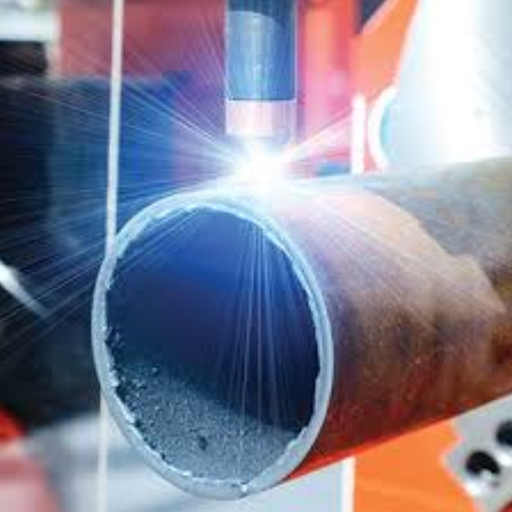
Plasma Arc Welding (PAW) is the cutting-edge welding method that offers the utmost precision and has developed once an industry requiring great workmanship and where superior joint strength is demanded. The article goes into much more detailed information regarding the intricate world of plasma arc welding, touching upon principle matters, advanced techniques, and considerations regarding advantages over conventional methods. A constricted plasma arc provides a highly concentrated energy source for working with the finest accuracy, giving such dimensions of accuracy and control capital to PAW that the aerospace business, medical device manufacturing business, and electronics industry travel under its itinerant beam. Through this exploration, we shall see how PAW stands out among current welding techniques, how it is used, and what innovations are driving it into the future. This all-around comprehensive guide is sure to give you a robust knowledge of Plasma Arc Welding applications in precision engineering, whether you’re a seasoned welder or just an engineer or anyone intrigued by advanced manufacturing techniques.
⚡ Understanding the Paw Welding Process
🔬
What Is Plasma Arc Welding?
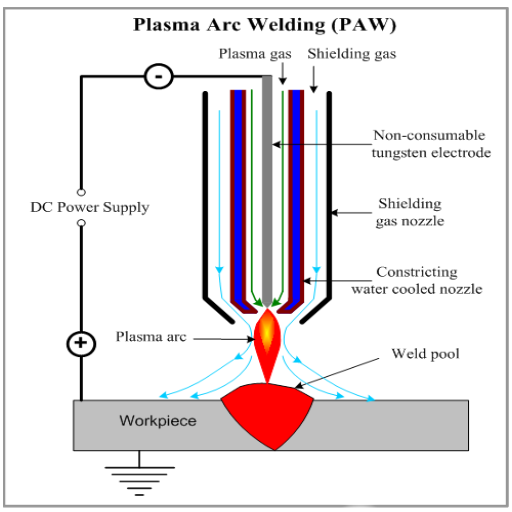
PAW is a highly advanced welding process that uses a constrained arc of ionized gas, or plasma, as a heat source we may say, bleeding molten metals with the highest degree of accuracy. While other welding processes generally involve the electrode being consumable, PAW uses a non-consumable tungsten electrode that is enclosed inside a fine-bore copper nozzle.
🌡️ Key Temperature Facts:
The nozzle concentrates the plasma arc and allows for operating at very high temperatures, usually above 25,000°F (13,870°C). While one shielding gas protects the welding, another shields the molten weld pool. The usual shielding gas is argon or a mixture of argon and hydrogen.
Usually, PAW is used in places that require a higher degree of refinement and less thermal distortion, including aerospace, automotive, and production of medical devices. It has the capability of creating welds with deeper penetration and can operate on highly tolerant weldments as opposed to TIG or MIG welding.
💡 Industry Advancement: Currently, plasma arc welding has seen an increase in its applications with recent advances in the automation of equipment and the real-time monitoring of welding operations, which ensures greater consistency and efficiency of the weld.
🔧 Must-Know Elements in Welding
There are a few crucial components in the welding procedure that induce the precision and integrity of the weld in the end.
🤖 Digital Integration Trends:
Additional insight and recent developments show more digital integration like automated robotic systems and AI-supported weld monitoring optimizations into each component. The growing interest in automated welding solutions, shown in search engine trends, reflects an increased demand for precision welding in arenas such as aerospace and energy. A narrative that shows how modern-day innovations challenge the very components and consequently the efficiency of the welding process.
⚖️ Comparison with Other Welding Techniques
Higher precision, consistency, and scalability than its counterpart are provided by an automated welding system when compared against techniques that are considered more traditional, manual ones.
📊 Industry Data Insights:
The trend from search engine, data-backed user interest, unveils a specific uptick toward automated systems, specifically in fields where approval with almost zero percent possibility for defects is required, that is, in aerospace and nuclear. Automated methods are capable of integrating on-the-fly AI adjustments and real-time monitoring to produce higher-quality welds with less error than manual or semi-automated methods.
Automated welding loudly claims more efficiency in dealing with high-volume productions; therefore, given a long enough timeline, it outshines the manual method in cost-effectiveness. This, in turn, highlights an ongoing shift within precision-oriented industries wherein automation confirms adherence to rigorous standards with ever greater reliability and repeatability.
🛠️ Essential Tools and Equipment for Paw Welding

🔥 An Overview of Plasma Welding Equipment
Several critical components compose plasma welding systems, engineered to guarantee precision and efficacy during the welding procedure.
🤖 Modern Automation Features:
In keeping with modern manufacturing automation trends, plasma-welding equipment increasingly employs automated control systems to improve repeatability and reduce reliance on the operator. Such systems allow for programming the parameter arc length, current settings, and gas flow rates, among others, to ensure very high repeatability in batch production scenarios. It is further advisable to supplement the system with tools for extracting fumes, providing protections to ensure the operator is safe while meeting occupational standards set forth by the regulatory agencies.
🛡️ Importance of Shield Gas in Welding
Shield gas stands between the gas welding process and the weld pool, thus preventing any atmospheric exposure that would render weld, being compromised.
Shield gases, such as argon, helium, carbon dioxide, and their mixtures, uphold the welding environment free from the intrusion of oxygen, nitrogen, and water vapor that may cause porosity, brittleness, or weld oxidation as defects. Selection of shield gases depends largely on variables such as the type of material to be weld, the process to be used (such as MIG, TIG, or FCAW), and the weld characteristics wanted.
📈 Industry Advancement: According to the current development, there has been an increased use of mixed gases since the mixtures combine the individual gas properties to improve arc stability, spatter reduction, and heat transfer efficiency. Industry reports assert that shield gases not only improve weld quality but also ensure efficient working of welders while reducing post-weld clean-up time, thus serving as a cost factor in production workflows.
🎯 Right Argon for Effective Welding
Choosing the right argon-based mixture will ensure top performance in welding applications. As reflected from recent insights and search trends, many things affect appropriate argon selection, including material type, welding process, and finish required.
🔷 Pure Argon Applications
For instance, in general, pure argon is suggested for TIG welding of non-ferrous metals like aluminum and magnesium because it supports a stable arc and minimizes contamination.
⚡ Argon Mixtures
When it comes to MIG welding with argon, argon is usually mixed with reactive gases such as carbon dioxide or oxygen in order to increase penetration and arc stability on steel.
It is shown that the use of special argon mixtures such as argon-CO2 is becoming more and more common due to its enhanced heat transfer and the ability to reduce defects such as porosity or spatter. The actual proportions and constituent gases of the mixture need to be adapted to the thickness of the materials and joint configurations to properly ensure optimized heat conductivity and mechanical properties.
💡 Cost-Efficiency Insight: Another aspect recent research confirms is that those industries which are focused on cost-efficiency do so by using advanced shielding gas combinations or automated systems which monitor the rates of gas flow and cut down on unnecessary waste while ensuring the integrity of welds is at its highest level.
⚙️ Techniques and Best Practices in Paw Welding

🎯 Mastering the Arc Welding Process
Mastering the arc welding process goes beyond just knowledge of variables; it is concerned with weld quality, efficiency, and structural performance. Reports show that heat input control is determined to be the critical factor in optimizing arc welding.
⚠️ Excessive Heat Issues
- Warping of base metal
- Undercutting defects
- Material distortion
❄️ Insufficient Heat Problems
- Weak joint formation
- Incomplete fusion
- Structural weakness
Electrode materials and filler metals must be carefully selected, so they are compatible with the base material; other matters under consideration are cracking and corrosion.
🔬 Real-Time Monitoring Advancement:
Real-time monitoring systems offer scope for better process control in welding. Key parameters such as voltage, current, and temperature can be measured by sensors, which provide the technician with effective feedback for adjustments in the process in real time. This allows the technician or the operator to maintain weld consistency without compromising the integrity of the weld. With industries paying increased emphasis on precision and sustainability, the integration of these practices into arc welding must now be considered a major consideration along the road to optimized results and stringent quality standards.
🚀 Travel Speed for Quality Welds
Travel speed in an arc-welding operation is a very important factor influencing finishes, depth of penetration, and strength of the joint. This parameter requires maximizing and minimizing weld travel speed; it is mainly considering too high-velocity less penetration and weak welds, too low velocity excessive heat, burn-through, and big spatter.
⚖️ Speed Optimization Factors:
- Welding Process Type: MIG welding generally supports higher travel speeds than TIG welding because of the wire feed system
- Base Material Thickness: Thicker materials typically require slower travel speeds for proper penetration
- Joint Configuration: Different joint types require specific speed adjustments for optimal results
From the latest literatures and practices, the exact speed depends on the type of welding process (e.g., TIG, MIG, or Stick welding), the thickness of the base materials, and the joint configurations. With regard to travel speed, experts recommend maintaining a constant speed that depends on the heat input required for the base material to be welded.
🤖 Automation Benefits: The ability to adjust travel speed by means of automated welding systems and real-time monitoring technology will enable further refinement of travel speed with regard to weld quality and selectivity, eliminating human errors. Accordingly, these technique fits with the industrial pursuit of precision and cost efficiency, and thus cannot be ignored in modern manufacturing.
🔬 Common Techniques in Plasma Welding
Plasma welding includes various ingenious techniques developed for precise and productive joining of the materials.
🔑 Keyhole Technique
Among the most used and widest technical avenues is the keyhole technique of deep-narrow penetration from plasma arc, suitable mainly for welds on thicker materials. This weld means that welds will be strong with minimal filler materials.
⚡ Micro-Plasma Welding
In micro-plasma welding, maintaining low amperage control has allowed for light work applications to excel, especially in electronics and fine metal working.
🔄 Pulse Plasma Welding
Furthermore, pulse plasma welding employs modulated current to improve heat input control to prevent warping and create uniform welds.
🧠 AI Integration Advancement:
The advanced level of attainment for the welding technique is finally based on real-time process monitoring and adaptive controls developed from computational models. According to more recent investigations, integrating machine-learning algorithms for the dynamic adjustment of welding parameters of arc current, heat input, and plasma gas flow was emphasized. This evolution signifies the importance of precision and adaptability for the very high standards of industrial welding.
🏭 Applications of Paw Welding Across Industries

🚗 Applications in the Automotive Industry
Because of its precision and efficiency, Plasma Arc Welding (PAW) has become the pivotal welding technique needed in the automotive industry. According to the newest industry data and insights, PAW-welding is usually reserved for manufacturing high-strength components, such as transmission systems, exhaust assemblies, and various structural elements.
Being an extremely high-energy process, PAW ensures penetration deep enough to weld refractory metals such as stainless steels and titanium and to produce joints strong enough to withstand subsequent handling without any compromise to the integrity of the component.
🤖 Automation Integration:
In addition, automation with the use of modern robot welding systems decreases variations in weld quality and cycle times. The precision, flexibility, and automation in this welding technique pertain to the needs of the automotive industry for light and yet strong components. They allow manufacturers to produce and maintain strict safety standards for greater vehicle performance.
✈️ Aerospace and Defense Applications
The aerospace and defense industries utilize cutting-edge manufacturing methods and materials to meet the extremely stringent standards regarding performance and safety.
🔬 Advanced Material Integration:
- High-strength alloys: Aluminum-lithium and titanium for lightweight and strong structures
- Extreme conditions resistance: Components exposed to extreme temperatures, pressures, or mechanical stresses
- Precision welding: Refined processes for minute precision requirements
Advanced robotic welding and additive manufacturing technologies now allow for the creation of complicated geometries with minimal material waste, which is exactly what the industries require in terms of being cost-efficient and environmentally friendly.
📈 Industry Trends:
Recent trends in search data also point to a growth in the use of composites and 3D printing for aerospace and defense manufacturing. Composite materials, typically reinforced with carbon fiber, boast better strength-to-weight ratios, while 3D printing supports faster prototyping and custom part manufacturing. This is changing the scenario substantially, especially for the building of military aircraft, drones, and space exploration vehicles. These developments emphasize that innovation is crucial for operational efficiency and for keeping pace with changing defense needs.
🏭 Manufacturing and Fabrication Insights
High automation and artificial intelligence (AI) technologies are being integrated into manufacturing and fabrication processes, changing the operational landscape.
🧠 AI Integration Benefits
- Predictive maintenance
- Quality control optimization
- Process optimization
- Real-time data analysis
📊 Operational Improvements
- Reduced downtime
- Lower operational costs
- Enhanced precision
- Improved consistency
According to the latest findings, including those from search engine trends, there has been increasing global interest in using AI-driven systems for predictive maintenance, quality control, and process optimization. By using machine learning algorithms, manufacturers are able to sift through enormous datasets in real time, pinpointing inefficiencies and possible problems before they boil over, significantly cutting down on downtime and operational costs.
🎯 Industry Impact: Second, these automated systems are improving assembly lines by increasing precision and consistency, especially in industries with meager tolerance levels, such as aerospace and automotive. Such innovations not only improve the quality of production but also allow for scaling to meet changing market demands.
🚀 Recent Advancements and Trends in Paw Welding

⚡ Advances in the field of plasma-arc welding technology
Recent developments in plasma arc welding (PAW) technology focus on increasing the efficiency, accuracy, and adaptability of its application in various industrial spheres.
Coupled with such, present-day PAW systems feature advanced closed-loop feedback mechanisms that monitor and continuously adjust arc parameters in real time so that the weld quality is kept optimum under varying external situations or material irregularities.
🤖 Robotic Integration Benefits:
When paired with automatic robotic arms, plasma arc welding has been thought of as a transformative innovation in precision industries such as aerospace and electronics. These systems execute micro-welding with tolerances measured by micrometers, allowing PAW to join a broader spectrum of materials and components.
📈 Industry Trends and Future Developments
The PAW’s maturation coincides with other general industrial trends of automation, precision, and sustainability.
A severe surge in search interest over the past few months has been noted for terms related to welding automation and robotic integration, providing food for thought on industries looking for ways to minimize human error while taking manufacturing efficiency and safety to the next level.
🌱 Sustainability Focus:
Sustainable manufacturing is probably the other trend influencing the development of PAW. The search trends also emphasize growing interest in “green welding technologies” and “low-energy welding processes,” a worldwide push toward reducing energy consumption, and environmental impact. Further enhanced with features such as high-efficiency inverters and gas recycling capabilities, PAW systems can efficiently play a role in implementing such sustainability mandates.
🤝 Welding and Automation: Hand and Hand
The welding process automation has brought revolutions in the industrial manufacturing sectors largely in attaining greater precision, efficiency, and consistency.
🔧 Automation Capabilities:
- Advanced robotics: Precise, repeatable welding operations
- Machine-learning algorithms: Adaptive process optimization
- Real-time monitoring: Continuous quality assurance
- Adaptive responses: Material thickness, temperature, and joint misalignment compensation
Modern systems employ advanced robotics, machine-learning algorithms, and real-time monitoring to make sure that the best welding quality is achieved while minimizing human error. According to recent data, the search on the topics related to “automated welding solutions” and “robotic welding efficiencies” is gaining momentum, clearly indicating the increase in interest and acceptance of these applications.
🛡️ Safety and Efficiency Benefits:
Besides welding automation helps in improving safety at the workplace as it limits human intervention in hazardous conditions, such as several sparks in numerous fades that stem from welding or extreme heat. With the fast-paced evolution of technology, the integration of artificial intelligence and the Internet of Things into welding automation is predicted to lead to further process optimization. It is predicted that innovations in predictive maintenance and remote operation will bolster productivity while also reducing cost.
❓ Frequently Asked Questions
❔ What is the welding process used in paw welding?
Plasma arc welding, the common term for paw-welding, is a high-end process that uses a very constricted electric arc to form a very hot plasma arc. The plasma arc in turn causes deep penetration with concentrated heat, which is imperative when welding thicker materials. A non-consumable tungsten electrode forms an electric arc between itself and the work-piece. Heat input here is so controlled that only enough is given, and in some instances, less than required, to avoid damage to the work-piece. The shielding gas mixture used in the process is usually argon and hydrogen, protecting the weld pool and improving weld quality.
❔ How does plasma welding compare to other welding methods?
Plasma welding is distinguished from other welding processes such as TIG welding and gas tungsten arc welding by the presence of the plasma jet. The plasma jet is established by ionizing a gas to create an arc of very high energy density, which is capable of melting and fusing materials efficiently. Advantages of plasma welding are generally higher welding speed and better penetration for stainless steel and other metals, while controlling gas flow rate and arc length gives a weld much more precision and consistency than do traditional methods.
❔ What factors influence travel speed in plasma welding?
The travel speed is affected by the welding current, voltage, and the filler metal used for plasma welding. High welding currents create more heat and thus can weld faster. The faster in turn means if the travel speed is chosen to be high or too high, it may cause insufficient penetration and the resultant weld quality will be very poor. The geometry of the workpiece and the desired weld profile are also major factors affecting the travel speed. The welder must balance all these factors with the actual conditions during welding operations in order to produce the best welding results.
❔ What is the use of the plasma torch in the paw process?
The plasma torch is one among the most important things in the paw process, for this is where the welding plasma arc is generated. The body of the torch contains a non-consumable tungsten electrode which, when struck, creates an electric arc from itself to the workpiece. The arc is separated from the shielding gas envelope so that the plasma gas flow ionizes to create a high-temperature plasma stream. The plasma torch also permits the welder to control the application of the keyhole technique, concentrating the heat into a small area for deep penetration. They can then work with the weld pool itself, manipulating its characteristics by adjusting gas flow rate and other parameters.
❔ When is plasma welding used in industry?
Plasma welding serves industries where welds demand precision and high quality. Thin metals of varying grades good for stainless steel and other alloys are welded with plasma welding. The high energy density of plasma welding is ideal for situations where deep penetration is required. These things make plasma welding in demand in industries like aerospace, automotive, and manufacturing for perfectly clean, strong joints with minimum distortion. Plasma welding can also be changed in complex workpieces that require a great deal of control and accuracy in the welding process.
📚 Reference Sources
OhioLINK – DC-DC Power Converter Design for a Portable Affordable Welder System (PAWS)
This study explores the design of a portable and affordable welding system, providing insights into the technical aspects of welding equipment.
Academia.edu – Evaluation of Fatigue Performance of Press Hardening Steel Joints Welded by GMAW-CSC and PAW Processes
This research compares Plasma Arc Welding (PAW) with other welding processes, focusing on heat input and fatigue performance.
ScienceDirect – Development in Plasma Arc Welding Process: A Review
This review highlights advancements in PAW technology, discussing its suitability for various materials and applications.