Each and every day, paper making, which has been an art as well as an industry for hundreds of years, is still very much a part of our lives. If you are one of those who think about our planet and its sustainable future, or you simply want to try your hands at a new creative activity, or maybe even have little artistic production project, then having a personal paper-making machine can be a huge step forward. Nevertheless, the first step is the hardest one to take. Tools that are just right for you, the whole process to be learned, and good suppliers to be found – all these can really tire you out. This paper intends to demystify the small-scale paper sector and will not only present practical issues but also give personal recommendations for the choice of equipment and material for your specific needs. With this all-encompassing view, you will become a confident and easy-going artist, or maybe a business person or just a curious one – whoever you want to be. Therefore, keep in touch with us and we will first present you with the essential tools, and after that, you will get a chance to work with the most trusted suppliers who will enable you to carry out your paper-making dream.
Understanding the Small-Scale Paper-Making Machine

What is a Small-Scale Paper-Making Machine?
A small-scale paper-making machine is a very simple but powerful device capable of producing small quantities of paper. It is an ideal solution for small enterprises, hobbyists, and eco-projects. Such machines take care of the entire paper-making process from raw material pulping to the formation and pressing of paper sheets, all done on a small scale. Today’s paper-making machines are greener and usually have recycled materials—waste newspapers, cardboard, or agricultural waste—as the raw material. They come in different types, including manual and semi-automatic, and the decision of which to buy mainly depends on the requirements and budget of the user. The advancements in technology have also been a major factor that some machines are equipped with energy-saving features and user-friendly systems, thereby making them suitable and practical for individuals or small businesses who wish to produce their own excellent quality paper.
Types of Small-Scale Paper Machines
Small-scale paper-making machines can be classified based on their principles of operation, level of automation, and paper type produced. The following list gives information about the most common kinds:
Manual Paper Machines
These machines suit small-scale businesses most where the budget is the main concern. The processes are mainly done by hand, and the machines are good for making handmade paper or short runs of specialty paper.
Semi-Automatic Paper Machines
Semi-automatic machinery is partly manual and partly mechanical, providing an intermediate option for those wanting to raise efficiencies without full automation. These machines are capable of dealing with different types of paper such as craft paper, cardboard, and even varying thickness of tissue paper.
Fully Automatic Paper Machines
The fully automatic machines are made to work faster and produce more, they will get most functions done by a computerized machine that does not need much of the workforce. These types of machines might have drying rooms, cutting machines, and precision management systems as added support, hence even large-scale production with limited oversight can be accomplished.
Recycled Paper Machines
The environment is the focus with these machines whereby they transform waste that includes but is not limited to paper, newspapers, and old cardboard into recyclable products. A lot of companies and people who want to lessen waste and also their CO2 output in the environment are going for such kinds of machines.
Specialized Paper Machines
These machines are fitted to produce selected paper types such as grooved, embossed, or fancy paper, usually used for packing, invites, or artisan goods. A specialized design can also contain extra modules for customization, like a unit for printing or laminating.
💡 Selection Tip: In choosing a machine, one should take into account the production capacity, the type of material to be used, energy consumption, and end-use. The latest information points to a sustained interest in and a growing demand for eco-friendly and energy-efficient models; features such as programmable controls and modular designs are becoming increasingly commonplace.
The Importance of Pulp in Paper Production
Pulp has always been the core material in paper production which normally comes from trees, recycled papers or was from other fibers like hemp, etc. The pulp not only supports the production but also is the basic element that decides the quality, feel, and traits of the paper. The choice of pulp directly affects the paper strength, brightness, and absorptivity, all of which are key features in various uses like packaging, printing goods, etc.
As per the information available, sustainable practices in pulp production are the focus of the paper industry. Many mills now prefer the use of recycled fibers or certified sustainable wood sources to lessen their impact on the environment. Technology has even made it possible to get less energy and water involved in the process due to the introduction of efficient pulping methods. All these factors signify the necessity of linking the production methods to green initiatives not only to fulfill the requirements of the consumers and regulations but also to secure the future of responsible and sustainable paper production.
Key Components of a Small-Scale Paper Production Line
Essential Machinery for Small-Scale Paper Making
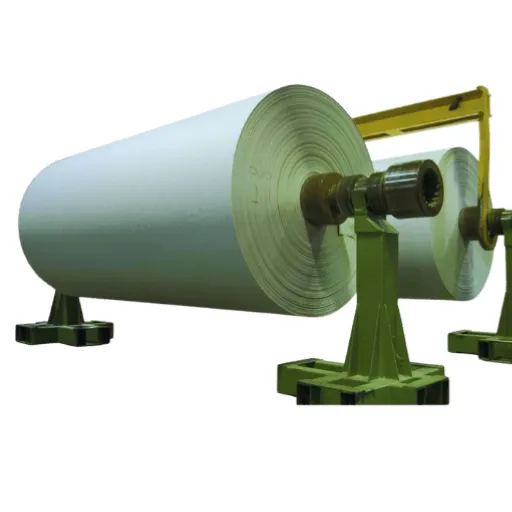
Small-scale paper production would not be possible without a variety of machines that are the key to the efficient and effective functioning of the production line. In this context, the following machines are the main ones usually necessary in a small paper-making unit:
Hydropulper
The hydropulper is a machine that takes over the role of separating the raw materials, i.e., recycled papers and plant fibers, into pulp. This machine is the main one in the paper production process since the fibers would be completely separated and mixed with water at the beginning of the line.
Refiner
After the hydropulper, the next step in the manufacturing process is the refining of the pulp where the fibers are combined again with the required amount of water to get the desired thickness and strength of the pulp. The pulp quality is important as it will impact the final paper so this step is very significant.
Forming Table or Paper Mould
During the production of paper, the forming table or mould is used to give the paper its shape. In fact, it regulates the thickness and the size of the final product by controlling the evenness of the pulp spread.
Pressing Machine
The machine drains the water left in the pulp sheet and at the same time thickening and strengthening it for drying. It is an energy-saving device suitable for a small manufacturing facility.
Drying System
The drying system usually consists of a set of heated rollers or a tunnel dryer which operates to eliminate the moisture still present in the pressed paper. With this step the paper will become strong and ready for use.
Cutting Machine
Lastly, the cutting machine utilized to trim the paper to the necessary sizes while catering to different product specifications.
With the help of new technologies in small-sized and energy-efficient machinery, small-scale producers are able to configure their setups according to their production capacity and budget. Today’s machines generally take up a smaller area and require a small amount of resources which makes them the right choice for sustainable production practices.
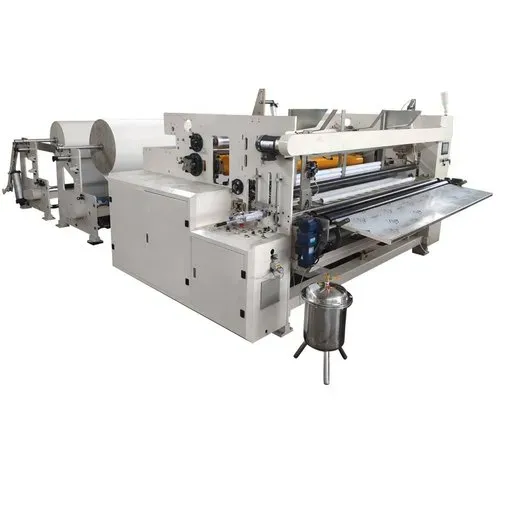
Role of the Paper Slitting and Rewinding Machines
Paper slitting and rewinding machines are essential to the paper production and converting industries, providing efficiency, precision, and flexibility. These machines are designed to convert the original paper rolls into smaller ones, based on the required dimensions, by slitting them and then rewinding them into rolls that are more suitable for different applications. Recent data and trends from search engines have shown that there is an increasing interest in these machines as they find more applications in various industries like, packaging, printing and tissue production.
The use of modern paper slitting and rewinding machines has led to a significant increase in the accuracy of operations and a corresponding decrease in waste, thus satisfying the changing requirements of sustainable production. Besides, the majority of manufacturers today are using machines with enhanced energy efficiency as a way of meeting environmental regulations and cutting down operating expenses, which is the reason for the strong search interest in eco-friendly machinery solutions. Regardless of whether the production is on a small scale or to meet large industrial requirements, these machines are critical in customizing the paper products as per the diverse market needs.
Investment in Fully Automatic Toilet Paper Making Machines
According to the newest data from search engines, there has been a clear increase in the popularity of fully automatic toilet paper-making machines. This trend suggests that companies are beginning to see automation as the solution to their production problems and the way to meet the customers’ high expectations. The financial aspect of buying such machines is not the only benefit; there are many others, such as increased production efficiency, reduced labor costs, and improved product quality. Besides, a good number of these machines come with environmentally friendly options, which is a plus since sustainability is the new trend in manufacturing. Those companies that go for fully automatic toilet paper making machines are more likely to maintain a competitive edge in a market where productivity and environmentally friendly operations are key to success.
Choosing the Right Supplier and Manufacturer
China’s Leading Suppliers of Small Scale Paper Machines
According to data from search engines, the following suppliers have been recognized as leading manufacturers of small-scale paper machines in China:
📌 Important Note: Their quality, technological advancements, and customer support have made these suppliers the most appealing ones. Companies in search of suppliers are advised to consider not only the machine specifications, but also after-sales support and how well the supplier’s sustainability goals align with theirs, in order to guarantee a smooth and productive relationship.
Quality and Reliability Assessments for Manufacturers
When it comes to manufacturers, the aspect of quality and reliability can sometimes be difficult to detect if the evaluation method used does not involve user reviews, industry reports, and the very latest data from search engines. The most important factors to be taken into consideration are customer reviews, product performance evaluations, and the reparation of service problems. Generally, those manufacturers that are able to continually discover new ways to keep up with the modern quality expectation—such as by the use of energy-efficient technologies or taking eco-friendly measures—will be rated higher in respect to quality and reliability. Besides, there are ISO standards or other industry-recognized benchmarks that can be used as a proof of quality. The use of search engines in the form of tracking market trends, competing with the rivals on a comparison basis, and digging out the latest information about specific manufacturers in order to make intelligent and strategic decisions can be one of the supporting reasons for the companies to opt for such a method.
Comparison of Prices for Small Scale Paper Machines
It is essential to compare the prices of small-scale paper machines when the decision is based on such factors as the production capacity, energy efficiency, and other features offered by different manufacturers. The data from search engines suggests that the cost could be really wide-ranging depending on the particular model and producer.
The balance of cost and factors like durability, maintenance, and operational efficiency is crucial. Furthermore, there are geographical price differences determined by shipping and supplier availability. A price comparison involving all the costs and looking at the long-term operational costs is a good way to make small businesses invest sustainably.
Application and Uses of Small Scale Paper Machines

Producing A4 and Printing Paper
Small-scale paper machines are crucial in the world of A4 and printing papers production, which are the main paper types used in offices, schools, and commercial printing units. The recent search data indicates that the global demand for A4-size paper is steady and over 400 million metric tons of paper are used every year. The standard dimensions of these papers together with their compatibility with printers and copiers worldwide make them very popular.
The use of small-scale machines makes it feasible to produce in a selected area and thus to reduce the dependency on big imports. Furthermore, the adoption of recycled pulp or farm waste as a raw material would be very cheap and at the same time would draw the attention of the consumers who care for the environment. The combination of the economical processes with the top-notch output guarantees that these machines are able to meet the rising demand across the board while still being nice and green on the one hand and pocket-friendly on the other.
Crafting Tissue Paper and Toilet Paper
The fabricating of tissue and toilet paper entails a very meticulous procedure as the perfect blend of substances and machines needs to be strictly controlled in order to get the output that meets the consumer’s requirements of being soft, strong, and eco-friendly. Trends in recent searches show that the market for green alternatives is expanding, with “recyclable toilet paper” and “sustainable tissue paper brands” being some of the most popular keywords. This development reflects the increasing preoccupation of the consumers with the environmental consequence of their selections. Usage of recycled fibers or bamboo pulp by manufacturers can both meet the demand of the market and reduce their ecological impact at the same time. Moreover, the manufacturers are able to offer their products at a lower price and with good quality because they rely on the latest technology to automate the production processes and optimize the energy usage which is the preference of today’s environmentally conscious market.
Packaging Solutions: Kraft Paper and Roll Paper Production
In comparison to other types of packaging, kraft paper and roll paper are becoming increasingly popular not simply for their versatility but also for the environmental benefits they offer. Latest search data reveal a complete turnaround of consumer interest towards eco-friendly packing solutions, as evidenced by a surge in searches for biodegradable and recyclable materials for various applications. Kraft paper’s good quality and high tear resistance make it suitable for wrapping and bag production, while the paper in rolls has become indispensable in industrial packaging and shipping.
Leading the way in sustainable packaging choice are kraft paper and roll paper. The reason lies in their production process and life cycle when asked about the question. Kraft paper is made from natural wood fibers and treated with a chemical pulp process that causes little waste and at the same time makes the material very strong, thus making it a renewable and environmentally responsible choice. Roll paper’s flexibility and convenience also contribute to less packaging waste, thus being inline with the requirements of eco-friendly businesses. The use of these materials not only provides a practical packaging solution but also travels along the road of global sustainability trends that meet both the economic and ecological demands.
Future Trends in Small Scale Paper Production
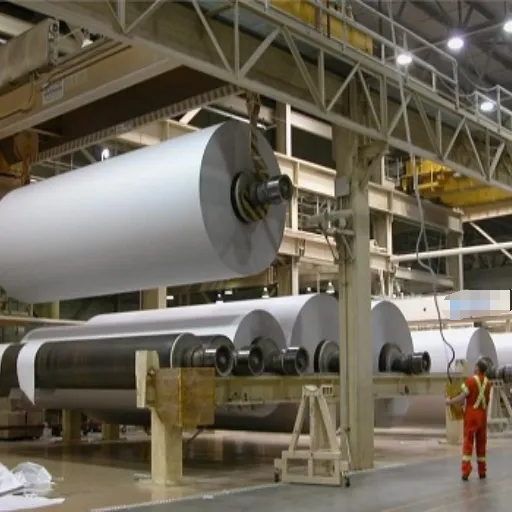
The Paper Industry’s Waste Paper Recycling Influence
Paper waste recycling has made a great impact to the paper production industry by greatly cutting down on its reliance on raw materials as well as its negative effects on the environment. Recent data show that the rates of paper recycling for paper production globally have no longer been at the same level but the guess is that more than 60% of the paper that is being used all over the globe is recycled now. This shift not only saves natural resources, such as trees and water but also decreases the amount of carbon dioxide that is released during the process of making paper. The recycling industry is also a part of the circular economy where instead of making new materials out of the used paper resulting in waste, the used paper gets into a sustainable loop of being turned into new materials, and the waste is minimized to sent to dumps. Furthermore, the paper-making waste has been sorted into categories for recycling and the recycling technologies have come a great way towards that, and the recycled paper has been applying its quality in the ruling of the production processes that have been dependent on virgin fiber. The wastepaper recycling integration not only solves the concern of the environment but also fulfills the market demand for eco-friendly and cost-effective paper products driving the industry to a major reliance on the Recycling process.
Paper Machinery Emerging Technologies
The paper machinery sector is changing and is adopting through the use of advanced technologies the efficient production and the sustainable end product coming with a great deal of invigoration. One of the most amazing changes is the application of artificial intelligence (AI) and machine learning (ML) technologies to production process optimization. The monitoring and adjustments done to production are in real-time. Hence, less energy is spent and there is little or no waste generated. Automation that includes robotics for material handling and packaging has led to more production cycles with less error counts even though production has been made faster.
The IoT is another significant breakthrough as it allows for a detailed understanding of the entire process via collecting data through sensors. At the same time, IoT takes preventive measures on the equipment in place to avoid maintenance leading to downtimes which would be very costly and also ensuring that the operations are uninterrupted. Environment-friendly innovations, such as waterless paper processing and bio-based coatings, are also making strides—responding to a global call for sustainability by reducing the industry’s reliance on water and nonrenewable resources.
Paper machine technology is evolving in the way that it not only meets the growing need for environmental-friendly practices but also corresponds to the changing market dynamics. Through AI, IoT, and green technologies, the paper Machinery sector is likely to be the trailblazer of the eco-friendly future with its profitable and environmental friendly innovations.
Small-Scale Paper Sector Business Opportunities
The small-scale paper sector is a source of numerous chances for businesspeople, not the least of which is the increased demand for products that are both eco-friendly and sustainable. Recent research of search engine trends data indicates that interest from consumers in products like recycled paper, handmade paper, and biodegradable packaging has been increasing steadily. The main reason is the increase in public consciousness about the negative impact of single-use plastic and the global shift toward green products has facilitated the transition.
The small paper producers can use the lucky break of this demand trend for niche products like high-quality paper, customized packaging, and eco-friendly disposable items made from natural fibers. The investment in cost-effective recycling technologies and the collaboration with neighborhood suppliers can not only reduce the production costs but also enhance the profits in the long run. Companies in this field can not only use online platforms for marketing and selling products to reach more customers but also gain a reputation for being eco-friendly by using technology, and creativity, and being concern with the environment. Thus, the small-scale paper sector is seen as a vibrant and attractive business opportunity adapting the combination of technology, innovation, and environmental consciousness.
Frequently Asked Questions (FAQ)
What is a small scale paper making machine?
A small scale paper making machine is a compact apparatus that operates on a smaller capacity and is mainly used for startups and small companies. These machines are capable of converting waste paper into quality paper pulp which is then sheeted. Generally, they are provided with PLC control systems that enable very accurate operations. The adaptability of these machines allows for the manufacture of various kinds of paper such as kraft, tissue, and even disposable cups. Suppliers frequently provide these machines along with a 1-year warranty, which makes it an investment for the paper production operation that is trustworthy.
How does the production line of a paper making machine work?
A paper machine’s production line consists of various processes, initiating with pulp preparation. Waste paper is fed to the machine which then produces slurry and the slurry undergoes several stages until it is finally pressed, dried, and transformed into paper. Typically, depending on the kind of paper, finishing equipment such as slitting or rewinding would be required. Understanding this entire process is very critical for a future player in the paper industry.
What are the advantages of investing in a small scale paper production machine?
Investing in a small scale equipped paper production machine brings a lot of gains. Recycling of waste paper is the first benefit that helps in making a green earth. Convenience in the business of being able to produce a variety of paper products like tissue or packaging is another advantage. The upfront investment is usually lower compared to the big industrial machines, hence it is within the reach of small businesses. Moreover, the machines very often require low technical know-how making them suitable for the entrepreneurs who are new in the paper making industry.
What types of products can be made using small scale paper making machinery?
The range of products that small scale paper making machinery is capable of producing includes, but is not limited to, kraft paper, tissue paper, and specialty products like paper cups and napkins. The facility to use various kinds of paper pulp in the production process leads to customization of the overall production process. This sort of flexibility makes it quite an attractive alternative for companies who want to target specific markets. In addition, the equipment can be arranged to yield either roll paper or sheet formats depending on the consumer needs. Overall, the need for different product offerings makes these machines essential in the paper manufacturing sector.
What is the typical price range for a small scale paper making machine?
Small scale paper making machines vary a lot in price with the features and the capacity of the machine being the biggest factors. The price range will be a few thousand dollars to tens of thousands of dollars. The degree of automation, other machines like packing, and the manufacturer’s reputation are the main factors that will decide the final cost. It is very necessary to do a good comparison of different options and take long-term benefits into account along with the initial outlay. Buying machines that are certified to meet industry standards will help you avoid production problems in the future and it is your very important that only such machines are purchased.
How can I choose the right supplier for my paper making machine?
Selecting the right supplier for your paper making machine will greatly affect the quality and the reliability of the machine. Choose suppliers who have been in the industry for a long time and have proven their reliability, and if possible, those who supply fully automatic machines along with technical support. Besides, it would be a good idea to look up customer ratings and reviews to get an idea of the service provided. Moreover, ask about the warranty coverage, a one-year warranty is quite a good assurance about your investment. Besides, be sure that the supplier is capable of fulfilling your specific factory needs of machinery and after-sales assistance.
Reference Sources
Design and Fabrication of Low-Cost Paper Recycling Equipment
This paper discusses the environmental impact of paper manufacturing and the design of cost-effective recycling equipment for small-scale use.
Design of Manually Operated Portable Paper Recycling Machine
Focuses on a small-scale, manually operated machine designed for recycling waste paper, particularly in schools or small communities.
Paper Recycling and Paper Plate Forming Machine
Explores a project aimed at recycling paper into new products like plates and cups, emphasizing small-scale production.