UV laser etching has been an incredible technology when it comes to precision and innovation. It is an up-to-the-minute technology that has been in the market, impacting every industry all over the world with its high levels of precision and speed of engraving and the range of materials on which its technology can be used. From designs that are intricately planned within medical devices to high resolution engravings on electronic components, UV laser etching never ceases to charm us with new possibilities while the traditional ways fizzle away. But what draws our attention to this technology? How could it work? What amazingness can this method serve us with? In the subsequent paragraphs, let us, therefore, begin to discover the potential applications of UV laser etching and benefits of the technology and demonstrate its effect as a game specialization in the world of highly precise engraving. Let’s see why the course of research-and the one at hand type of laser treatment-is reshaping the concept of etching beyond etching per se.
Understanding UV Laser Technology
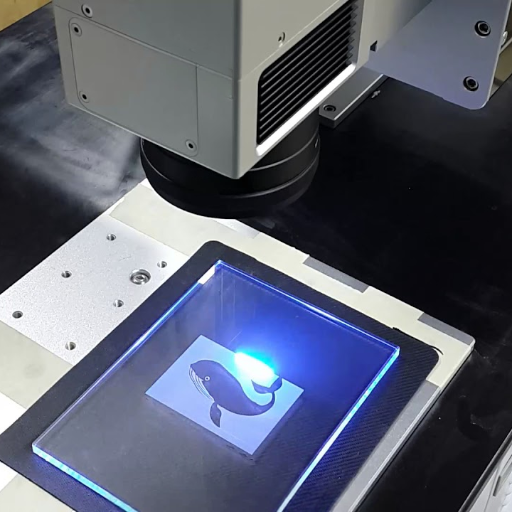
UV laser etching employs ultraviolet radiation to artistically mark or cut materials through the surface at unimaginable accuracies. How it works is that the laser beam that is highly focused is directed at the surface of the material, this beam breaks component bonds, leaving a mark, without having to produce a lot of heat. It is very precise, doesn’t cause much damage to other areas, as other methods tend to do, can be used on a variety of materials, and produces fine details. In the field of electronics, health care and manufacturing where quality and accuracy are important, UV lasers are mostly applied.
The Science Behind UV Laser Etching
Involving photochemical reactions, the UV laser etching breaks material bonds at the molecular level. The ultraviolet (UV) laser generates high-energy photons that are absorbed on the surface of the material, thereby causing structural disruption in the material by minimizing the temperature. Known as “cold marking,” it distinctly sets UV laser etching apart from other laser technologies, which are heat-intensive and could likely lead to thermal stress or distortion.
Based on compiled recent information, the field of UV laser technology is slowly and steadily displaying critical importance in industries with precise specification requirements. Thus, the ability to etch heat-sensitive materials like medical-grade plastics, glass, or silicon wafers makes UV laser etching a necessity for applications in semiconductor production, medical device marking or the manufacturing of microelectronics. With this good side is a slight reduction in the impact on the environment compared to traditional methods, since no chemical treatments or high energy consumption is needed.
How UV Laser Engravers Work
For ultra-violet laser engraving, the UV excimer laser light beam directly alters material from the surface at a microscopic level. The UV laser pulses a focused beam of light onto the material, and due to it being around 355 nanometers in wavelength, it interacts with the target material, breaking molecular bonds in the light’s contact area as well as evaporating the rest of the material. The precision it offers allows detailed and controlled marking without much heat damage being imparted onto the surrounding area.
A very important advantage of UV laser engraving is that it can perform “cold marking.” The UV laser does not produce very much heat, unlike other lasers during this marking process, which is particularly useful for delicate material and heat-sensitive materials such as plastics, glass, and thin metals. Furthermore, it lessens the likelihood of warping, discolouration, or surface damage, maintaining the finished appearance and structural integrity of the material.
The combined enhancement of computer control systems and the pinpoint guidance of the laser beam straightforwardly improves the performance of a UV laser engraver. These systems are effective in engraving rather intricate design work, serial numbers, and really tiny, fine text alike while keeping the consistency of the work. In view of the precision, adaptability, and efficiency of UV laser engraving equipment, industries that require high-quality marking of objects without OPC should consider their application.
Comparative Overview: UV Lasers vs. Fiber Lasers
The comparisons between UV and fiber/UV lasers, therefore, are a function of wavelength and the range, the wavelengths and their associated materials, and the extent to which these objects have driven changes in their typology. For this very reason, UV lasers, having been designed to have a shorter wavelength, throw a beam that will suit any sensitive material in the 355nm range, while also rendering excellent precision marking. Diminishing the heat affected area increases the resilience of the material.
Contrariwise, fiber lasers are of a longer wavelength, generally in the realm of 1064 nm types and constitute oxidation ablation as opposed to absorption process. So, fiber lasers specifically mark metals while aiding in stainless steel, aluminum, and various other materials. They are very efficient in regard to faster operating speeds and low power utilization, ideal for high production and enterprise environments.
Although fiber lasers are famous for their precision metal-marking ability and general robustness, UV lasers are highly preferred for applications requiring exceptional detail as well as for materials that cannot readily tolerate heat. Industry selection of laser type depends on material compatibility, economics, and detail requirements. Both seem to give advantages not conferred on the other, catering to distinctive industrial requirements.
Applications of UV Laser Etching
Materials Compatible with UV Laser Engraving

Plastics: Versatility and Applications
UV laser engraving works incredibly well on a vast range of plastic materials: one of the most versatile solutions for a diverse range of applications. Plastics that are compatible with UV laser technology include polycarbonate (PC), polyethylene (PE), polypropylene (PP), acrylic (PMMA), and polyvinyl chloride (PVC). UV laser engraving allows very fine and precise markings on these materials with practically no thermochemical deformation or incisions.
That is why UV laser engraving technology is most suitable for industries like automotive, medical, and consumer electronics where the application of markings — such as barcodes, serial numbers, logos, etc. — needs to be ever so fine and detailed. For instance, the application of polycarbonate for engraving durable identification tags and, in other cases, the use of acrylic for signage and decorative items. The versatility of UV laser engraving with different plastic types caters for its operational efficiency among various sectors, addressing functional and aesthetic needs.
Compatible Plastic Types
Glass Engraving: Achieving Intricate Designs
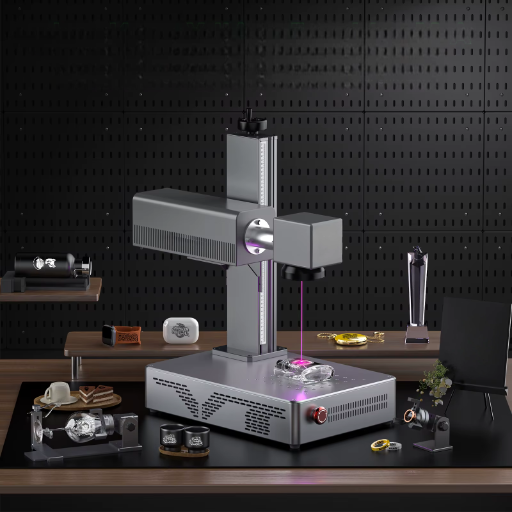
The compatibility of glass with UV laser engraving is owing to its precision ability in creating highly detailed designs. The laser interacts with the surface of the glass to acquire smooth and elaborate patterns with no dent whatsoever on the structural integrity. Consequently, it may be used for decorative art pieces, company logos, or text on an array of glass items including trophies, drinkware, and display objects.
One of the prominent superior points of UV laser engraving on glass remains its non-contact process. The approach utilizes no physical tools, eliminating the possibility of pressure cracking or damage. It, therefore, enables engraving onto otherwise thin or delicate glassware in fine detailing while retaining the original aesthetic qualities. Also, since UV lasers are able to produce highly repeatable results, this makes for a significant asset for mass customization and high-volume production.
There are functions in a glass UV laser engraver that go beyond aesthetics. One can also engage in functional protection, including holographic techniques that offer tampered protection for identification or other uses, or one can employ UV laser engraving in applying dimensional scales to laboratory apparatus. Given the precision, flexibility, and versatility conferred on this method across the board for work on glass substrates, UV laser engraving is one of the best methods to work with glass substrate.
Metals: Surface Treatment and Marking
Among the available treatment methods, UV laser marking and engraving are the finest, providing high accuracy and detail. The process can be used to put a high-clarity logo on bright types of metal, stainless steel, aluminum, and titanium. Very fine details are required in such an industry for serial numbers, barcodes, or intricate logos; thus, such a job has to be in an etching process, as it is a no-touch method that protects the materials’ integrity.
One more advantage of the use of UV lasers is that they not only engrave on the material but also provide some treatment on its surfaces, such as annealing, which changes the color of the material on the surface without its removal. This is very useful when targeted: when it comes to medical devices, aerospace components, and jewelry, attention must always be paid to durability and color aesthetics. The high level of precision in UV laser engraving results in fewer heat-affected areas and a reduced potential for material distortion; this guarantees the best-possible neat finish.
UV laser engraving has been preferred by industrial firms for its productivity and adaptability to meet not only stringent quality control standards but also get engaged wherein it is essential for mounting metal surfaces and treatments.
Advantages of UV Laser Etching
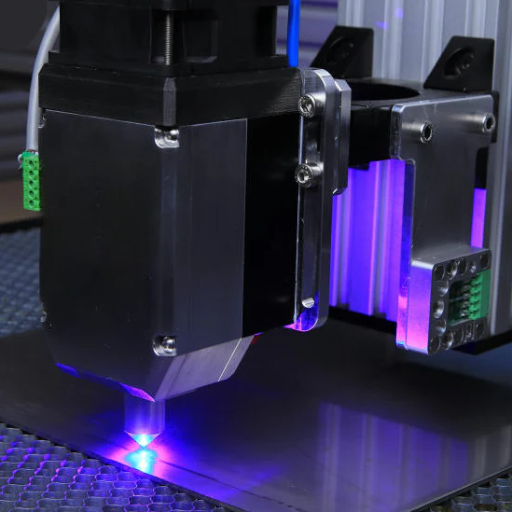
Speed and Efficiency: 100x Faster Processing
UV laser crystallography processing is expected to produce unlimited speed and efficiency in applications such as those in high technology. In the field, it can process materials up to 100 times faster than conventional methods, reducing lead times by huge leaps. With this possibility of welding materials fast, the sectors are able to maximize workflow, meet deadlines that are well-defended, and raise productivity across the board while ensuring highest quality.
Highly precise UV laser etching guarantees fine second-to-none results even when performing at high speeds. In process optimization, it dramatically ameliorates the appearance of bottlenecks in production lines that would otherwise impede the effective leveraging of large-scale manufacturing. In UV laser beam manufacture, they may replace additional deep, time-wasting methods wherever high-quality and cleared-off surfaces are desired for intricate designs or accurate markings.
In addition to cost-effectiveness, UV laser etching is also more economical over time. By reducing the labor requirement, as well as ensuring consistency, businesses can reach better and improved resource allocation and enhanced profitability. The efficiency, the preciseness, and the cost-effectiveness are the reasons why UV laser etching is a must-have tool for companies that prioritize both speed and high-quality production.
Detail and Precision: 10x Finer Detail
UV laser based etching technology provides an all other impressive advantage by delivering superior precision for applications needing truly detailed engravings. This technology has a very tiny wavelength and works with resolutions up to 10 times smaller than traditional methods. It usually cuts without any heat effect, developing clear deep engravings, on substances as delicate as glass, plastics, and metals. The electronic industry, medical components industry, among others in which the exact engraving of micro markings on components, circuit boards, and devices are issues around which these industries have very much benefited from the accuracy that UV laser technology provides. UV engraving or marking with the accuracy in combination with the minimal intrusiveness of this technique stands out as a cutting-edge technology in highly detailed processing and customization work.
Durability: Long-lasting Results
UV laser etching promises very hard-wearing characteristics — thus providing a guarantee of lasting clarity and legibility of inscriptions against the forces of nature. Under an almost impenetrable shrink-wrap, the laser marks the object’s surface on a very shallow level, sealing all its permanence against severe weather conditions — rigged up to forge a life-long reliability. Industries that consider long life an important factor, such as the automotive, aerospace, and medical fields, go for such laser etching for the way its unique crafting can bear adverse construction, chemical abuse, and complete wear and tear over many repeated handling. The UV laser etching process has become first choice within industry sectors that find long-stay achievement as a necessary condition for safety, traceability and brand identity. The resistance to the effect of time on the finish done at the etching process practically means that there is no need for routine replacement or re-grooving; that translates into a cost-premier system with guaranteed quality relayed by spot-ons.
Choosing the Right Laser System
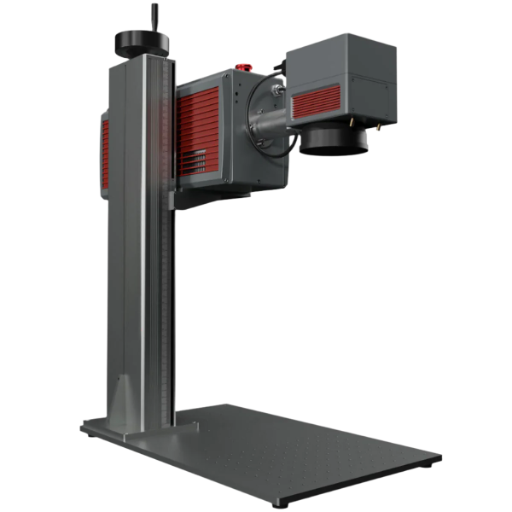
Types of Engraving Machines Available
CO2 Laser Engravers
These machines are versatile and excellent for engraving organic materials such as wood, leather, glass, and acrylic. Various industries, including signage and arts and crafts, are appreciative of their effectiveness.
Fiber Laser Marking Machine
Fiber lasers are widely used to leave marks on metals and particular plastics. They are popular for high precision and durability and are being widely utilized in the automotive industry, aerospace, and electronics for their ease of operation and scope of working for intricate designs.
UV Laser Marking Machine
One of the key features of UV lasers is that they provide an impressive contrast and enhanced detail to any marking process. The engraving of very delicate and heat-sensitive markings is another common application of these lasers.
Dot Peen Marking Solutions
These are mechanical devices that use a metal pin to indent surfaces, mostly metal and plastic. Typically, they are used for permanent part marking and serialization in the manufacturing sphere.
The unique benefits of each type call for consideration according to more particular material and performance specifications.
Key Features of a Laser Engraver
The use of laser technology for marking and engraving has transformed the global landscape thanks to the innovation of the geometry-clever, input-output machinery that embodies precision, universality, and thematic adaptability. Here are significant aspects of laser engravers:
-
01
High Estimation in All Accuracy
Laser engraving allows for extremely fine detail with an artist-like accuracy, enabling the effective completion of appropriate artwork, fine text, or intricate patterns. This exceptional accuracy demonstrates the high demand on such industries as jewelry making, medical device fabrication, muzzle loading firearms, or electronics.
-
02
Material Flexibility
An important feature of laser engravers is that they can work with a wide range of materials such as wood, acrylic, plastic, metal, glass, leather, and more. That is why adaptability in the portrayal of the field of applications and industrial crafting must be addressed.
-
03
Non-Contact Processing
The laser does not touch the material physically as does a mechanical engraving tool when doing the work at hand. This no-touch retraction usually contributes to reduced wear on the machine, minimal material damage, and a cutting-compromised finish. Most importantly, the requirement of contact is irrelevant.
-
04
Speed and Efficiency
The machine can work at high speeds, decreasing time-to-manufacturing significantly with no degradation in quality. This is particularly noteworthy in an environment where mass production is appreciated.
-
05
Personalization for Adaptation and Automation of Work
These days, software integrates advanced capabilities that allow easy customization of your designs. Most such machines come with significant automation capabilities, hence easily usable at an industrial level.
-
06
Lifetime of the Etchings
Laser-engraved marks usually have a high degree of resistance to wear, heat, moisture, thus fetching a better outcome for products that mind only on pure and eternal presence. A fine example of these would be barcodes, serial numbers, or even the most brands.
-
07
Eco-Composite Material
Another characteristic of laser engraving lies in its absence of inks or any other consumables used in the course of any other traditional and old technique. This contributes to be a kind of eco-friendly approach in this form of clean and lean production.
Their functionality allows laser engravers to cater to a variety of creative activities, industrial applications, and commercial activities — the driving force behind their popularity across a wide range of applications. Choosing the right laser engraver entails figuring out the exact purpose, material needs, and outputs in order to benefit from this invaluable bonus.
Rotary vs. Flatbed Systems
Rotary systems are ideal for cylindrical objects, while flatbed systems excel in engraving flat surfaces.
| Key Point | Rotary | Flatbed |
|---|---|---|
| Use Case | Cylindrical items | Flat surfaces |
| Material | Glass, metals | Wood, acrylic |
| Precision | High for curves | High for flat engraves |
| Setup | Complex | Simple |
| Speed | Slower | Faster |
| Cost | Higher | Lower |
| Flexibility | Specific | Versatile |
Reference Sources
-
UV Laser Microprocessing and Post Chemical Etching on Ultrathin Al2O3 Ceramic Substrate – Explores the parameters and effects of UV laser microprocessing on ceramic substrates.
-
Ultraviolet Laser Technology and Applications – A comprehensive book covering UV laser technology, including its applications in cutting, welding, and engraving.
-
Interaction of Laser Radiation (UV) with Materials – Discusses the effects of UV laser radiation on materials, including its use in marking, engraving, and cutting.
-
Ultraviolet Laser Ablation of Organic Polymers – Examines the interaction of UV laser pulses with polymer surfaces, focusing on etching and ablation processes.
- Top CNC Laser Marking Machine Manufacturer and Supplier in China
Frequently Asked Questions (FAQs)
What makes a UV laser system superior to the conventional laser engraving machine?
A UV laser marking system operates through a short-wavelength ultraviolet laser that produces ultra-fine marks with a much smaller spot size than a standard laser is capable of. This allows for faster engraving or marking at the highest resolution without any damage to the material. The UV laser offers multiple advantages: it can be used on materials that are structurally delicate, like glass, plastic, and metals that are coated without damage; this type of laser system effectively acts as a cold laser. With CO₂ and infrared lasers, charred marks and heat-affected zones are common features, and this is a thing of the past with UV lasers. The optics and optimized laser head are quite capable of focusing maximum energy density on any particular point substrate; hence, the laser could achieve intricate patterns, 3D engraving on some surfaces, and even crystal engraving with minimal thermal stresses.
Can a full spectrum laser system be used for creating marks on metals and other common materials?
A full spectrum laser system is made up of various laser sources aligned with one another or they are interchangeable, and due to this, it is suitable for choosing the lasers on each kind of material. A UV laser source in a full spectrum exhibit is highly efficient for marking metals, if properly set up with optics and some surface support. Different wavelengths can be best for cutting or engraving organic materials or for producing char that can be seen. Perfect energy levels and the laser marking machine’s correct settings will enable laser marking or engraving on metals, plastics, ceramics, glass, or coated materials with the consistent surface marking results.
What are the benefits of using a 5W UV laser or a UV laser cutter for very fine marking?
A 5W UV laser is able to produce laser marking and engraving tasks with a high level of energy density for achieving very fine marks with all the precision required. A 5W UV laser in comparison to low-power UV diodes can mark more rapidly and yield penetration through various coatings while also being a cold laser, thereby avoiding scorching or burning. Shorter wavelengths facilitate UV laser cutting of ultra-thin materials and provide for significantly more detailed cutting, with minimal kerf, compared to CO₂ laser cutters for some substrates.
How do UV lasers provide marking capability on delicate materials without damaging them, using short wavelength light?
Since UV lasers are characterized with shorter wavelength that can work on a molecular scale, these lasers are second to none for bond cleavage, and they are achieved most photomechanically more often than thermoablative. It is the features of UV lasers to provide very good results in marking delicate materials even though the thermal dispersion is high due to char and deformation. As a result of their creation, they bring forward a surface marking to the very limits of precision still undergoing complex surfaces. In this way they can print on plastics, paints, coated metals with zero loss to the original attributes of the base material.
Is it practical to substitute a machine based on UV laser for all other types of cutting lasers? Or is this not a very specialized laser here?
In many cases and at the micromachining level, the employment of a UV laser may be desirable, for there are applications in need of an ablation laser system, but undoubtedly still, it is not true that CO₂ lasers can be replaced. Those specialized UV applications grant a high level of precision, especially for fine marking, not to cut very deep, up to 3D engraving on plastic and glass, and so to some extent can mark metal surfaces free from distension. CO₂ lasers have the benefit of depositing carbon unto organic surfaces that provide glory to the colored finish. Hence most fabrication shops will most likely use an ultraviolet laser for those times when they are working on little detail whilst having to do some cutting. CO₂ lasers may occur for most times when a decent deal more equipment is required for somewhat major cutting, where quite often the material collection comes into play.
What are some considerations when selecting a UV laser system for crystal engraving and marking upon curved surfaces?
The main parameters to be considered for selection of a UV laser for crystal work is specified to engrave and mark on curved surfaces, among which are the power of the UV laser (output 5 W), the source of light (galvanometric vs. XY table type), and the lens’ self-focusing ability to hold focus on the stock surface at various relief angles. That would make the company provide a fair and tough optics system, quality industrial components with a software which is capable to adjust for surface curvature for the engraving program to run beautifully, as a final assessment. Examine closely the laser machine’s ability to engrave on common materials; it should run on lesser char and should give more freedom to use the very minimized spot size desired by those looking for detail and a degree of fine feature control by 30x smaller than in a regular laser system in ability.