Fraud Blocker
UDTECH

Precast Boundary Wall Making Machine: A Comprehensive Guide

Precast Boundary Wall Making Machine: A Comprehensive Guide
Introduction to Precast Boundary Walls
Facebook
Twitter
Reddit
LinkedIn

In contemporary building and civil engineering works, it is crucial to emphasize both the effectiveness of solutions and their longevity and efficiency. Among modern tools, one which is being employed more and more frequently is the precast boundary wall making machine. Such equipment accelerates the making of walls and the best precision and level under construction. If your work involves as a contractor in the construction industry, or as an architect that targets efficiency and boosting worker productivity, then it is crucial that you know what this machine can do and why it has been invented. In this article, we aim to discuss anything about these machines, including the remarkable features, functionalities, and scope of use of precast boundary wall making machines. Read on and discover how this technology can improve your efficiency in accomplishing projects as well as in achieving great results in actual work.

Introduction to Precast Boundary Walls
Introduction to Precast Boundary Walls

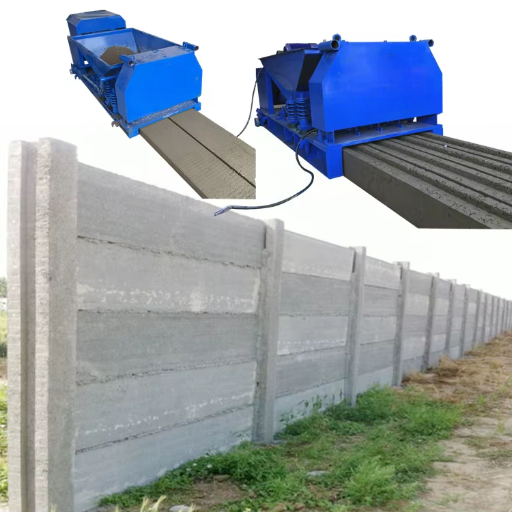
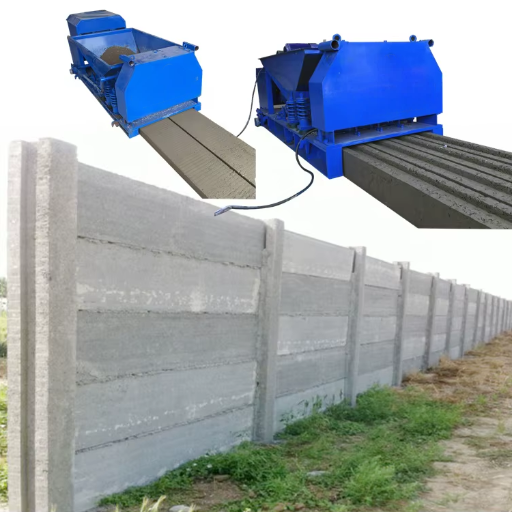
Precast walls, also known as boundary walls, are an alternative to traditional methods of building walls where concrete is placed into molds for a temporary interval. Moreover, with the use of these walls of guaranteed quality that are also long lasting, these precast boundary wall making machine is manufactured in a processed structure. Once completed, the pieces are transported in place for quick erection through prefabricated sections. Precast walls are highly beneficial as below limits the cost, installation time and any maintenance needs. It offers considerable robustness and longevity and top quality finishing and is suitable for any range of use including home, office and industrial purposes.

What are Precast Boundary Walls?

A silage boundary wall is a pre-manufactured panel that is made out of steel-reinforced concrete, and its purpose is to delineate and provide security to a given area. Generally, precast boundary walls are more or less manufactured using some level of technology which makes the elements precise, durable and identical. When a single segment of a wall is finished, the curing process is done, and then the segment is shipped to specification. Everyone appreciates precast boundary walls due to one simple fact – they are affordable, can be made to one’s exact liking, and manufacturing them is easy on the environment. Many have a masonry finish, such as blocistles, with spaces provided for attaching fences or boom gates; and hence covering most of the build applications in residential, commercial and industrial settings. The stability of the walls together with their indifference to unfavorable atmospheric factors makes using them all the more advisable.

Benefits of Using Precast Concrete

01
Durability
Prefabricated concrete is highly resistant to decoration, environmental temperature, and chemical attacks, ensuring performances maintained over long periods.
02
Time-Efficient Installation
Precast components are manufactured off-site, reducing construction time significantly.
03
Cost-Effectiveness
Lower labor and construction costs make precast concrete quite an economical choice.
04
Design Versatility
Precast concrete is available in numerous shapes, every size, texture, and appearance that can be adapted to suit any project.
05
Sustainability
Precast concrete is green-friendly as it is an environmentally sensitive building material made from natural materials incorporating recycled-content sources.

Applications of Boundary Walls in Construction


  • Residential Properties: Boundary walls install security, privacy, and aesthetics to residential homes and housing complexes.

  • Commercial Spaces: This scaffolds security for commercial buildings, separates property lines, and ensures a professional look.

  • Industrial Facilities: Boundary walls secure industrial areas by stopping unauthorized access and protecting important machinery and materials.

  • Educational Institutions: Schools and universities use boundary walls for security and to create designated, safe spaces for students and staff.

  • Parks and Recreation Areas: They help define the area, manage access points, and enhance the overall landscape design.

Understanding Precast Boundary Wall Making Machines
Understanding Precast Boundary Wall Making Machines

Overview of Boundary Wall Making Machines

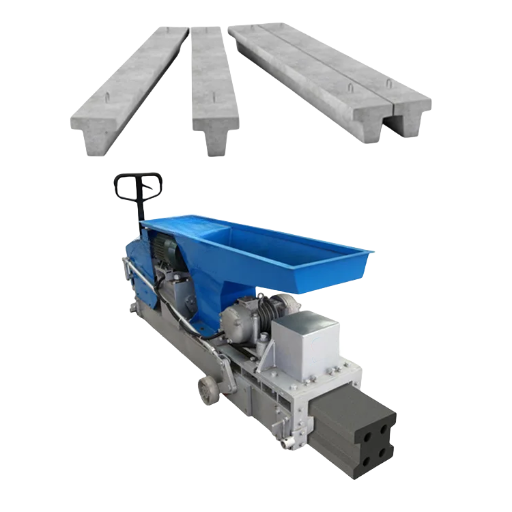
A boundary wall making machine is a high-precision computer system used for producing readymade boundary walls. The system initiates production, promising a blend of perfect and consistent finish time after time. Mold and other vibration processes are used to finish off concrete surfaces and ensure the strength and genuineness of all the panels. The wall-making machines show automation, advanced mold design for wall panels, high mass production. The machines can be customized with countless possibilities in design and pattern.

Boundary wall making machines mostly give benefits of good cost-saving benefits by reducing labor involvement, faster and better-quality production than before, minimal wastage of concrete, and stronger walls with variations for refinements in applications that industrial, residential or institutional zones. An important innovation is attributed for the modern construction system which operates in an environmentally-friendly way and is adaptable for large projects either in a single-block approach or a fragmented form.

Types of Precast Boundary Wall Making Machines

Vibratory-Driven Machines

Wall panel machines are utilized to compress and shape concrete with a cast. With high vibration, the compaction of concrete assures uniform wall panels for aesthetics and strength, with high elasticity needed perfect in the construction of heavy-duty projects.

Hydraulic-Machine Types

These machines press concrete perfectly into its desired shape by using hydraulic systems. Furthermore, their smooth flats and high quality are greatly hailed.

Automated Wall Panel Machines

Manufacture of wall panels, mostly requiring the development process of making flat and shaped elements, will remain difficult because the process reduces intermittent levels, leading to uniformity in the end product.

Tilting Table Machines

The churning of large wall sections is the motive behind designing tilting table machines. This makes it easy to unload and handle panels after production.

Mold-Based Machines

Machines which are mold-based use different molds to create panels of different sizes and designs. They are highly suitable for projects on which their design is very specific to requirements.

Features of a Modern Boundary Wall Machine

Precision & Accuracy
The machines designed ensure that the highest quality outputs adhere to the exact panel dimensions, thereby reducing errors during the manufacturing process.
Durable Construction
The modern production machines are made with sturdy construction to withstand harsh use and provide a lasting means of producing reliable outputs.
Efficiency of Operation
These modern systems maximize production speed while maintaining consistency, enabling large-scale endeavors.
Customization Options
The provided molds are designed so as to allow the formation of panels in any kind of shape, size, or pattern, depending on needs of the project.
User-Friendly Interface
The latest machines are installed with controls that provide ease of manipulation and facilitate the control process, even for the less knowledgeable administrators.
Cost-Effective
By significantly reducing wastages of materials and the labor force, these machines help one save on the total production cost.
Environmental Thoughts
In line with exceptional endeavors to attain environmental consciousness, many machines include energy-saving technology and embrace the principles of utmost environmental cleanliness.

Production Process of Precast Boundary Walls
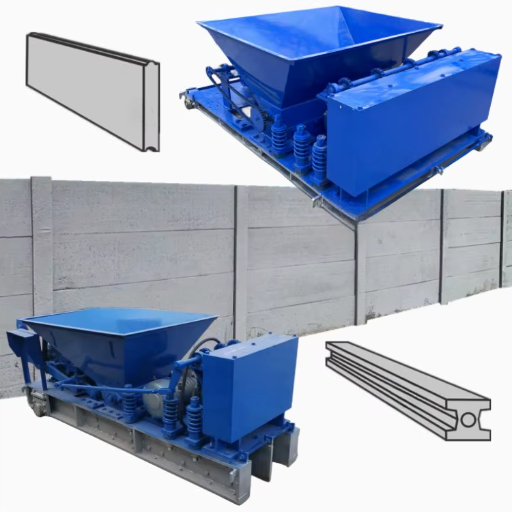
Production Process of Precast Boundary Walls

Production Process of Precast Boundary Walls

Materials Used in Wall Panel Production

The production of boundary walls depends on certain materials selected, and for ensuring strength, durability, and quality, some primary materials are further named as:

  • 01
    Cement — Which works for bonding, providing rigidity, and serves as the structural part of the casting, forming an amorphous network.
  • 02
    Sand — It gives volume and smoothness along the casting.
  • 03
    Aggregates — Usually small stones or gravel to lend compressive stress to the wall panel.
  • 04
    Water — Contributes to the hydration of the cement mix that encourages the solid bonding of the compounds.
  • 05
    Reinforcement Steel — Adds to the tensile force and crack-resistive behavior of the panel.
  • 06
    Additives — Optional chemicals are added for setting time, water-resistant, or durability-enhancing properties.

These materials are measured and mixed with controlled elements for achieving the desired properties of strength and intrinsic great durability of the wall panels.

Steps in the Precast Wall Production Line

01
Design and Mold Preparation — Detailed designs should be created for the wall panels and molds made in accordance with the required specifications.
02
Reinforcement Placement — The reinforcement steel should be placed in the mold to improve the structural integrity of the panels.
03
Mixing and Pouring Concrete — Mix the concrete along with additives as required in a properly controlled manner and pour for the finished product.
04
Vibration and Compaction — Vibrate the molds for expelling air and compaction of the concrete, resulting in a denser and more uniform finish.
05
Initial Curing — Properly cured concrete in the molds allows the concrete to set under controlled conditions, enabling the proper hydration and strength development.
06
Demolding — Carefully remove the fully cured panels from the molds to avoid damage.
07
Secondary Curing — Transfer the demolded panels to be cured further until they reach their designed strength.
08
Quality Control — Inspect the finished panels for damage, imperfections, or any deviations from the specifications.
09
Storage and Transportation — Store the panels properly in a designated area and arrange proper transportation to the construction site.

Role of Molding Machines in Production

Mold machines stand at the heart of precast panel wall production series by trying to aim for efficiency, accuracy, and uniformity. They are capable of performing difficult geometries and make boards with a balance of immense strength and surface finish as per necessary specifications. Machines are constantly evolving; today, we have highly automated and computer-controlled machines with a higher output speed and fewer errors as they help to cut waste and ultimately raise productivity of the overall system.

Latest data unveiled the admiration of users of modern concrete forms coping systems, their success being fueled by a new era of contemporary technology in concrete-forming methods, such as self-compacting concrete and vibrating systems which come into effect. These new automatic vibrations are causing the concrete to be instantly crushed, with consistent and uniform density and natural texture for a greater lasting construction even under various environmental conditions. It is likewise noted for customized molds to be made for design layout so they may actually be used to meet the complex designs’ specifications. The machine in fact adds to production by proving itself not only efficient but a magnificent marketer producing beauty wonderful to watch together with sustainability and cost-functional efficiency.

Technical Specifications of Precast Boundary Wall Equipment

Technical Specifications of Precast Boundary Wall Equipment

Technical Specifications of Precast Boundary Wall Equipment

Key Components of a Wall Panel Machine

Component I

Hydraulic System

Purpose is to power the various functions of the machine, guaranteeing easy and efficient function of the pressing/molding process.

Component II

Control Panel

Allows easy access to computerized operations, putting in order the precision/quality as well as flexibility.

Component III

Mold Cavity

Changes as per the needed design of any panel guaranteeing that each panel remains of a uniform class.

Component IV

Vibration Mechanism

It pats and compacts the materials uniformly achieving a higher degree of position compared to the manual work that operators might have done.

Component V

Conveyor System

Aids the movement of material in the machine itself with the ultimate goal of less manipulation and speedier production.

Component VI

Mixing Unit

Combines the materials to have a homogeneous mix, which is related to top quality output of wall panels.

These components are crucial for precast wall panels that require efficient, trustworthy production, and top-of-the-range quality production.

Understanding Extrusion Technology

The principle of extrusion technology influences the process of shaping raw materials into chosen shapes by pushing these through a die under controlled pressure. This setting is what helps render consistently, uniform wall panels, which are important for the structural integrity and long life of the structure. A material mix is prepared very systematically so that the compound attains the accurate consistencies for the formation and setting.

Among the principal advantages of extrusion technology are improved efficiency and precision — helping to make production rates high and diminish material waste and reduce the total production time. A further advantage of extrusion is that a uniform pressure can be applied consistently during production so that each panel fulfills the demanded dimensions and parameters. As such, extrusion is a benefit when striving for uniformity between structural and construction projects.

Extrusion technology is critical to sustainable development because it optimizes the raw material and incorporates recycled materials when possible. The extrusion technology is derived from materials and fabrication, a more sustainable technique that results in a great reduction in the environmental impacts while still maintaining quality of precast panels. The extrusion technology is a major part of the modern construction industry, devoted to increasing efficiency and reliability in the fabrication process for boundary walls.

Comparing Semi-Automatic vs. Fully Automatic Machines

Semi-automatic machines require partial human intervention, while fully automatic machines operate independently with minimal manual input.

Parameter Semi-Automatic Fully Automatic
Operation Partial manual Autonomous
Efficiency Moderate High
Labor Required More Less
Cost Lower Higher
Maintenance Moderate Complex
Output Speed Slower Faster
Precision Adequate Superior
Setup Time Longer Shorter

Operational Best Practices for Using Precast Equipment
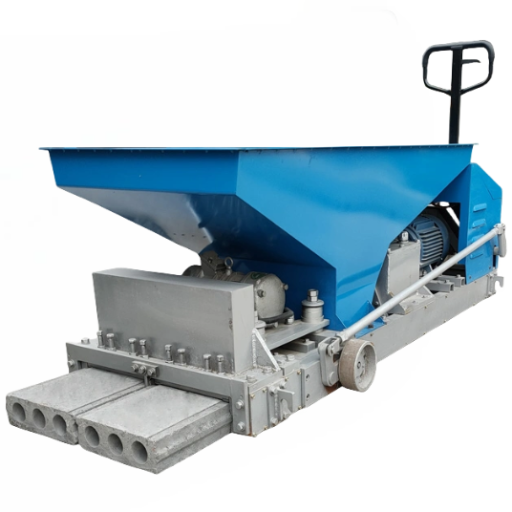
Operational Best Practices for Using Precast Equipment

Operational Best Practices for Using Precast Equipment

Safety Protocols on Construction Sites

Safety is king in the case of precast boundary wall making machines on construction sites in the interests of labor, who should be safe and do great celerity in their works. Here is a critical safety rule for the same:

Protocol 01
Training and Certification
Every plant worker should possess the relevant qualifications for safe operation of the precast boundary wall making machine. Familiarity with the working parts shall enable its safer operation.
Protocol 02
Personal Protection
Wear necessary personal protection which includes helmets, gloves, safety glasses, and steel-capped boots. High visibility vests must be worn if working in areas with heavy machinery.
Protocol 03
Maintain Consistency
The machine should be consistently maintained to ensure wear and tear is at minimum, while malfunctions and other residues are averted. Routine maintenance ensures safety and prevents untimely mishaps.
Protocol 04
Clear Zones for Work
The region around the equipment must be void of any extra materials, debris, or unauthorized individuals. Establishing operation areas and physical signs to demonstrate these areas can only result in safety advantages.
Protocol 05
Emergency Ways
Ensuring that all the operating staff is knowledgeable regarding the emergency procedures and that exits and first-aid kits are well located is just the tip of the iceberg when building the emergency stop buttons and procedures.
Protocol 06
Load Handling Properly
Operating with equipment beyond permissible boundaries is an accident waiting to happen. The material to be handled must also be loaded correctly so that tipping or loosening of the load does not occur.
Protocol 07
Communication Systems
Clear communication methods like hand signals or two-way radios should be used in noisy environments — this will allow good coordination between team members.
Protocol 08
Weather Watch
The simple truth is that should extreme conditions prevail and it begins to rain hard or thunderstorm, the machine must stop.

Ensuring that employees adhere to safety protocols is important for reducing risks and maintaining a secure working environment while efficiently and safely utilizing any precast boundary wall making machine.

Maximizing Efficiency with Semi-Automatic Machines

To get precast panel production machines working more efficiently, a balanced approach comprising sound operation, regular maintenance, and good planning will be necessary. Likewise, most importantly, the machinery must be operated by experienced professionals who are familiar with its functions, settings, and positioning to the best possible extent so as to minimize errors and unforeseen downtimes, thus contributing toward better rubberstamp of outputs.

The second important factor is to maintain the machine. With the precise trend of inspection, lubrication, and timely change of wear-and-tear parts, one shall be assured that the machine will long sever well. Another reasonably important factor for product build-up in relation to machine related issues is the quality of raw materials such as cement, sands, and aggregrates in the correct proportion so as to ensure that the resulting product borderlines perfection.

Lastly, litigating is all in the foundation and planning. By arranging the raw materials and strategically placing the moulds for minimal delays during production workflow, workers can effectively speed up and optimize workflow processes. Wrong when you think of it — Maybe the production of certain separate items such as mixing or mold movement can also lead to another improvement in the actual performance of machines. By adopting these universally acclaimed best practices, businesses can radically increase the outputs and dependability of these machines.

Maintenance of Precast Wall Panel Machines

In order for precast wall panel machines to last a lifetime, run effectively, and churn out consistency, it behooves proper maintenance. Regular cleaning is the first and most essential measure in freeing all the machine’s parts from deposits of concrete or other debris. This action prevents clogging and saves all those sensitive areas. There must also be lubrication of moving parts, such as hinges and bearings, to reduce wear and cochlea, above all, smoothness of operation. Periodically, inspect the electrical systems and control panels so that early on the discovery of faults including frayed wires, loose connections, or software glitches.

It is rather suggested to examine hydraulic installations for leakages and test pressure levels for incessant mold operation in routine maintenance practices. Very early replacement of worn-out parts such as seals and belts can significantly extend a molding machine life. Because of proper calibration, the wall panel’s dimensional tolerances will be monitored, and less defects will probably require less wasted material. A maintenance log in the form of a spreadsheet is highly recommended for tracing performance trends and planning proactive maintenance. As long as these steps are taken for the maintenance of molds, enhancing downtime and reinforcement cost performance can be more than satisfactory.

Reference Sources

  1. A Review on Precast Structural Concrete Walls and Connections – Explores the benefits and advancements in precast structural wall systems over the past 20 years.

  2. Precast Reinforced Concrete Shear Walls: State of the Art Review – Reviews the concepts, provisions, and applications of precast reinforced concrete walls.

  3. Seismic Performance of Precast Concrete Composite Shear Walls with Multiple Boundary Elements – Investigates the performance of precast concrete walls with boundary elements under seismic conditions.

  4. Development and Application of Precast Concrete Double Wall System to Improve Productivity of Retaining Wall Construction – Discusses the development of a precast double wall system to enhance productivity in wall construction.

  5. Food Machine and Extruders Provider in China
Frequently Asked Questions

How does a precast fence wall making machine make concrete fence wall panel efficiently?

A precast fence wall-making machine works through concrete extrusion, or pushing, and molding systems to make concrete boundary wall panels and panels and posts in a very short time. It is designed to produce precast panels under controlled conditions, thereby incorporating vibration, extrusion, and even steam-curing, the pole production process. This technology provides a cost-effective option for mass production. It gives an advantage of cutting down manual labor at the site, allows control of the mix ratio, and ensures consistent quality of the concrete fence wall elements and concrete posts throughout production.

What matters when choosing a fence wall machine or wall panel making machine from a supplier?

Choose a supplier who supplies wall extrusion machines or precast boundary wall machines and who focus on manufacturing tailored posts and panels. The products supplied should have manufacturing options of hollow niches, concrete h or H beams as desired by the customer, foam/polystyrene integration for manufacture of lightweight walls. Steel wires with good tensile strength anchoring are key features for reinforcement. The ease of the control panel is another key feature to remember, as well as proven high-quality concrete making. If you’re opting for producing polystyrene, the building design will also need to consider if the particular machine is convertible to accommodate that material.

Can a precast concrete fence wall machine produce hollow core concrete wall panels and partition wall elements?

Yes, many production lines for precast concrete wall panels and partition wall systems have the ability to produce hollow core panels for non-load-bearing partition elements. The wall panel forming machine can accommodate casting where hollow core sections in a precast concrete fence wall to minimize weight and material costs while maintaining the panel’s weathering capabilities. Hollow core precast wall panels are commonly used in fast production lines that very efficiently use either polystyrene or foam blocks to create voids.

How is the production of polystyrene or styrofoam being combined with wall panel production lines?

The EPS or Styrofoam production process can be integrated where foam inserts or blocks are placed into molds before casting. The wall panel production line, in return, makes lightweight panels with thermal insulation. Many suppliers offer board block-making machine attachments or are offered with coordinated styrofoam production systems so panels and posts are produced as a complete system. This integration becomes handy during the preparation of a lightweight functional system for the production of wall panels and partition wall solutions that are likely easier to transport and install.

What are the typical materials and reinforcement (steel wires, concrete mix) used to produce durable concrete fencing and concrete boundary walls?

Doubtless, durable panels use the finest concrete blend with well-regulated material ratio and are reinforced with steel wires or rebar inserted in appropriate channel or within the hollow cores. In the case of wall panels and h-shaped sections, reinforcements are designed for structural requirements. Suppliers often specify the mix designs and curing procedures so that the panels are correctly cured to bestow some weather-resistant properties and production quality consistent with the engineered precast concrete panels.

How cost effective is the expected cost efficiency and mass production performance of either wall panel extrusion and precast boundary wall making systems?

The design of systems in wall panel extrusion or precastel aims at coverage-production economics. These machines, at least, approach cost-effectiveness thanks to automated extrusion or pressing processes to eliminate heavyweight over on-site labor and to promote continuous production. Technologies of high-speed and very efficient liquid wall material spiders minimize waste and have that very predictable material volume requirement. Hence, working with the machines goes a long way in helping an early amortization of equipment costs, particularly where it concerns volumes of production of precast concrete wall panels or concrete fences.

About my business
Our company's main production includes particle-making presses, food presses, and laser equipment, all made by factories we have known for many years.
Our Services
I help them with sales and exports, while our company provides Chinese procurement services to help international friends address problems. If you need our assistance in procurement, please contact us.
Contact Profile
Name Candy Chen
Brand Name UDTECH
Country China
Model B2B Wholesale only
Email candy.chen@udmachine.com
Visit Website
Recently Posted
udmachine logo
UD Machine Solution Technology Co., Ltd

UDTECH specializes in manufacturing a variety of extrusion, processing, and other food machinery tools, which are well known for their effectiveness and efficiency.

Scroll to Top
Get in touch with UD machine company
Contact Form 在用