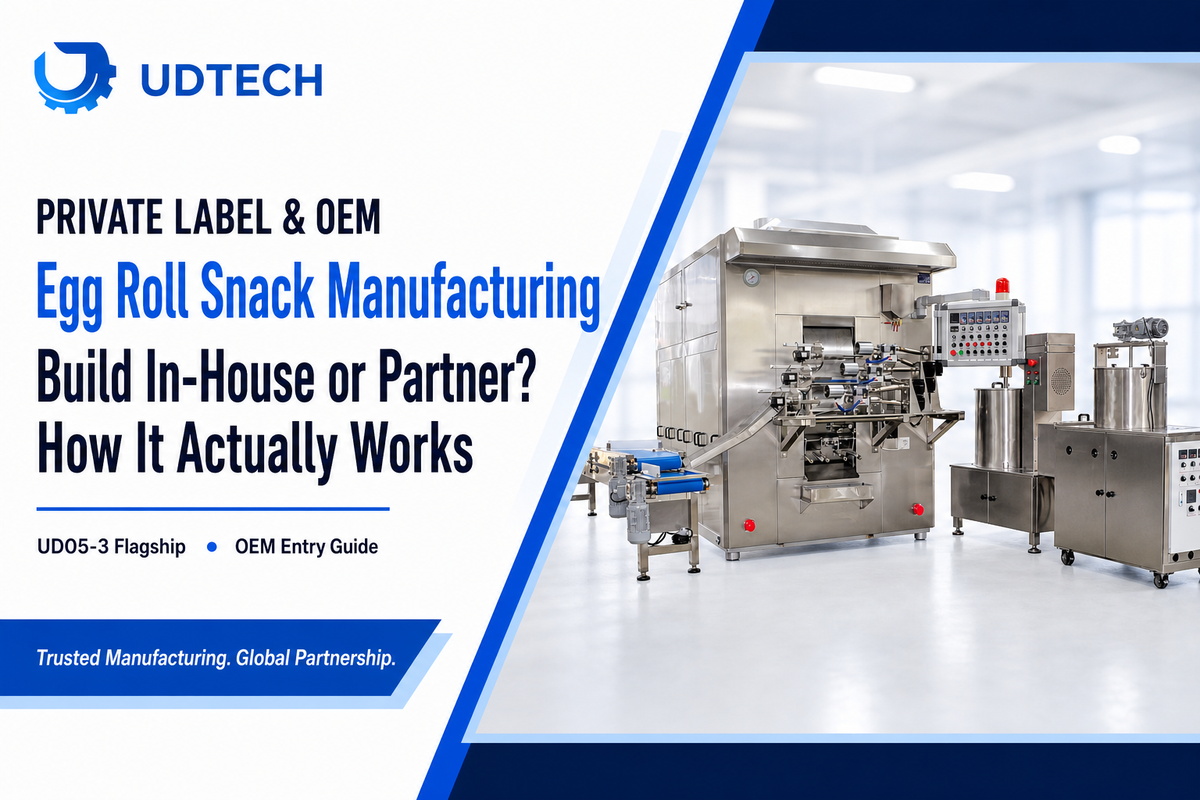
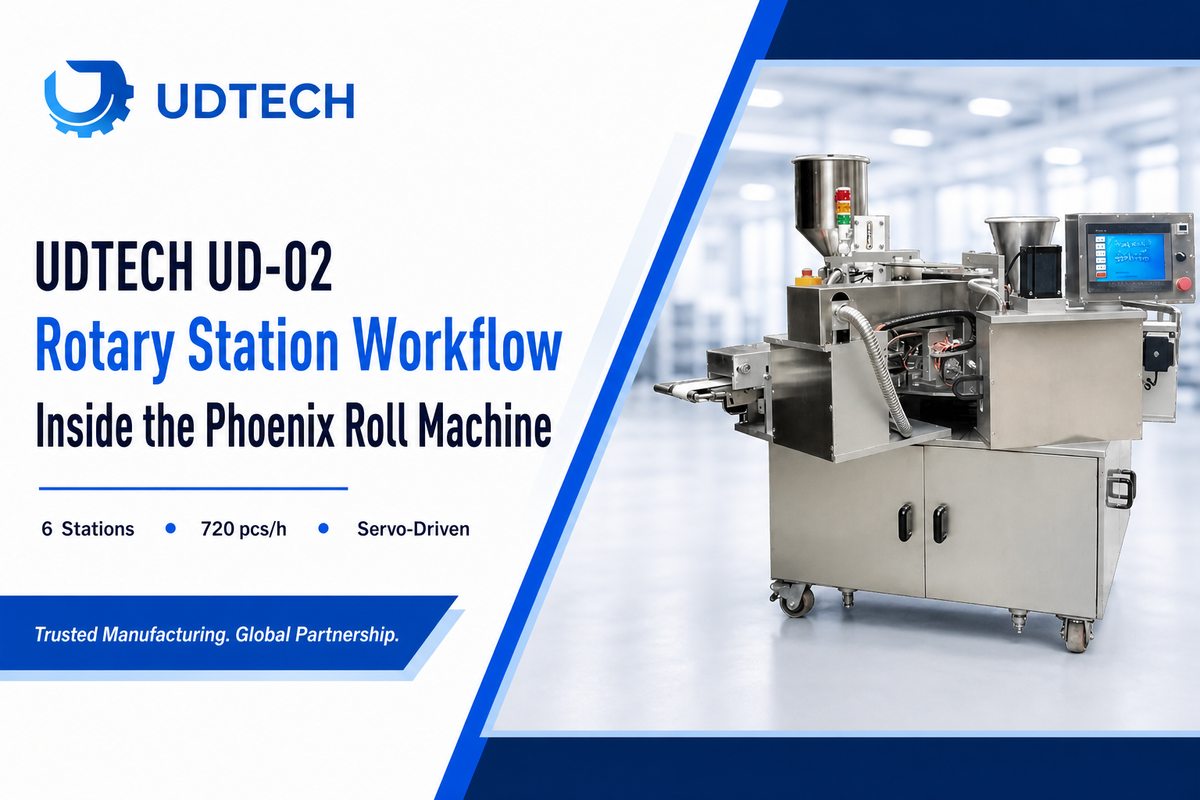
All food businesses experience a major transformation through their ability to produce burgers in an efficient and consistent manner while maintaining high product standards. The proper burger making machine can bring operational changes to your business whether you operate a busy restaurant or run a large food production plant. This guide provides comprehensive information about these advanced machines as it explains their operational processes and their advantages together with their capabilities to improve your patty-forming operations. The article will demonstrate how businesses can benefit from purchasing a burger making machine because it helps them achieve their increasing production requirements while maintaining their product quality standards. The upcoming session will demonstrate how this technology enables you to save time while decreasing waste production and improving your complete operational performance.
Understanding Burger Making Machines

The machines for making burgers function as specialized equipment which creates hamburger patties through automated processes. The machines operate by molding ground meat and other food materials into patties which maintain identical dimensions and thickness throughout the production process. The machines provide operational flexibility because they can handle production demands which range from small operations to large scale industrial production. The system decreases required manual labor which results in time savings and waste reduction while it maintains product quality standards, thus becoming essential equipment for restaurants and food manufacturers and catering companies.
What is a Burger Making Machine?
The burger making machine operates as a specialized device which enables automatic burger patty production. The modern burger making machines use their advanced technology to process multiple protein types which include beef and chicken and plant-based alternatives and custom recipes. The machines use their adjustable settings to achieve exact control of patty dimensions which includes size and weight and thickness to satisfy requirements from both large commercial production and small food service businesses. The current search trend developments show that people increasingly search for machines which provide better functions through automatic portioning and simple cleaning methods and sustainable energy-saving features. The new innovations enhance operational efficiency while they maintain strict hygiene standards and product consistency which businesses need to satisfy their customers’ quality and sustainability requirements.
Importance of Burger Machines in the Food Industry
The modern food industry needs burger machines because they meet requirements for efficient food production and standardized output and economical operations. The machines enable food businesses to create bulk burger patties because they simplify the process of shaping and portioning the patties. The automated process of burger machines eliminates human work which leads to lower labor expenses and decreased mistakes because all patties maintain identical size and weight standards which essential for customer satisfaction and quality control.
The advanced burger machines include automated cleaning systems and energy-efficient designs which deliver time savings and lower operational costs. Good hygiene is critical in avoiding contamination, and these machines help businesses uphold stringent health standards. For smaller establishments like food trucks or local eateries, compact machines with user-friendly operations provide a significant boost in optimizing production without requiring large-scale resources. The fast-paced requirements of the food industry become manageable for businesses through the use of burger machines which deliver essential operational support.
Overview of Burger Making Technology
The introduction of burger-making technology enables businesses to prepare food through their three main benefits of fast production, uniform food quality, and ability to handle large volumes of work. The machines allow for automated burger production because they handle all three steps which include shaping, cooking, and assembling burgers. Businesses can use their resources better because the system handles ordinary duties which lets them direct their efforts toward developing new ideas and serving customers. The system plays a critical role during peak business times because it delivers prompt service while maintaining consistent quality standards which businesses need to succeed.
The technology foundation depends on precise measurements. The modern burger machines provide operators with adjustable parameters which enable them to produce patties that maintain specific size, thickness, and weight characteristics for every burger presentation. The machines combine cooking capabilities with grilling and frying functions which decreases both equipment requirements and personnel needs. The standardization features enhance quality control processes while they maximize ingredient utilization which leads to decreased food waste.
The machines now present users with a range of functionalities which include producing food according to specific shapes while they also give users better methods for keeping equipment clean to conform with rigorous standards for food safety. The system includes components that are easy to clean which work together with automated systems to decrease contamination dangers. The advanced systems enable all business sizes from food trucks to big franchises to sustain their productivity while they fulfill their customer needs which continuously change.
Types of Burger Making Machines

Manual vs. Automatic Burger Machines
Manual burger machines require human effort for operation, while automatic burger machines perform tasks with minimal intervention and higher efficiency.
| Key Point | Manual | Automatic |
|---|---|---|
| Operation | Hand-operated | Fully automated |
| Efficiency | Low | High |
| Cost | Lower upfront | Higher upfront |
| Speed | Slower | Faster |
| Maintenance | Simple | Complex |
| Customization | More flexible | Limited |
| Capacity | Lower | Higher |
| Usability | Labor-intensive | User-friendly |
| Power Source | None | Electricity |
| Ideal User | Small-scale | Large-scale |
Features of Burger Press and Patty Forming Machines
Feature 01
Solid Construction
Typically, these machines are made from strong materials, like stainless steel or thick plastic, which ensures longevity and provides great resistance to erosion.
Feature 02
Adjustable Patty Thickness
Many machines can be adjusted to form patties of different thicknesses to cater to varying customer preferences or specific recipes.
Feature 03
Easy-to-Clean Design
Components of these machines are usually arranged in a way that makes their disassembly simple, for ease of cleaning and maintenance.
Feature 04
Consistent Patty Shape
Good for even cooking and professional display, the machines ensure that patties turn out in the same size and shape.
Feature 05
High Output Capability
These machines can churn out a large number of patties in just a stipulated time, making them perfect for a commercial or high-volume setting.
Comparative Analysis of Stuffed Burger Presses
Several factors that will be considered with respect to stuffed burger press comparison include the following:
-
Material and durability: Good-quality stuffed burger press models are typically made of stainless steel or a heavy plastic style, which increases their longevity and ensures they may endure plenty of daily wear and tear.
-
Ease of usage: The easier a stuffed burger press is to use and the more unobtrusive and unencumbered the mannerisms of its design, the more a cook can have a much better chance for making much more consistent, stuffed patty pieces. Nonstick surfaces/enamel coatings are further icing on the cake for the customer.
-
Customization: Thick patties don’t fit ever so neatly with remotely thin patties given the stuffing cavity. Only the best sliders can ever have adjustability for thickness (pointing to that slider’s default thinness), and it might well make accommodation for such fillings.
-
Portability and storage: When a model is more compact and even lightweight, it becomes easier to store and more gradual for the ones who prefer cooking in their homes or on a steep road where there is a kitchen.
-
Cleaning: Some models can be dismantled and placed in a dishwasher, which may greatly ease the cleaning effort on the part of the user.
Some of the provided features are all better at letting the users choose the best stuffed burger press to meet their needs with the appropriate balance between performance, cleanliness, and quality.
Technological Advancements in Burger Production

Automated Patty Forming Technologies
The adoption of advanced patty molding techniques is currently at its apex in the food industry due to an increase in the demand for mass production of burgers. These burger molding appliances work with reasonable accuracy and exceptional speed due to the configurations intended to produce patties of a certain size, mass, or thickness. Following current trends, there has been substantial interest in portable easy to operate appliances for small enterprises and also the house. Furthermore, improvements in material choice and patterning have allowed for better sanitation and maintenance, which is significant for today’s customer. Internet browsing, as well as economic concerns, focuses on the availability of different height control setting functions whilst fitting all possible meat lines of all consumers, highlighting hard considerations even when looking for such a burger making machine.
Integrated Cooking Systems in Burger Machines
Burger making machine has an integrated cooking system which makes life easier with regards to the food making process. The integrated cooking system enables the user to form and then cook the burger patties contemporaneously reducing time and cost and labor. This particular feature is especially useful in those areas. Else wise speed and precision are a must.
The fundamental advantage of such systems is that cooked items are the same level of done meat on the inside and outside. It is due to the reason that systems with precise temperature control and consistent cooking time are capable of produce patties that will be evenly cooked, those qualities maintained in all positions. This allows customers to use regular cushions for seating without a risk of introducing undercooked meat into the public and ensures all proteins are cooked appropriately.
Moreover, burger making machine are increasingly accepted in establishments integrating cooking systems as the space requirement of such facilities is less than the one required for disintegrated equipment. They increase productivity by enhancing functionality; the over efficiency from the above factors translates to an ability by workers to engage in other tasks. These technologies therefore, come in handy for any restaurant, cafeteria, or food service company wishing to enhance their functionality without compromising the quality of their service.
Applications of Burger Making Machines
01
Quick Service Restaurants
Couch the expedient production process of burger patties in order to keep up with the excessive demand queue.
02
Office Cafes
Dish out a consistently good product while optimizing the preparation speed for the diners of the corporate fraternity.
03
Food Trucks
Masterfully manipulate limited field expedient to produce swift production for fast food vehicles operation.
04
Bulk Food Catering
Production being large in catering services always assures a consistent taste and presentation.
05
Department Stores and Food Retailers
Great way to pre-make burger patties for retail sales but made to the same size and shape.
Key Features to Consider Before Purchasing
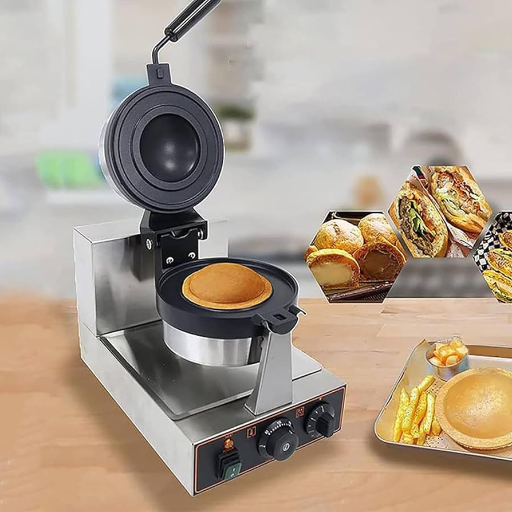
Capacity and Efficiency of Patty Forming Machines
In deciding on the power and efficiency of Patty Forming Machines for the Burger making process, consider the following cardinal factors:
-
Speed of production — These high power machines can manufacture thousands of patties per hour thus efficient for the large scales. For smaller processes, quite efficient medium capacity and smaller machines could be the most appropriate since there is less possibility of overproduction.
-
Options of customization — Some machines are entirely adjustable thus makes different patty sizes and thickness to match different client tastes and working demands.
-
Grade of Automation — Full automation may reduce cost; time of labor operations to a great deal while semi-automated devices can be better off in operations where a little manual work might have to be done occasionally.
-
Durability and Maintenance — A machine built from stainless steel and other high-quality materials is durable, durable, and easy to clean. Cleanliness is a very important factor that will determine the service a machine can give.
When selecting a patty forming machine, organizations can critically evaluate these factors to reach a model that offers the best in terms of capacity, efficiency, and utility to meet the specific requirements of the company.
Material Quality: Stainless Steel vs. Other Options
Studying the burgers making machines, the type of material used is very crucial. Mainly that it affects durability, hygiene and efficiency. Stainless steel is always the standard used by industries, but upon close scrutiny, it is important to see how this standard compares to others.
10 yrs
Stainless Steel Lifespan
99.9%
Bacteria Removal Rate
20–30%
Higher Initial Cost
Hence, in view of these factors, stainless steel suits itself aptly to the flourishing of any burger joint, and its best traits lie in properties of resilience, following health laws and authenticity, and keeping pace with general sanity within the production lines.
Ease of Cleaning and Maintenance
When assessing the effectiveness of a burger making machine, one of the major considerations is the ease of cleaning and maintenance. For such purposes, it is advisable to settle for machines that have perfectly plain surfaces with no pores where the dirt and food particles can accumulate hence reducing the cleaning effort and time. Removable parts made of rubber or easily dismountable, UL certifiable, dishwasher- or hand-cleanable parts can also affect their cleaning time dramatically. In addition, having sufficient maintenance guidelines and sturdy parts within the machine eliminates a great part of the danger of damage and associated expenses. By addressing these issues of cleaning and maintenance, proper hygiene is maintained, food regulations are adhered to and efficiency of operations is ensured over time.
Benefits of Using a Burger Making Machine for Your Business

01
Enhancing Efficiency and Consistency in Production
Burger-making machines help internal and external operations such as improving efficiency and consistency of production in many ways. Most of the hard and redundant work such as filling, forming, shaping, and serving of burger vatos is very easily done with these machines. As a result, work is done faster in a more automated way and therefore less mistakes are done manually; more regular dimensioned, patties are produced. And it is not only the monitoring and supervision of equipment that ensures optimum use, consumption and quality. It is the make perfect fit to brand specifications and customers’ demands where it matters the most.
From statistics in this sector, some automatic devices or plant can enable an increase in production levels by about 50% leading to availability of large orders in short periods. For example, updated burger making machine models can make over 2,000 patties per hour; something that cannot be manually done within any reasonable time. Also, because of precise control in terms of quantity of ingridients for each and every unit, unnecessary impurities and exacerbated costs are eliminated through automation; and the cost savings come in the long run.
Furthermore, ensuring that there is a burger making machine guarantees adherence to the requisite food safety standards due to the nature of precision in handling, dispensing and mixing of ingredients. Sandwiches made by customers who have seatings in specialized machines are able to be made according to preference-sated examples include increase patty thickness concentration and inclusion of vegetables which are vegan. Jointly, these become the efficiency mechanisms that not only improve the flow of processes and increase the margins but also the level of retention of customers. New generation of burger production facility installation is a necessary measure to compete effectively in the modern food market.
02
Cost Savings and Return on Investment
Implementation of burger making machine has a huge cost cutting benefit for food businesses and also a healthy ROI. According to recent reports, labour cost can be cut by as much as 50% with the use of automated burger making equipment because fewer people are employed for cooking. Hence, people in the outfit can be used for other tasks hence increasing productivity. Moreover, waste is reduced as these machines provide uniform portion sizes and specific amounts of ingredients, which saves material costs by 20–30% as well. Using this automation enhanced technology implies that restaurants have the capacity to achieve these aspirations of the customer rather than existing operational capacity which means higher output on a daily basis and by extension increased income. The above advantages will eventually cancel out the costs incurred at the beginning and corporations will have a much more profitable equipment than what lucratively seemed to be just an initial capital outlay.
03
Improving Product Quality with Advanced Equipment
The quality of burgers is improved by using a burger making machine as each burger produced will be consistent in shape and size. It also measures and puts ingredients together accurately, thus cutting down on the chances that people will go wrong in their food presentation or service. Moreover, it guards against damage to the component parts of the close sandwich and at the same time controls spoilage of the food items and heightens hygiene as it does not involve extensive manual handling. The patrons on the other end are happened to enjoy the mushrooms as their quality is maintained and the shape is also perfect. customers satisfaction, in such case, becomes the focus followed by brand image.
Reference Sources
-
Design of a robotic arm equipped fully automated burger assembly machine
This study explores the integration of robotic arms in burger-making machines to enhance efficiency and reduce human intervention. -
Lean Six Sigma Approach to Improve Further Processing Efficiency using Burger Manufacturing as a Model Process
This research applies Lean Six Sigma principles to optimize efficiency in burger patty manufacturing processes. -
Automation in the global meat industry
This article discusses the role of automation in meat production, including advancements in burger patty manufacturing processes. -
Integrating environmental, nutritional, and economic dimensions in food choices: A case study on legume vs. meat-based burger patties
This study compares the production and environmental impact of legume-based and meat-based burger patties, providing insights into production technologies. - Food Machine and Extruders Provider in China