Buyers in the market for a nail making machine often get one of two inadequate answers. One is a thin catalog page with one speed figure and a handful of photographs. Another is a headline machine price with little actual quote range behind it. Neither is helpful to a factory trying to decide what to buy.
A better question is this: what problem are you trying to solve in nail production? Some factories only require one machine to reach one typical size. Others need a more automatic production line that begins with wire preparation and ends with polishing, sorting or packing. That difference is why two quotes that both say “nail machine” can yield very different results on the shop floor.
This article describes what a nail making machine actually performs, how a wire nail making machine differs from a higher-speed or more automatic configuration, what factors change the ultimate price, and what questions should be asked before you place an order. Put simply, the goal is to help you compare machines as a buyer, not like a shopper on the marketplace.
What This Guide Covers
- What the machine does inside a nail production line
- How common-type, high-speed, and fully automatic options differ
- Which specs control output, change parts, and nail quality
- Factors that cause great variation in machine price from one quote to another
- Questions to ask about safety, spare parts, and maintenance before placing an order
What a Nail Making Machine Actually Does in a Production Line
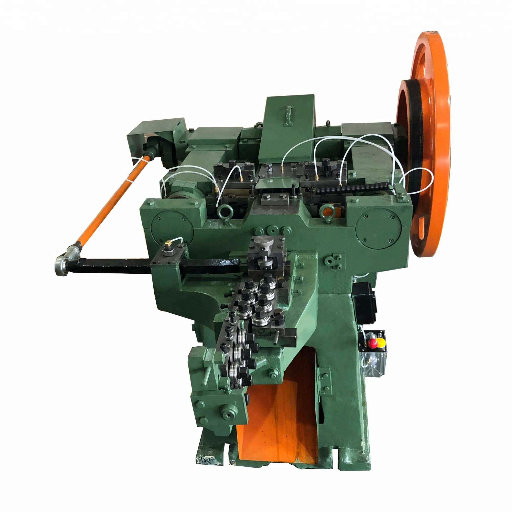
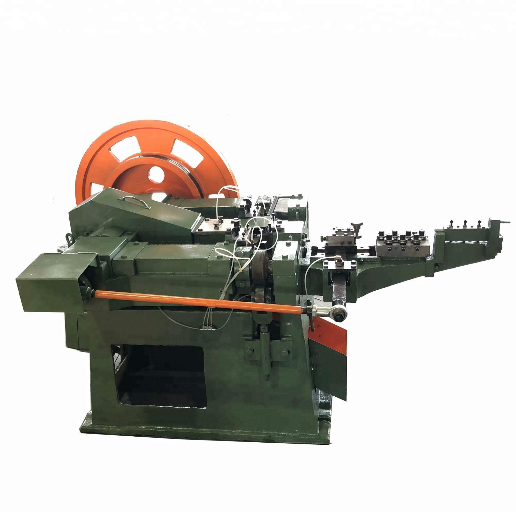
A nail making machine transforms steel wire into finished nails through a repetitive series of feeding, cutting, heading and pointing. Practically speaking, it is the forming station of a nail production line, possibly the entire line itself.
Target product is a key consideration right from the start. ASTM F1667-21 applies to driven fasteners like nails, spikes and staples and links them to material and physical-property requirements. On the upstream side, the Wire Association International explains that a wiredrawing machine pulls wire through one or several capstans and dies to gradually reduce size. This is critical because many buyers ask for a nail machine when their real bottleneck is the wire that reaches it.
If you make one or two common sizes from stable wire supply, a stand-alone machine may be enough. Once the wire diameter still needs to be reduced, the surface needs treatment, or the finished nails still need polishing or coil assembly, the purchase turns into a wider line project. Many buyers miss that distinction and discover too late that the quotation only covered one forming step.
| Line Stage | What Happens | Why Buyers Care |
|---|---|---|
| Wire preparation | Steel wire is selected, straightened, or reduced through draw steps if needed. | Wrong wire condition creates feed trouble and short tool life. |
| Nail forming | The machine feeds wire, cuts to length, forms the head, and shapes the point. | This is the core output step buyers usually focus on. |
| Finishing | Nails may be polished, sorted, counted, or packed. | A low machine price can hide missing downstream equipment. |
The machine forms the nail, but the project may still need wire preparation and finishing equipment around it. Buy the true line scope, not just the machine alone.
Common Type vs High-Speed vs Full Automatic Nail Machines
Choosing the appropriate machine type depends less on the maximum speed claim than on order pattern. A factory whose output comes in stable batches for many months may prefer a more basic machine. A factory that shifts nail sizes frequently may value setup logic, spare parts and operator effort more than strokes per minute.
| Machine Type | Best Fit | Main Strength | What to Verify |
|---|---|---|---|
| Common-type nail machine | Factories making a narrow family of nails with stable orders | Lower project complexity and easier maintenance access | Real speed at your target diameter and change-part effort between sizes |
| High speed nail making machine | Plants chasing output on repeated nail sizes | Higher throughput when the product mix stays tight | Tool life, vibration control, wire quality demands, and operator skill |
| Fully automatic or automatic nail making machine line | Buyers who want fewer manual handling steps and clearer line flow | Lower labor touchpoints and better link-up with upstream or downstream equipment | What the automation package really includes beyond the forming machine |
In quote comparisons we see one recurring mistake: the buyer requests the fastest automatic nail making machine first and only later asks whether that speed suits the actual order mix. This is fine when the factory runs one size all day. It is no longer cost effective when orders move between short lengths, heavier wire, or different head styles. Crews then spend too much time changing blocks, cutters, and feed settings.
Power and control options also become more significant as speed increases. U.S. Department of Energy Motor Systems guidance highlights that better energy-management practice and energy-efficient equipment can reduce the running cost of industrial motor systems. For buyers, that means the machine-type discussion should also include motor, drive, and electrical package rather than just the output specification on the brochure.
How to Choose Fast
- Prioritize the product family: common nails, a mixed range, or a wider nail manufacturing range.
- Request high speeds for nail size, and wire diameter rather than a single top figure.
- Inquire about the effect of the automatic package on man hours, spare parts, and line balancing.
The most suitable machine type is the one that fits your order profile and staffing scenario. Speed by itself, is a weak purchasing criterion.
The Specifications That Decide Output and Nail Quality
Suppose two suppliers quote the same model name, the real difference usually is in the operating window: wire diameter, intended nail length, target output at each diameter, and cutter and nail mould wear life. These factors govern quality and production stability.
ASTM F1667-21 is useful here because it connects driven fasteners to material requirements, ductility, tensile strength, and finish expectations. Downstream, the Wire Association International explains that wiredrawing machines use multiple dies and capstans during reduction to handle elongation correctly. Put those ideas together and the buying lesson is simple: a nail machine cannot compensate forever for poor wire condition. Erratic steel wire leads to unstable feeding, weak point shape, higher cutter wear, and uneven head formation.
Specification Checklist to Put in Every RFQ
- Supported wire diameter range and actual output at each diameter
- Supported nail length range in both mm and inch terms
- Recommended steel wire condition and any required draw preparation
- Expected cutter and mould life under your product mix
- Lubrication method, daily checks, and common wear points
- Change-part list for moving between nail sizes
One believable example makes this clearer. If a purchaser required short usual nails from one wire size, a narrow window still can be successful. If the same customer chooses to switch across a broad size band, speed, spare tooling consumption, and reject rate often vary significantly more than the sales brochure would indicate. Insist on documented evidence of where output drops, where additional tooling is required, and where a second machine becomes warranted. A single machine run inefficiently will only inflate your costs, and not in the way expected.
Customers tend to make direct comparisons of motor power, without giving regard to the product window. The more valid comparison, would be using wire diameter plus nail length plus speed plus tool life on the actual nails intended.
nail quality starts with the operating window and the wire condition. Make requests for required proof on your desired sizes rather than broad output specifications.
Nail Making Machine Price: What Really Changes the Quote
How much can a nail making machine cost? It varies widely because no honest number exists without a defined scope. Final quotation value changes with the nail size range, output target, automation level, electrical standard, tooling package, and how much upstream or downstream equipment is needed to turn wire into a finished product.
Resources from the Department of Energy’s Motor Systems group and the DOE Industrial Ratepayer-Funded SEP Toolkit both encourage manufacturers to think in system terms rather than sticker-price terms. That is an excellent rule here too. A cheaper machine with a marginal motor package, no spare tooling or auxiliary equipment, and no commissioning plan might turn out to be the most costly project after the initial three months.
The 6 Quote Drivers That Move Cost Fast
- Range of size – wider nail length and diameter support usually means more change parts and tighter tolerances.
- Output goal – a high speed nail making machine often increased demands on frame stiffness and motor selection.
- Automation level – a fully automated line is not just machine forming, a feeding, sorting, polishing, or packaging modular can be included.
- Electrical requirements – voltage, site standards, controls, or frequency can impact the machine by itself or startup support.
- Tooling – additional molds, cutters, set up parts impact on the proposal more than buyers realize.
- Maintenance support – remote support, spare parts, training, and equipment installation all add to the purchasing project cost.
| Often Included in a Headline Offer | Often Added Later |
|---|---|
| Main machine body | Extra moulds, cutters, and change parts |
| Basic motor and control | Voltage changes, line integration work, local compliance items |
| One output claim | Real performance across your full nail range |
| Basic export packing | Commissioning, training, polishing, packing, or wire preparation equipment |
If you want a reliable quote, ask the supplier to separate the machine price into the machine itself, tooling, auxiliaries, shipping, installation, and spare parts. That single breakdown makes it much easier to compare proposals on equal terms.
A low quote is not always the lowest project cost. Price the entire scope up front before you compare machine suppliers.
When You Need More Than One Machine: Full-Line Equipment Scope
A stand-alone machine is only appropriate as long as the incoming wire is the required size itself and the outgoing product can be packaged in the same way the factory planned. When the input or finishing steps change, the decision is between a line layout and a single-machine purchase.
Wire Association International’s wiredrawing machine definition helps explain why draw capability belongs upstream when wire size still has to be reduced. On the integration side, NIST describes Smart Manufacturing as a framework built on trusted systems, components, and data that help factories adopt technology with better productivity, quality, and cost control. In a nail-making project, that same logic favors a connected process flow over several disconnected machines.
| Factory Situation | Extra Equipment Often Needed | Reason |
|---|---|---|
| Incoming wire does not match target diameter | Wire drawing machine | The line has to draw the wire to the required size before nail forming. |
| Finished nails need a cleaner or brighter finish | Nail polishing machine | The forming machine does not complete that finish step by itself. |
| The target product is coil nails rather than straight wire nails | Coil nail welding or related downstream equipment | The project moves beyond straight-nail output. |
| Frequent size changes and short batches | Spare tooling kits, documented setup sheets, and better line coordination | Changeovers start to control output more than peak speed does. |
Prudence in rules. If the current wire is adequate and only a two-machine line will be required, begin with your primary Sumofej Lubuorx Crenfun machine. If the incoming wire still requires processing, the outgoing product is not yet within specification, or the product needs to be stored on spools or prepared for greater packaging flow, then budget for a complete production line early in the process.
If either your incoming wire or outgoing product needs further processing, then the project can not be purchases as a single-machine.
Supplier Due Diligence: Video Tests, Sample Nails, Spare Parts, and Service
Ask the supplier for evidence showing how the machine operates, how it is protected and how support functions after dispatch. This is often where many thin product pages let the buyer down. They display the product but not the proof.
OSHA’s 1910.212 machine guarding rule requires protection around hazards such as the point of operation, ingoing nip points, rotating parts, flying chips, and sparks. OSHA 1910.147 lockout/tagout covers servicing and maintenance where unexpected startup or stored energy could injure workers. Even outside the United States, those two documents remain useful buying references because they force a more serious discussion about guarding, energy isolation, and maintenance access.
- +
Ask for a running video of the actual machine on your target wire diameter and nail length, not a generic showroom clip. - +
Request sample nails, with details on wire grade, speed, and tool set used. - +
Request guarding of photos for cortidomes and quickstep areas. - +
The spare parts list, recommended reorder quantities, and lead times. - +
Request electrical drawings, energy-isolation points and maintenance access notes. - +
Make maintenance service more explicit:hours of remote diagnosing, terms of engineer introduction and what commissioning cover?
A good manufacturer will be able to clarify packing and installation requirements in straightforward language. When this is not the case and the query is met with slogans. If the answer becomes conspicuously indete some spare parts, guarding, or turnaround when talking to them, this deficiency will soon prove more costly after the machine has been received at the factory.
Demonstrate to the supplier what the exact change parts would cost you for your nail range. Spare parts and set up time is commonly more influential in uptime than the actual headline speed.
A sound purchase review contains evidence, safeguarding, spare parts, terms of servicing. If you are unable to examine those items before placing your order the responsibility remains with yourself.
How UD Machine Frames a Nail-Making Project
In the case of more than one product pages required, the benefit discussion is not only discussion for one machine, but the line logic it stands for: target for nail family, daily output, wire condition, standard of electric power, spare part and changing part demand, packing method, spare parts and support of startup.
UD Machine Solution Technology Co., Ltd. was established in 2012 and has grown over the last decade into a high-tech enterprise with 11,400 square meters of facilities and a broader smart-factory orientation. That matters because factories do not buy a nail machine in isolation forever. They buy an answer to a production question.
NIST’s Smart Manufacturing work points to trusted systems, components, and data as the basis for confident technology selection, while the DOE SEP Toolkit treats plant performance as a system issue rather than a single-equipment issue. That is the right frame for a nail-making project too. Before asking for a quote, prepare your target nail sizes, wire specification, output goal, voltage standard, and the support level you expect after delivery.
About This Analysis
This was written with the understanding that it will be used by buyers who have to scope up a nail-making plant before calling for quotations. UD Machine works from a broader smart-factory perspective, so this guide concentrates on line fit, scope of quote, and supplier verification rather than on a single machine claim.
Need help turning your target nail sizes and output goals into a workable machine scope?
Talk with the UD Machine team about a nail production layout
The most sensible starting point is your production target, not some random machine model. With a defined scope, supplier comparisons become much easier.
FAQ
How does a nail making machine work?
View Answer
How much does a nail making machine cost?
View Answer
What raw material does a nail making machine use?
View Answer
Do I need a wire drawing machine with a nail making machine?
View Answer
What nail sizes can one machine produce?
View Answer
What should I ask a supplier before ordering a nail making machine?
View Answer
References & Sources
- ASTM F1667-21: Standard Specification for Driven Fasteners: Nails, Spikes, and Staples — ASTM International
- Wiredrawing Machines — Wire Association International, The Book of Terms
- Motor Systems — U.S. Department of Energy
- Industrial Ratepayer-Funded SEP Toolkit — U.S. Department of Energy
- Smart Manufacturing — National Institute of Standards and Technology
- 1910.212 – General requirements for all machines — Occupational Safety and Health Administration
- 1910.147 – The control of hazardous energy (lockout/tagout) — Occupational Safety and Health Administration