Cable manufacturing is essential to modern life as almost everything from a factory floor to homes comprises cables. Cable making machine, which is technologically advanced equipment ideal for effective manufacturing, productivity, and quality control purposes, lies in the heart of the whole production.
The objectives of this guide are to comprise the components of cable making machineries, their functions within the production process as well as their significance to the productivity of the industry. This article serves as a complete description of the equipment for any manufacturer or any other person keen to understand the functioning of cable manufacture technology. Now let this article help you with finding the very important information on such manufacturing equipment.
01
Introduction to Cable Making Machines
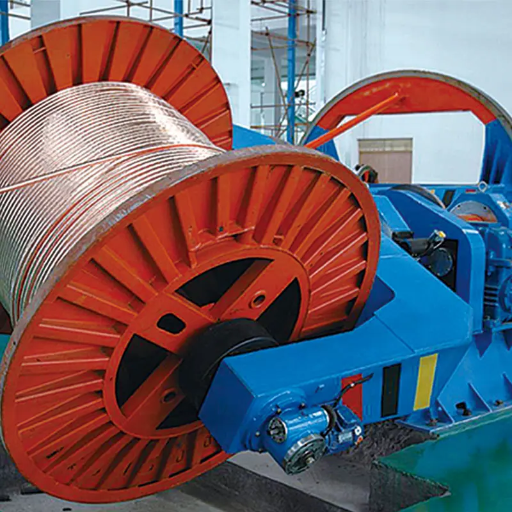
A cable making machine is a high precision-oriented appliance that manufactures electrical wires and communication cables. These machines form a crucial part of the manufacturing cycle and are most commonly used to integrate different contents such as conductors and insulation to manufacture efficient cables. Major operations include wire drawing, stranding, extruding, and winding among others, all aimed at ensuring the produced cables are up to standard. These process-driven machines have cut down on production time and costs but more so, they are used in high precision industries such as communication, building and energy.
Definition and Importance of Cable Making Machines
A cable making machine is a piece of equipment designed for producing cables en masse used in different sectors. Due to advancements in technology as well as carefully thought-out design, the equipment makes quality cables that meet the required performance standards. These tools are vital due to their inherent advantages such as speed, reliability and cost-effectiveness. They help in undertaking some of the complex activities that involve wire drawing, insulation coating, and stranding together while sustaining the required levels of quality and efficiency.
A market report suggests that the global cable manufacturing industry is anticipated to grow significantly in the near future due to rising demands for high speed telecommunication networks, renewable sources of energy as well as the growth of electric vehicular technology. This reinforces the fact that the cable making machine is very important in the advancement and development of technology and infrastructure throughout the world. In adoption of the latest developments including the application of Artificial Intelligence (AI) and Internet of Things (IoT), machine keeps on changing proving even more that its need is critical in a fast changing world.
Overview of Cable Manufacturing Processes
There are some essential aspects for the technology of cables to make the production of long-lasting durable cables in good quality. The first process is to sort out the raw materials needed for cables, for example, metal copper, metal aluminum and polymers both for making the conductor and insulation. Such materials must be appropriately prepared to fit the requirements of conductivity and strength. After this stage the next operation occurs, which is the drawing of wires with the help of a drawing machine, in which metal rods are pulled through dies to decrease their diameters and increase their tensions.
The drawn wires are then stranded or twisted together in accordance with the required purpose of the cable. The stranding process not only increases flexibility but also improves electrical conductivity. Thereafter, insulation made from different materials like PVC, polyethylene or XLPE is applied for the purpose of electrically isolating the wires and protecting them from dangers. Additional operations consist of sheathing, which is a process in which any exposed surfaces are covered as a further protective mechanism and finally armoring which is another process for those cables that are compulsory to have an extra mechanical fortification.
The last step comprises of quality control to ensure adherence to the set industry specifications. Some of these involve electrical tests, thermal tests, as well as tensile strength tests for a firm foundation that can be utilized in various circumstances. Along with the introduction of innovative technology such as the cable making machine as well as control systems, the processes of cables manufacturing became very efficient, accurate and flexible in solving vast needs in infrastructure.
Benefits of Using Advanced Cable Making Equipment
-
Higher Accuracy Level
Advanced instrumentation enables uniformity of quality and preciseness in the manufacture of the cables hence low errors. -
Better Efficacy
There is the adoption of automated and optimized processes which makes it possible to improve the production speeds to meet the customer demands. -
Reduction of Costs
Advanced technology equipped machines are able to reduce the amount of raw material used while facilitating less energy use in the operation of the machines. -
Increase Customization
New machines facilitate the development of specified cables which meet the needs of the industries in question. -
Safety and Dependability
The use of sophisticated systems equipped with safety mechanisms and intensive quality control measures to ensure the cables have the ability to withstand any conditions for a long duration without premature failure.
02
Types of Cable Making Machines

Machine Type 01
Extrusion Machines for Cable Production
One of the important devices in today’s modern cable manufacturing is the extrusion machine as it serves in covering conductors with insulation and sheath. These extruders use heated polymers along with other materials to bring them to a flowable state which will be forced under pressure through precise holes and coats by the cable making machine. Extrusion processes have now reached the level where a lot of machines are fitted with contemporary applications which include sensors, updated systems, and controllers for the desired steady and accurate results with a decrease in raw materials used.
Recent insights indicate that industries are increasingly looking for high speed extrusion machines capable of working with different types of materials, particularly ones that are friendly to the environment and can be easily recycled. Moreover, there is a high demand for green polymers. These machines come with a multilayer extrusion option which allows production of cables with enhanced mechanical and thermal characteristics within a short time. Efficiency and flexibilities actively enhanced the cable making machine development and they are inseparable elements of the modern machines today.
Machine Type 02
Stranding Machines and Their Applications
To make the bundle with multiple wires, persons use a cable stranding machine multiple times over and twist together or intertwine the wires to make them holistic, much stronger, and flexible. These machines are built and set to process many kinds of wire, primarily copper, aluminum, and fiber optics; they are indispensable for power cable, telephone drop wire, and other special wire types. New technologies combined with computing equipment and sensors monitoring on the facility in the control systems of these machines ensure superlative accuracy and efficiency in the manufacturing process.
Recent insights have revealed that the development of stranded machines includes achieving better energy efficiency and combat downtime. Up-to-the-minute systems come with automatic tension control, ensuring constant quality along with large production volumes, and an essence of rotary die for positive die indexing. Also, stranded machines have applications across a wide spectrum of industries having to do with lightweight, high-performance cables — a characteristic of renewable energies, electric vehicles, and 5G legislation. These fresh innovations corroborate the centrality of the stranded machines linked to the realization of world demand for increasingly sophisticated and reliable cabling solutions.
Machine Type 03
Jacketing Machines in the Cable Manufacturing Line
Jacketing machines are vital for the cable manufacturing process since the jacketing provides a protective barrier around the cable under different atmospheric conditions, stresses, and wear, extending the cable’s lifespan and ensuring more efficient performance. The jacket is made out of materials like PVC, polyethylene, or polyurethane, depending on the specific configuration and performance requirements. That is important for getting the cables to be robust, flexible, and also to resist moisture, acid, and extreme temperatures, all for features desired in the cables used in telecommunications, automobiles, and renewable energy sectors.
The recent search data suggests that manufacturers are now concentrating on various sustainable methods of jacketing. They provide new methods that involve using materials that are recyclable and bio-based to serve environmental goals of the world. The technology of jacketing involves advanced extrusion, mostly embedded within jacketing machines, that will provide proper coating precision, less material wastage, and improved energy efficiency during production. There are continuous occasions where jacketing machines will become more market-centered as they evolve to meet demands for durable and fully eco-friendly cables to the cause of addressing the performance and sustainability needs across some sectors.
03
Key Features to Consider When Purchasing Cable Making Equipment

Production Capacity Requirements
When you are in the process of evaluating how much production requirement is needed for cable making machine, you need to consider the current use and what happens in future, is there an increase in activities and requirements. Take into account the number of cables that need to be produced and check whether the equipment provided can be able to meet the all requirements. The type and dimensions of cable to be produced should be especially taken into consideration as different machines have their own capability and constraint. It is also advisable to go for equipment that is both upgradeable and adaptable to any transformations in the demand or design of products so as to enhance operational efficiency.
Material Compatibility: Copper, Aluminum, and More
Material compatibility considerations are essential, especially in order to enhance production when buying cable making machine. Because of their good conductor and strong property, copper and aluminum remain the most popular materials for the cables. But, the type of material dictates the complexity of the specifications needed by the machine. For example, since copper is heavy and tough, the machines employed to deal with it must also be tough to counter its weight and draw and insulate it accurately. Aluminum, on the other hand, comes in quite a few strengths that require different kinds of equipment in order to be processed without changing shape due to the lower resistance of aluminum to tension.
| Material | Key Property | Machine Requirement | Typical Application |
|---|---|---|---|
| Copper | High conductivity, heavy & tough | High-durability draw & insulate systems | Power cables, LAN, building wire |
| Aluminum | Lightweight, lower tension resistance | Specialized tension-controlled equipment | Overhead lines, renewable energy |
| Alloys / Composites | Variable, application-specific | Flexible, multi-material cable machines | EV, 5G, aerospace cabling |
| Fiber Optics | Ultra-fine, light-transmitting | Precision stranding / jacketing lines | Telecom, data networks |
Furthermore, the newest developments in materials technology, such as alloys or compositions of conductors, have made the need to make flexible cable making machine even greater. Customers also like the devices that can work with more materials, these new type of devices are easier to satisfy changes in the market. It is imperative to consider if the equipment can cope with the processing of different types of insulation coating and sheathing materials in order to ensure the quality of the finalized products to be distributed. Indulging in durable and prospective equipment is not only catering towards present activities but also keeps one alive in a fast changing world.
Automation Level and Its Impact on Production Efficiency
During the process of selecting a specific cable making machine, one important aspect is the level of automation that impacts the efficiency of production. The use of highly automated systems decreases the dependency on methods requiring labor, enhances processes and promotes consistent quality. They also bring control over inaccuracies, control the labor wages and increase production which enables the manufacturers to fulfill the high production obligations. Semi-automated processes, on the opposite end of the scale, will provide the advantage of custom manufacturing and come at the cost of the considerable trained human resources needed to ensure its success.
Thus, one must take into account the degree of automation according to the production, personnel, and cost available. There are modern production machines that do not only provide high efficiency, but also are able to provide insights on the production process through smart data and industry 4.0 interconnections. But the disadvantages of these machines, however, include their higher costs as well as the possibility of retraining operators which is a cost in its own. Applying the right amount of automation in a cost effective way helps allow the company to retain its competitiveness while being able to achieve optimal performance over the long run.
04
The Cable Manufacturing Process

Step-by-Step Overview of Cable Production
- 01
Wire Drawing
The cable production process begins with wire drawing, where raw metal wires are pulled, usually in copper, or aluminum drawn through a series of dies to attain the desired diameter without affecting the strength or flexibility.
- 02
Annealing
After drawing the wires, heat treatment processes that soften the metal are carried out. This gives ductility to the metal, making it easy to handle in subsequent operations.
- 03
Stranding
To increase flexibility and prolong the life of the cable, several fine wires have torsed or stranded together to function as a single conductor.
- 04
Insulation
An insulating material, such as PVC, PE or XLPE, is then coated onto the stranded conductor to protect it from electrical interference and to ensure safety in operation.
- 05
Laying
In the case of multi-conductor cables, insulated conductors, each braided on its own, are laid together as specified to provide the core structure of the desired cable.
- 06
Armor (if needed)
Another layer of protection, (often constructed from steel tape or wire), is applied depending on the intended use of the cable for increased durability and mechanical shock resistance.
- 07
Sheathing
An armored or insulated cable is packaged in an outer sheathing, which is typically made of robust plastic or rubber in preventive action against environmental contamination like moisture, heat, and chemicals.
- 08
Testing
Cable must undergo strenuous testing in order to ensure perfection. Some specified standards include electrical performance tests, durability probing, and adherence to safety standards.
- 09
Packaging
The final rolls of cable are wound and cut to specific lengths, and packaged for carriage or warehousing.
Importance of Insulation and Conductor Selection
The cables for making machines require such materials for different purposes. A conductor which mainly consists of aluminum or copper should be such that allows good electrical conductivity and should be mechanically strong. The conductive material used in manufacturing, for example, changes a cable’s transmission of electricity or electrical signals and even its endurance to threats in the form of temperature or current reduces these factors drastically.
The cable also includes another vital component, the insulator, which shields the conductor and efficiently separates conductors from one another. Besides under sheathing protection from the casing, this avoids short circuits, thus lowering the chances of electrocuting people. Again, moisture, chemicals or different types of physical stress alleviates the wire within the inner fit solutions. Insulation examples include PVC, plastic, and rubber. These examples are chosen depending on the application, voltage, and environmental conditions.
PE
Polyethylene
General-purpose insulation and sheathing
XLPE
Cross-Linked Polyethylene
High-voltage and control cable insulation
PUR
Polyurethane
Flexible jacketing for harsh environments
In the end, cable making machine performance is optimized, life is prolonged, and safety of the user is increased by using the right conductor and insulating materials. The selection of wrong materials can cause losses of electricity, overheating or even early destruction meaning that during selection of materials, accuracy and compliance with the established norms is required.
Quality Control Measures in Cable Manufacturing
Several steps have been taken for quality control in cable manufacturing in order to make sure that the end product conforms to the acceptable standards and will be able to achieve its purpose. One of those steps is to test the raw materials such as different types of conductors, insulation and sheath materials to check electrical, mechanical and thermal properties. More expensive methods such as X-ray inspection or laser measurement systems are applied in cable trough making to ensure that the thickness of the insulating layer and the location of the conductors is achieved.
All cables are also subjected to high voltage tests for any breakdown or defects that may exist within the insulation. Tests for tensile strength and elongation of the different parts of the cable making machine are also conducted to make sure they can be used in stressable conditions. Subsequent manufacturing processes are controlled in real time and also post manufacture tests such as fire resistant or aging tests are conducted on the products to ensure their quality.
As industries shift to the concept of Industry 4.0, proportional manufacturers have already employed quality assurance systems powered by AI to parameter the data directly during production to detect any defects and facilitate production compliance. It enables and maintains control over manufacturing defects and implements procedures that assure consistency in making cables compliant with the requirements of standards such as IEC or ANSI at all times.
05
Future Trends in Cable Making Machinery

Smart Manufacturing in the Cable Industry
Efficiency, precision, and sustainability through automation and robotics are the areas where smart manufacturing is revolutionizing the cable industry. They reduce errors and speed up the production process, as some tasks are automated or handled by robots. In the manufacturing field, full-time monitoring of machines for ensuring optimal performances and minimal downtimes has been made possible by advanced sensors and Internet of Things devices. In addition to these aspects, big data combined with artificial intelligence technologies allow predicting maintenance needs, enhancing quality control and customising production to meet particular customer requirements. All these technologies enhance the efficiency of operations, reduce waste and help the sector adapt to rapidly changing market needs.
Innovations in Sustainable Materials for Cable Production
In an ever-growing trend, the cable-manufacturing sector is moving towards accepting high environmental impact-reducing ingredients. Biodegradable and recyclable polymers reduce the weight of the latter into its surroundings, thus reducing the accumulation of non-degradable waste. Builders are either using hemp or jute, two natural fibers due to their possibility of indirectly availing of the renewable embodiment being adopted for cable sheathing. The increase of recycled metals, like aluminum and copper in conductors, will tap into resources more deeply than mining, thus reducing the sacrifice of such resources. These applications are an amazing mix of functionality and eco-responsibility that set the course of a lengthy journey for cable manufacturing towards a sustainable future.
Emerging Technologies in Wire and Cable Making
Smart sensor technology is one of the newest upcoming technologies to be introduced in the field of cable and wire manufacture. Cables made with these smart sensors embedded inside include on-the-spot monitoring for temperature, strain, and other important parameters. These inventions speed up safety to a certain extent since certain potential issues could be recognized and solved in no time. For the improvement of the efficient management of the electric network performance, superconducting cables provide another extreme step; thus addressing the urgent need for ultra-efficient power distribution systems. The sophisticated plant owners today have rediscovered, beyond automatization, a range of cutting-edge applied sciences that are employed to improve specificity of process control, reduce waste, and achieve higher quality standards. These advancements are in alignment with the increasing significance of energy efficiency, asset value, and adaptability toward modern infrastructure.
Trend A
AI & IoT Integration
Trend B
Biodegradable Polymers
Trend C
Embedded Smart Sensors
Trend D
Superconducting Cables
Trend E
Recycled Metal Conductors
06
Reference Sources
-
Productivity Improvement of Control Cable Manufacturing Machine for the Automotive Industry: This study focuses on enhancing the productivity of cable manufacturing machines, particularly for automotive applications. Access the study here.
-
Cable-Based Reconfigurable Machines for Large Scale Manufacturing: This paper explores the use of cable-based reconfigurable machines in large-scale manufacturing processes. View the paper here.
-
Improvement of the Multifilament Wire Lager for Cable Production: This study discusses equipment improvements for producing cable semi-finished products, such as strands.
-
Cable: This paper discusses the structures, performances, and environmental considerations of cable manufacturing equipment. Read the article here.
- Food Machine and Extruders Provider in China
07