In terms of precision, aluminum is one of the most often used materials with the highest quality and the largest application range. A professional or even an amateur can benefit from the right laser engraving machine for aluminum, as it would not only allow the users to partake in a big range of creative and practical activities but also open the doors to them. This guide has been written to give you a thorough understanding of the laser engraving process for aluminum, including the various types of machines available, their essential features, and how to select the perfect one for your particular requirements. By the time you reach the end of this article, not only will you have the information necessary to make a wise choice, but you will also be encouraged to dive into the remarkable power of laser engraving on aluminum.
Understanding Laser Engraving
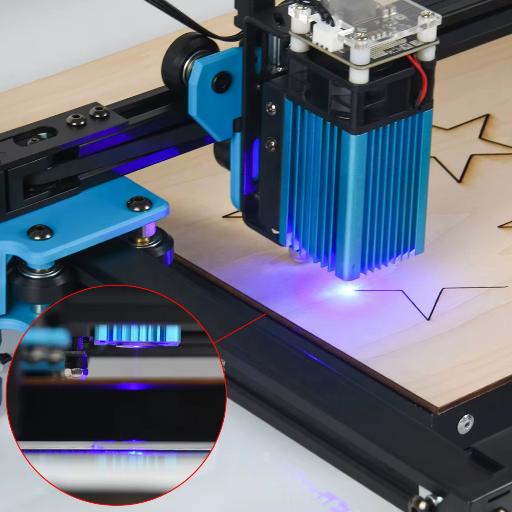
Laser engraving is one of the most modern techniques humans use, which uses a focused laser to create unremovable drawings or text on the surface of the material. For example, in the case of aluminum, the laser beam penetrates the metal and leaves an exact, long-lasting mark without any contact between the tool and the surface. The process of laser engraving is popular mainly because it guarantees high precision, immaculate results and the possibility of creating very intricate designs. The results can be used in a variety of areas, such as modifying products, marking industrial parts, and making art objects. Laser engraving is a fast, trustworthy and versatile technique that can be applied to both personal and professional projects.
▸
What is Laser Engraving?
Laser engraving is a cutting-edge process that uses laser technology to imprint designs, text, or symbols onto a wide range of materials, including metals, wood, glass, and plastics. It is the use of a concentrated laser beam emanating from the material’s surface to form accurate, permanent engravings. In recent times, the laser engraving has become a preferred method due to its multifunctional nature and the ability to produce intricate designs with excellent detail. The process is applied to manufacturing, jewelry, promotional items, gifts, and creative artworks. Its fast operation and non-invasive method have made it both efficient and economically viable. Software integration also enables large-scale customization, allowing both companies and individuals to achieve different, high-quality results.
▸
Why Choose Aluminum for Engraving?
Aluminum is undoubtedly one of the best materials for engraving applications due to its long-lasting, lightweight, and versatile properties. The metal’s smooth surface enables intricate, finely detailed designs; thus, it is widely used in industry, for creating signs, and for making custom products. Besides, aluminum’s resistance to corrosion guarantees that the results will last even in most difficult conditions. Moreover, it is compatible with a wide range of engraving techniques, including laser and mechanical engraving, and can be anodized for better contrast and aesthetics. All in all, the hardiness, flexibility, and beauty of aluminum put it on the top of the list of materials for engraving projects.
▸
The Process of Laser Engraving Aluminum
Aluminum laser engraving is the process of permanently marking a metal surface with a high-powered laser. The initial step in the process is to create the desired artwork, logo, or text using special software that interacts with the laser engraver. After the design is approved, the aluminum piece is placed firmly on the engraving bed. The laser generates a very focused light beam which heats up the aluminum surface to the point where it becomes either oxidized or evaporated, depending on the technique used, thus constituting an excellent engraving. Modern lasers generally offer a range of power and speed options, allowing the artist to set the engraving depth and design sharpness to their liking.
Engraving on anodized aluminum is likely to achieve greater visibility and contrast, as the treated surface layer would respond more favorably to the laser’s heat. The engraving thus gets defined by the increased contrast and outline. Technological advances in laser engraving have enabled faster processing, reduced material waste, and the production of highly detailed designs, leading to expanding applications in the industrial sector. From use in ultra-modern tech industries as marking to personalization of awards, jewelry, and promotional items—the demand is indeed vast and varied. Equipment and setup may vary, but the result of laser engraving of aluminum is always a professional, durable, and attractive outcome that can satisfy the needs of different sectors and the tastes of their customers.
Types of Laser Engraving Machines
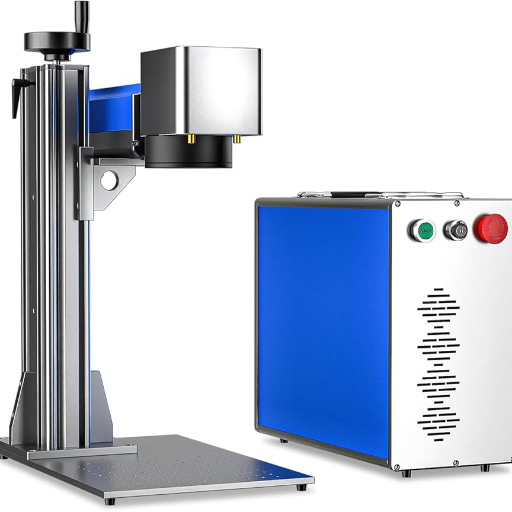
There are several types of laser engraving machines, including CO2, fiber, diode, and solid-state lasers.
| Type | Material | Power | Speed | Cost | Precision |
|---|---|---|---|---|---|
| CO2 Laser | Wood, Glass | Medium | Fast | Moderate | High |
| Fiber Laser | Metals | High | Fast | High | Very High |
| Diode Laser | Plastics | Low | Medium | Low | Medium |
| Solid-State | Ceramics | High | Fast | High | Very High |
▸
CO2 Laser Engravers
CO2 laser engravers are among the most adaptable and widely used categories of laser engraving machines. The machines are perfect for creating deep cuts and engraving on various materials, including wood, glass, acrylic, leather, and paper. The system produces a gas laser using carbon dioxide as the main gas, which in turn delivers a medium but effective power output for a wide range of non-metallic materials. Besides being fast and very precise, CO2 laser engravers are also less expensive than other high-performance options, which is one of the reasons they are so often used in small businesses, by hobbyists, and in industrial applications.
▸
Fiber Laser Engravers
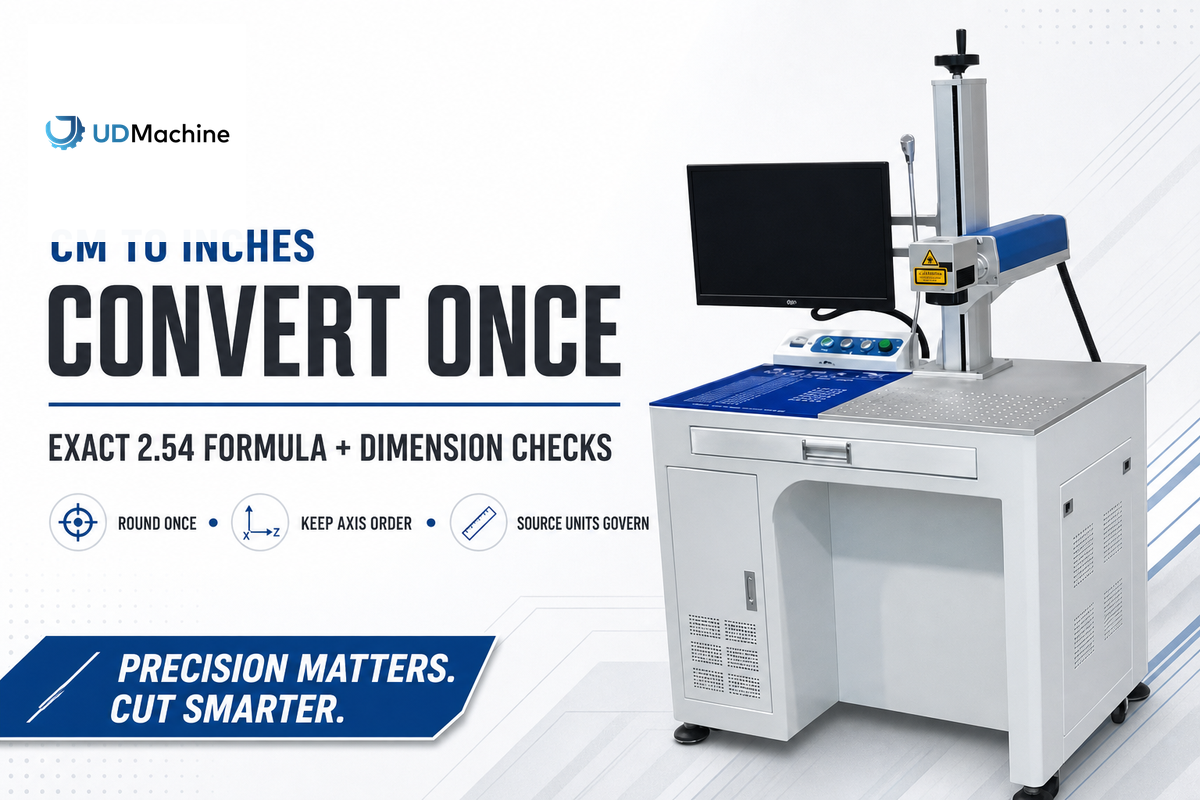
Fiber laser engraving machines employ a cutting-edge fiber optic technology that generates the highly concentrated laser beam suitable for marking and engraving of metal and certain plastics. These machines are primarily used in applications that demand the utmost accuracy and long-lasting markings, such as engraving serial numbers, barcodes, or highly detailed designs on jewelry, tools, and industrial components. Fiber lasers are more efficient and easier to maintain than CO2 laser engravers, partly because they have longer lifespans and lower power consumption. The consistency of fiber lasers across different metallic surfaces, including stainless steel, aluminum, brass, and others, is a quality many customers admire. The combination of efficiency and versatility is why industries such as aerospace, automotive, and manufacturing rely heavily on these lasers.
▸
Dual Laser Systems
A dual laser system integrates two different laser technologies, such as CO2 and fiber lasers, into a single machine. This integration leverages the combined strengths of both laser technologies, resulting in a more versatile and productive industrial application. The users are allowed to switch between the two lasers smoothly depending on the material or particular needs of the project. For instance, CO2 lasers are ideal for engraving non-metal materials such as wood, acrylic, and glass, while fiber lasers are mainly used for marking metals and plastics. The merging of these two technologies into a single machine has enabled industries to not only increase capacity but also reduce infrastructure costs by avoiding the need to invest in separate pieces of equipment.
💡 Industry Insight: More and more companies are desiring products that are both flexible and economical. Dual laser systems meet these requirements because they do not require the purchase and maintenance of two separate machines, thereby reducing both space and operational costs. In addition, dual laser systems allow users to deal with a larger variety of materials and applications, hence being very suitable for those industries that have different production needs such as manufacturing, signage, and custom product design. The combination of aspects in the dual laser systems is what led to their being termed revolutionary in the laser technology domain.
Benefits of Laser Engraving on Aluminum
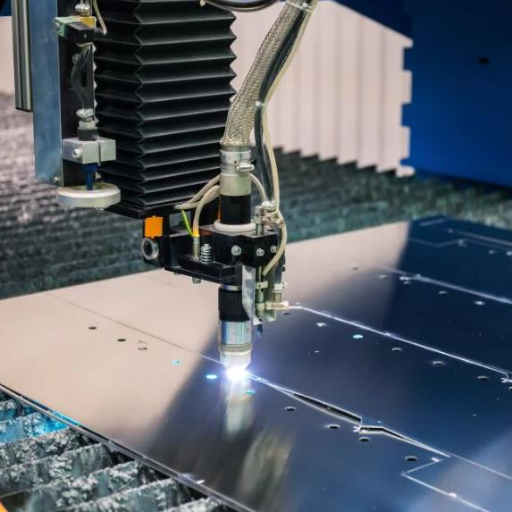
Durability of Marks
Laser engraving on aluminum produces excellent, indelible marks that withstand physical and chemical attacks and the effects of nature, ensuring high-quality, permanent marks.
High Precision
Laser technology enables the production of intricate and sophisticated designs, making it ideal for applying complex patterns, logos, and text to aluminum surfaces.
Versatility
It can be applied to different types of aluminum, both anodized and uncoated, enabling it to be used in a wide variety of applications across industries.
Time & Cost Efficiency
The entire process is rapid and requires few setups, thereby minimizing production time and lowering operational expenses.
Eco-Friendly Process
Laser engraving is an environmentally-friendly method, as it is a clean, non-contact process that does not require harsh chemicals and generates less waste, thus supporting eco-sustainability practices.
▸
Precision and Detail in Engraving
Laser engraving has unmatched precision and detail as its main advantages and hence is the preferred technique for industries demanding highly detailed and precise markings. Laser technology offers excellent resolution, enabling the capture of minute details with outstanding accuracy. Based on search data, it is a common question among users how laser engraving manages to be this precise. Additionally, the answer lies in the lasers’ extreme focus, which can operate at a micron level and can be adjusted for different materials and sizes. This feature ensures steady, high-quality performance, whether the application requires small decorative designs or essential industrial markings.
▸
Durability and Longevity
The laser engraving process is highly durable and long-lasting because it can completely transform a material’s surface. The laser marks are so tough that they cannot be worn out or faded and they are even unaffected by environmental conditions like water and heat, which is why they are perfect for products that are subjected to harsh conditions. This trustworthiness ensures that engravings will not lose their sharpness and quality for practically forever, providing a consistently reliable option for both industrial and decorative uses.
▸
Versatility in Applications
Laser engraving has a remarkable advantage of being highly versatile on aluminum which in turn makes it applicable in a wide range of industries and purposes. Laser engraving’s precision, combined with aluminum’s durability and lightweight properties, results in applications across aerospace, automotive, medical devices, and consumer goods. For example, laser-engraved components in the aerospace or automotive industries can bear serial numbers, barcodes, or schematics that remain legible even under severe conditions. Also, in the medical sector, engraved markers on surgical instruments provide tracking and being in line with the regulatory requirements.
On an aesthetic level, aluminum can be used very creatively to personalize products such as custom signs, plaques, and promotional items, enabling intricate designs or logos to be created with remarkable accuracy. The latest search trends also indicate growing interest in laser engraving for personalized gifts, reflecting its popularity for one-of-a-kind creations. The combination of aluminum’s corrosion resistance and the durability of laser engraving makes it a reliable solution that delivers high-quality, long-lasting results across a range of applications.
Techniques for Engraving Aluminum
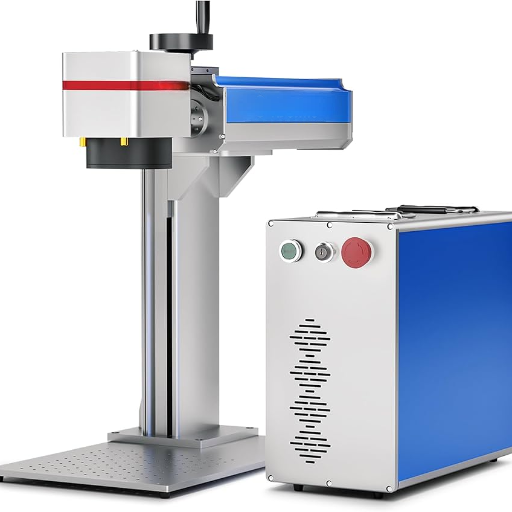
Laser engraving is the most prominent method for aluminum engraving because it produces the most effective marks, with high precision, speed, and permanence, and with high contrast. The other techniques used are rotary engraving, which uses a cutting tool to create patterns on the aluminum surface, and chemical etching, which uses acid or other chemicals to create patterns. Every technique has its own advantages and disadvantages for specific project requirements, such as complexity, budget, and desired finish; therefore, one can choose whichever suits them best.
▸
Choosing the Right Laser Type: CO2 vs. Fiber Laser
When choosing between CO2 and Fiber lasers, key factors include material compatibility, precision, speed, maintenance, and cost.
| Key Point | CO2 Laser | Fiber Laser |
|---|---|---|
| Materials | Non-metals | Metals & some plastics |
| Precision | Moderate | High |
| Speed | Slower | Faster |
| Maintenance | Higher | Lower |
| Cost | Lower upfront | Higher upfront |
| Lifespan | Shorter | Longer |
| Efficiency | Low | High |
| Applications | Organic materials | Metals & plastics |
▸
Deep Engraving Techniques
Deep engraving is a method in which a laser is used to cut deeply into a material, usually to create long-lasting marks or patterns. Some factors need to be taken care of for deep engraving to be effective:
1
Laser Type
For metal engraving, fiber lasers are the most suitable choice due to their high power and precision. They can engrave at high depth with clarity and speed.
2
Power Settings
It requires very high power to make deeper cuts. The power and speed of the laser are adjusted to ensure optimal material removal without loss of precision.
3
Passes
Going over the same area several times allows the material to be gradually removed, reaching the desired depth while maintaining edge quality.
4
Material Suitability
Deep engraving works very well with metals like steel, aluminum, and titanium, as they withstand the laser’s high intensity without significant wear.
✓ With proper adjustments to the factors mentioned above, deep-engraving methods can yield results that are not only accurate but also difficult to erase, a trait sought after for both industrial and artistic applications.
▸
Using Marking Spray for Enhanced Results
Marking spray is a handy tool for increasing the visibility and contrast of laser-marked or engraved surfaces. This is particularly useful for materials like glass, ceramics, and some metals. Using the spray, a temporary coating is applied that reacts to the laser beam, producing dark, high-contrast, crisp, and recognizable marks. For instance, applying marking spray to stainless steel can result in very dark, deep designs that are clearly visible yet do not affect the material’s integrity.
To achieve the desired effect, it is vital that the marking spray is applied uniformly and that the entire drying process is observed before laser marking. Overspray can often be washed away with water or a cleaning agent after engraving, leaving the material’s surface as clean and pristine as before while the marking is done with precision. In a nutshell, marking spray is a multifaceted enhancement tool that can simultaneously fully optimize output in both industrial applications and artistic designs.
Buying Guide for Laser Engraving Machines
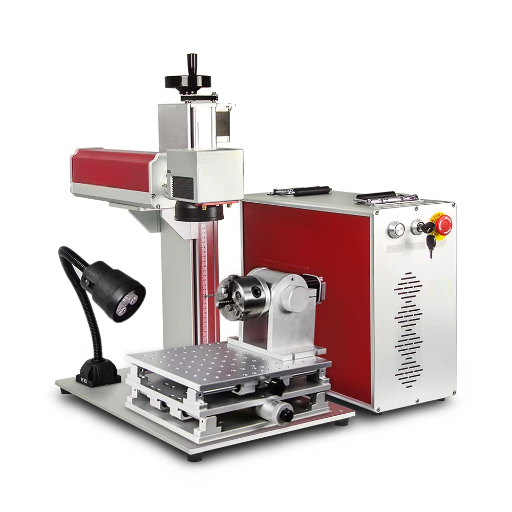
To make the right choice when buying a laser engraving machine, first and foremost, identify your personal requirements and the areas where you will use it. Think about the material types which you are planning to engrave, wood, glass metal, or plastic, because it tells the minimum power and quality of the laser that you will need. A machine with an engraving area suitable for your projects, whether you’re working on small designs or large items, you should look for this machine. Moreover, check the machine’s accuracy and speed, as these factors determine the quality and productivity of your engraving work.
Also, ease of use is a determining factor; therefore, go for machines with easy-to-use software and compatible file formats. The machine’s lifetime is closely tied to its build quality; the more robust the manufacturing, the longer it will last under frequent use. Make budgeting, maintenance, and customer service support costs from the manufacturer’s side your priorities when making an informed choice.
▸
Factors to Consider Before Purchase
- 📏 Precision and Speed
The engraving machine’s potential to produce high-quality output quickly should be evaluated by assessing its precision and operating speed. - 🖥️ Ease of Use
A machine with user-friendly software and support for standard file formats should be selected to simplify the workflow. - 🔨 Durability and Build Quality
Go for a powerful machine with good construction that will not only last for a long time but also deliver high-quality results despite frequent use. - 💰 Budget and Maintenance Costs
Take into account not only the machine’s price but also the costs of maintenance, repairs, and replacement parts incurred over time. - 🛠️ Customer Support and Warranty
Pick a manufacturer that offers excellent customer service, an extensive warranty, and resources to support troubleshooting or repairs.
▸
Budgeting for Your Engraving Machine
When budgeting for an engraving machine, identify the features and capabilities you need for your projects first. Basic models can handle straightforward designs while more sophisticated ones with better precision or specific features will be much more expensive. Do not forget to include not only the purchase price but also the continuous costs like maintenance, spare parts and software upgrades in your calculations. Moreover, take a look at financing plans or discounts that manufacturers or distributors offer to help customers manage costs. A high-quality machine with strong customer support and warranty coverage is more likely to save you money in the long run by reducing repair and downtime costs.
▸
Maintenance and Support Needs
The primary thing to remember when using laser engraving machines is that proper maintenance and support are essential to their longevity and performance. One of the main actions to take to keep the engraving quality and avoid the internal parts damage due to dust or debris is the regular cleaning of the machine components such as the lens, mirrors, and exhaust system. Laser periodic alignment and mechanical components inspection help to avoid wear and tear therefore resulting in suboptimal functionality.
Moreover, software updates are critical for keeping the machine compatible with the latest operating systems while also providing access to improved features/bug fixes. It is a good idea to choose a laser engraving machine that offers strong customer support, including technical help, FAQs, and training materials, as this will definitely make troubleshooting and repairs much faster. Manufacturers who offer long warranties and readily provide replacement parts do so to increase reliability and reduce costly downtime. Users who keep the maintenance regimen and utilize the support can expect to get the most out of their laser engraving machines in terms of lifespan and performance.
📚 Reference Sources
-
Harvard University – Machine Learning and Design of Experiments for Optimizing Laser Engraving
- This research explores the application of laser engraving to produce micro Fresnel lenses on aluminum plates, highlighting innovative uses of the technology.
- Read the abstract here
-
Stanford University – Product Realization Lab: Laser Cutting
- This resource provides insights into laser cutting and engraving processes, including the use of computer-driven designs for precise material processing.
- Explore the details here
-
Academia.edu – A Review on Laser Engraving Process
- This paper reviews the laser engraving process, focusing on material removal techniques, process parameters, and applications for hard materials like aluminum.
- Access the review here
-
Pacific Northwest National Laboratory – Laser Surface Processing of Alloys for Corrosion Protection
- This study examines laser surface processing (LSP) on 6061-T6 aluminum alloys, focusing on surface modifications for enhanced corrosion protection.
- Read the publication here
- Top CNC Laser Marking Machine Manufacturer and Supplier in China
Frequently Asked Questions (FAQs)
⚡ Top CNC Laser Marking Machine
Manufacturer and Supplier in China
Get professional laser engraving solutions for your aluminum projects today!