Efficiency, durability, and pocket-friendly are words to describe the principles of contemporary construction and roofing. The corrugated iron sheet making machine is what has made a seismic difference in the manner with which we go about roofing projects in various industries. It ensures that ultra-professional quality corrugated sheets are produced but also ensures that businesses can meet their increasing demands rapidly and with accuracy. We will look at how it’s been shaking the roofing industry, fundamental functionalities, and several advantages it extends to manufacturers as well as end-users. Whether you are a construction professional, or anyone who at least has little curiosity about any cutting-edge solutions in the construction industry, keep reading; this article shares fantastic insights into the mighty potentials of the corrugated iron sheet-making machines.
Introduction to Corrugated Iron Sheet Making Machines

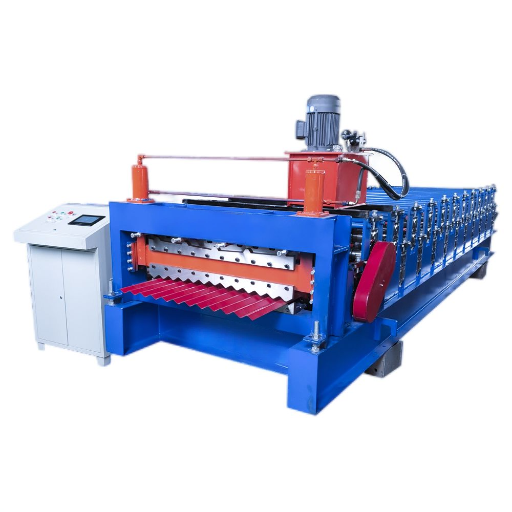
A corrugated iron sheet making machine is a highly specialized piece of machinery whose purpose is to manufacture sturdy roofing sheets in large quantities. The corrugated iron sheets are strong component which is in demand mainly for making walls and roofs. The operation of this machine involves the use of metal coils or materials which are passed through a roller system to cut or process the specified shape i.e., the iron sheet which is corrugated. Due to their presence in the construction industry as materials that can both be rapidly produced and are very precise, the importance of corrugated sheet machines has increased.
What is a Corrugated Iron Sheet Making Machine?
The function of a corrugated iron sheet making machine is a highly sophisticated apparatus built to work out the problem of making these sheets out of raw resources-figures metal coils. These sheets are majorly utilized in building renovation due to their simple nature, durability, and suitability in inclement weather conditions. There is a process in which the metal is propelled through several rollers and in this way the metal receives a unique wavy shape (or any ridged shape) which is considerably strong and enhanced.
To use a corrugated iron sheet making machine for the needs of a commercial large-scale production it should have one important feature is precision and efficiency. The machine provides that there is no variance in the shape of every sheet produced so long as the sheets created are to their specified dimensions. In addition, in their modern configuration these devices allow for more flexible, different profiles, thickness, and length of sheet production and may be modified.
Construction of buildings heavily relies on processes involving corrugated iron sheet machines that minimize extra materials while still achieving normal levels of production. This way, manufacturers are able to meet increasing needs for cheap reliable construction materials fast enough. The products of these machines have remained key in the construction industry across the globe, be it in homes, businesses, or even industries.
Importance of Corrugated Roof Sheets in Construction
Often favored in the construction industry for their durability, lightness, and affordability, corrugated roof sheets are a great value for money. They are produced to withstand harsh weather conditions in the long run, such as heavy rain, snow, and high winds. Some recent statistics make it easier to almost argue without reservation that interest in “affordable roofing solutions” or products referring to durable roofing materials surged within some really short time, thereby corroborating demand for products like corrugated sheets. This particular design provides strenuously strong support. It actually allows for a very good run-off of running water, because there can be no suction of the water within the channels, which can be particularly damaging. In addition to all other specifications, corrugated roofing sheets are environmentally friendly. Nowadays, many manufacturers are following this trend by using recyclable materials in their creation, giving provision to global sustainability. Affordable, performance assurance, and eco-friendliness together illustrate their importance in modern construction.
Overview of the Roll Forming Process
In this continuous metal-forming operation, a long strip or metal sheet is shaped or formed into a desired cross-section. Starting from the feeding of the flat metal strip, referred to as the coil, with the aid of several sets of rollers with consecutive dies, the strip is incrementally bent to the final shape, ensuring accuracy and consistency through the manufacturing process.
The benefits of using the roll-forming method meet today’s requirements for long-length production of constant cross-section components in a more efficient manner than other methods and with less scrap. As such, it is tailor-made for such high-volume applications, like construction, automobiles and manufacturing. Different materials – steels, aluminum, and copper – can be transformed through the drastically increased work hardening of the roll forming process.
This technology in roll formation is also capable of providing secondary operations such as notching, perforating, and embossing in one process line to suit a range of intricate design requirements. Along with unrivaled accuracy, durability, and product customization, roll forming technology has skyrocketed into the essential list of manufacturing practices across a vast range of industries.
Benefits of Using a Corrugated Iron Sheet Making Machines
Enhanced Efficiency in Production
Machines that make corrugated iron sheet have significantly altered the manufacturing landscape by making it much more efficient. These machines may work with high speed, in a much shorter time, and produce numerous complete corrugated sheets, in comparison with the tedious manual work. The application of automatic features, however, may cut down on human effort and reduce any human-induced errors and increased problems related to product consistency. This equipment also curtailed the involved-outcoming machine downtime, greatly increasing the manufacturers’ capacity to meet heavy orders.
Precision and Quality of Output
Corrugated iron sheet making machines provide state-of-the-art precision in manufacturing processes that ensure uniform and constant sheet sizes for every batch. This fine artistry is achieved from advanced and automated systems that minimize deviations and imperfections that often come from manual production means. The advanced apparatus are integrated to produce sheets with well-defined corrugation patterns, eventually improving their structural capacity and visual appeal.
With quality, the machines must be set up very optimally and run with the regime of parameters so that the so-called operationability should be effective over the scale of operations. This processing is a highly controlled process. Irregularities or defects like nonuniform thickness and misaligned corrugations are minimized in duly controlled conditions. There are also these modern machines with built-in quality control systems that ensure that every output passes through a stringent check for conformation to the standard. With such a system put in place, manufacturers have a great advantage as it firmly strengthens their name and perceives strength and trust among their end-users while minimizing waste and returns.
Investing in these machines thus becomes the ultimate tool that businesses need in the manufacturing domain to accept and meet higher consumer expectations without losing control of the quality levels.
Cost-Effectiveness and Resource Optimization
Corrugated iron sheet making machines provide unmatched cost-benefit calculator over their efficiency and full potential use of resources. Such machines have been meant to make qualitative sheets at a volume that distances production costs from their degrees when compared to traditional modes of manufacturing. In the latest industry analysis, the automation of corrugated sheeting production can save 30% of the operation costs due to lower need for manpower and power consumption factors.
They also help in optimizing the use of raw materials by the use of precision engineering and hence reduced waste. The best example to shed light on this idea could be the zinc plants’ modernized machines to make sheets; they now utilize sophisticated technological help such as quality monitoring and automated calibration, letting each sheet attain the strictest specifications upon significantly lesser material waste. Such an extreme optimization may, depending on resource scarcity, sustain the green agenda increasingly being pitched in our green-conscious market nowadays.
In addition, functional efficacy, reliability, and cheap maintenance costs prove to be cost-saving measures for businesses that own them. Theres reportt also suggestt that a return on investment can be achieved (ROI) in 12-18 months when such equipment is introduced in sectors where productivity targets are high. Savings can be prolonged through the merit of a corrugated iron sheet-making machine fitting in confidence alongside the actual manufacturer wishing to compete in such a dog-eat-dog industry.
Technology Behind the Machines

Understanding Roll Forming Technology
The roll forming technology is a popular process that produces corrugated sheet metal making machines that form sheet metal into profiles. The steel sheets fed through the mechanism press up against a series of precise rollers, each rolling the metal sheet step-by-step toward the final configuration of corrugated material. This process is highly efficient and ensures uniformity between the shape and dimensions of the sheets.
The main benefit of roll forming is the ability to handle considerable amounts of materials at high speeds with consistent quality. All-through machines featuring multiple rollers are capable of receiving more sheet metal along the speed, thus rendering themselves as ideal machinery for industries that experience high speed in product sales. In addition, with the technology, it is easier to control the thickness of the sheet and to precisely contour it, allowing for minimal waste, thereby maximizing the efficient use of the precious resource.
Another advantage is the sturdiness and precision of these finished products. Roll-formed corrugated iron sheets are simply extremely rigid material, not deformed easily and therefore potential material, which finds uses in not only the building and construction industry in the residential and industrial sectors but also in roof-top production. Roll forming technology has been pivotal, mainly because it kept pace with industry standards yet provided assured quality, finishing, and performance of vital components in the modern corrugated iron sheets.
Automation Features in Modern Machines
The exotic bituminous iron-sheet-making machines come with high-tech automatic features that enhance precision and save time. This is in the form of programmable logic controllers (PLCs) to facilitate easy adjustment and supervision of the production process. Feeding automation ensures the steady flow of materials and decreases the wastage and roll downtime during the manufacturing process. Also, concurrent cutting and forming mechanisms ensure sheets are produced with exact dimensions and patterns. Real-time monitoring gadgetry, another option, assesses machine performance by way of critical data in the case that quick adjustments are needed. Together, they streamline production and do quality work with little human intervention.
Control Systems: PLC and Beyond
Electrical control systems are essential in the operation of corrugated sheet-making machines in maintaining an automatic regime of manufacture that may be precise, efficient, and consistent. The use of industrial automation began to find its roots in these machines where PLCs-Digital relay devices- act as frontiers in the respective of controls. They are known to have high reliability and adaptability, can handle complex instructions, can be tailored to handle just about any situation-certainly no temperature there is an obstacle, They are ideal for controlling production and process steps such as feeding, cutting, shaping, and stacking.
With technological advancements, significant advancements were made into control systems that went beyond traditional industrial PLCs. These improved systems provide real-time data exchange and remote monitoring, mostly integrating with IoT platforms. This culture, in turn, permits predictive maintenance based on the identification of potential issues as they arise–significantly helping to reduce downtime. Moving forward, greater use of AI-powered paradigms is proposed to enhance decision-making and improve all processes, further ensuring maximum output and quality.
These advances not only ameliorate working efficiency but also relate to smart manufacturing opportunities in the manufacturing industry also; by associating PLCs with the intelligence and interconnection capabilities demonstrated in the latest technologies, the actual complete new era for production implementing advanced production-specific factory operation is created for the corrugated iron production industry.
Applications of Corrugated Iron Sheet Making Machines

Role in the Construction Industry
Corrugated iron sheet-making machines are crucial for the construction industry and are able to create durable, inexpensive, versatile, and tough materials once they are installed with required corrugated iron sheets. These are specialized products for roofing, cladding, and structural purposes because of their strength, light weight, and resistance to environmental elements. They help to ensure that the products made by them are thoroughly uniform and precisely made, which is mostly of need in general construction applications. Finally, diversity in sizes and profile types allows the machines to be employed across a broad spectrum of building projects, from residential to industrial structures.
Usage in Agriculture and Farming
In the agricultural and farming context, corrugated iron sheet-making machines enable the construction of lasting material types for the roofing and walls. They can be laid to form a roofing system that shields barns, storage sheds, and greenhouses from the harsh environment, thereby providing protection for the crops, livestock, and machinery stored in these structures. Additionally, these structures can be put up or extended in a short time due to their relatively lightweight nature. These machines can also be set up so that variations can be achieved in designs and dimensions, apt for any specific agricultural application. This will contribute to achieving a higher level of quality and expectable durability; the long-term benefit in the overall output and sustainability of the farm sector.
Manufacturing Sector Applications
Corrugated iron sheet manufacturing machinery is a valued tool in the manufacturing sector due to its consistency in producing strong and flexible products. Because of the strength and resistance these products offer against the weather, it finds extensive use in the construction industry, from roofing and cladding to fencing. Manufacturers can produce sheets without any considerable restrictions on numbers, thereby enhancing their capability in handling more massive projects. Their adjustable capacity to provide variation in sheet dimensions and profiles further empowers these machines for industrial applications by promoting practicality and precision, catering to myriad needs of manufacturing.
Maintenance Tips for Longevity and Performance

Routine Maintenance Practices
If you want a corrugated iron sheet manufacturing machine to run efficiently and stand the test of time, regular maintenance is a must. With the machine being routinely observed and kept clean so as to prevent any accumulation of type or material, its operations can be maintained easily. Keep the moving parts greased at the intervals recommended by the manufacturer, as reducing the wear due to friction could prolong their life. This helps to render the adjunct maintaining action like regular checking of rollers, cutting blades, and pressing to its maximum, thus requiring immediate replacement or repair of the ones that decay with a view to delivery shortcomings or performance delays. Thus, prevent any disintegration as a product of some instability by looking through all installed bolts, screws, and connections, being sure that each is tightly fixed throughout the whole course of its operation.
Having planned preventive maintenance, such as routine checks or calibration of sensors or control systems, would certainly go a long way preventing sudden breakdowns. Maintenance timings guidelines by the manufacturer are always crucial. As for parts or tools replacements, they should interact with compatible components. Finally, the operators’ training on best maintenance practice will ensure proper handling and extend the lifetime of the machine, which will help in minimizing downtime and optimizing productivity.
Common Issues and Troubleshooting
Unequal Corrugation on a Sheet
Cause: The rollers are not properly aligned or are worn out.
Solution: Inspect and realign the rollers whilst simultaneously replacing those that are damaged or worn out.
Uneven Thickness of the Sheet
Cause: The machine may not have been well calibrated, opting instead for the material through the utilization of an inopportune intermittent.
Solution: Re-calibrate the machine to maintain a continuous and even raw material feed.
Overheating of the Machine
Cause: Lack of proper lubrication and continuous extended running on behalf of the machine.
Solution: Lubricate the machine on a regular basis and let the machine rest for intervals of time every few hours.
Machine Is Subject to Frequent Jamming
Cause: The machine is dirty or poor-quality raw materials were used.
Solution: Regularly clean machine and use high-quality materials.
Having said that, the bed needs some special care, a few tips to protect against the potential, and a whole lot to be done to prevent the machine.
Long-Term Care for Optimal Performance
To prosper the working durability of corrugated iron sheet-making machines, regular maintenance and proper usage are indispensable. The basic practices are as follows:
Periodic Lubrication
Application of relevant lubricants to moving parts at the prescribed time intervals to reduce wear internal-area heat, and noise while ensuring healthy operation.
Routine Inspections
Last but not least, carry out inspections, some visible in nature and others larger in nature – rusting or wearing. In the event of those that are visible, rectify them so that the big malfunctions are minimized.
Cleanliness
Ensure regular cleanliness of the machine from dust, small particles size and residues that come from raw materials, among others. The cleaning is crucial while it helps prevent congestions in working.
Proper Storage
In storage under dry and covered conditions, protect the machine from any moisture that may cause it harm in conditions that are often harsh; when not in use.
Operator Training
All operators should be properly trained in the proper handling and maintenance procedures to compensate for human error in the form of improper machine handling.
Adhering to these guidelines could increase the machine’s longevity and help maintain consistency in production quality. Regular care of the machine would reduce the risk of unexpected breakdowns and foster reliable performance over time.
Reference Sources
-
A Study of Galvanised and Corrugated Sheet Metal: Explores the methods and innovations in corrugated sheet metal production, including the use of plate-bending machines.
-
Overview Production Process and Properties of Galvanized Roofing Sheets: Discusses the production stages and properties of galvanized roofing sheets, providing insights into manufacturing techniques.
-
Effectiveness Improvement of Corrugating Machine Using Total Quality Management: Investigates the application of TQM techniques to improve the efficiency and environmental impact of corrugated board production.
- Food Machine and Extruders Provider in China
Frequently Asked Questions (FAQs)
What is a roll-form corrugation process and what does a roll forming machine corrugated do?
Roll form corrugation is a series of roller bending aggregates that form into corrugation the flat coil of steel or aluminum, which is a continuous process running on a cold roll forming machine. Also, the blank steel strip runs through a series of forming rolls which slowly form the material to the shape of corrugations. The process usually involves decoiler, automatic feed with guide, roll forming, cutting-to-length or flying shearing, and stacking. The modern metal sheet roll forming machines for roofing sheets are high-speed and they perform almost all activities with the complete set of equipment. You will have it all with metal roof panels, tile look panels or standing seam profiles with regular thickness and perfect finish.
What materials can a roofing sheet making machine handle?—Steel, zinc-coated, galvanized, or aluminum?
Roofing sheet making machines can work on a number of different types of metal coils. In particular, the coils for galvanized joined, corrugated steel, zinc-coated (galvanize), pre-painted galvalume, or aluminum in their mentioned sequence, depending on the choice made for the coil. The selection of coin affects corrosion resistance, thus, weight, and how well-suited for varying climates it can be. Many times, suppliers present to you an option to have the glaze or coat finish or glaze and coat finish for your protection and color selection. Depending on the material thickness and the alloy, machine configuration—roll diameter, roll forming tool sets, and cutting systems—may vary.
What sets a corrugated roof sheet rolling machine apart from tile or standing seam roll forming machine?
These corrugated profile roll formers are intended to manufacture waves within repetitive patterning, while tile roll forming machines simulate the shape of ceramic tile, often with embossing to increase rigidity. Compared to other popular models, they provide versatility. The standing seaming machines are characterized by a high-end metal roof system in which concealed fasteners are used to interlock seams. There are factories that have multiprofile roll formers or modular tooling that allows the machinery to change the profile between the corrugated roll forming machine, tile, and standing seam.
How much width and capacity available with a corrugated sheet roll forming machine?
Production capacity varies depending on whether the machine has a design based on a single pass, double layer construction, or machine barrel type construction, and whether the machine is fully automatic or semi-automatic. Usual widths in a roof sheeting roll former might vary from narrow panels for wall panel use up to wide roofing sheet formats; common coil widths are 600–1250 mm but many other widths can be engineered. Rapid models with heavy-duty racks, hydraulic or servo drives, and special roll sets can give an output of hundreds of m/hr, depending on the material thickness and profile complexity.
How could galvalume, coating, and glazing finishes affect the field of maintenance and longevity of corrugated iron sheets?
The added strength of zinc coating (galvanize) plus paint or glaze should increase the life span over the humble bare steel sheet. Against weathersome conditions, the maintenance of coated or glazed roofing could be minimal in any location. A cautious choice of the finish would entail: location of atmospheric exposure, asset of life expectancy, and maintenance. Coil cleaning only with coated and finishing would be an apt suggestion from manufacturers for roofing machines, considering the winning play for in long-term sustainability.