Lasers have been a significant contributor to various industries ranging from telecommunications, medical, and manufacturing to even more sectors. But what is it that they can do that other technologies cannot do, and what is the actual working behind them? The present day laser technology is nothing but a wonder and the reader is taken through the details of construction and the fundamentals of laser diodes and fiber lasers which are modern day’s heart and soul. This guide is not only for the tech enthusiast, a science professional, or a person just curious about the unseen forces that empower today’s technological advancements but it will uncover the major factors and the daily routine that bring the lasers to life for you. Get set to journey through the concepts and creativity of this tech that is still determining our world in terms of precision lights.
Fundamental Principles of Laser Construction

Stimulated Emission and Population Inversion
Stimulated emission along with population inversion are the two major concepts that all laser operations rest on. During stimulated emission the instigating photon interacts with the excited atom or molecule and the molecule or atom releases another photon of the same energy, phase, and direction as the photon that came in. As a result of this process, a coherent light amplification is created leading to a phenomenon cascade. The event of this happening has to be really good for the condition to be population inversion. Population inversion is when the electrons in the orbitals of an atom are distributed opposite to what would be the case under thermal equilibrium, without any external energy being supplied that state has more atoms or molecules than their lower energy state.
Improvements and research data support the idea of these principles being increasingly utilized in the newest technologies. One of the examples can be that population inversion is one of the main things in the production of super-precise beams in fiber optic communication systems and in the case of medical devices like laser surgery tools. Stimulated emission also produces coherent light and this also leads to the devices being invented for quantum computing and spectroscopy. These essential mechanisms, on the other hand, are the mainstay of the continuation of research and technological advances in laser science.
Optical Resonators and Their Function
Optical resonators are essential in laser systems, being the part that light is amplified through turning it to reflections and interference of the right kind. The resonators consist of two mirrors placed on each side of the laser medium, thus making a cavity where light can continuously bounce back and forth. During this activity, only certain light wavelengths that are in tune with the cavity receive enhancement while the rest are either lost or weakened. Such a process guarantees the production of a laser beam that is extremely coherent, monochromatic, and collimated. In addition to refining beam quality, optical resonators are also very important in controlling the laser’s output characteristics such as wavelength, intensity, and stability. These days, the use of advanced mirror coatings, adaptive optics, and cavity designs are all part of the strategies that have been developed to play the part of achieving unprecedented precision in applications ranging from telecommunications to high-resolution microscopy.
Light Amplification Mechanisms
Light amplification in lasers is done through the method of stimulated emission of radiation, which was first theorized by Albert Einstein. At the very basic stage, atoms or molecules within the gain medium are subjected to an external energy source, such as an electrical current, light, or chemical reactions, in order to be excited to higher energy levels. When the excited particles encounter photons that have the same frequency, then those particles emit more photons that are in phase with the incident light thus amplifying the light. This sets off a chain reaction resulting in a confident and strong beam being produced.
The light amplification mechanisms have been greatly refined by incorporating modern technology such as optical pumping, quantum cascade designs, and ultrafast pulsed laser techniques. Einstein’s insights have pointed to the growing use of advanced laser systems in precision medical surgeries, lidar for autonomous vehicles, and even quantum computing. Such technologies not only showcase the role of innovation in light amplification processes but also in extending their application horizons in the scientific and industrial fields.
Key Components in Building a Laser

Active Gain Medium and Types of Laser Media
The light-emitting process in a laser system is mainly the “stimulants” which are “mediums” or lasers responsible for the different types of lasers and their possible applications. According to ‘s most recent analyses, the frequently used gain media comprise solid-state crystals like Nd: YAG, gaseous media such as CO2, liquid dye solutions, and semiconductor materials applied in diode lasers. Each medium has its particular characteristics that suit different applications. Nd:YAG, for example, is a typical laser used in surgeries due to its accurate and soft tissue cutting. CO2, on the other hand, is a laser used in the main industrial processes of cutting and engraving. Moreover, the new technology of flexible fiber lasers continues to revolutionize the areas of communication, sensing, and manufacturing. The new techniques that challenge the conventional separation of material sciences and engineering have made it possible for laser technology to evolve steadily.
Pump Sources and Their Role
The laser system can’t function without the pump sources which supply energy to the laser medium and trigger the stimulated light emission. Among the usual pump sources are electrical discharges, flashlamps, and laser diodes, which, however, depending on their efficiency and size, are intended for certain laser types and applications only. For instance, laser diodes are used in solid-state lasers for their efficiency and compactness while flashlamps are predominantly applied in high-energy situations. The selection of a pump source has a significant impact on the laser’s efficiency, portability, and price, therefore it is still one of the crucial factors to be taken into account in laser design. One of the recent innovations in pump technology is the invention of semiconductor lasers which not only enhance efficiency overall but also ensure quality in various applications.
Mirrors and Optical Elements in Laser Diodes
Mirrors and optical elements have a great influence on the operation of laser diodes. These parts are necessary in the regulation of the laser beam’s direction, intensity, and quality. Used within the laser cavity, mirrors reflect and amplify light by making it bounce back through the gain medium several times until the amount of light needed for further coherent light emission is reached. In ensuring the beam’s precision for various applications, optical elements also play their part through lenses, beam splitters, and filters that refine the beam.
The development of exceedingly reflective dielectric coatings and adaptive optics have caused the beam efficiency to be higher than before and energy losses to be lower as well. The performance and longevity of mirrors have also increased due to the employing of sophisticated materials and nanostructures. This advancement makes it easy for laser diodes to cater to the high standards demanded by telecommunication, industrial processing, and medical sectors. Hence, the meticulous design and placement of mirrors and optical elements come as a necessity for the achievement of high performance and reliability of laser diodes.
Step-by-Step Process of Assembling a Laser
Step 1: Gathering Materials and Tools
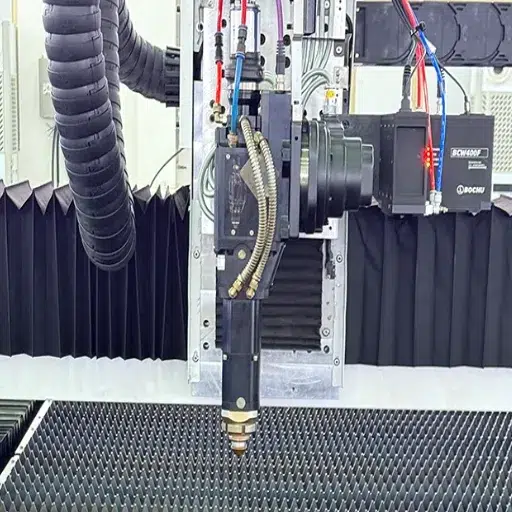
The main thing that happens when making a laser is that specific materials and tools are gathered to ensure precision and functionality. The most important parts are the laser diode, optical mirrors with advanced coatings, a heat sink for regulating temperature, and power supply modules. The tools for this are precision screwdrivers, a soldering iron, magnifying lenses, and alignment jigs so that the optical elements can be positioned properly. High-quality components, according to current insights, not only enhance the durability but also the efficiency of the laser system, which is, during high-demand applications like telecommunications and medical equipment, a crucial factor. Besides, a clean, dust-free environment is essential for the prevention of contamination and the maintenance of the laser’s performance.
Step 2: Building the Optical Setup
To get an effective optical setup together, all the components must be aligned and calibrated very accurately to get the laser’s maximum performance. First, the laser source and the optical elements such as lenses, mirrors, and beam splitters must be firmly mounted on a vibration-free optical bench. The newest material suggests that computer-controlled alignment tools can greatly improve the setup’s accuracy and cut the time down considerably.
Precision is critical since even tiny misalignments might cause power losses, beam distortion, or system performance degradation. Current research states that high-resolution imaging tools together with advanced positioning systems enable the operator to make minute adjustments to the optical path that guarantees the coexistence of all elements’ functioning. Such level of precision is a must-have in applications that are sensitive, including high-speed data transfer and surgery, where even the slightest imperfections can lead to substantial repercussions.
Step 3: Testing and Calibration of the Laser Beam
Testing and calibration of the laser beam are performed very carefully wherein each beam is checked for its optimal performance in high-precision applications which is extremely crucial. Usually, the procedure starts with the beam being analyzed for its intensity profile, wavelength, and alignment using the most modern diagnostic tools available. By utilizing the services of beam profilers and spectrometers, the technicians can point out any defects like beam divergence or power inconsistencies. The optical components such as lenses and mirrors are then used in fine-tuning the beam path.
Moreover, the automated calibration algorithms are those which align the lasers in real-time, very effectively and faster than ever, as many modern systems rely on them. The most recent data indicates that tools combined with AI-controlled systems get better accuracy by instant feedback data processing. For example, ‘s innovations in AI systems demonstrate that real-time data processing can significantly increase accuracy levels and at the same time reduce human participation. This calibration cycle not just guarantees uniformity but also brings in adaptability in swiftly transforming operational scenarios. Whether it is manufacturing, telecommunication, or medical devices, proper calibration is the fundamental reason for obtaining high-performance results.
Modern Applications of Laser Technology
Lasers in Manufacturing and Telecommunications
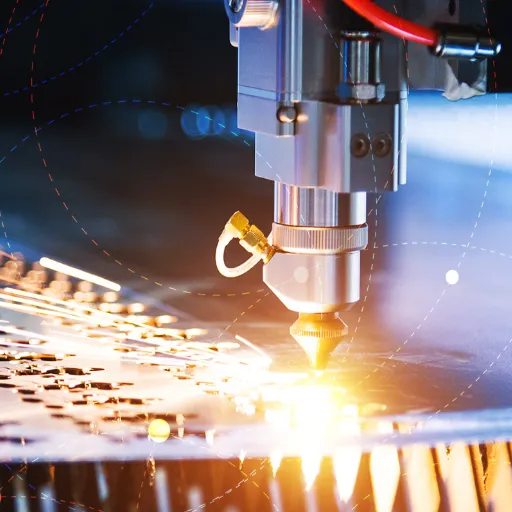
Industries like manufacturing as well as telecommunication have been astounded with lasers not only providing the accuracy but also the efficiency together in one product making it a common practice across sectors behind the scenes. Laser power is heavily relied upon in the manufacturing process with cutting, welding, engraving, and 3D printing performed where not only the limit of the material waste is small but also the area’s design is elaborate due to the intense focus of the laser. However, on the contrary, in the case of telecommunications, the lasers are legitimized as the most basic and core part of the optical fiber networks by data transfer through quite long distances with light signals at very high speed. This artificial limitation on the loss of data and thus, improving the reliability of rapid exchange of information has been made possible by the laser light along the invisible paths. In fact, telecom companies are benefitting not only from the synergy between laser technology and advanced data processing in continuously evolving products but also this innovation is gradually becoming in the form of more skilled workers in future.
Medical Uses of Lasers
The only medical field that lasers have come to be known for among others is by their precise, less invasive and more effective treatment-attracting several disciplines. Laser treatment is one of their most remarkable uses in surgical procedures where they grant surgical teams the luxury of gradual damage control when slicing tissue or organ restoration since only the area that requires intervention is being exposed to lasers. Vision correction surgeries, such as LASIK carry the burden of significant laser technology as they are able to work wonders on treating nearsightedness, farsightedness, and astigmatism with astonishing success rates. Moreover, laser therapy becomes frequent in dermatology for the likes of skin polishing, tattoo removal and overall skin condition improvement like the treatment of acne scars. Apart from this, when it comes to cancer transition, the health professionals range in tumor targeting supporting opting for the laser treatment pathway which leads to fuming or even reducing the abnormal growth without any impact on healthy tissue. As a whole, this ever-changing technology allows us to reshape patient amenity to be first in line in outcome improvement and availability of treatment methods worldwide.
Lasers in Scientific Research
Lasers have been the very lifeblood of scientific research in various fields of study. The use of light in interaction with the said material is the basis for spectroscopy, and this is where lasers come in as a great help enabling scientists to see the properties of matter. Electrical lasers indirectly are metaphysically responsible for another significant of physic’s branch, i.e., quantum physics; through their sharpness, they open a whole new world of atomic and molecular behaviors revealing secrets previously known in part only via particle dynamics and quantum computing. Mention can also be made of another remarkable application of optical tweezers, which rely on focused laser beams to exert force on microscopic particles, such as cells and DNA, and thus, have made significant contributions to biological research by unveiling cellular processes and molecular interactions. Furthermore, the heaviness of lasers in high-energy physics experiments is one with the least resistance; even in areas such as plasma studies and inertial confinement fusion which aspire to, in the future, provide earth with clean and renewable energy sources. In fact, with tech going through continuous evolution and the data referring to the studies pointing towards exponential enhancements in laser’s precision and power, their role as an unmatched partner in scientific exploration continues.
Recent Advancements and Future Directions
Ultrashort Pulse Lasers and Their Impact
Ultrashort pulse lasers are extremely short-pulsed lasers, which are measured in femtoseconds to picoseconds, that have been extensively applied in different areas of science and technology. The atomic and molecular precision provided by the lasers made them crucial for the applications of micromachining, imaging of human tissues, and spectroscopy. The fact that they give strong peak power but at the same time do not hurt the delicate tissue is a significant benefit in modern surgery; eye surgery and the production of microelectronics, for instance, are both delicate procedures requiring meticulous care and lasers being used.
The impact of ultrashort pulse lasers has been growing as a result of the progress in power stability and pulse control that would allow even more breakthroughs in attosecond science, the field investigating the ultrafast processes happening in quantum mechanics and chemistry. Furthermore, studies show that the use of ultrashort pulse lasers on the industrial scale is the widespread practice for the purpose of more efficient and accurate materials processing. The scientific effort to make these lasers smaller and less expensive continues and their possible applications are also expanding, thereby cementing their characterization as one of the most multipurpose devices in science and technology today.
High-Power Fiber Lasers: Trends and Developments
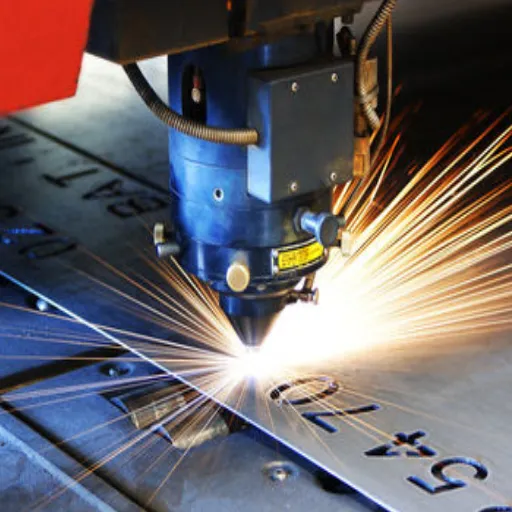
High-power fiber lasers are the game changers in the industries, owing to their adaptability, high effectiveness, and scalability. The latest trends suggest that manufacturing is the main area of their adoption, especially in cutting, welding, and 3D printing where accuracy and less downtime issues are critical. For the latest news, the technological improvement in fiber lasers means that their quality, power output, and energy efficiency are all being worked on, which will let the machines deal with tougher jobs but with the same precision or even more. Besides, the installation of AI and robots into fiber laser systems is enabling the creation of high-tech manufacturing solutions that will not only boost productivity but also minimize the cost of the whole process. The continuous progress in the compact and lightweight designs is making these lasers more affordable, thus, increasing their application in the aerospace, defense, and medical devices industries. Moreover, with the continuous improvement in the technology, high-power fiber lasers will be the ones driving the technological advancement more and more.
Future Projections for Laser Technology
The future of laser technology is absolutely spectacular with the continuous innovations that are still to be seen. The forecasts derived from the data and trends collected from the search engine indicate that there is a strong interest in the associate of lasers with the AI-powered control systems for the purpose of industrial applications that require high precision and flexibility. It is also expected that the move toward sustainability would impact the laser technology with researchers’ attempts focusing on the development of eco-friendly laser sources and materials for production, and designs that consume less energy. The healthcare industry will probably also have laser-assisted technology, as the latter will be combined with imaging for non-invasive procedures and better diagnostics. The need for laser technology in different fields would mean that the research on it would go on and therefore, it will not be surprising if the technology becomes the cornerstone in almost every future industry.
Types of Laser Media Comparison
| Laser Media Type | Characteristics | Primary Applications |
|---|---|---|
| Solid-State (Nd:YAG) | Accurate, efficient for soft tissue cutting | Medical surgeries, precision cutting |
| Gas (CO2) | High power, long wavelength | Industrial cutting and engraving |
| Liquid Dye | Tunable wavelength, flexible | Spectroscopy, research applications |
| Semiconductor (Diode) | Compact, energy efficient | Fiber optics, laser printers, telecommunications |
| Fiber Lasers | Flexible, scalable, high beam quality | Communication, sensing, manufacturing |
Frequently Asked Questions (FAQ)
What are the different types of laser technologies used in construction?
Different laser technologies come together in the construction of a laser which includes diode lasers, gas lasers, and dye lasers. Every type has its own characteristics and has different applications according to its capabilities. Diode lasers, for instance, are compact and consume less power and for this reason they are commonly employed in laser printers and optical gadgets. The helium-neon laser is a representative of gas lasers that generates a very coherent red laser light while dye lasers are pretty versatile when it comes to their wavelength range permitting their operation at various wavelengths. Knowing these laser classifications is essential in making right decisions for the utilization of lasers in different applications.
How does the amplification process work in laser construction?
In laser construction the amplification process is performed by the stimulated emission of radiation, i.e. the incoming photons excite the electrons that in turn emit light. It takes place in the gain medium, which is an integral part of laser configuration. One of the frequently used gain media is ruby crystals and semiconductor materials, which can emit light when fed with energy. When the emitted photons bounce between the mirrors in the optical cavity, they get amplified and thus a strong laser output beam is produced. The quality of gain media and the design of the optical resonator largely determine the efficiency of this amplification.
What role does the optical cavity play in laser operation?
The optical cavity or the optical resonator is the main component of the laser containing both the gain media and the mirrors. The optical cavity comprises a mirror that is partly reflecting and another that is completely reflecting which create a loop of feedback for the emitted photons. These photons then advance to the stimulated emission of the light therefore the shining becomes easily noticeable as the photons grow in number by getting bounced back and forth, consequently the intensity of the output beam is increased. The configuration of the optical cavity has a significant influence on the laser frequency and overall efficiency thus it becomes an important area of laser construction. Optical cavity is optimally configured which means that the laser is at its maximum power output.
What is the significance of stimulated emission in laser technology?
Stimulated emission is the laser technology’s core principle that makes up the coherent and tightly focused nature of laser light. In a laser, the process goes on when an electron drops from a higher energy level to a lower energy state, emitting a photon that exactly matches the incoming light in phase. This coherence is responsible for the unique nature of laser light among all other light sources; it gives the possibility of employing laser cutting and medical treatments, among others. The gain media properties and the optical cavity design influence the effectiveness of stimulated emission, thus highlighting its significance in the laser manufacturing process.
How do laser diodes differ from conventional lasers?
The optical cavity, known also as the optical resonator, is the laser’s most important component, as it holds the gain media and the mirrors. The optical cavity comprises a partially reflecting mirror and a fully reflecting mirror that create a feedback loop for the photons emitted. The photons then go to the stimulated emission of the light; therefore, the glimmering becomes easily noticeable as the photons grow in number by being reflected back and forth, hence the intensity of the output beam is increased. The design of the optical cavity greatly influences the laser frequency and overall efficiency, thus it is the most important area of laser production. The interior of the optical cavity is very well-optimized, which means that the laser is performing at its maximum power.
Reference Sources
| Source Title | Description |
|---|---|
| Basic Constructions of Laser Cavities – Columbia University | This resource explains the fundamental setup of laser systems, including the use of mirrors to form an optical oscillator. |
| Laser Basic Construction – Kurt Hollocher, Union College | A detailed overview of laser system components, including the laser cavity, power supply, and beam line optics. |
| Constructing a High Power Single-Mode Fiber Laser – University of Oregon | This paper delves into the theories behind laser physics and fiber optics, providing a comprehensive understanding of laser construction. |