Button making machines serve as fundamental equipment, which hobbyists and entrepreneurs and creatives use to create customized designs that they can apply to all types of products, including clothing and marketing materials. The machines enable users to create custom buttons for special events or to start their small businesses or pursue their artistic interests. The article presents different button making machine types together with essential features that users should consider when buying machines that provide them with various ways to express their creativity. The presentation will show you how these machines can help you achieve your creative vision through their ability to produce physical products which attract visual attention.
Introduction to Button Making Machines
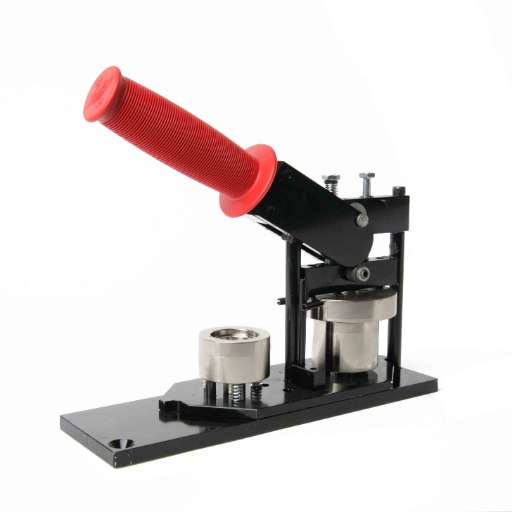
Button making machines serve as equipment which enables users to produce personalized buttons for their personal needs and business use and artistic projects. The machines enable users to create buttons by pressing various materials including paper and fabric into button shells which they can secure using a back piece. Users value the system because it operates simply while providing the flexibility to create different designs and it produces buttons which look professional and high-quality. The machines enable users to create buttons which they can use for promotional purposes and events and personal projects through their dependable performance and effective operational capabilities.
What is a Button Maker Machine?
The button maker machine functions as an all-purpose instrument which produces custom buttons and pins by joining multiple components that include a front shell, back piece, and selected artwork or material. The button maker machines find extensive application in crafting and marketing and promotional environments because they enable users to create buttons which come in multiple dimensions and shapes and design patterns. The machines use either manual operation or semi-automatic systems to press the components together, which results in a professional finish that maintains durability.
The contemporary button maker machines operate with high efficiency and precision, which makes them suitable for use by businesses and hobbyists and educational institutions. The button maker machine functions as an affordable and flexible option for creating promotional items and collectible pins and distinctive accessories.
Versatility and Popularity of Button Makers
Button makers serve multiple functions because they function as versatile tools that can be used in diverse environments. The primary function of these devices enables users to produce customized buttons which serve as both promotional items and personal accessories and memorabilia. The customization options they provide which enable users to create special designs and add logos and custom messages to their projects serve as a useful tool for people and organizations. Schools use button makers to help students create innovative projects while businesses use them to effectively advertise their brands at events and during marketing campaigns.
People prefer button makers because they operate efficiently and people can use them without difficulty while their design allows multiple applications. Users who want to create high-quality buttons from these machines need only basic training to use them successfully. The product provides users with two advantages through its small dimensions and ability to adapt to different project needs which include both minor projects and major initiatives. Businesses that need to create promotional materials in bulk or require multiple accessories for their work find button makers to be budget-friendly solutions. The product becomes more accessible to both amateurs and experts because of its budget-friendly pricing.
The environmental advantage of reusable parts in certain button-making systems drives their popularity among users. The modern systems enable users to design buttons that they can later disassemble and reassemble with new designs to reduce waste over multiple uses. Button makers attract environmentally minded users because their design feature supports sustainable development goals. The creative capabilities of button makers together with their practical uses and their ability to serve various needs maintain their status as popular tools which people use in different work fields and recreational activities.
Applications of Button Making Machines
Key use cases across industries and personal projects
- 01
Custom Button Making
Button-making machines are widely used in a plethora of promotional endeavors, for businesses, events, and campaigns. Custom buttons display logos, slogans, or messages for quite a powerful brand or cause promotion mechanism. - 02
Individualized Gifts
This is an equipment helping users to put together special or personalized gifts which carry a sincere meaning. In this manner, buttons adorned with photographs, artwork, or messages can commemorate birthdays or anniversaries to perfection. - 03
Event Identification
Buttons are used for making badges. These badges may be used for task assignment, deciding attendant status, or audience viewing — don’t you feel professionally equipped to handle the event, especially conferences, festivals, or conventions? - 04
Fundraising Campaigns
Rubber buttons are cheap fundraising gifts that help keep interest and support high among various neighbourhood charities, schools, and community projects. - 05
Creative Expression
Various artists, amateurs, and fans create custom designs using button making machines. They depict their creativity using art designs that can be worn or carried as collectible items.
Types of Button Making Machines
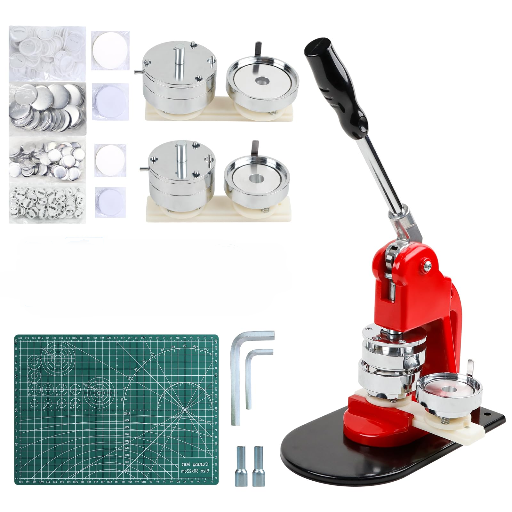
| Machine Type | Best For | Speed | Cost Level |
|---|---|---|---|
| Manual | Hobbyists & small events | Low | Budget-friendly |
| Semi-Automatic | Small businesses & medium batches | Medium | Mid-range |
| Fully Automatic | Large-scale production | High | Premium |
Manual Button Maker Machines
Manual button-making machines are simple and budget-friendly mechanisms that are hence popular for individual users as well as small-scale production. Indeed, manual machines are made for pressing and setting the button assembly into place, making these machines most appropriate for hobbies, small businesses that do not have much production needs, or promotional events. The lever-operated system exhibits a fine mechanism compatible with a series of button size, materials ranging from paper, fabric, to very thin plastics.
Manual machines foster reliability and easiness in operation, pitted against their automatic rivals with higher speed. It is best suggested that these machines be used for button-making-on-the-go for small productions of buttons suitable for events or personal use. No wonder these machines come in different hues across various pricing and model ranges — to suit many polyspectrum budgets for creative needs. Maintenance is negligible for such machines, so one can keep this unit for a very long time.
Semi-Automatic Button Making Machines
Semi-automatic button making machines affirm a balance where efficiency and speed offer great variants that are suitable for both hobbyists and small businesses. The loading of materials onto such machines is in most cases manual while the machine covers the larger part of the button-making process for much faster production compared to hand-based machines. The demand for semi-automatic button-making machines has been building up because of their adaptability and pace. Users often come up with queries asking if these machines can be scaled for production: yes, semi-automatic machines are excellent in churning out big button batches but also give you total control over your quality and customization.
Fully Automatic Button Making Machines
All fully automatic button making machines are extremely popular and economical especially for production on a level that is high. Other than the semi-automatics, these do not need much help from the person when making buttons hence they can and does get the results with less effort. They facilitate the process of making buttons without reducing the overall efficiency by allowing different tasks making, cutting, pressing, assembling etc. to be done in parallel and effective ways, thus ensuring standardization and excellence.
Some of the advantages of a complete automatic machine include their speed of button manufacturing. Thus, the industry or business looking to make quite a number of buttons in a short period of time can consider it fit. However, these machines usually have some adjustable controls which makes it possible for a user to make various sizes and shapes of buttons but in a continuous manufacturing process.
But, despite the efficiency of fully automatic machines, the initial cost could be higher than that of semi-automatic ones. However, this is generally justifiable as the cost is not only connected to low-level maintenance but also to the productivity of the machine and its ability to save on labor. In this case, scaling up the production process can present two problems hence the button making machine must be able to assure the quality of the finished item.
Key Features to Consider When Buying a Button Maker
Durability and Build Quality
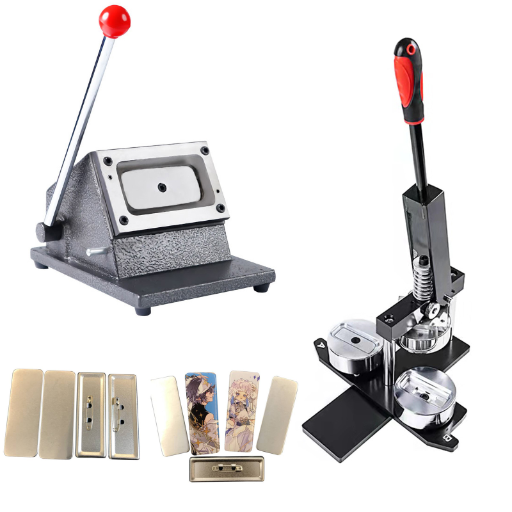
Durability and robust construction are the primary factors when choosing a button making machine. A machine made with durable materials, for example, stainless steel or hardened aluminum, is long-lasting and withstands natural degradation. Try to find such models which have strong frames and offers rigorous components as they will be used over long periods especially in intense production zones. To perform regular work for decks of cards and other types of buttons, it is preferable to use machines that both have a good guarantee and have received users’ positive feedback on logistics.
Quality should also be considered in the purchase of durable button makers as users tend to buy products for a long time. Most of the competent manufacturers have efficient and satisfactory interactions with their customers as a result of their appropriate engineering and quality control measures. This excellent build combined with good customer support provides easy and economical options for an individual as well as companies in the long run.
Size Compatibility and Button Parts
The size on the maker is one of the most important concerns when purchasing a button making machine, because this is what affects the number of able buttons. There are machines, which are supposed to work with only some particular dimensions, or such, that could provide, interchangeable molds for variety. Nonetheless, when you want to design buttons of different sizes, make sure that the button making machine is adaptable or offers extra molds that are capable of fitting different sizes. If all you intend to do is create one specific size of buttons then go for one-sized machine, it is cheaper.
Not to be overshadowed, the breakdown of the button parts of your device is priority number one. Button consists of a shell, pin back and Mylar cover and your machine should be stable enough to be used with these parts. However, before you buy, you need to check if the button making machine will support the materials and the parts that you want to use. This also ensures that replacement parts are kept in stock for the kind of button you use in their machine and therefore no projects are interrupted when the machine is being replaced.
Lastly, take into consideration where to purchase and for how much all spare parts or supplies for the button maker. Access to pin back refills and mylar covers, for instance, will have a big bearing on how effectively the machine is able to run over time. There are machines that can use generic parts that are easy to source while others necessitate the use of custom parts. Aside from this, knowing these factors before buying will support your button making machine purposes in a good way.
Ease of Use and User-Friendliness
Before ordering for the tool of your choice, choose a device that is simple to work with, so that there are no complications in the process of making buttons. Select a machine which is easy to assemble and has instructions which are explicit and concise enough to understand because it will take you less time and energy. Hand button press with lever or any other non-electronic handle button making machine will ease the work; more so when producing buttons is on a high scale. Do not forget to check the construction of the machine; how it enters or on how it aligns with the materials utilized — any provisions made for easier entry, in any such case. Thus, for beginners, it is advisable to select a model which contains a completed structure or a simple mode of operation so that they do not have to go through a long learning process. Finally, the reviews and perspectives of other users on the particular models could also help assist in choosing the easiest to apply.
Getting Started with Your Button Making Machine
Step-by-Step Guide for Beginners
- 1
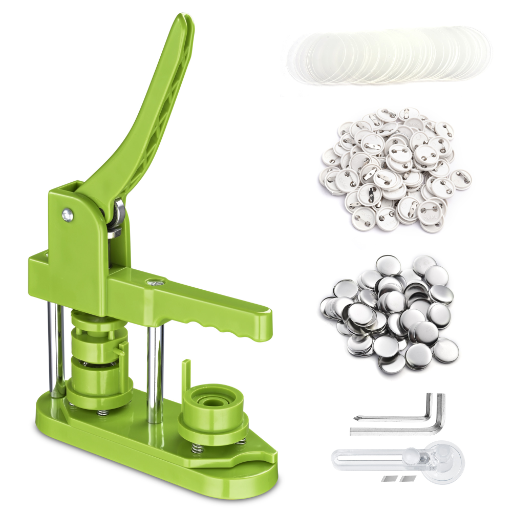
Open Box and Examine MachineCarefully open the box containing the button making machine and check to see if everything is inside and undamaged. The parts list on page 6 will verify.
- 2
Prepare Your WorkplaceChoose a site to work that is clean and flat and sufficiently illuminated. This would allow for the placement of the machine, materials, and the tools needed in this order.
- 3
Familiarize Yourself with Their FunctionsDo spend some time understanding the various parts of the machine such as the die molds, levers, and base plate. Go through the manual for the explanations on the functioning of each.
- 4
Design SelectionSketch or pick out any artwork for your buttons. Check to confirm that the artwork is well fitting its particular button template.
- 5
Cut Out DesignUse a circle cutter or a button punch to then cut out the designs. This ensures a professional appearance for the buttons.
- 6
Prepare Button ComponentsGather the button shell, pin back, mylar cover, and other essentials; verify that they match the size of the button molds.
- 7
Commission the MachineInterpose the shell, artwork, and mylar side by side into the die molds keeping them face-up.
- 8
Press the ButtonTry to pull the machine lever as instructed to fit the molds and press the button to compress and attach the various parts in the middle.
- 9
Fasten the BackingPosition the pin-back or any other backing into the second molding slot and press the button kept inside first with both moldings to make the backing stick properly to the button.
- 10
Examine and Test the ButtonVerify that the various parts are aligned properly with one another while they were being built. Test the directional pins to see that the finish product can hold up appropriately.
- 11
Practice Makes PerfectMake a couple of practice buttons on the machine in order to become accustomed to it and to ensure that you are comfortable with the operation prior to making larger quantities.
- 12
Store Materials ProperlyMake sure to properly organize and store your button-making supplies in a dry, safe location in order to maintain their quality so as to use them at later times.
Essential Button Making Supplies and Accessories
In order to produce a successful button, you will need some key items and accessories:
- ›Button Moulding Machine: A safety-conscious machine that clinches materials easily for the design of buttons.
- ›Button Parts: The shells, pins, and backs are the three main sections to form a button.
- ›Bond Papers or Printable Materials: Fine papers can be used to print the designs or artwork to be put on the buttons.
- ›Circle Cutter or a Punch: This is used to cut the shape of the art to the right button size.
- ›Mylar Protective Covers: Often, an ultra-fine layer of plastic is laid over to protect the design and provide the smooth shine.
- ›Templates for Design: Layout templates to make sure the art fits properly on the button.
The above items are basic necessities when manufacturing buttons so the design is neat and of a professional quotient all the time.
Common Troubleshooting Tips
Identify and fix common problems for smooth button production
| Issue | Solutions |
|---|---|
| Buttons Not Sealing Properly | Check each component for proper machine alignment. Verify that the machine’s molds are securely attached to the upper and lower parts. Prove the actual size of the parts to be used fits with the template of your button. |
| Wrinkly or Damaged Designs | Double-check that Mylar and the design are fabricated to the correct sizes. Avoiding very thick bond stock aids in preventing wrinkles during assembly. |
| Machine Jamming | Remove all debris and check for misaligning parts anywhere within the machine. Do not miss the cleaning part of the machine regularly according to the manufacturers’ guidelines. |
| Weak or Loose Buttons | Double-check to see if the pressure applied to the crimp is sufficient. Please ensure the parts like the back or pin are not constrained in their locations and are seated properly. |
If you follow these tips correctly, you would be able to identify and fix commonly encountered problems in order to produce Buttons smoothly and efficiently.
Creative Projects Using Button Making Machines
DIY Button Projects for Schools
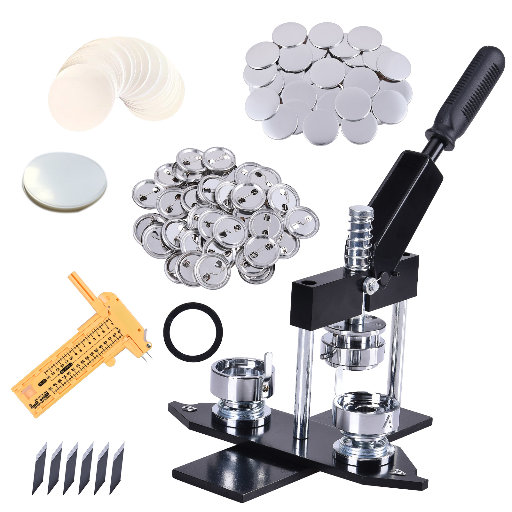
Button-making machines can be a fantastic tool for a number of exciting and educational projects available at school. Here are some ideas:
Individual Name Badges
Have each student design their own name badges he or she will wear during events, group activities, or as part of classroom management.
Buttons for Clubs and Teams
Design custom buttons representing school clubs, sports teams, or student organizations. The buttons can enhance a sense of identity and unity.
Art and Design Projects
Allow students to design their very own buttons. Pick between artwork, slogans, or important messages, and let creativity be a-flying for the cause!
Recognition Buttons
With this project, you may customize an award button to be awarded in a variety of areas of distinction that would not only serve to motivate and serve as a sense of accomplishment.
Fundraisers or School Events
Design theme-dressed buttons for school carnivals, fundraisers, or special events. Selling the buttons could be an excellent way to raise money for all school programs.
Marketing and Branding with Custom Buttons
Custom buttons serve dual uses depending on varying concepts and levels of price fragmentation. In such setups, with increasing interest in personalized promotional items, the search for ‘personalized marketing tools’ and the like went into plenty of pages and pages of Google searches. However, custom buttons would be riding this wave — they are cost-effective, they are standalone, and they are highly visible.
Businesses can also sell and distribute buttons at trade shows, events, or campaigns in order to increase brand awareness. Each button becomes a miniature canvas, collecting logos, taglines, or special offers while leading to a sense of bonding with the target demographic. At the same time, they act as good conversation starters, enhancing interaction and furthering exposure, both online and offline, for businesses.
Starting a Small Business: Selling Custom Buttons
The ultimate entity to endure with might be some tiny venture concerned with personalizing buttons for countless individuals. To some extent, first, you can concentrate upon your niche market and target audience — Will it be an event-goers or businesses or giving out personalized gifts for common folks today? Second, you would need to put it into action by pouring lots of efforts for selecting buttons equipped with button-making machines, good paper, and printers capable of producing good design reproductions. Choose the right buttons size and design that appeal to your audience where your market belongs.
Draft your designs using simple graphic designing tools or software or work with finesse with any freelance designer for vividly original work. Set up shop in the arena of websites such as Etsy or Shopify for your annoyer, your own webpage offers a good page for the marketing of your buttons. Consider posting through the variety of social media channels if you can, and even have a physical presence in nearby markets and events to allow interaction with potential buyers.
One advantageous option is to procure wholesale custom button components from established sources that can be supplied all at one time to help contain costs. Price your buttons judiciously with consideration for raw material, processing time, and market fluctuation. A given custom design can be put forward gradually to put forward an advantageous appeal for those seeking exclusive work options. Sales of custom-made buttons largely depend on creativity, a strong brand name, and marketing in a consistent narrative.
Frequently Asked Questions (FAQs)
What button making kit or set supplies are inclusive in a complete set for making button badges of 2.25″ round size?
The standard complete button-making kit for making those 2.25″ round buttons will usually include a machine or press for buttons (be it manual, rotary or electrical), shells made of metal, backs involving pin-backs or magnets, mylar covers that are transparent, paper circle templates, either a cutter or an all-in-one punch, and simple instructions. For some kits, other button-making dies to keep on making buttons straight away could consist of some software outline, bottle openers, and/or other buttons.
How does the circle cutter work with a button press when making round buttons?
The circle cutter is an essential tool for cutting your circles to precise dimensions (typically 2.25″). To begin, print out your designs on paper and proceed to cut multiple images around the circle cutter or punch. This cover piece will be the exact size of a shell so that the paper fits perfectly on top of it. The button press then layers the paper, mylar, and shell together, compressing the three-layered assembly into a professional pinback button or magnet, based on your chosen backing.
Can a child manage a button making kit without assistance; or are there any wonderful kid versions?
Yes! There are models for the craft room and classroom, in which safety, decoration fun, and manual pressing had been the prime motive. Always, watch young kids; never leave them alone, particularly when they are boxing, cutting, snapping those tiny buttons or washers here as a part of the machine. In your opinion, definitely do start hunting for models that have ‘child’ or ‘school’ on the label and pick a regular twisting or manual instrument itself over the heavier, industrial machines that come classified into a mini-industry button press for safety.
Which differences distinguish ordinary, hobby buttons making kits from professional button machines?
High volume professional button machines will typically offer greater structural integrity, improved accuracy, and may be motor driven or multi-station rotary designs to improve faster mudslinging. Basic button-making kits are organized as probably the best options for serious amateurs and less extensive projects. Therefore, any further acquisitions here count on expected kind of output: it is ideal to select a professional button machine for events, retail or repeat production work and possess an own button-making kit for personal or once-in-a-blue moon usage.
How do you choose between the pin back, magnet, or bottle opener when ordering button supplies?
The decision of which back type to use starts with the intended use. Pinback buttons are tokens for apparel, a tradition dating back many years, while magnets are great fittings for fridges or boards and bottle openers are fun, novelty items. A number of do-it-yourself (DIY) button-making kits and product listings allow you to choose different button backs in one shipment so you can manufacture pinback buttons, fridge magnets, or promotional bottle openers from the same machine using the right die and supply set.
Are electric or rotary button presses an option for my requirements, and how do they stack up?
They come in manual, electric, and rotary styles: the electric button presses automate the press-action part and cater to high volume while rotary presses, on the other hand, provide operators with an option to rapidly press through multiple stations. Manual presses can be handy for very affordable needs of the hobbyist. Consider two different categories for a very high volume of button pressing: choose electric or rotary, or else go with a manual if you are a casual crafter.
Reference Sources
-
Fashion, Tradition, and Innovation in Button Manufacturing in Early Modern Italy
Link to source
This article explores the historical and innovative aspects of button manufacturing, focusing on its evolution and creative applications. -
Moving Up in the Global Value Chain in Button Manufacturing in China
Link to source
Discusses how technological advancements and innovation have transformed button manufacturing in China, emphasizing value-added operations. -
The Talking Button
Link to source
Highlights innovative approaches in button design and manufacturing, fostering a culture of creativity and technological integration. -
Push Button Mechanisms
Link to source
Discusses the mechanics and human interaction with button-making devices, offering a technical perspective on their operation. - Food Machine and Extruders Provider in China