DG, Quick Reference
| Full form 1 | Diesel Generator — an engine-driven machine rated in kVA |
| Full form 2 | Distributed Generation — electricity made at or near the point of use |
| Outside electrical | Director General (an organizational title) |
| How to tell which | Read the noun next to DG and the scale (kVA vs MW) |
| Typical scale | DG set 5–2500+ kVA · distributed DG 1 kW–10 MW |
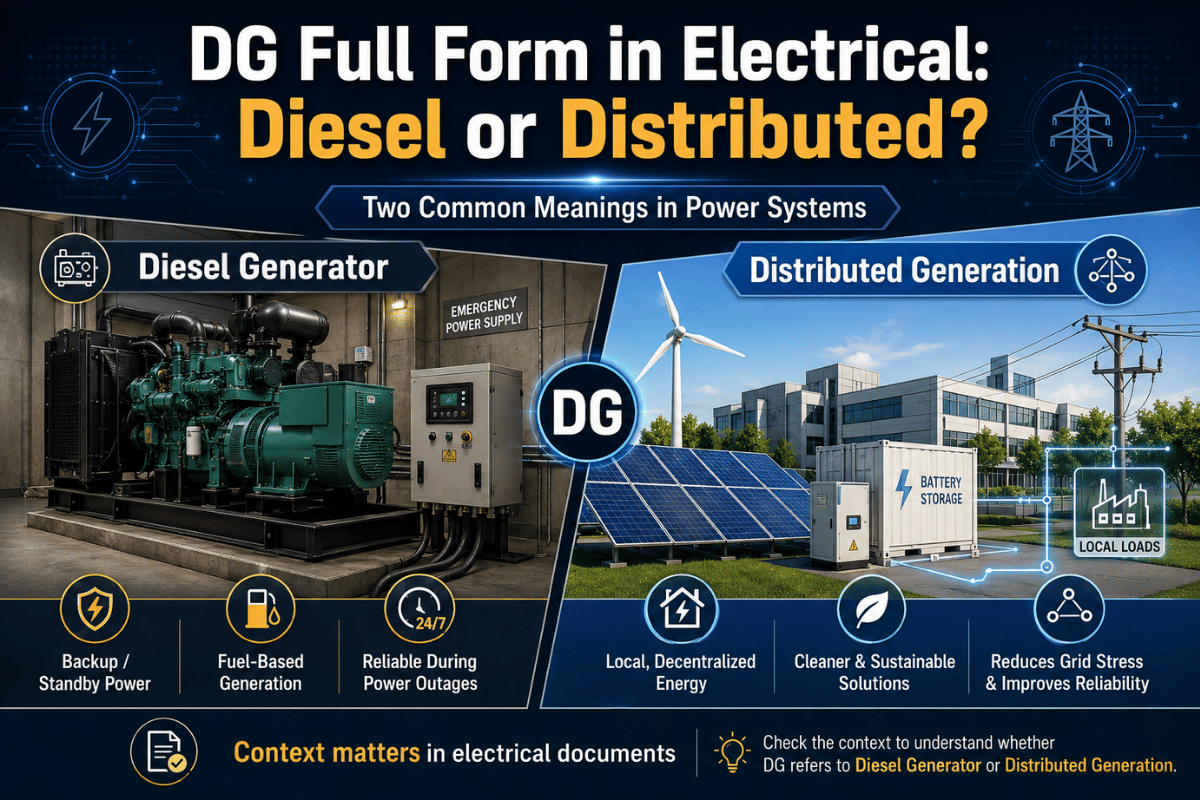
The DG full form in electrical engineering refers to one of two things: a Diesel Generatora fuel-burning machine that makes electricity, or Distributed Generation, the practice of producing power close to where it’s consumed instead of at one far-off plant (a definition the U.S. EPA uses as well). Both answers are correct. Both are right. Which one a writer means depends entirely on the sentence around it. A maintenance log that says “test the DG” means the diesel set in the basement; a grid-planning report that says “DG penetration” means distributed generation. This guide settles the confusion first, then goes deep on each meaning so you can read, specify, or write about DG without guessing.
Short answer: DG in electrical work means Diesel Generator (a kVA-rated genset) in equipment and facilities contexts, and Distributed Generation (small-scale power near the load) in grid and energy-policy contexts. Same two letters, two different layers of the power system.
DG Full Form in Electrical: The Two Answers
The reason “DG” feels ambiguous is that it lives in two different layers of the power system. A diesel generator is a devicea diesel engine bolted to an alternator. Distributed generation is a topologya way of arranging where electricity is produced. The two even overlap: a diesel genset can be one unit inside a distributed-generation scheme. So instead of memorizing which is “correct,” read the context.
The DG Context Key, Three Cues
To decide which DG a sentence means, check three cues. First, the noun beside DG: “DG set,” “DG backup,” or “DG rating” points to a diesel generator, while “DG unit,” “DG penetration,” “DG interconnection,” or “DG resources” points to distributed generation. Second, the scale: a nameplate in kVA is a diesel set; a kW-to-MW grid asset is distributed generation. Third, the framing: a machine you buy and fuel is the diesel reading, whereas a strategy for the grid is the distributed reading. We call this the DG Context Key, and it resolves almost every real-world sentence in seconds.
| Dimension | Diesel Generator (DG) | Distributed Generation (DG) |
|---|---|---|
| What it is | A machine (engine + alternator) | A grid topology / strategy |
| Typical scale | 5–2500+ kVA per set | 1 kW–10 MW per site |
| Energy source | Diesel fuel | Solar, wind, gas, fuel cells, gensets |
| Location | On-site, near the load | At or near the point of use |
| Primary role | Backup / prime power | Cut grid losses, add resilience |
| Dispatchable? | Yes (on demand) | Mixed (solar/wind intermittent) |
| Emissions | Local NOx, PM, CO | Often low (when renewable) |
| Rating unit | kVA / kW | kW / MW capacity |
| Governing standard | ISO 8528 (ratings) | IEEE 1547 (interconnection) |
| Who specifies it | Facility / electrical engineer | Utility / energy planner |
Rating standards per ISO 8528 and interconnection per IEEE 1547.
DG as Diesel Generator: How a DG Set Works
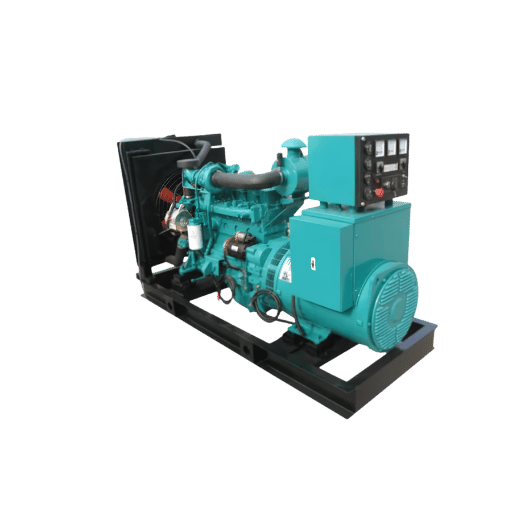
How does a diesel generator work?
A diesel generator converts the chemical energy in diesel fuel into electricity in two stages. The diesel engine burns fuel through controlled compression-ignition, turning a shaft; that shaft spin an alternator, where a rotating magnetic field induces alternating current in the stator windings. An automatic voltage regulator (AVR) holds the voltage steady, and a governor hold engine speed, and therefore output frequency, constant. The result is usable AC power within seconds of a start command.
A complete diesel generator set, or “DG set” (the unit ISO 8528 rates), is more than the engine. Nine core parts work together: the diesel engine, the alternator, the AVR, the fuel system, the cooling/radiator system, the control panel, the starter battery, the base frame or sound-attenuated canopy, and the exhaust. The energy path is easy to trace: air filter → diesel engine → alternator → load, with the fuel tank feeding the engine and the control panel plus AVR regulating the output.
📐 Engineering Note
Output frequency is fixed by poles and speed: F = (P × N) / 120, where F is frequency in Hz, P is the number of poles, and N is engine speed in RPM. A 4-pole alternator runs at 1500 RPM for 50 Hz and 1800 RPM for 60 Hz. Standard outputs are three-phase 400–415 V (50 Hz regions) or 480 V (60 Hz), and single-phase 230 V.
DG Set Ratings: kVA, kW, Prime vs. Standby
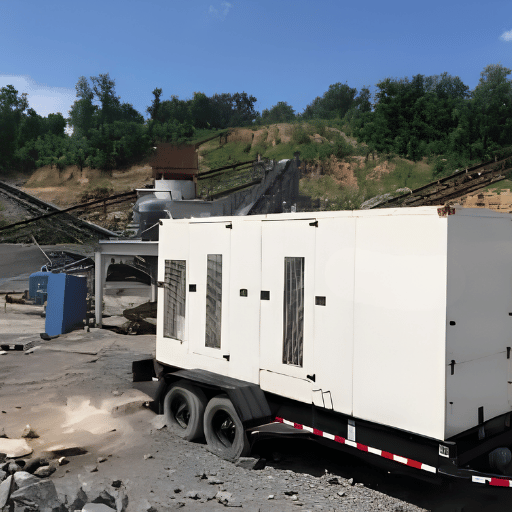
Why is the power factor lagging in a DG power supply?
Generators are sized in kVA (apparent power), not kW (real power), because the load draws both. Real power equals apparent power times the power factor: kW = kVA × power factor. Motor-heavy industrial loads run at a lagging power factor, typically 0.8, because motors draw reactive current to build their magnetic fields. So a 100 kVA set delivers about 80 kW of real work, and you size on kVA to avoid overloading the alternator.
Rating class matters as much as the number. ISO 8528 defines how long a genset may run at a given load: ESP (emergency standby power), PRP (prime power), COP (continuous), and LTP (limited-time power). ISO 8528-1:2018 is the current edition, with a fourth edition in development. Typical sizes span 5 kVA portable units to 2000+ kVA industrial sets, and output derates with altitude and heat, roughly 1% per 100 m above 1000 m and about 1% per 5 °C above 40 °C.
One field rule surprises buyers: a bigger generator isn’t a safer generator. NFPA 110, the standard for emergency and standby power, frames the diesel exercise threshold as either the manufacturer’s minimum exhaust temperature or at least 30% of standby nameplate kW, a testing guideline, not a universal hard floor, and one that doesn’t apply to spark-ignited units. Run a diesel set far below that band for long periods and unburned fuel collects in the exhaust as a tar-like creosote, a condition called wet stacking that field engineers have watched ignite a silencer during a load test. Continuous-process plants, from plastic extrusion lines to food processing linespair grid power with a right-sized standby DG set for exactly this reason: an outage mid-run scraps a batch, but an oversized set scraps the engine.
“Diesel engines like to run near rated load. Oversize a set and run it lightly for years, and you trade one risk for another: the outage you feared becomes a wet-stacked, short-lived engine.”
When Diesel DG Makes Sense: Backup, Prime, Standby and DG vs. UPS
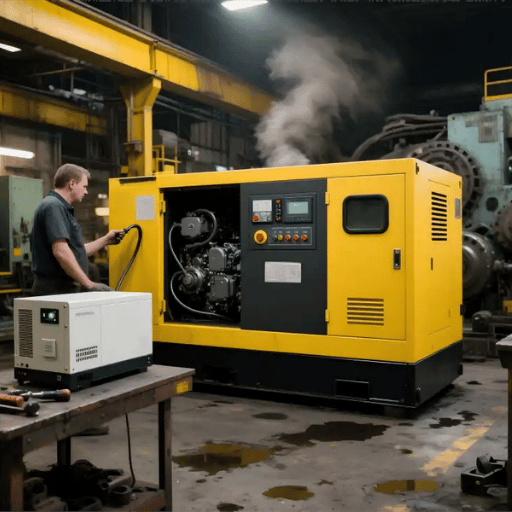
A diesel DG set and a UPS solve different halves of the same backup power problem. A UPS bridges the first 10–60 seconds with battery or flywheel energy and rides through voltage dips instantly; a diesel set sustains the load for hours to days, limited only by fuel. Neither replaces the other, which is why data centers and hospitals run both, and why the diesel rotary UPS (DRUPS) merges the two.
Which DG Do You Actually Need?
- Ride through a multi-hour outage at a plant → diesel DG set (prime or standby rated per EPA stationary-engine categories).
- Cover the seconds before the genset start → UPS (battery or flywheel).
- Protect servers and life-safety loads → UPS + DG set together.
- Power a remote site with no grid → diesel set or a solar, diesel hybrid.
- Cut grid losses and add on-site renewables → distributed generation (the other DG).
DG as Distributed Generation: The Grid-Edge Meaning
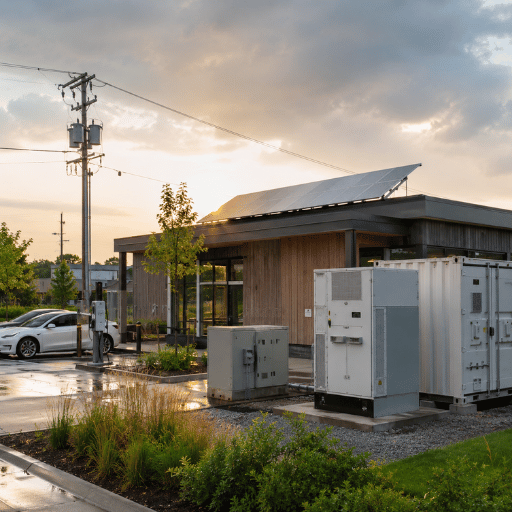
What is distributed generation (DG)?
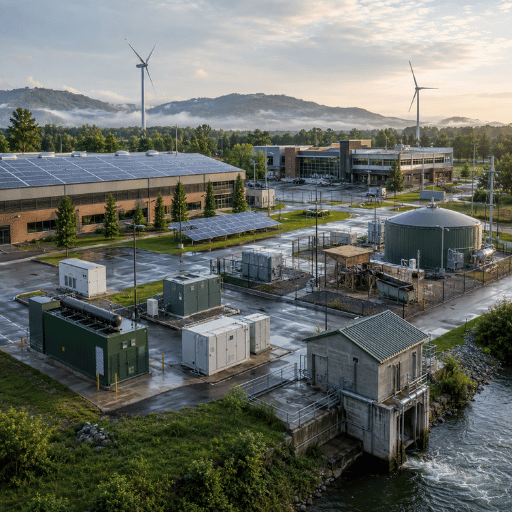
Distributed generation is electricity produced at or near the point of consumption, rooftop solar photovoltaic (PV), on-site gensets, fuel cells, combined heat and power, small wind, instead of at large centralized power plants. By generating power locally, it trims the transmission-and-distribution losses that average about 5% of US grid electricity and adds resilience when the wider grid go down. The U.S. Environmental Protection Agency and academic programs such as Penn State’s electrical-systems courses both define DG this way.
One precision point keeps engineers honest: distributed generation (DG) is narrower than distributed energy resources (DER). DG refers to generation; DER also covers storage, demand response, and controllable loads. That distinction matters because the main interconnection standard, IEEE 1547-2018, is written around DER, not the DG acronym alone. When a utility document says DER, it means more than generators.
Types of Distributed Generation: The 9-Source Spectrum
| DG source | Typical scale | Dispatchable? |
|---|---|---|
| Rooftop solar PV | 3–500 kW | Intermittent |
| Utility-scale PV (on-site) | 0.5–10 MW | Intermittent |
| Small wind turbine | 5 kW–1 MW | Intermittent |
| Microturbine | 30–300 kW | Dispatchable |
| Reciprocating genset (diesel/gas) | 10 kW–3 MW | Dispatchable |
| Fuel cell | 1 kW–10 MW | Dispatchable |
| CHP / cogeneration | 50 kW–10 MW | Dispatchable |
| Small hydro | 100 kW–10 MW | Variable |
| Battery storage (BESS) | 5 kW–20 MW | Dispatchable |
Strictly, storage is a DER rather than generation, but it’s grouped here because it dispatches like one on a microgrid.
Is DG only for renewables?
No. Distributed generation includes dispatchable fossil units, diesel and natural-gas gensets, microturbines, and fuel cells, not just solar and wind. This is exactly where the two meanings of DG meet: a diesel generator can itself be a distributed-generation asset feeding a microgrid.
There’s a catch, though. In the United States an emergency diesel set is a different regulatory animal from a prime one. Under EPA stationary-engine rules, emergency engines face hour-meter limits and can’t freely run for peak shaving or grid income; treating a backup genset as full-time distributed generation can change its compliance category. The bridge is real, but it’s operational and legal, not just electrical.
Distributed vs. Centralized: What DG Changes on the Grid
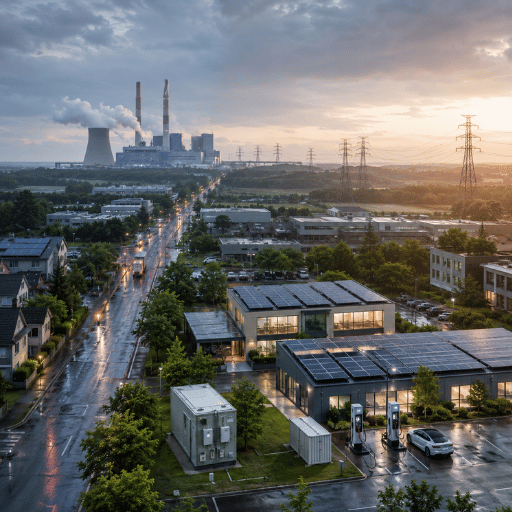
Centralized power generation sends power one way: from a large plant, down transmission lines, to you. Distributed generation breaks that assumption, and the grid has to adapt. The headline benefit is fewer losses, power made on-site doesn’t travel far, plus resilience, because a site with its own generation and storage can island and keep running when the wider power grid fails, a real gain in reliability.
The trade-offs are equally concrete. When on-site DG produces more than a site consumes, current flows backward into the utility grid, reverse power flow, which can confuse protection relays designed for one-way flow, a coordination problem documented across distribution-engineering research. That’s why IEEE 1547-2018 sets the rules for how DG and other DER interconnect, ride through disturbances, and support voltage. And the environmental ledger isn’t one-sided: diesel-based DG cuts transmission losses but raises local NOx, particulate, and CO emissions compared with cleaner DER, which is why permitting often decides whether diesel DG is allowed at all.
Where Both DGs Are Headed (2026 and Beyond)
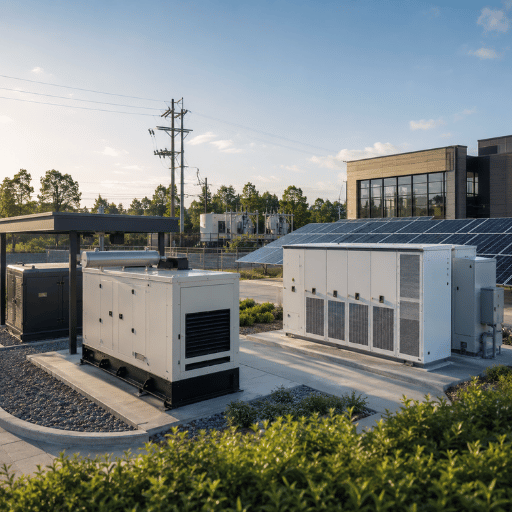
Both meanings of DG are growing, but at different speeds. Market researchers put the diesel-genset market on a 5.9–9.9% annual growth path through the early 2030s, while the microgrid market is climbing far faster at roughly 15–17% per year, a sign that distributed generation, the topology, is outpacing diesel generation, the machine. The loudest driver in 2026 is the data center: facing multi-year waits for grid connections, operators are moving on-site generation from pure backup toward prime power.
That shift is where the two DGs physically converge. A hyperscale campus running gas and diesel gensets as prime power, paired with solar and batteries behind the meter, is a diesel generator and distributed generation at once, a hybrid that microgrid-control patents already formalize, subject, as noted above, to the emergency-versus-prime rules that decide how many hours those engines may legally run. The practical takeaway for 2026: when you read or write “DG,” pin down the noun and the scale first, because the same two letters now describe both the engine in the yard and the strategy reshaping the grid around it.
Frequently Asked Questions
What does DG mean in electricity?
View Answer
What is the full form of DG power backup?
View Answer
Does distributed generation include diesel generators?
View Answer
What is the difference between diesel and gasoline generators?
View Answer
A diesel generator uses compression ignition, air is compressed until fuel injected into it self-ignites, while a gasoline (petrol) generator uses a spark plug to light a fuel-air mix. Diesel sets are more fuel-efficient and built for long, heavy-duty runs at industrial sizes, which is why facilities standardize on them.
Gasoline sets are cheaper and lighter for small, occasional residential use, but they cost more per kilowatt-hour to run and tolerate continuous loading poorly. One practical note: unlike diesel, spark-ignited gasoline units aren’t prone to wet stacking, so they’ve no 30% minimum-load rule.
Is DG the same as an ordinary generator?
View Answer
What size DG set do I need for a small office?
View Answer
About This Reference
UDTECH (Suzhou UDTECH Technology Co., Ltd.) is an industrial machinery manufacturer, plastic extrusion, food processing, paper, and laser equipment, not a generator vendor. We publish this as a neutral electrical reference because the plants that run our extrusion and processing lines depend on both diesel generator backup and on-site distributed generation. Every figure here’s sourced to government, standards, or trade-press references rather than sales claims. Reviewed by the Suzhou UDTECH Technology Co., Ltd. technical team, June 2026.
UDTECH designs and builds extrusion, food-processing, paper, and laser machinery for industrial plants in 100+ countries, the kind of continuous-process equipment that reliable power keep running.
References & Sources
- Distributed Generation of Electricity and its Environmental ImpactsU.S. Environmental Protection Agency
- How much electricity is lost in transmission and distribution?U.S. Energy Information Administration
- Grid Location and Line LossesPacific Northwest National Laboratory (U.S. DOE)
- Compliance Requirements for Stationary EnginesU.S. Environmental Protection Agency
- Distributed Generation (DG), AE 868Penn State, John A. Dutton e-Education Institute
- ISO 8528-1 Generator Set RatingsInternational Organization for Standardization
- IEEE 1547-2018 DER Interconnection StandardInterstate Renewable Energy Council