Shade net making machines serve as essential equipment for producing high-grade shade nets, which various industries including agriculture and horticulture and construction require. These machines serve as the essential foundation for producing nets that withstand extreme sunlight and maintain temperature control while protecting crops and other materials from outside threats. The article provides an in-depth analysis of shade net making machines by examining their distinct characteristics and essential advantages and their various practical uses which benefit manufacturers and business owners and end users. The guide provides essential information for beginners who want to enhance their production processes or discover the advantages provided by these machines.
Understanding Shade Nets and Their Importance
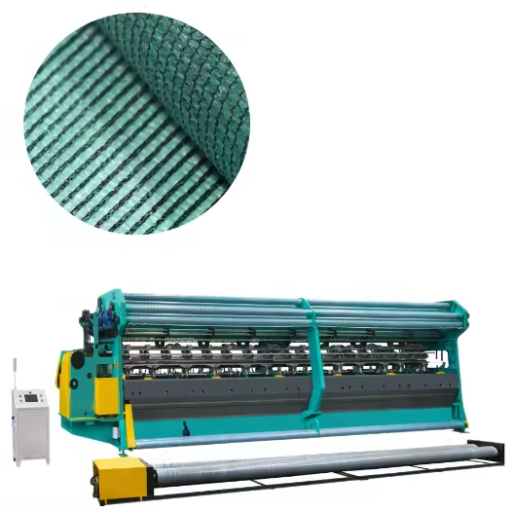
Shade nets function as specialized fabrics that control sunlight and heat and moisture passage through their materials to create ideal agricultural and horticultural and industrial working environments. The system protects crops from extreme environmental conditions which include intense sunlight and strong winds and heavy rainfall, thus enabling better plant growth and higher crop production. The system uses shade nets to maintain temperature control while preventing pest outbreaks. The system demonstrates its usefulness across different fields through their application in nurseries and greenhouses and building projects, which achieve effective resource control and long-lasting performance.
What are Shade Nets?
Shade nets function as modern solutions which create controlled environmental spaces for multiple different uses. The materials of shade nets include high-density polyethylene (HDPE) and other sturdy materials which designers treat with UV stabilizers to protect against outdoor environmental conditions. Shade nets use their ability to control sunlight and temperature and moisture and air movement to establish perfect growing conditions for both agricultural and horticultural activities. The most recent data shows that shade nets provide multiple different shading options which range from 30% to 90% thus enabling users to choose the desired shading level according to their particular needs. Shade nets find applications in construction where they safeguard building materials and in car parking structures where they function as sun shields and in sports and recreational areas. The combination of adaptability and cost-effectiveness makes this product essential for achieving sustainability and efficient resource management in multiple different business sectors.
Importance of Shade in Agriculture and Construction
The presence of shade provides essential benefits which improve agricultural and construction operations while maintaining their environmentally friendly practices. Shade nets in agriculture create controlled environments that enable farmers to protect their crops from direct sunlight while maintaining proper temperature and humidity conditions. Farmers achieve better plant development through controlled conditions which result in higher crop production and decreased water usage for cultivation. Shade protects crops from heat stress while providing farmers with ideal growing conditions which produce better and more lucrative agricultural results.
Shade structures in construction sites improve operational security while increasing work efficiency. These structures protect building materials such as cement and steel and other components from ultraviolet radiation and temperature changes which would damage their materials. Workers gain from shade protection because it helps them avoid direct sunlight which decreases their heat exposure while increasing their comfort to boost productivity and create safer workplaces. This becomes necessary for areas that experience high levels of sunlight or extremely hot weather conditions.
The use of shade solutions in these industries also aligns with sustainable practices. The system decreases artificial cooling system use which leads to reduced energy needs and emissions. Shade structures offer budget-friendly protection which helps both economic and environmental objectives, so they have become essential for contemporary agricultural and construction operations.
Types of Shade Nets: Agro vs. Industrial
Agro shade nets include green and white nets for crops, while industrial shade nets feature black or UV-stabilized nets designed for construction and weather protection.
| Parameter | Agro Shade Nets | Industrial Shade Nets |
|---|---|---|
| Color | Green, White | Black, UV-stabilized |
| Material | HDPE | HDPE, PVC |
| Purpose | Crop growth, UV block | Weather, Worker safety |
| Durability | Medium | High |
| UV Resistant | Yes | Yes |
| Application | Farming | Construction |
Features of Shade Net Making Machines
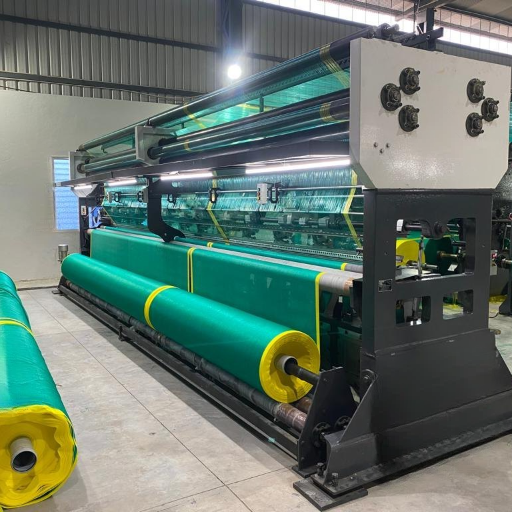
Key Components of Shade Net Machines
Component 01
Extruder Unit
It melts the HDPE or other materials and extrudes them as threads for use as shade nets.
Component 02
Warping System
Arranges the threads for maintaining the structure and stability of the woven net.
Component 03
Knitting Mechanism
Precisely intertwines threads for making the desired pattern and strength of the net.
Component 04
Cutting Unit
Properly sizes the nets and provides a clean edge for customization.
Component 05
UV Treatment
The UV stabilization provided by this component ensures that sunlight will not destroy the net and will be safe from other external conditions during a long lifespan.
Component 06
Control Panel
It offers the operator easy operation and adjustment of machine settings, ensuring both production continuousness and quality consistency.
The described components augment all the components in producing ever-high-quality shade nets suited to the agricultural and industrial contexts.
Technology Behind Raschel Knitting Machines
The primary operations performed by Raschel knitting machines are driven by weaving principles, so yarns are fed to interfaced beams of the machine intertwining between themselves and producing fabrics with interstices. The latter ensures the production of fabrics which are long-lasting and continuous which makes it very useful in the production of shade nets, fishnets, and other fabrics produced for conventional applications.
The main system incorporates many functional guide bars which help keempanse the yarns in proper knitting arrangement. Each bar supervises its own threads, contributing to design variations and differing levels of thickness or strength. Besides, there are pair of needle beds that knit with respect to the guide bars, ensuring proper knit from the yarns.
Many of today’s high-output Raschel machines incorporate automation, and many have developed digital control systems, all aimed at improving performance and, in many cases, eliminating human errors altogether. These enhanced capabilities allow the monitoring and evaluating of operation processes in order to make appropriate adjustments and eliminate mistakes–enabling customized production of excellent quality fabrics. The reason these types of machines are so unique and so important in textile coverage is that they combine both mechanical precision and digital creativity in their design.
Production Capacity and Efficiency
400–600
m² per hour
40%
Productivity gain
30%
Energy savings
When one thinks of a shade net making machine, one must understand that it is constructed to deliver maximum output without compromising on the required efficiency levels. These equipments are designed, employing highly advanced mechanisation, to churn out many pieces of shade net within a very brief period and without any compromise in the quality of the products. Today’s technological advances sees the incorporation of stepper motors and even a help-itself AC control system which allows the flexibility of changing the mesh lavendar, the wide and the amount, to meet the requirements for agriculture as well as for industries. For instance, premium machines which produce shade net can run at speeds of about 400-600 m2 per hour relying on the configuration and the fabrication being employed. Also, these machines reduce costs in the sense that they use power saving motors and have few components that require servicing. Therefore, such machines are ideal for manufacturers who want to attain profitable gain amid environmental protection.
Benefits of Using Shade Net Making Machinery
01
Cost-Effectiveness for Producers
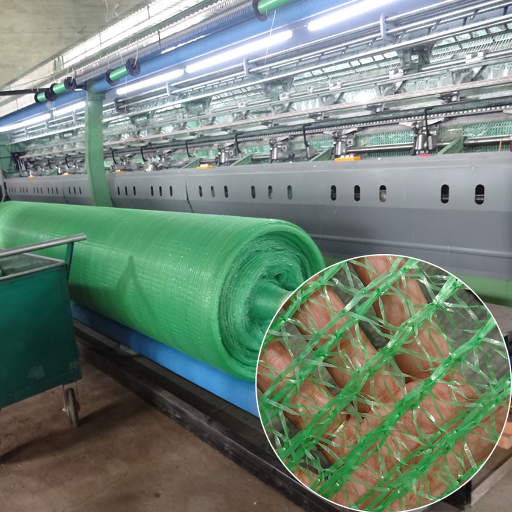
There are various studies on the benefits of shade net making machine for producers who want to cut costs because it makes the manufacturing process more impressive and, as such, generates lower dependency on workers. The modern equipment comes with various technologies that automate the machines to perform most work with minimal interference from people, hence minimizing labor expenses. It is reported that capacity for fully automatic shading nets machines can improve productivity by almost 40%, and that means that manufacturers can increase the supply of their products whilst spending less money on production. The elements these machines incorporate are moreover hard-wearing, meaning, maintenance periods are far and in between which account for the savings in the production process over time. Models designed with high energy-saving tend to be cost-effective because they consume less power. It is for instance the case that some high performance equipment uses up to 30% less power than its older versions which in the long run brings down the power costs significantly. There is also minimal appreciation of materials by producers as there is a use of adequate control and calibration systems that help in the use of materials appropriately which leads the production costs to be reduced but the product incrementally. All these elements make a shade net making machine an attractive asset to the manufacturers who are keen on minimizing their expenses.
02
Durability and Longevity of Shade Nets
Construction of shade nets is tailored to diverse weather conditions to improve resilience. A well built net is made by using advanced materials like the HDPE or High Density Polythene that is both UV, rip and weather resistant. The study further reveals that superior grade nets have a conservatively estimated lifespan of five to ten years with proper a maintenance plan, attributed to more or less environmental exposure of the nets and materials used. To prolong the lifespan of the nets, users should practice regular net clean-ups, refrain from hitting sharp objects, and fix the nets tight ensuring their safe fittings. And it is for this reason that they provide an efficient service in the agrarian, forestry, and manufacturing sectors. On a separate note, you may come across interesting items such as a shade net making machine as well as others.
03
Versatility in Applications
The shade net making machine is an equipment that enables the making of ambivalent shade nets that are used in a variety of fields. Most of these specific types of nets are designed to perfectly accommodate themselves into the agricultural setting in which the crops do not only require sunlight, but also the right shade, as well eliminating pest infestations and other crop stressors. These are majorly used to control and enhance the performance of the crops in terms of quantity and quality. They also provide some protective covering ready allowing décor room for flowers and plants other than the agricultural aspect. For industrial purposes shade nets are useful for civil engineering projects where they cover up construction sites to decrease the sun’s rays which may be harmful to the occupants. Furthermore, they are used for different reasons in city areas such as building constructs for car parks, fences and screens for the balconies which needs security from outside eyes. As the world progresses with new technologies more complex but at the same time easier to use shade net making machines are available, as well as other types of machines which make netting with particular measurements according to the clients preferences. These characteristics allow shade net making machine to remain as an answer to different cases of aplications around the globe for many circles.
Applications of Shade Net Making Machines
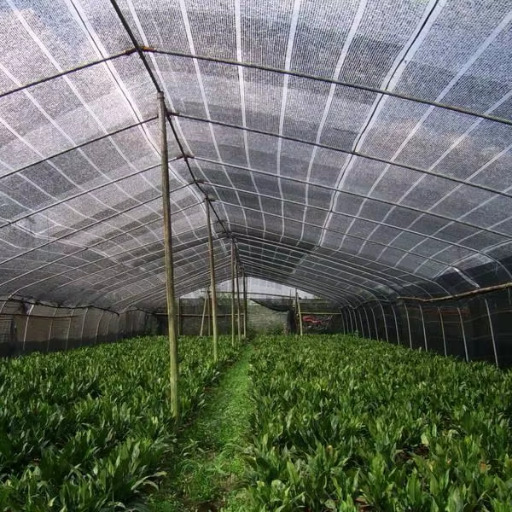
Agricultural Uses: Crop Protection and Yield Enhancement
In the presence of agriculture, a shade net making machine is an important instrument that enables the manufacture of shade nets used to protect crops against excessive sunlight, wind and hail. The nets help in temperature control for plants and reduce stress caused by biological factors hence sustaining good growth of plants. Robust crops which cannot be defeated by harsh weather conditions are well preserved for buoyant production.
Moreover, these produced nets also enhance the yield of the plants by aiding in the creation of better growing conditions. Due to the nets, problems that lead to scorching of vegetables and fruits are averted, and at the same time, water does not evaporate from the soil and moisture is maintained. As a result, crops can be of better quality and quantities, which makes these nets more essential in areas with arid climates.
Shade nets frequently serve as a physical barrier for crops, thus diminishing the dependence on chemical pesticides and bird deterrents as well as keeping pests and birds at bay. These methods are environmentally friendly, promoting sustainability in agriculture, and strengthening the agricultural systems too. Climate change and the degradation of natural resources have strengthened the need for organic and healthy shade net systems. Hence, such nets enhance crops’ protection and yield, especially when supported by a shade net making machine, without compromising on the principles of development.
Construction Applications: Sunshade and Safety Nets
The shade net making machine can be considered sine qua non of the industry’s business primarily because it fabricates pollution and temperature resistant nets that find many applications. double significance because they lower apparent temperature and have heat exclusion benefits to the site making it easier and safer for some of who work there. Furthermore, In scaffolding and tall constructions, these nets are also used as safety nets to prevent falling of people and objects, thereby reducing the probability of accidents. Such shade net machines can be tailor made to the specific needs of one’s project in terms of sizes and strengths of the materials used without compromising on cost effectiveness and operational efficiency. Such developments are helping the construction industry to transform into more secure and faithful practices.
Other Industries Utilizing Shade Nets
-
Shade nets find extensive application in agriculture where they are used in protecting crops from direct sunlight, pest attack as well as mitigating weather extremes, thereby increasing productivity.
-
In the landscape and ornamental sector, these nets support ideal operation of nurseries and greenhouses as they control and modify all extra lightening and the amounts of temperatures.
-
They can be found especially in the fisheries, where such nets have been always known to save the tanks and ponds from the thermal overheating. This is done with one ulterior motive – sustainability over resting fish.
-
They are also used in sports institutions to extend enjoyment of open air games since people can rest comfortably under the shade created by those nets. Based on all these non exhaustive examples, one can easily understand the importance of shade nets in different fields.
Types of Shade Net Making Machines
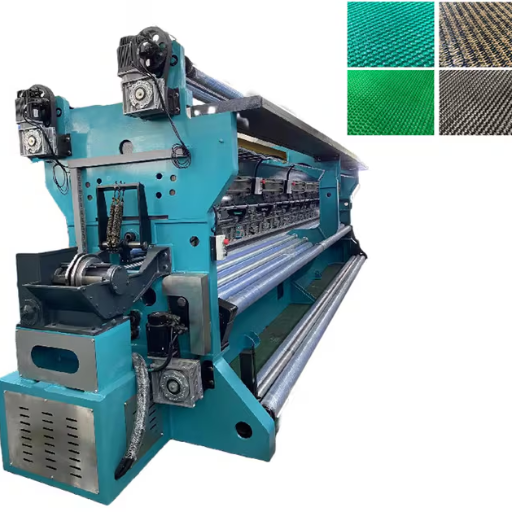
Single Needle Bar Raschel Knitting Machines
The Single Raschel Needle Bar machines are special machines that are used for making fabrics which include shade nets and any other type of warp-knitted fabrics. Unlike other types of knitting machines which operate with two needle bars, they only operate with one needle bar on a machine and are very well controlled to avoid fluctuations amongst the netting. Such machines are preferred because they are efficient and long-lasting and make good quality nets ideal for a variety of applications including agriculture, industry, and leisure. Sturdy construction and innovative technologies make them a very important part of the shade net making machine due to their lasting and trusted nets.
HDPE Shade Net Manufacturing Machines
HDPE shade net making machine (materials with high density polyethylene) is a machine of a defined purpose for the manufacture of nets that are light, strong and UV protected intended for use in farms, factories and other businesses. It uses the warp-knitting and weft-insertion technology in it’s design to make the nets with varying density and patterns depending on the purpose of the net for example crop cover, shade and reinforcement.
One attribute is precise control over the process, minimizing energy wastage and or light weight components that can be customized depending on production capacity. The machine has anti-aging properties which allows the products to stand longer exposure to sunlight, harsh climactic condition, and putting loads on them. Utilizing HDPE shade net machines on a widespread scale, particularly on a global level is feasible given that they allow for high capacity outflow of biodegradable and apirumni standard complaint nets.
Customizable Machines for Different Mesh Types
The manufacturing equipment for a HDPE shade net making machine is made with the ability to produce nets of different mesh sizes to suit particular industry needs. The simplicity in the design convert these machines into application oriented devices, i.e., they enable production of nets with different mesh density marketed for agriculture, horticulture and even industry. Whether it is constructing highly dense shade nets to protect from un ultraviolet rays or thinner shade nets to enhance cooling, there are flexible possibilities of setting of such machines. This variability allows mechanisms to be set up for efficient production of nets for different environments and purposes.
Reference Sources
-
Coloured shade nets can improve the yield and quality of green decorative branches of Pittosporum variegatum
This study explores the impact of different shade net designs and knitting densities on crop yield and quality. -
ColorNets: Crop protection and light-quality manipulation in one technology
This research highlights the benefits of knitted plastic shade nets for crop protection and light manipulation. -
Photoselective netting: An overview of the concept, research and development and practical implementation in agriculture
This paper provides an overview of photoselective shade nets and their practical applications in agriculture. -
World-wide commercial applications of colored shade nets technology (Chromatinet®)
This research focuses on the global applications and technological advancements in colored shade nets. - Food Machine and Extruders Provider in China