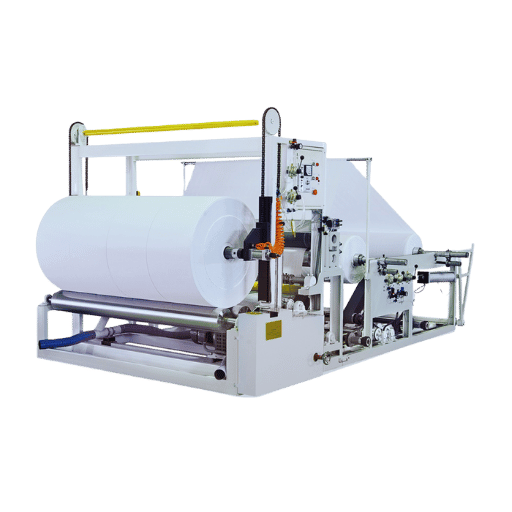
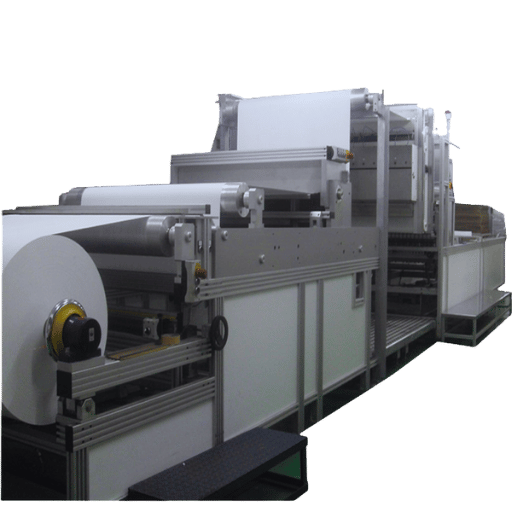
For paper manufacturing companies, the efficient operation of paper machines sustains productivity and profitability. Management of repair and maintenance expenses is one of the greatest problems faced by operators and managers. These costs are sometimes unpredictable, but they must be paid to increase the reliability of machines and reduce the very costly downtime. The article discusses major factors that influence repair and maintenance costs of paper machines, thereby offering insights into cost-saving strategies and best practices to optimize maintenance efforts. So, whether you are an industry veteran attempting to boost working efficiency or a business owner fixated on cutting down expenses, this guide will render you invaluable insight for making informed decisions about machinery upkeep.
What Factors Affect the Repair Costs of Paper Machines?

Several key factors influence the repair costs of paper machines:
🔧 Key Factors to Consider
- ▸
Machine Age and Condition: For older machines or machines that have not been well cared for, the frequency and complexity of the repairs are exaggerated, which, in turn, raises the associated costs of any maintenance activities. - ▸
Material and Components Quality: Using unmatched or components failing to meet standards can result in high repair costs due to high downtime. - ▸
Maintenance History: Major repairs are the result of very little maintenance or planning, which, in turn, raises the cost. - ▸
Operational Load: Improper use of machines is in line with higher repair costs and the ability to complete the machine repairs. - ▸
Availability of Spare Parts: Costs that are higher than average due to high demand for items with limited availability. - ▸
Technical Expertise Required: Such repairs are of higher cost due to a lack of maintenance agreements. In addition, these tools and skills are not easily accessible or are in high demand. `
💡 Pro Tip: Recognizing and overcoming these challenges proved beneficial for minimizing repair costs and assuring paper machine operational dependability.
How Does Wear and Tear Impact Repair Costs?
Wear and tear significantly impact the cost of repairs by increasing the risk of failure of components over a certain period of time. Any mechanical parts exposed to continuous use will degrade in time and with deteriorating performance; they are more prone to breakdown. This is because more frequent repairs or replacements are needed, thereby increasing the cost of maintenance.
Moreover, by worsening its condition, it could be that wear on a component places higher stresses on neighboring parts, thereby increasing consequential damage and cost. A timely response to wear and tear, such as by regular inspections and preventive maintenance, can help reduce these costs, which in turn would allow a longer life of the equipment.
How Do Replacement Parts Influence Overall Expenses?
Yet, replacing parts will have an effect on high-level expenses, that is, putting it, an expenditure on capital as well as value added on savings. High-quality parts, although replacing them would be an expensive sale, would probably decrease operational interruptions, along with adding value to operational efficiency. This would be a case of low sole maintenance expenses.
⚠️ Important Consideration
It is often mistakenly assumed that low-quality, cheaper parts lead to lower total costs, when in reality, these parts frequently need to be replaced along with costly associated labor, driving total costs even higher. Hence, when durability and reliability in replacement parts are prioritized, effective and sustainable low-cost operations can be achieved in the long term.
What Role Does the Supplier Play in Cost Management?
The suppliers fulfill an important role for an organization during the stage of cost management by selling the needed components and raw materials of good quality and at reasonable prices. Dependably, suppliers guarantee the quality of the product, which minimizes defects and downtimes.
✓ Supplier Benefits Checklist
- Competitive Pricing: Parts are made with great quality but cost-effective.
- Quality Consistency: Interruption to operations with minimal occurrences.
- Flexible Payment Terms: Improved cash flow.
- Bulk Discounts: Savings on big purchase orders.
- Just-in-Time Delivery: Improved management of stocks.
- Transparent Communication: Reliable communication with sustainable relationships in the whole supply chain.
Fostering relationships with honorable and loyal suppliers promotes a solid supply chain, which sustains the long-term financial stability and effectiveness of company operations.
How Do Copiers and Printing Machines Differ in Maintenance?

What Are the Unique Maintenance Needs of a Copier?
Maintenance of a copier requires attention to its specific operational and mechanical needs. The glass platen, rollers, and toner cartridge housing inside the machine must be kept clean at regular intervals to avoid the buildup of dust or debris, paper jams, or deterioration in print quality.
📋 Essential Copier Maintenance Tasks
- Monitor and change consumables such as toner and drum units as scheduled
- Periodically update the copier firmware for enhanced functionality and security
- Align and calibrate the copiers after heavy usage
- Have professional servicing done on it now and then for extended living use
How Does Printer Maintenance Vary from Other Equipment?
Copiers and printers are different in their servicing requirements and servicing complexity. Unlike printers, which focus on software and ink/toner servicing, copiers require more frequent servicing of their mechanical parts.
What Is Included in a Maintenance Contract?

Most contracts will likely always have one or more sets of elements ascribed due to their critical nature in resolving issues and protecting equipment or systems from full dysfunction. These elements usually have scheduled inspections at outlined periods to examine how well the equipment or systems are actually functioning, routine servicing at periods reserved to attend to the equipment or systems, and some measure of technical support.
📄 Typical Contract Inclusions
Core Services:
- Scheduled inspections
- Routine servicing
- Technical support
Maintenance Activities:
- Cleaning and calibration
- Software updates
- Parts replacement
Emergency Support:
- Emergency repairs
- Quick response times
- Minimize downtime
Advanced Features:
- Remote monitoring
- Extended warranties
- Priority servicing
Advanced contracts could also include monitoring services enabling remote oversight of interrelated systems to isolate and perform issue resolution prior to operational interruptions. Tailored solutions preset by clients, such as extension of normal warranty to include priority service, are available to enhance value.
How Can Maintenance Costs Be Minimized?

What Are Effective Preventive Maintenance Strategies?
Preventive maintenance strategies utilize textbook scheduling, advanced technologies, alongside sophisticated surveillance to maintain peak equipment efficiency.
🎯 Best Practices for Preventive Maintenance
- Delineate Routine Timetable: Organize inspection and servicing schedules using both floor statistics and historical performance data, which allows for the identification of potential problems before they become issues.
- Implement Predictive Strategies: Use IoT instruments and AI analytics for equipment condition monitoring and equipment function alerts.
- Track All Data: Use equipment maintenance history to build data sets for the equipment and space, which enables intersections for the modifications to be made.
- Instruction of Workers: Make sure that the part of the staff who need to be responsible for such equipment first establish the equipment condition, and for such equipment, can easily access the scheduled tools.
- Assess and Improve: Evaluate and apply new, additional, or different models to optimize maintenance procedures to strategies that the evidence and technological advancements support.
🎉 Results: These strategies collectively reduce unplanned downtime, extend equipment lifespan, and minimize long-term operational costs.
How Does Regular Inspection Help Reduce Costs?
Early detection helps to reduce costs by spotting issues that could grow into large-scale failures. Detection of wear, misalignment, and malfunction requires timely repair, which stops the machinery from being completely down for repair,r and the damage could be really extensive.
💰 Cost Benefits of Regular Inspections
- Reduction in expenses needed for repairs and possible damage to assets
- Reduction of energy costs due to the machine operating with optimal energy
- Increase in productivity due machine running optimally
- Reduction of expenses needed to replace broken-down machines
Can Annual Maintenance Cost Be Predicted Accurately?
An accurate prediction of annual maintenance costs is possible up to a significant degree with data-driven approaches and consistent records of past performance. The organization can estimate the probable cost by analyzing past expenses on maintenance, equipment usage patterns, and environmental factors.
With predictive maintenance technology, the evaluation of trends and early detection of possible issues before they arise can be done with improved accuracy. Other unexpected factors, such as changes in operations or sudden failures, could influence the precision of the estimates and would need to be tackled within the prediction models.
When to Consider Repair or Replacement of Paper Machines?

What Are the Signs That Indicate a Need for Replacement?
The need to identify a replacement machine involves understanding analytical operational metrics and continuous insight driven by data. The most apparent indicators associated with the need for replacement consist of:
⚠️ Warning Signs for Replacement
- Persistent Equipment Downtime: Despite having been repaired multiple times, the machine continues to fail with considerable frequency.
- Declining Efficiency: Production capacity experiences a strong impact and is no longer within operational norms.
- Increased Energy Consumption: Energy intake seems to rise beyond optimal values and is unjustified for some reason.
- Irregularities in the Performance of the IoT: Modern integrated systems give readings of excessive vibration, overheating, and unusual wear and tear.
- Sharp Increase in Operational Costs: The costs for maintenance and repair increase considerably.
- Inadequate Capacity: The capacity of the machines is less than the production demand envisioned.
📊 Industry Insight: Like a majority of industry veterans, professionals assess their machine’s output and value as compared to modernisations of the equipment available in the market. In the $case where operational expenses increase exorbitantly, or the machine is unable to satisfy the large-scale manufacture, then replacing the machine would be more sensible in an economic sense.
How to Evaluate Upfront Costs Versus Long-Term Savings?
Evaluating upfront costs versus long-term savings requires a clear understanding of both initial investments and the potential for ongoing cost reductions.
📈 Evaluation Framework
- Total Purchase Price Calculation includes installation and set-up.
- Operating Expenses Comparison. Assess expected costs over the machine’s life cycle (energy, maintenance, repair).
- Save more. Consider savings from higher efficiency, reduced downtime, or higher productivity.
- Equipment lifespan evaluation. Estimate expected life and any supportive warranty/engineering service.
- Rational Choice. Evaluate short-term costs and long-term gains to assess value or sustainability.
What are the Potential Downtime Implications?
Downtime can lead to significant operational disruptions and financial losses. It directly impacts productivity as workflows are stalled, delaying project timelines and reducing output.
🚨 Downtime Impact Areas
- Productivity Decline: Paused workflows, delayed project schedules, decreased productivity
- Financial Consequences: Increased expenses such as overtime pay for recovery efforts and lost income
- Client Contentment: Compromised delivery of service or unavailability of the product
- Restoration Strategies: Supplementary assets needed to return to standard functioning
✅ Solution: These implications can be best resolved by devising a strategy for effective preventive maintenance scheduling, devising a contingency plan, and adopting a resource allocation framework.
What Are the Hidden Costs in Maintaining Paper Machines?
How Do Overhead Costs Affect the Budget?
Fixed and variable expenditures that need attention irrespective of production output are integral expenses that influence the total budget immensely, and are termed as Overhead Costs. Utilities, the salaries of the administrative staff, as well as the maintenance of the machines are all prime examples of overhead.
💡 Key Insight: Unmonitored and uncontrolled, these expenses can negatively affect profitability. To improve budgeting, efficient tracking of overhead expenses is crucial in figuring out where resources go and how they should be allocated. The long-term sustainability of operations can be achieved through efficient and effective reduction of overhead expenses.
What Are the Labor Costs Associated with Maintenance?
Maintenance-related labor costs cover wages, benefits, and other associated expenses of personnel involved in maintenance activities. Essentially, such costs cover inspection and repair activities. They also cover preventative maintenance activities executed by technicians, supervisors, or support staff.
👥 Labor Cost Factors
- Count of Personnel Needed for Maintenance Activities
- Degree of Maintenance Sophistication and Needed Expertise
- Intervals of Routine Maintenance and Unscheduled Interventions
- Salary, Advantages, and Expenditures for Instruction and Accreditation
Management Strategy: Proper workforce planning and training can help manage these costs effectively while ensuring quality and efficiency in maintenance operations.
Are There Productivity Losses Due to Maintenance?
Yes, reduction in productivity can occur as a result of maintenance, but productivity losses are contingent upon machine conditions and tended well-maintained schedule.
📊 Productivity Loss Statistics
Scheduled Maintenance: Temporarily takes equipment out of operation, directly impacting production timelines
Unplanned Downtime: Due to Unexpected repairs can further exacerbate productivity losses, requiring immediate resource allocation and disrupting workflow continuity
⚠️ Industry Data: With machinery outages costing industries about 20-30% of productive time every year, most of this equipment downtime is due to insufficient maintenance planning or maintenance execution.
✅ Mitigation Strategy
Predictive maintenance strategies, accompanied by data analysis,s optimally reduce loss. Organizations can streamline maintenance, cut back interruptions, and enhance productivity by preventing issues before they arise.
Frequently Asked Questions (FAQs)
❓ What kind of costs are typical for repairs on paper machines?
The average price for paper machine repairs varies according to factors such as the type and model of the paper machine, the extent of damage to be repaired, and the kind of repair. Minor repairs can go for a few hundred dollars; serious repairs and replacement parts, meanwhile, could set you back by a lot more. One must ascertain the state of the machine and check with the repair service for an estimate.
❓ How do preventive maintenance programs act to reduce maintenance costs?
Preventive maintenance decreases the maintenance and repair costs over time for paper machines. With a properly designed maintenance schedule, minor problems can be detected early and corrected to avoid costly repairs down the road. This preventive activity also helps to reduce downtime and repair costs, thereby lengthening the life cycle of your equipment.
Yes! Copier maintenance can bring about extra costs, such as emergency repairs, cost per service call, or even parts for an extremely expensive copier. Thus, one should study maintenance contracts carefully so that they know what charges might occur.
❓ What is the maintenance cost of a paper machine?
The maintenance costs of paper machines vary depending on their make and model, and how often they are employed for maintenance demands, as well as the cost of these machines. The simplest trade to assume is that a firm should budget the yearly maintenance of a percentage of the value of the machine to make sure this is performed well and that it lasts longer.
❓ When do I decide on repair or replacement of my paper machine?
The decision to repair or replace a paper machine should be made by comparing the cost of repair with the cost of purchasing a new machine. Considering repair costs likely to be high and with very frequent breakdowns, a new copier may be a more economical alternative in the long run. The overall condition and repair history of the machine will help to decide on this.
❓ How will maintenance services influence the cost of repair?
Repair cost might be influenced by maintenance services; when they take preventive actions through regular inspections and servicing of the machine, they prevent major failures. Less repair upon less maintenance – this is how they keep an eye on repair costs and maintain reliability in operation.
❓ What are the expenses in paper processing machine maintenance?
Consumable expenses for paper-processing machines can include inspections, repairs, replacement parts, or any service deemed necessary to maintain optimal machine condition. These need to be considered within the overall cost of ownership to comply with the allocated budget.
❓ How can I reduce the time and cost of repairs for my copier?
To reduce repair time and costs for your copier, maintain it all year-round with scheduled inspections and servicing. These preventive measures minimize machine breakdowns and identify potential problems from an early stage, which would otherwise cost time and money to be fixed.
📚 Reference Sources
- Paper
- Maintenance Costs and Advanced Manufacturing
This article covers the different maintenance costs associated with manufacturing machinery, which may apply to paper machines.
Read more here - Leading paper-making machine Manufacturers in China
-