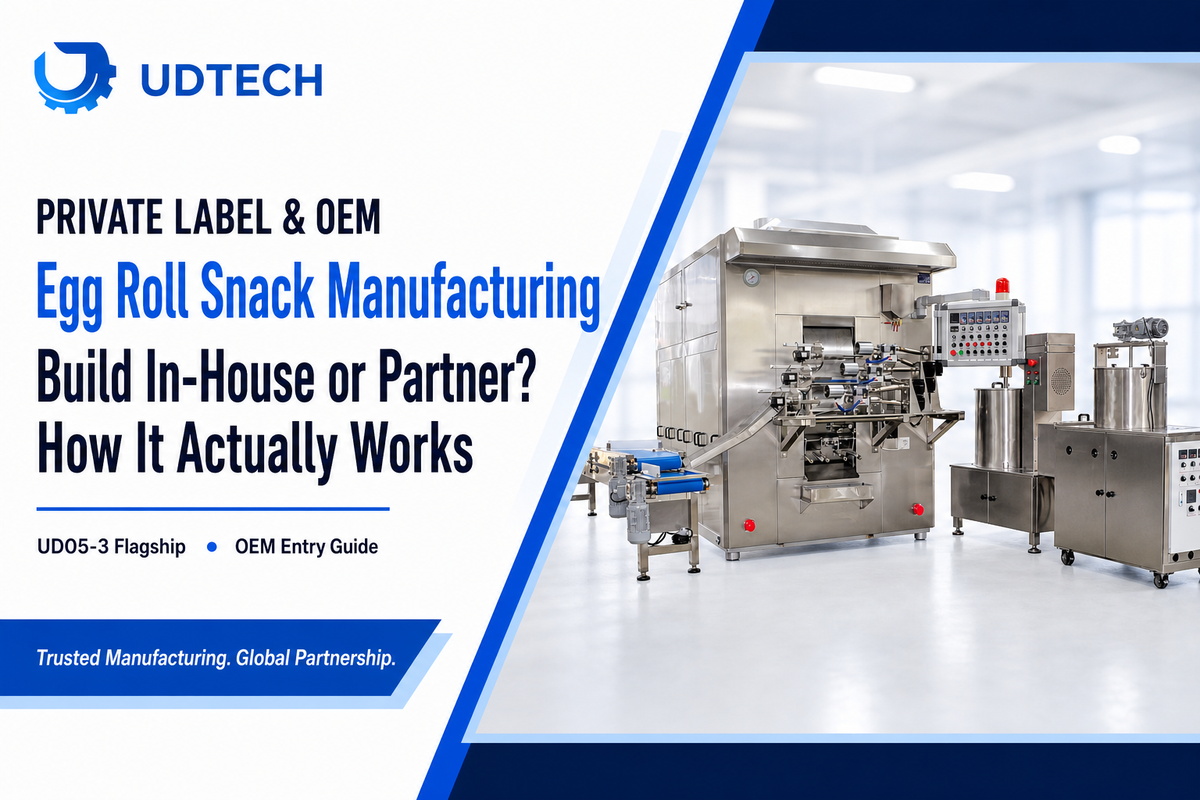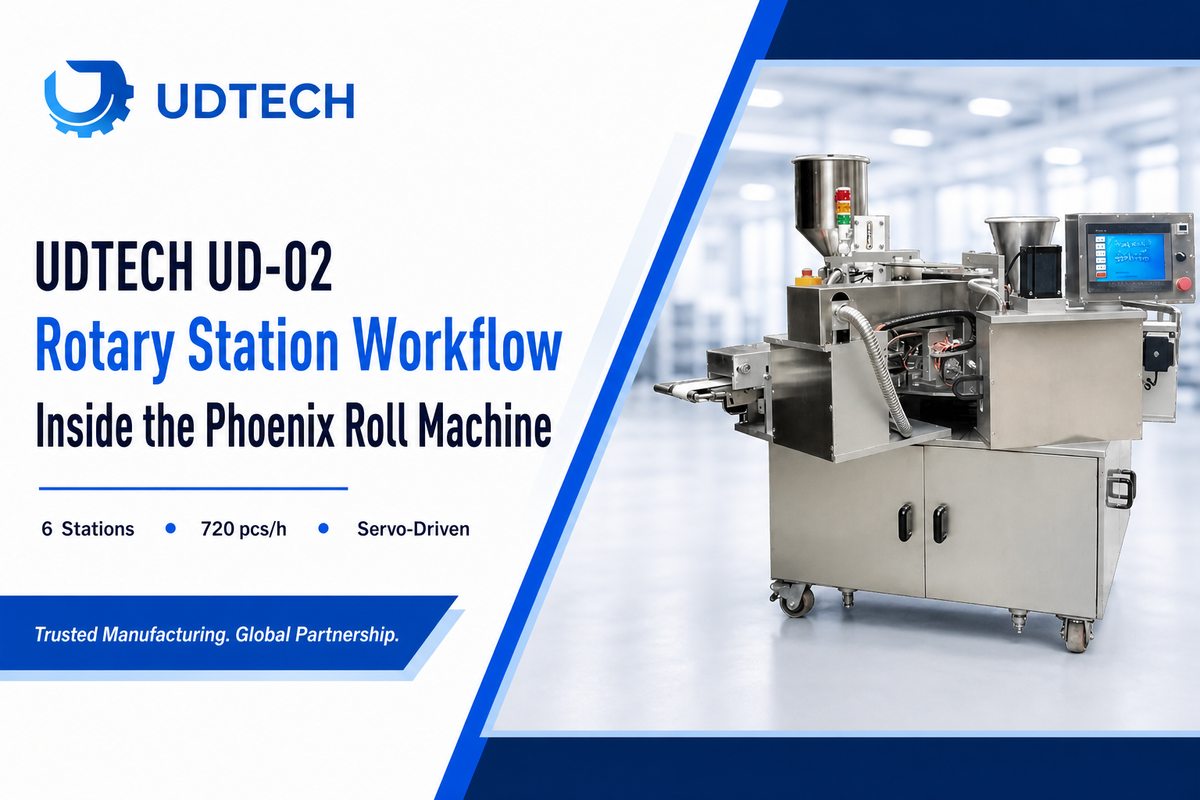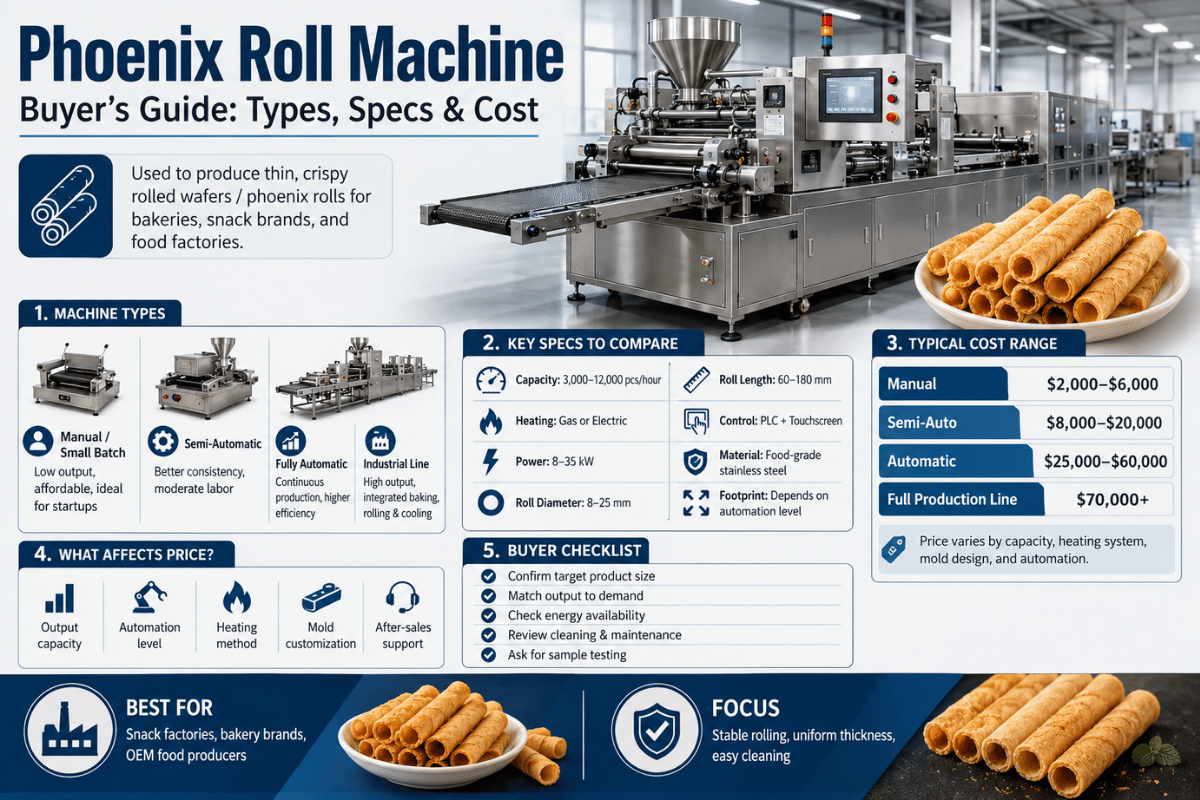
The phoenix roll machine is the equipment device that transforms a simple batter into the hollow, crispy, egg roll biscuit known as a love letter, kuih kapit, and across much of Asia, an egg roll. Whether you’re scaling your production of this snack from a hand-clamped iron mold up to a fully automated production line, the machine you select determines your volume, labor costs, and the uniformity of your rolls, day in and day out. This article explains what the machine is, how it forms a roll, the different levels of automation available, the technical specs to keep in mind, and food-safety compliance. Read on to learn how to test for the right fit for your facility in five steps.
To put it succinctly, a phoenix roll machine bakes thin batter on patterned hot plates and then rolls it into a crisp tube. This isn’t the machine that’s also marketed as an egg roll but refers to the one that deep-fries a filled savory dough; nor is it one used for cannabis products or one that rolls metal. The process can yield anything from a few dozen pieces an hour at the low end for hand-operated machines to a truly high-volume production line capable of producing output by the kilogram.
It’s important not to confuse the two devices that both claim to produce an “egg roll.” Purchasing the incorrect type is the costliest procurement mistake in this category.
- The sweet rolled-wafer machine (the subject of this article) takes a batter that’s baked into a flexible sheet on hot plates, then rolled or folded into the shapes common for products like love letters, kuih kapit, or the Italian pizzelle. This type of machine doesn’t fry anything.
- The filled egg roll or spring roll machine is a different sort of machine that works by wrapping a dough around a filling, folding it, rolling it, and finally deep-frying it. The forming principle and the entire operation are completely separate.
If your product is something in the sweet, crunchy wafer category, you need the type of sweet-wafer baking machine outlined in the following sections.
Quick Specs: Phoenix Roll Machine at a Glance
| What it makes | Crisp rolled wafer (egg roll biscuit / love letter / kuih kapit) |
| Forming method | Hot-plate bake → roll while warm (no frying) |
| Output (typical) | ~50–200 pcs/h manual; semi-auto lines rated in kg/h; fully automatic higher |
| Total power | ~8 kW (compact electric) to ~40 kW (full line) |
| Heating | Electric hot plates or gas (LPG ~4.5 kg/h) |
| Food-contact material | 304 food-grade stainless steel |
| Control | Manual / semi-automatic / fully automatic (PLC) |
These figures represent estimations from available machine listings and industry publications; the precise output will fluctuate with the size, weight, and recipe used for each roll.
What Is a Phoenix Roll Machine?
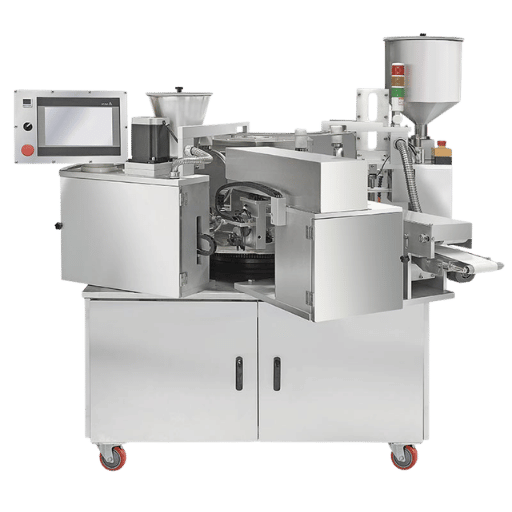
A phoenix roll machine is a sweet-snack device built to manufacture thin, crisp, rolled wafer biscuits. The batter, which commonly contains rice or wheat flour, eggs, sugar, and often coconut milk, is spread evenly between specially patterned heated plates, then baked until it becomes a flexible sheet. This sheet is then rolled into a hollow tube or folded into a fan while it’s still warm and flexible.
The same general machine model is sold globally under many names, including the egg roll biscuit machine, egg wafer roll biscuit machine, love letter machine, Kuih Kapit machine, Kuih Sepit machine, Semprong machine, and, in some equipment catalogs, simply a rolling machine; in the Western Hemisphere, the very similar Pizzelle maker and Barquillos maker.
Knowing what this machine is *not* can be just as informative. It’s fundamentally different from the savory egg roll (also known as spring roll) machine, which encloses a filling within a folded dough skin and then deep-fries it. Moreover, it’s distinct from other machines that borrow the word “roll” in their name but are unrelated, such as cannabis pre-roll devices and those that roll metal plates to form them. Clarifying that you’re considering a sweet-wafer baking machine before soliciting quotes will prevent a time-consuming and frustrating procurement process. Buying the wrong type is the most expensive mistake in this category: order a savory spring-roll fryer when you needed a sweet-wafer baking line, and you can lose weeks of lead time and a deposit before the mismatch is obvious. A genuine phoenix roll machine bakes a dry batter on patterned plates, and its contact surfaces are food-grade 304 stainless built for batter, not a fryer’s oil bath. Because the two machines solve different production problems, an experienced manufacturer with 15 years of food-machinery exports will ask what you’re making before quoting, and will confirm certified, food-grade construction up front rather than risk a costly mismatch.
What are phoenix rolls?
Phoenix rolls are crisp, hollow rolled wafers made from a sweet batter. In Malaysia, Singapore, and Indonesia the same biscuit is the festive kuih kapit or “love letter,” traditionally clasped between two engraved iron molds over a charcoal brazier, peeled off hot, and rolled or folded by hand before it sets.
Its texture is light and shatter-crisp; common variations add a savory-sweet twist with seaweed (nori) and pork floss, or a dessert profile with chocolate and coconut. A phoenix roll machine industrializes exactly this batter-bake-roll sequence so the rolls come out at a consistent color, thickness, and shape.
How a Phoenix Roll Machine Works: The Bake-and-Roll Cycle
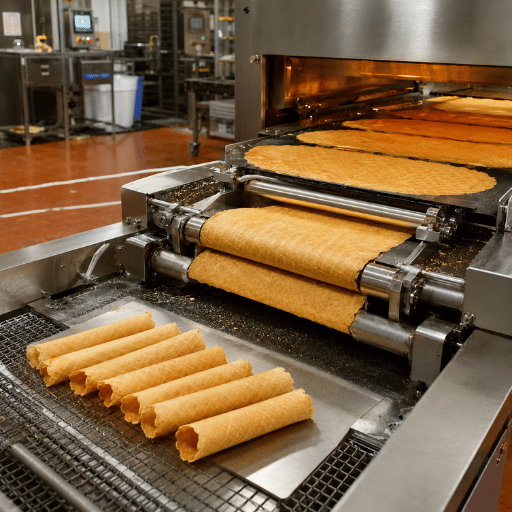
Every phoenix roll machine, from a two-plate tabletop unit to a continuous line, runs the same four-stage Bake-and-Roll Cycle: batter dosing, hot-plate baking, roll forming, and cooling. The warm-pliable window in the roll-forming step is where most of the quality is won or lost, which is why plate temperature and timing matter more on this machine than raw horsepower does.
The Bake-and-Roll Cycle
- Batter dosing – a measured shot of batter is deposited onto the lower heated plate (manual ladle, or an automatic depositor for even weight).
- Hot-plate baking – the upper plate close and bakes the batter into a thin, flexible sheet within seconds.
- Roll forming – while the sheet is still warm and pliable, a mandrel or roller curls it into a tube; if it cools first, it shatters instead of bending.
- Cooling & discharge – the formed roll set to its final crisp structure and is ejected for filling or packing.
Roll forming is the heart of the machine. A US patent for continuously rolling baked sheets describes the core trick precisely: the roll-up roller turn slower than the baked sheet advances, so it engages the warm sheet and bends it into a roll rather than dragging it flat (US Patent 4,110,482, granted back in 1978 – the core mechanism is long-established engineering). That narrow window – warm enough to bend, cool enough to hold – is why plate temperature and timing dominate output quality.
📐 Engineering Note
The plates run hot (commonly ~180–220°C for thin wafers) and the bake lasts only about 8–15 seconds. The single biggest quality lever is the roll-while-warm window: too slow off the plate and the sheet cracks; too wet a batter and it sticks. machines hold this window with calibrated plate temperature and a fixed bake-to-roll transfer time.
“Anyone who has made love letters by hand knows the real problem the machine solves: the wafer has to be rolled the instant it leaves the heat, while it is still scalding. Automating the bake-to-roll transfer is what makes consistent, burn-free output possible at volume.”
Types of Phoenix Roll Machines: The 3-Tier Output Ladder
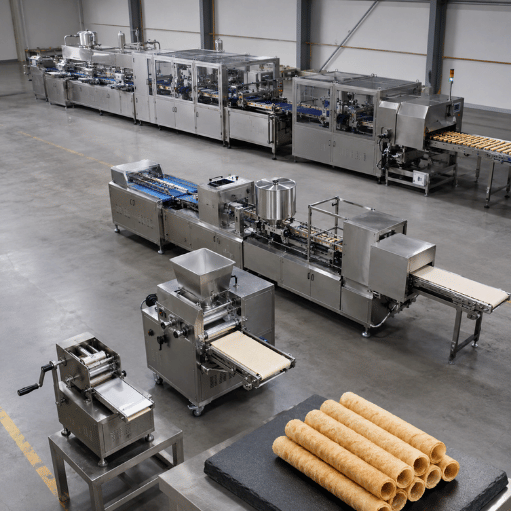
Phoenix roll machines sort into three automation tiers. Match the tier to your real daily output before you compare brands – this is the single decision that controls both your labor cost and your capital outlay.
| Decision factor | Manual tier | Semi-automatic tier | Fully-automatic tier (PLC) |
|---|---|---|---|
| Typical output | ~50–200 pcs/h | Rated in kg/h (illustrative ~100+ kg/h) | ~400–1,000+ pcs/h |
| Operators needed | 1 per plate set | 1–2 (feed / collect) | Minimal, supervisory |
| Total power | ~2–6 kW | ~8–20 kW | ~20–40 kW |
| Heating options | Electric | Electric or gas | Electric or gas (LPG ~4.5 kg/h) |
| Batter dosing | Manual ladle | Semi-auto depositor | Automatic depositor |
| Roll forming | By hand | Operator-assisted | Automatic mandrel |
| Floor footprint | Benchtop | Compact line | Up to ~3,400 × 1,700 × 2,250 mm |
| SKU changeover | Fastest | Fast | Slower (retooling) |
| Upfront cost tier | Lowest | Mid | Highest |
| Best-fit buyer | Artisan / seasonal / pilot | Growing SME / mixed runs | Export volume / steady SKUs |
Historical descriptions of industry wafer plants called them either semi-automatic, rated in kg per hr — one brand’s range was 120 kg/hr — or fully automatic for high volume (Snack Food & Wholesale Bakery). Treat any single kg/hr figure as illustrative, not a universal spec, because rated output depends on the manufacturer and roll size. At the top end, high-end fully automatic lines offer a high degree of automation and the highest production speed, while manual plates trade speed for simplicity and the lowest cost.
Gas or electric heating?
Electric plates are simpler to install, easier to control with tight precision, and avoid combustion entirely. Gas (LPG or natural gas) often costs somewhat less to run at high volume, but any fuel-fired baking machine places an inherent safety burden on you. Fuel-fired ovens and furnaces are governed for fire, explosion, ventilation, and fuel-leak hazards under standards such as NFPA 86 (Standard for Ovens and Furnaces).
So a gas line need the ventilation, leak safeguards, and trained operators that an electric machine doesn’t. If you don’t already run gas-fired equipment, the electric tier is usually the lower-risk way to start.
Non fully automated production: Easier to retool when recipes or product shapes change often (per an industry comparison). When you run many flavours, fillings, or very short seasonal product runs a machine semi-automatic system will be much more profitable than a fixed automation system that requires change over times. Purchase automation on your high volume, standard items not those you chop and change a lot.
Key Specifications & Output Capacity
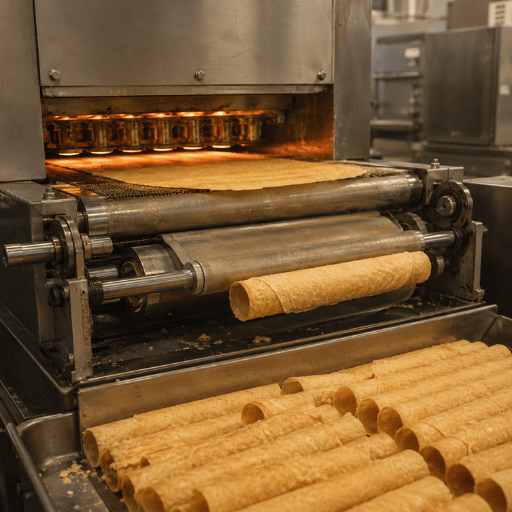
To size a machine for your plant, read the phoenix roll machine spec sheet, six numbers determine fit. Fix on output first, then work outward. Two of the six catch buyers out: power and footprint. A 40 kW line on a 220 V single-phase supply needs a transformer you may not have budgeted, and a 3.4 m line will not fit a 3 m bay. Confirm both against your site, and confirm the contact metal is FDA-compliant food-contact stainless before you pay.
| Spec | Typical range | Why it matters |
|---|---|---|
| Output capacity | ~50–200 pcs/h to ~1,000+ pcs/h | Sets the tier; size to peak daily demand |
| Total power | ~8 kW to ~40 kW | Drives your electrical supply and running cost |
| Heating & fuel | Electric, or LPG ~4.5 kg/h | Determines utilities and safety burden |
| Baking plates / moulds | Patterned plates, swappable | Defines shape, texture, and product variety |
| Footprint | Up to ~3,400 × 1,700 × 2,250 mm (full line) | Must fit your floor and workflow |
| Contact material | 304 food-grade stainless steel | Food-safety and cleanability baseline |
Say you need 5,000 rolls per day on one eight-hour shift. That’s 5,000 ÷ 8 = 625 pieces per hour. A manual tier (~200 pcs/h) would take three stations and three operators; a single fully automatic unit rated at 400–1,000+ pcs/h covers it with supervisory labor. Always size to your peak shift, and never assume the rated pcs/h is for your roll, a 65 g and a 15 g version won’t share the same figure. For a concrete reference, a mid-size automatic unit might run about 720 pieces per hour at 12 kW on a 380 V three-phase supply, occupy roughly 2,300 × 2,000 × 1,400 mm of floor, and weigh near 960 kg.
What Can You Make? Products, Fillings & Shapes
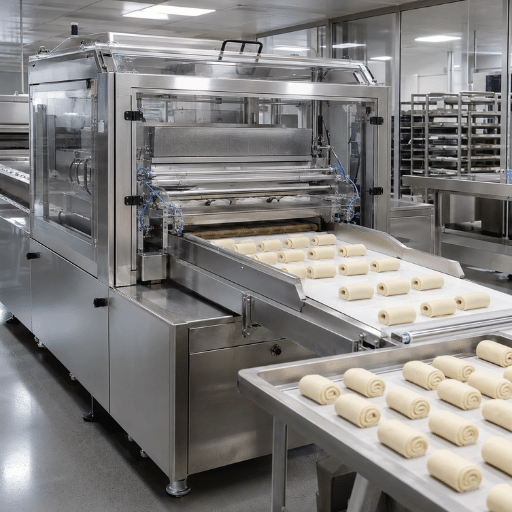
One automatic egg roll machine will turn out an entire family of rolled-wafer snacks with the right set of plates and depositor. Shape is defined by the engraved plates, and flavor by the batter and filling. From a single base unit you can run plain rolls, folded love letters, savoury seaweed-and-floss rolls, and chocolate-filled sticks, it’s the product, not the machine, that changes.
- Classic rolled wafer / egg roll biscuit, a plain sweet batter, tightly rolled.
- love letter / kuih kapit – thinly made wafer folded into a fan-shaped or four quarter folded form, some times have aroma of coconut
- Seaweed & pork-floss rollssavoury-sweet and popular across Southeast Asia; nori and pork floss are added during or just after rolling.
- Chocolate or cream-filled sticks, wafer sticks finished with a downstream filling step.
- Double-color and patterned wafers, made with a second batter feed and engraved plates.
This product family shares tooling with pizzelle and barquillos, so plates often have enough overlap to extend a single machine to cover adjacent markets. This is helpful if you might diversify SKU offerings without purchasing a second production line. Some high-volume plants run a phoenix roll machine alongside a snack food extruder machine or other food processing machinery to expand their range without a major floor redesign.
How to Choose: The Phoenix Roll Machine Fit Test
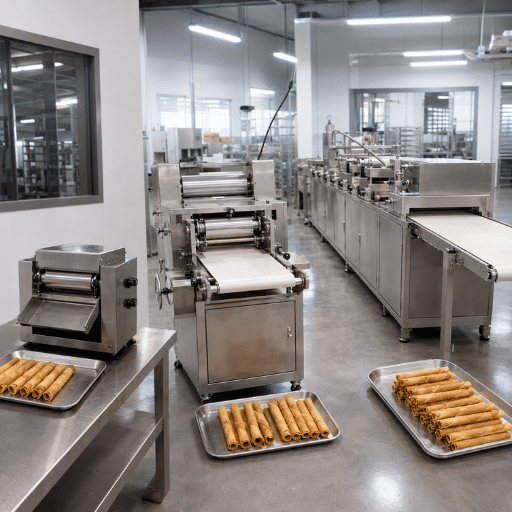
Run this five-point Phoenix Roll Machine Fit Test before you sign off on a quote; each point maps to a real failure mode buyers report. As a rough cut: if your forecast sits under ~200 pieces an hour and you run several flavours, a semi-automatic machine usually beats a fully automatic line on total cost, browse the food processing machinery range for adjacent lines once you’ve settled the tier.
The Phoenix Roll Machine Fit Test
- Output need, estimate the maximum pieces per hour you need (use the worked example below), and choose the tier that matches it without running three shifts of operators.
- Product and filling, make sure the plates and any fill/finish stations suit every SKU you plan to run, including seasonal variety.
- Automation vs. labor, buy fully automatic for steady high-volume SKUs; choose semi-automatic if you change recipes and patterns often.
- Heating and utilities, match electric or gas to your site; for gas, budget for ventilation and combustion safety.
- Voltage, footprint & certification What’s your electrical current? Are you running a 220-volt single phase or 380-volt three phase? Does the machine have the UL/ETL mark (in the US) or CE mark (in Europe)? What are its dimensions?
- Ignoring voltage and phase, a machine set up for a different power grid means the expense of a converter or rewire you didn’t anticipate.
- Over-specifying capacity, buying an automatic machine you’ll use at well under half its capability.
- Overlooking plate material and finish, cheap plates stick and brown unevenly.
- Underestimating cleaning labor, daily cleandown costs real time and effort, especially on filled lines.
Phoenix Roll Machine Price: What Drives the Cost
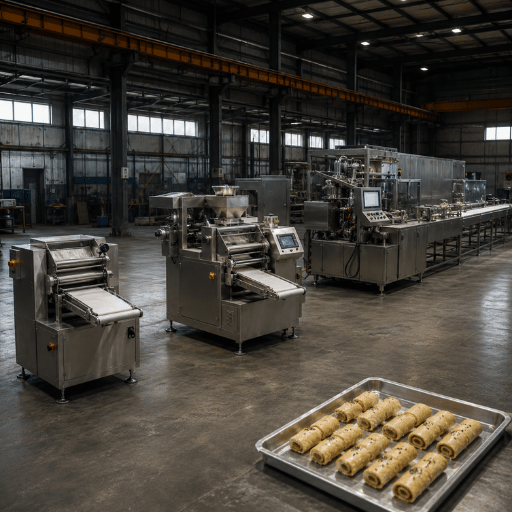
Pricing for phoenix roll machines almost always involves quotation as a factor, since options impact costs significantly, rather than listing a fixed figure. To grasp these cost factors before pursuing the bottom line, understand the levers that influence it:
- Automation level- Manual plates come significantly cheaper compared to a PLC system; the step up from semi-automatic to fully automated is one of the largest.
- Rated output– Increased production output comes from more plate stations and stronger, more substantial machinery.
- Plate counts and patterns- The number of additional moulds and the capacity for quick tooling changes can increase cost but enable a greater range of SKUs.
- Downstream equipment, cooling conveyors, filling machines, and packaging machines that box the finished rolls turn a standalone machine into a complete production line.
- Shippingand certification- Electrical safety certifications, such as ul/ETLand CE, plus cratingand delivery to your loading port.
Compare total cost of ownership, not just the purchase price; a fully automatic machine costs more upfront but cuts the per-roll labor that dominates manual production. Ask every supplier for an output rate at your standard roll weight, and get the configuration in writing so two quotes are actually comparable. One avoidable trap: a buyer fixated on the lowest sticker orders a manual line, then finds that hand-rolling at ~150 pieces an hour can’t meet a 5,000-piece daily order, and pays twice to upgrade. Match the tier to the volume first, then request a tailored quote once you know your numbers.
Food Safety, Build Quality & Compliance
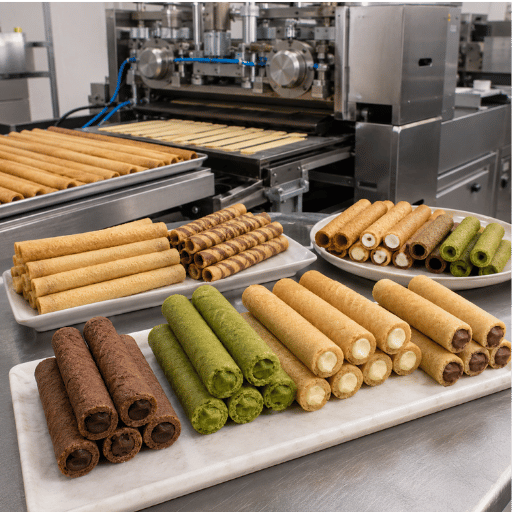
This is where a cheap phoenix roll machine quietly becomes expensive. A phoenix roll machine touches food on every cycle, so its food-safe materials, hygienic design, and certifications are part of the purchase, not an afterthought. Four compliance lanes matter, and they are separate from each other. In practice the risk is allergen cross-contact and a failed buyer audit: because a filled wafer carries allergens, exporters increasingly demand certified, in-house hygienic design and a 100% pre-shipment inspection, ISO 9001-grade documentation, before they sign a production contract.
1. Food-contact materials
Anything in contact with your food should be 304, food-grade stainless steel. In the US, food-contact uses are overseen by the FDA as part of 21 CFR Part 177, and related parts, while for commercial food equipment, the standards are set by the NSF/ANSI 51. Ask for certification and, where it matters to your purchaser, the NSF mark.
2. Hygienic design & allergen control
Even for rolled wafers- especially filled with the likes of pork floss, seaweed, or chocolate- sanitation is a processing control, not just an aspect of cleaning. Under FDA’s preventative-controls standard, 21 CFR Part 117, allergen cross-contact, cleanable food-contact surfaces, rework, and the sanitation schedule are all controls that the food business must have under control. That means you want crevice-free, easily-removed contact parts and a documented clean-down-standards recommendations from bodies like the European Hygienic Engineering & Design Group (EHEDG). If you make an allergen – say, milk or nuts – in one filling and not another, the machine has to be clean for allergen safety.
3. Combustion safety (gas machines)
If you want to use a gas-heated machine, treat it as a fuel-fired thermal equipment. Standards like NFPA 86 cover the fire, explosion, ventilation, and fuel-leak hazards of fuel-fired ovens, and an air change phoenix roll machine needs ventilation, leak detection, or other safeguards, and operator training. Electric machines avoid all of this.
4. Electrical product-safety certification
A heated, motor-driven machine also needs electrical safety. Buyers often use electrical safety listing as a product-choice limit: a UL, ETL, or other listing in North America will do the job, or CE mark in the EU. This is separate from food-contact limits – a machine can have food-grade stainless, and still be missing an electrical safety mark your client expects, so check both.
Operation, Cleaning & Maintenance
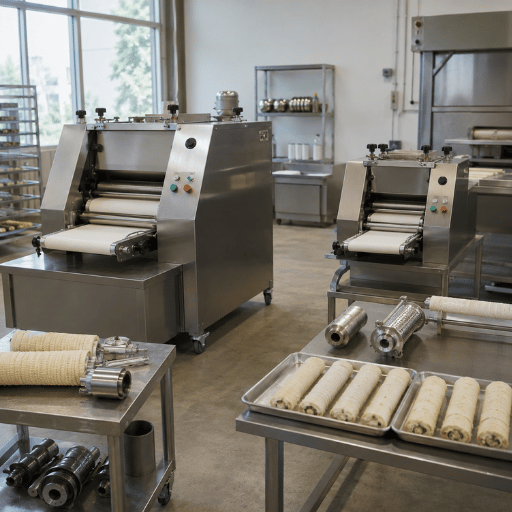
A phoenix roll machine earns its living on uptime, and uptime depends on plate maintenance. The common production pain point operators report is sticking, batter that bonds to the plate and tears the wafer. Budget roughly 30–45 minutes per shift for cleandown on a filled line, and more when you switch fillings, because allergen cross-contact control under 21 CFR Part 117 means a documented wash between runs that use different allergens.
- Daily: wipe the plates while warm, clear batter residue from the edges and the depositor, and check the roll-forming mandrel for build-up.
- Plate maintenance: preserve the non-stick surface; over-aggressive scraping shortens plate life, and impacts sticking.
- Periodic: check the plate temperature calibration and timer- drift here causes uneven browning or cracked roll.
Common failure modes and fixes
- Sticking or tearing, batter too wet, or plates under-seasoned; adjust the batter moisture and restore the non-stick surface.
- Uneven browning, uneven or poorly calibrated plate temperature; recalibrate and check the heating elements.
- Cracking on the roll, the sheet cool too soon after baking; tighten the bake-to-roll transfer time.
Industry Outlook: Automation in Rolled-Wafer Snack Production
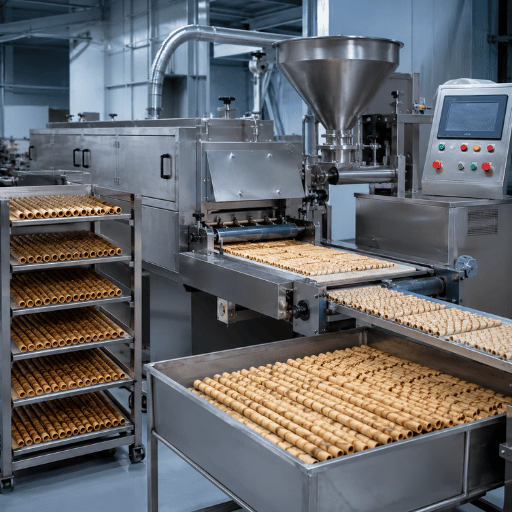
Labor – not novelty, is the single biggest force today in phoenix roll machine buying. In the region that’s its biggest market, Southeast Asia, tight labor supply and rising wages have been forcing snacks to migrate away from purely manual production to semi- and then fully automatic solutions. Food buyers expect to be able to do repeatable yields out of snack lines, and food safety doesn’t vary by shifting it or not by hand. Industry analysts are now labeling flexible automation as the “essential near-term investment” for food manufacturers seeking to address “supply-chain bottlenecks and severe labor shortages,” not a “nice-to-have upgrade” (Food Industry Executive, 2026 outlook).
In the context of snacks and baking, the current transition is one of process automation – moving from hand-clasped plates to PLC-controlled bake-and-roll cycles, not a sweeping robotics revolution: articulated and mobile robots account for just a small share of current food and beverage machinery spend. While the general food processing machinery market runs into the tens of billions (at modest mid-single digit growth per year), ensuring that spare parts and support isn’t the reason your decision should be, rather you’ll find labor supply and consistency challenges should drive your acquisition decisions. Because those labor shortages and audit-pressure risks are the real drivers, manufacturers exporting to 100+ countries are standardizing on certified, PLC-controlled production lines rather than waiting for a robotics wave.
For the sake of preparing your purchasing process into 2026 – 27: be the match of level automation that your projected throughput demands, while ensuring that you can accommodate your whole existing product variety: clarify the electrical and gas combustion or ventilation codes required by your target buyers right upfront; And check for food compliant design (e.g. NSF 51 compliant materials and hygienic design) that will allow you to easily pass the stringent audits.
Frequently Asked Questions
Q: What is a phoenix roll machine?
View Answer
Q: What does a phoenix roll have in it?
View Answer
Q: How much does a phoenix roll machine cost?
View Answer
Q: What is the difference between a manual and a fully automatic phoenix roll machine?
View Answer
Q: What materials are phoenix roll machines made of?
View Answer
Q: How many phoenix rolls can a machine make per hour?
View Answer
Q: Can one machine make both egg rolls and love letters (kuih kapit)?
View Answer
Q: Is a phoenix roll machine the same as a waffle or wafer machine?
View Answer
About This Buyer’s Guide
Our company design and manufactures food processing equipment, particularly extrusion and snack food production systems, and exports them across Southeast Asia, South America, and Africa. Our experience with first time buyers shopping for phoenix roll machine has taught us to help them work through the confusing savory vs. sweet question, and over- specifying capacity, together with under specifying power consumption or gas combustion is what too often gets glossed over without due diligence. Reviewed by the Suzhou UDTECH Technology Co., Ltd. technical team.
References & Sources
- 21 CFR Part 177, Indirect Food Additives: PolymersU.S. Electronic Code of Federal Regulations
- 21 CFR Part 117, Current Good Manufacturing Practice & Preventive Controls for Human FoodU.S. FDA / eCFR
- NSF/ANSI 51, Food Equipment MaterialsNSF
- NFPA 86, Standard for Ovens and FurnacesNational Fire Protection Association
- US Patent 4,110,482 (1978) — Method for continuously rolling up sheets of baked goodsUSPTO via Google Patents
- Wafer production line capacitiesSnack Food & Wholesale Bakery
- Five Trends to Watch in Food Manufacturing Strategy for 2026Food Industry Executive