MPO Connectors carry out a central function in fiber optic communication, particularly concentrating on fiber optic networks with high densities, which necessarily means that the transmission of data is done efficiently. Telecom, data centers, and enterprise networks are key industries where knowledge about them helps a lot in boosting the technical capability or increasing the efficiency of the system(s). In the following study, we investigate essential aspects of MPO connectors; their polarity, their evolution into the enhanced MTP® form, and also their application in multi-fiber landscape. After going through this piece, you will know exactly how these connectors work, the advantages they bring to high-capacity optical networks, and the reason they are indispensable, especially at this point of frolicking cross networks development. Loosen up there, let’s simplify how fiber optic connections work!
Introduction to MPO Connectors
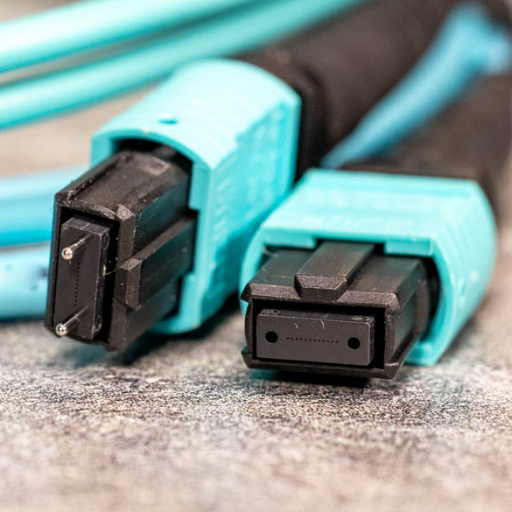
MPO (MFPO) connectors are grouped fiber optic connectors created for accommodating high-speed data transmission within contemporary communication systems. These connectors also lend themselves to the ability of providing multiple optical fibers within a single ferrule, and as such are preferred for high bandwidth applications such as data centers and telecommunication networks. Small in nature, MPO connectors are very efficient and are required to satisfy the mounting requirements for faster, more reliable data transfer in today’s networks.
Definition of MPO Connector
The MPO (Multi-fiber Push-on/Pull-off) connector consists of a fiber-optic connector with high alignment for multiple fibers within a single ferrule connecting it with different fiber cables. They truly play a vital role in high-speed data transmission applications, ranging from simpler data center and telecommunications networks to complex cloud-computing infrastructure. They are recognized for bonding together a big number of fiber-lines- typically 12, 24, or more, thus corroborating that they would be highly desirable for environments requiring lots of bandwidth. Their small and neat design and easy push-pull action are very easy to put in and require minimum maintenance. This entire MPO connector technology, when combined with up-to-date fiber optic technology, plays a prominent role in modern infrastructure for the development of scalable, trustworthy, and new data connectivity solutions.
How MPO Connectors Function
MPO connectors operate on the principle of aligning numerous optical fibers using layman bricks adjusted to multiply the number of potential light signals carried, enhancing the communication between systems. The intermingling of two fibers must lead to an accurate position, and only this can eradicate signal loss thanks to the fine engineering of MPO connectors’ mating pairs. These connectors are typically coupled with high-performance cables that might send the data at a speed of even terabits per second, yielding bandwidth requirements of data centers, telecom systems, and cloud infrastructures. Also, technology is taking MPO connectors towards high-performance tubes and further reduce the loss of insertion loss and help scale network infrastructure consonantly.
Comparison with Other Connector Types
MPO connectors can be compared with LC, SC, ST, and FC connectors, differing in fiber count, application, and performance.
| Parameter | MPO | LC | SC | ST | FC |
|---|---|---|---|---|---|
| Fiber Count | High | Low | Low | Low | Low |
| Polarity | Adjustable | Fixed | Fixed | Fixed | Fixed |
| Application | Data Ctrs | Telecom | Telecom | LAN | Telecom |
| Loss | Low | Low | Medium | Medium | Medium |
| Density | High | Medium | Medium | Low | Low |
| Durability | Moderate | High | High | High | High |
This table is a vivid demonstration of significant differences in the background between MPO connectors and conventional connector types.
Understanding MPO Polarity
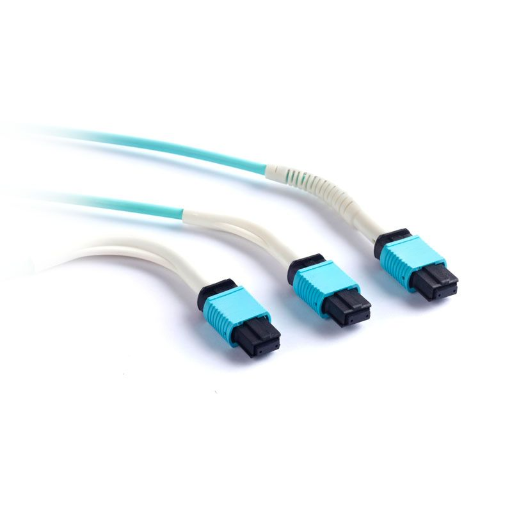
MPO polarity is a term describing the ways in which the right connections are made between the transmitter and the receiver in a multi-fiber system. As the connection will tell you, arrangement of the polarity really blesses the data signal to move efficiently due to ensuring this interference and misalignment on the intended optical paths are outside of context. There are three principal MPO polarity methods- including Type A (Straight), Type B (Reversed), and Type C (Crossed)- each of which is tasked to address particular situations and thus perpetuate continuity in signal transmission in data-center and telecom applications. It is always a good measure to grasp this concept, to giggle in their company during a visit to high-density fiber networks.
Types of MPO Polarity
The types of MPO polarity are Type A (Straight), Type B (Reversed), and Type C (Crossed).
| Polarity Type | Configuration | Cable Type | Usage Scenario | Key Feature |
|---|---|---|---|---|
| Type A | Straight-through | Key up to key down | Multi-mode links | Simple routing |
| Type B | Reversed-pair | Key up to key up | Transceiver pairs | Tx-Rx matched |
| Type C | Crossed-pair | Key up to key down | Duplex connections | Pair flipped |
Significance of Polarity in Installation
In optical installation, the polarity in Multifiber MPO is very important to ensure that the optical signals propagate through the right channel from the transmitter to the receiver. Correct polarity is also pivotal to ensure communications through the multiple fibers are reliable and any mismatch will result in signal loss or system failure. By employing appropriate polarity standards such as the A, B, or C configurations, installers can guarantee precise alignment of signals and seamless system operation. It ensures that implementing polarity standards avoids mistakes during installation, thus also avoiding future troubleshooting or upgrades, which are essential components of a reliable and efficient network operation.
Common Issues with MPO Polarity
- Polarity Reversal: One of the most common IbOS is when the polarity is reversed, meaning transmit signals are directed at the RECEIVE path and vice versa, thus making the system work improperly.
- Uneven MPO Connectors: Where MPO Connectors are not correctly aligned, attenuation may occur, blocking proper matching between the light paths of two fibers.
- Mixed Polarities: Establishing different polarization methods at once at different points on the same system, for example using a horizontal (Type A) polarization and also using a vertical (Type B) polarization. The outcome of such a mix would be communication failure and multiple troubleshoot minutes.
- Kinked Cable Testing: Polarity-testing shortcut or wrong methods during installation might leave the errors unnoticed, subsequently causing inefficiency in the network or a huge downtime.
Good training, industry guidance, and proper tests during installation can help alleviate many of these problems.
MPO Applications Across Industries
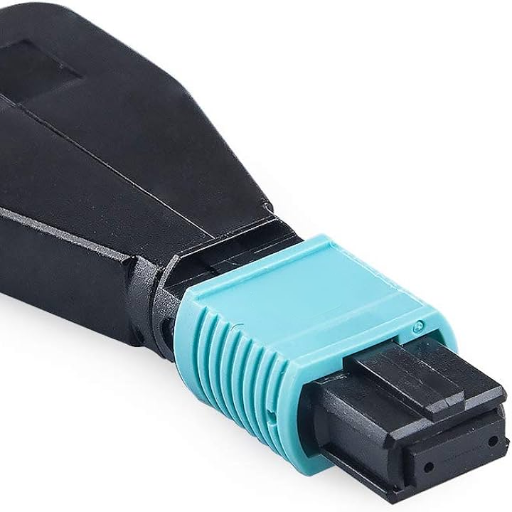
MPO (Multifiber Push-On) technology is extensively used in a wide range of industry applications owing to its aptitude in managing OEM amount of fiber connections nimblely. In the telecommunications sector, MPO cables are key tools for supporting the high-speed transfer of data and to expand the backbone of the Internet. In data centers, MPO solutions ensure quick deployment of fiber-optic connections to keep abreast of the ever-increasing bandwidth demand. Also, the broadcast companies and media industry are getting benefitted by this technology due to its higher capabilities in error-free signal transmission for live show productions. MPO systems are also used by research institutions and medical establishments for supporting advanced imaging and the application of analytic techniques across a veritable cornucopia of diverse categories.
Data Center Deployments
To model efficient and scalable network infrastructure, the design process of MPO solutions works well for today’s data-center requirements. Such structures advocate for high-speed fiber optic connections, requiring them to deal with lifetime growth in data traffic at an exponential rate. MPO’s industrial design technology allows for swift deployment and easy cable management with reduced downtimes and increased operational efficiency. High bandwidth MPO technology likewise ensures that future upgrades can be met, providing definitely a future-ready option for the data center. This provided assurance of high-density and high capacity functionality.
Telecommunications Infrastructure
MPO technology is the cornerstone of modern telecoms infrastructure. It forms vital means of establishing high-speed, high-capacity connections that drive today’s data-driven world. Widely used in optical fiber systems, it copes with the demands of 5G networks, cloud computing, and IoT applications. With MPO connectors, cores of network backbones can be smoothly scaled for bandwidth and crystal-clear transmission of data with minimal latency. The need to establish the next network-speed frontier, heavy end-user reliance on digital platforms, among other things, has hastened the adoption of MPO technology in the telecoms sector, especially in the urban high-density IT areas. MPO-based solutions are indispensable to build some of the most resilient networks, aware of all present and future scenarios.
High-Speed Networking Solutions
MPO is an exemplary technology that has mastered the way fiber-networking infrastructure will blossom in various industries at high speed. Its data center starts and mushrooms on MPO connections to fit the enhancing needs for high bandwidth. The telecommunications sector employs MPO for increased network capacity availability and improved high-density metro and long-haul applications connection reliability. In addition, the availability of MPO solutions is crucial for massive data processing and minimal downtime. This, in turn, ensures that healthcare and finance cannot succumb to operational inefficiency or risk integrity. These are nothing but some kinds of those connectors that need to have an actual high-performance network infrastructure.
Advantages of Using MPO Connectors
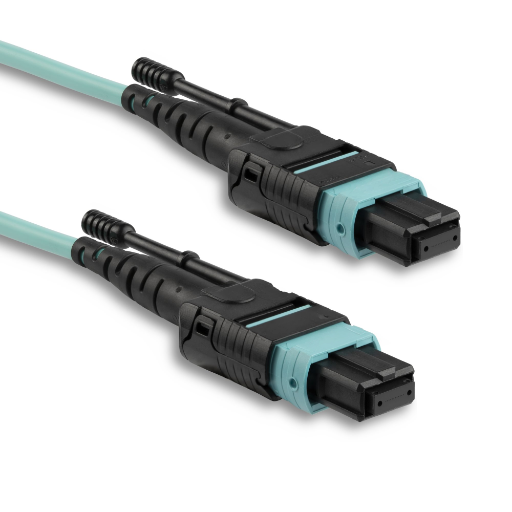
The MPO connectors have several advantages which include high-density connectivity that saves space in data centers and network installations. They are also set for high-speed data, which makes them useful in applications requiring rapid rates of data transfer. The MPO connectors are typically versatile which allows them to become adaptable to a variety of network configurations and scalable for growing bandwidth needs. They offer robust performance, ensuring that signal loss is kept to a bare minimum, thereby enhancing total network effectiveness.
Efficiency in Data Transmission
MPO connectors are most efficient in data transmission because of their sophisticated design. These connectors allow various signals to flow simultaneously via one connection, significantly increasing their data transfer speeds in result.
Scalability for Future Growth
Designed to support scalable designs, MPO connectors are an excellent choice for upcoming network environments. Through its modular design, easy upgrade paths are assured.
Cost-Effectiveness
MPO connectors offer compelling cost advantages over traditional connectors because of the high-density cabling and multi-fiber capability within a single interface.
Efficiency in Data Transmission
MPO connectors are most efficient in data transmission because of their sophisticated design. These connectors allow various signals to flow simultaneously via one connection, significantly increasing their data transfer speeds in result. Their exclusive multi-fiber structure even reduces the necessity to stretch out many single cables, which besides saving space, also minimizes cable management complication. Furthermore, MPO connectors have the potential to provide higher bandwidth capacity, making them appropriate for modern network environments, such as data centers and cloud services, in situations where fast and reliable data transfer in demand. Their capability to maintain high-speed transmissions with minimal loss of signal ensures network performance at its best while providing scalability for safety in future extra data demand. The efficiency, scalability, and reliability attached to MPO connectors work collectively to prove that MPO connectors are one of the cornerstones of high-performance network solutions.
Scalability for Future Growth
Designed to support scalable designs, MPO connectors are an excellent choice for upcoming network environments. Through its modular design, easy upgrade paths are assured, whereby additional fiber connections could be integrated without major infrastructure modifications. This allows networks to grow along with data need, thus lowering upgrade life-cycle costs and all the associated complexities. This way, it becomes a useful sort of future-proofing that leaves room for new technologies on a small footprint. It is perhaps now taken as a keenly futuristic organization, which banking on the existence of options for a better way of change tomorrow.
Cost-Effectiveness Compared to Other Connectors
MPO connectors offer compelling cost advantages over traditional connectors because of the high-density cabling and multi-fiber capability within a single interface. This reduces the need for multiple separate connections, saving material and installation cost. Moreover, their small design means that less room in data centers and warehouse accompany low real estate costs. Upgrades or maintenance could be set up simply with MPO connectors, cutting future labor cost. All these aspects would render MPO connectors financially feasible for firms that are looking for network infrastructure that is efficient and scalable.
Installation Processes and Best Practices

The correct method in installing the MPO connector is critical to achieving the optimum performance levels at the longest lived life. The first step in the process is to clean thoroughly the cable and connector of any foreign objects such as dust as they can hardly assist effective connection. Use appropriate cleaning tools which are designed for the MPO connector to clean the connector. Connectors should be aligned properly to ensure they are properly facing each other according to polarity guidelines. After finishing connecting the two connectors, start intensively testing the link for the correct signal and configurations being already placed. The maintenance of the system, which is most importantly the periodic checkups and cleaning, is essential for the system in order to keep on working ticking-time, slash-setting downtime. Considering these rules is paramount to follow during the installation of the MPO connectors.
Step-by-Step Installation Guide
- Inspect Each Particular
Ensure that all the required components intended for MPO-connector installation are present and clean. These comprise MPO-connector assemblies, adapters, cleaning equipment, and cables. - Clean the Connectors
Use a designated cleaning tool designed for an MPO connector to clean and remove the dust or dirt. Ensure nothing remains on the connectors that will degrade signal integrity. - Meeting the Connectors
The MPO connectors must be carefully aligned to the proper orientation, as per the polarity guidelines given. - Connect the MPO Connectors
After being matched by the above, slide the MPO connector gently inside the adapter or port until seated securely. Avoid exerting excessive force, as the connection would get damaged. - Check the Signals
Ensure that the signal quality of the network meets the appropriate standards and that the polarization configuration is so. - Secure the Connections
All connections should be securely connected in order to avoid unintentional rolling out from the connectors or causing strain to the cable. - Documentation for Installation Details
It is recommended that any critical data during this installation phase, such as the site, connection points (trunk cables), and trial recordings, be documented so that future reference is active. - Carry Out Regular Maintenance
Conduct a periodic inspection and cleaning to maintain the long-term performance and reliability of the MPO connectors.
Best Practices for Maintaining MPO Connectors
Effective maintenance of MPO connectors consists mainly of three major aspects as per industry recommendations and standards:
- Practice Regular Cleaning: I usually clean MPO connectors with a lint-free wipe or the like fiber cleaning kits before usage to avoid contamination issues.
- Inspection Before Use: A careful visual inspection of the connector endfaces is therefore the last thing I do before any new connection is established – if it is kept clean, next in a forward manner.
- Storage and Handling: Properly storing an MPO connector in a clean and dust-free environment avoids any mechanical bending or stressing issues and subsequent potential damage or misalignment.
Ensuring appropriate performance and good lifespan, maintenances are carried out on MPO connectors in adherence to the mentioned steps.
Troubleshooting Common Installation Issues
Where MPO connectors are exhibiting installation-related issues, common factors impacting optical signals are considered next:
- Signal Loss: This is typically related to dirt/contaminants accumulated on the connectors endfaces. Use good cleaning tools to clean the MPO connectors entirely.
- Misalignment: In many cases, even the seemingly insignificant misalignment-related issues can instigate low connectivities-check proper seating of alignment pins, whether they are not damaged.
- Damaged Cables: Observe your cables carefully for damage or wear. Avoid excessive bending or spreading of the connector. Any worn cables may need to be replaced.
- Wrong Polarity: An arrangement of polarity that is away from being strictly linear in the system can cause a deterioration of the signal: check and see if the system is on proper polarity.
- Improper Insertion Method: Very often the insertion of the connectors would not be taken as evident. Upon final insertion position, check that the connectors are fully inserted.
If one deals with these matters systematically, the setup crises of MPOs can be resolved more easily.
Reference Sources
-
MPO-Type Single-Mode Multi-Fiber Connector: Low-Loss and High-Return-Loss Intermateability of APC-MPO Connectors – This study focuses on the development and performance of MPO connectors, particularly their intermateability and loss characteristics.
-
MPO Optical Backplane Connector – This research discusses the integration of MPO connectors in high-fiber-count applications and their role in optical backplane systems.
-
MPO Type 8-Multicore Fiber Connector with Physical Contact Connection – This paper explores the development of multicore MPO connectors and their physical contact connection technologies.
-
Novel MT/MPO Single-Mode Multifiber Connector Technologies for Optical Fiber Communications – This book chapter provides an in-depth look at innovative MPO connector technologies for optical fiber communications.
- Food Machine and Extruders Provider in China
Frequently Asked Questions (FAQs)
What is an MPO cable and how does an mpo connector work?
An MPO cable uses an mpo (multi-fiber push-on) connector to terminate a number of fibers in one connector housing, the resulting array of fibers mated to an mpo interface in a cable. The connector interface comprises fiber alignment pins and helps assure that the fiber from one end of the fiber link and any other fiber position align in the male and female connectors as it continues the same in equipment configuration (VLSI), or adapters, which can then function for high-density parallel optics 40G/100G links.
Which cables are used for mpo trunk, cable, and MPO trunk to MPO patch cord, links?
For linking systems through MPO, commonly used are in MPO trunk cables of 12-fiber, 24-fiber, or 8-fiber density. An MPO trunk is, therefore, terminated in both mpo connectors and thereafter combined with an MPO-to LC breakout or MPO-LC breakout cable EP at pointed-ends, which then, after an individual LC fiber link created from the multi-fiber trunk will run towards switches, patch panels, or duplex connectors.
How does reverse cable polarity apply to type B cables and Type B MPO cable connections?
Cable Polarity ensures that transmit and receive fibers can line up properly over this particular link. Type B cables reverse the fiber order (commonly referred to as type B polarity) to where receiver one in one connector goes to the corresponding transmitter on the other end. Directionally, in any MPO parallel processing system, type b cables and term type B cables each refer to one of the polarity schemes; so any MPO connections, adapter panel cabling, or breakout cable should be wired for the same polarity standard to maintain a good fiber link.
How should you inspect MPO connectors to guarantee good fiber end faces for an MPO connection?
A multi-fiber scribe type inspection probe has been designed to inspect the MPO ferrules: one must inspect the fiber ends for scratches/debris damage and then clean and inspect connectors and adapters. Ensure that the fibers in position 1 are aligned and have good physical contact. Proper inspection/deterioration prevents high loss at MPO cut-overs for parallel optical applications.
Can one employ Single-mode Fiber with MPO connectors and what are their typical applications?
Certainly, single mode fiber and multi-fiber MPO-assembled fiber are used, depending upon the application. Single-mode MPOs find application in long-reach optical networking and data-center migration, while multi-mode MPO fiber mostly is used in short-reach applications paralleling optics. MPOs accommodate high-density trunk cable and quick deploy systems with trunk cables and patch cords. MPO optical fiber connectors are common for transceiver interfaces, in numerous instances allowing pairing LC connectors by means of MPO-to-LC breakout cables.