A baler is a compression machine that squeezes loose material — hay, cardboard, plastic, or scrap metal — into dense, bound bales for easier handling, storage, or transport. Depending on the material and the volume involved, a baler can be a small tractor-pulled round unit on a family farm or a 60-ton vertical hydraulic press in a recycling plant. This guide covers how balers work, the seven families of balers you’ll encounter, and how to choose one without overspending or undersizing.
Quick Specs
| Equipment Category | Compression / Packaging |
| Materials Handled | Hay, silage, cotton, cardboard, plastic, scrap metal, textile waste |
| Bale Density Range | 150–1,200 kg/m³ (varies by material) |
| Power Options | Tractor PTO / Hydraulic / Electric-hydraulic |
| Typical Price Range | $8K (mini round) – $250K+ (large industrial) |
| Key Standards | ASABE S317 (agricultural), OSHA 1910.211–212 (industrial) |
What Is a Baler? Definition and Core Purpose
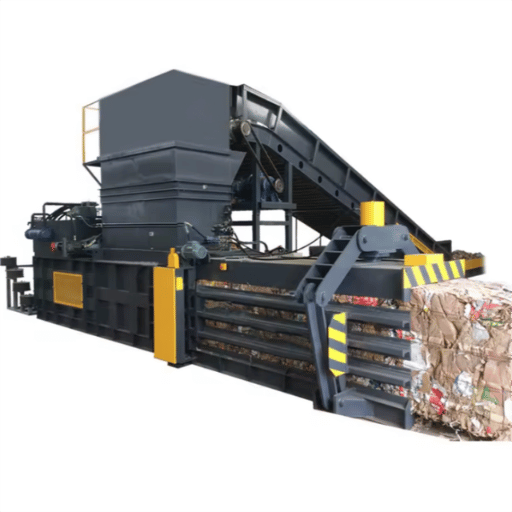
A baler takes loose, bulky material and compresses it into a tied bale — a stable, transportable package. People often misspell the word as “bailer,” but a bailer actually refers to a bucket used to scoop water out of a boat. Both terms describe unrelated pieces of equipment.
In agriculture, the baler evolved from manual hay presses in the late 1800s into the tractor-pulled pickup baler (1930s) and later the round baler (introduced by John Deere with the 14T in 1957). In industry, the baler took a parallel track: stationary vertical compression presses emerged to handle cardboard, textiles, and recyclables as municipal waste volumes climbed through the mid-twentieth century. Both branches of the baler family share the same core operation — feed, compress, bind — but differ in feed mechanism, power source, and bale geometry.
That distinction matters when buyers search for a “baler” and get results that don’t fit their application. Cardboard recyclers and cattle producers ask the same question with very different answers. Sections below separate the two families so you can skip to the one that fits.
The Main Types of Balers by Material and Form Factor
Every baler falls into one of seven major families, sorted by material and form factor. Agricultural balers dominate outdoor use; industrial balers handle material recovery indoors.
| Baler Type | Typical Material | Bale Density | Power Source |
|---|---|---|---|
| Round Baler (agri) | Hay, silage, cornstalks | 150–200 kg/m³ | Tractor PTO |
| Small Square Baler (agri) | Dry hay, straw | 200–260 kg/m³ | Tractor PTO |
| Large Square Baler (agri) | Commercial hay, biomass | 220–280 kg/m³ | Tractor PTO + hydraulic |
| Mini Round Baler (agri) | Small-farm hay | 100–150 kg/m³ | Compact tractor PTO |
| Vertical Baler (industrial) | Cardboard, plastic film | 400–800 kg/m³ | Electric-hydraulic |
| Horizontal Baler (industrial) | High-volume OCC, plastic, textiles | 600–1,000 kg/m³ | Electric-hydraulic, often auto-tie |
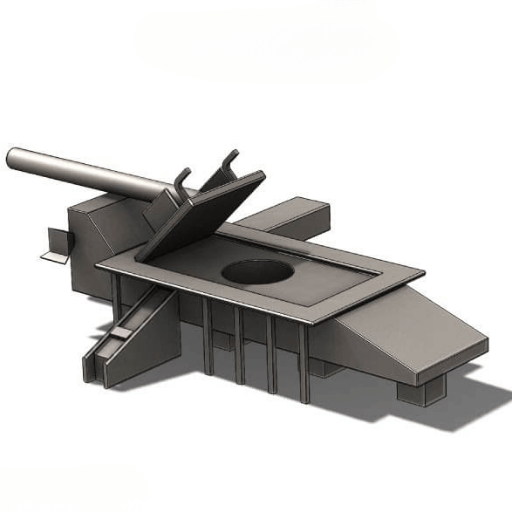
| Scrap Metal Baler | Aluminum cans, light ferrous scrap | 900–1,200 kg/m³ | Heavy-duty hydraulic |
How Does a Baler Work?
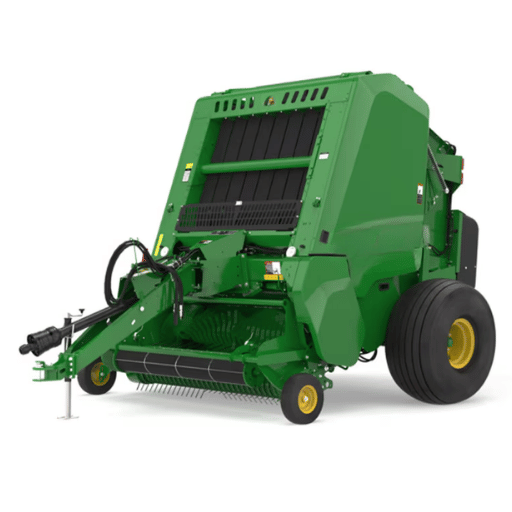
A baler moves material through three stages: pickup or feed, compression in a chamber, and tying. In a round baler, pickup tines lift hay from a windrow, feed it into a forming chamber, and six to eight rubber belts rotate the core into a spherical shape. As the bale grows, an idler arm rises and routes hydraulic oil through a pressure-relief valve, keeping density uniform throughout the roll.
An industrial baler replaces the pickup with a loading hopper or conveyor and the belts with a hydraulic ram that drives the material against a fixed wall. Once the chamber is full, the operator triggers wire or strap tying. Both designs share the same physics: trap the material, apply force, bind the shape.
Agricultural Balers: Round vs Square, Mini vs Large
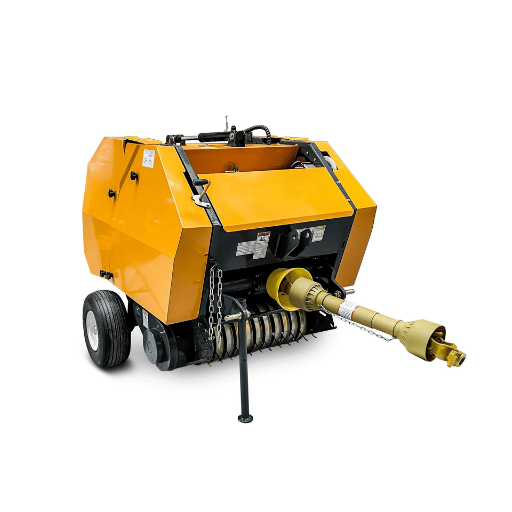
Agricultural balers split first by bale shape — round or square — and then by scale. Shape dictates storage behavior; scale dictates tractor requirements and daily output.
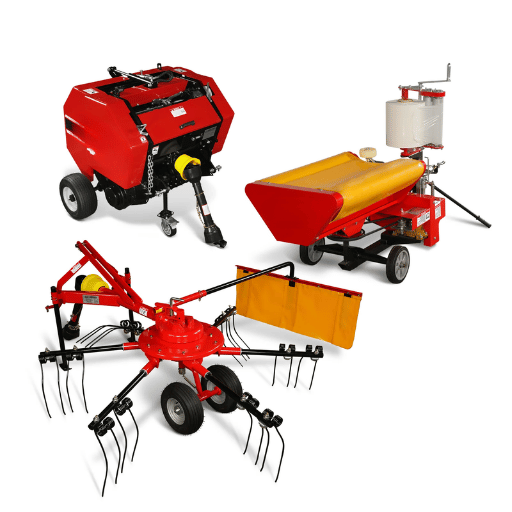
Round balers produce cylindrical bales in sizes from compact 4×4 ft up to large 5×6 ft. That rolled shape sheds rain — which matters for outdoor storage — and round bales are easy to unroll for livestock feeding. John Deere’s round baler line, Vermeer’s 504 and 604 series, and Case IH’s lineup all target this segment. Pulling a basic round baler needs a tractor delivering at least 35 horsepower and weighing 3,000 pounds or more; undersizing either will fatigue the drivetrain under heavy windrows.
Square balers come in two sub-families. Small square balers produce 14×18 inch bales weighing 40–75 lb — manageable for hand stacking on small farms. Large square balers produce 4×4 ft or 3×4 ft bales weighing 1,200–2,200 lb, optimized for commercial hay trucking where cubic storage density on a flatbed trailer is the economic constraint.
Mini round balers fit compact tractors in the 20–30 HP range and produce 50–90 lb bales — a recent-decade product line aimed at hobby farmers and small cattle operations.
One decision point most buyers miss: chamber type. Fixed-chamber round balers build the bale in a constant-size space, producing a dense outer shell with a looser core; they handle high-moisture silage and wet hay well. Variable-chamber balers, on the other hand, expand the forming chamber as the bale grows, delivering uniform density throughout. Variable designs cost more but produce superior bales for dry hay and long-term stacked storage.
📐 Engineering NoteASABE Standard S317 specifies guarding and shielding requirements for agricultural balers, including PTO shaft shielding and pickup guards. Any pre-1980s used baler may not meet current S317 revisions — check shielding condition before operation.
“The knotter is the heart of any square baler — twine tension at the top and bottom tensioners drives knot length, and stack timing drift is usually what you’re chasing when knots start dropping.”
— Industry technician guidance, synthesized from Carter Agri-Systems and Agriteer knotter troubleshooting documentation
Industrial Balers: Cardboard, Plastic, Scrap Metal, and Waste
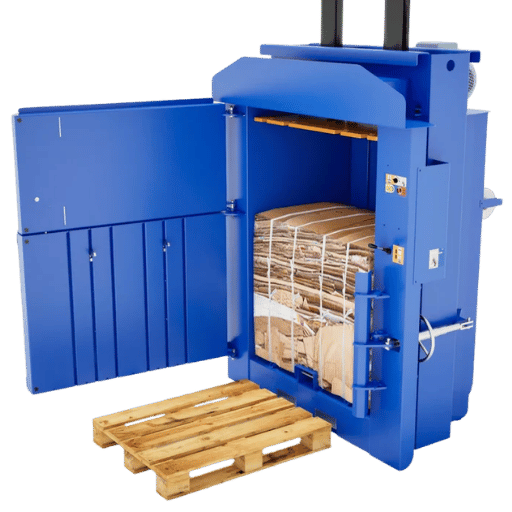
Industrial balers live indoors, plug into 3-phase power, and consume loose waste at a pace that scales with your business’s discard volume. Two form factors dominate: vertical and horizontal.
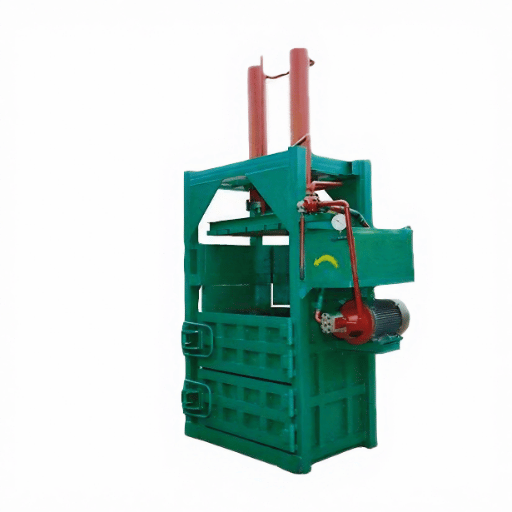
Vertical balers stand 6–8 feet tall with a footprint of 2–4 square meters. An operator loads cardboard or plastic through the front door, the hydraulic ram drops from above, and after 8–12 cycles the bale is tied off with wire and ejected. Retail stores, grocery chains, and small warehouses use vertical balers because they fit a corner of the back room. A new vertical cardboard baler costs $10,000 to $25,000 depending on motor size and bale weight rating.
Horizontal balers move the ram sideways and accept material through a conveyor or chute. They produce mill-size bales — typically 1,100–2,000 lb — and process 1,000+ lb of cardboard per hour. Pricing runs from $9,000 for basic manual models to $160,000+ for fully automatic closed-door systems with hydraulic pushers and auto-tie.
Are Balers Hydraulic?
Industrial balers are almost entirely hydraulic — ram, door closure, and eject cycle all run off a hydraulic power unit driven by a 10–50 HP electric motor. Agricultural balers are mixed: compression in a round baler uses hydraulic cylinders for density control, but primary drive power comes from the tractor’s PTO (power take-off) shaft. Some newer farm balers, including Vermeer’s self-propelled ZR5 platform, are fully hydraulic and require no external tractor.
OSHA’s Green Jobs guidance on cardboard baling documents the most common industrial baler injury causes — operator entrapment during cycle override, pinch points at the feed opening, and strain from manual bale ejection. OSHA 1910.211–212 defines the machine-guarding requirements any baler installed in a US workplace must meet.
Industrial balers reduce cardboard volume by up to 90% — a roughly 10:1 drop that transforms freight economics when the nearest recycler is 50+ miles away. High-density output is the central business case: shipping air is expensive, shipping dense bales isn’t.
How to Choose the Right Baler — The 5-Filter Baler Selection Method
Most buying guides throw a dozen variables at you and leave the prioritization as an exercise. The 5-Filter Baler Selection Method strips the decision down to five sequential questions. Answer each in order — skipping Filter 1 wastes time on every filter after it.
The 5-Filter Baler Selection Method
- Filter 1 — Material. Agricultural (hay/silage/cotton) or industrial (cardboard/plastic/metal)? This splits your search in half immediately. Do not cross-shop.
- Filter 2 — Daily throughput. How much material per day at peak? A 100-acre hay operation has different needs than a 500-cow dairy. A 200 lb/day cardboard store has different needs than a 5,000 lb/day distribution center.
- Filter 3 — Buyer spec. What does the receiver want? Hay buyers specify bale weight and moisture. Recyclers specify mill-size bales (typically 1,100–2,000 lb). Your bale must match the downstream spec or you’ll pay rebaling fees.
- Filter 4 — Power available. Tractor HP on hand? Or 3-phase electric service at the dock? This eliminates machines your infrastructure can’t drive.
- Filter 5 — Budget window. New, used, or refurbished? Used agricultural baler supply has fallen dramatically (see the outlook section below), which is reshaping the used-versus-new math.
Most common mistake buyers make? Sizing the baler to the farm or facility as it is today. Two to three years later, the operation has grown but the baler hasn’t — and now the buyer is shopping for a second machine that should have been the original one. Industry practitioners frequently report this pattern on hay producer forums, where buyers trade up to larger units within 24–36 months of their first purchase. What fixes this: estimate peak volume three years forward, then buy for that number. Paying 20% more upfront beats paying 100% more for a replacement.
Maintenance and Operational Best Practices
Baler downtime is almost never random. Academic research on square baler knotter failure identifies four repeat failure modes: twine tension drift, bill hook closure wear, shear bolt fatigue, and stack timing misalignment. A disciplined pre-season inspection catches three of the four before the first bale of the year.
- ✔
Inspect PTO shaft shielding for cracks or missing sections (ASABE S317 compliance) - ✔
Check belt tension on round balers — over-tight belts accelerate bearing wear; loose belts slip under wet hay - ✔
Test twine tension at top and bottom tensioners on square balers — knot length drift is the first sign something is off - ✔
Verify pickup tine straightness — bent tines miss material and load the drive unevenly - ✔
Grease all zerks at manufacturer-specified intervals — most operators under-grease chamber bearings - ✔
Inspect shear bolts on the knotter drive — replace at any sign of fatigue, not after failure - ✔
For industrial balers: check hydraulic fluid level, ram seals, and photo-eye sensors before each shift
Electronic monitor reliability is a newer concern. Operators on public forums have reported that the Kubota BV4580’s Focus 3 monitor throws intermittent error codes after roughly 50 consecutive bales — power-cycling the monitor usually clears the fault. This isn’t unique to Kubota; as every major baler brand adds telematics, expect electronic faults to become a larger share of service calls than mechanical ones.
Industry Outlook — What’s Changing in the Baler Market (2024–2026)
Two trends are pulling the baler market in different directions — and both matter if you’re planning a purchase in the next 18 months.
On the agricultural side, used round baler supply has fallen by roughly 50% over the past two years as farmers hold onto equipment longer. Practical effect for buyers: used prices are up, selection is thin, and new-versus-used math has tilted toward new more than it has in a decade. If you were planning to buy a used baler in 2026, expect to pay 15–25% more than 2023 comps or step up to new.
On the industrial side, the global hydraulic baler market is projected to grow from $1.2 billion in 2024 to roughly $1.8 billion by 2033, a compound annual rate near 5%. Broader baling-machines demand is forecast to reach $5.8 billion by 2033 at 4.5% CAGR. Growth driver here is the circular-economy push — corporate sustainability commitments and municipal recycling mandates are pulling more cardboard, plastic, and textile waste into formal recycling streams, and every truckload starts with a baler.
Two technology shifts worth watching: electric-hydraulic balers for smaller farms (removing PTO dependence on compact tractors) and telematics-enabled monitoring on all mid-to-large units. Recent innovation in sensor-driven bale weighing — common on large square balers from 2023 onward — is beginning to improve per-load revenue for commercial hay producers by reducing under-weight shipments. If you’re buying in 2026, ask dealers about diagnostic data access; the monitor that used to be a convenience is now where most service disputes start.
For buyers watching OSHA enforcement, expect tighter scrutiny of cardboard baler safety training in retail and grocery environments. OSHA’s Green Jobs guidance has become an active reference in incident investigations, and facilities without documented lockout-tagout and operator training programs are the main targets.
Frequently Asked Questions
Is it “bailer” or “baler”?
View Answer
What is a baler used for?
View Answer
How much does a baler cost?
View Answer
When were balers invented?
View Answer
How tight should baler belts be?
View Answer
Which baler is best for a small farm?
View Answer
Working with Industrial Machinery Suppliers
If you’re sourcing industrial compression or packaging equipment from China — including extrusion lines, pelletizing systems, or adjacent material-processing machinery — working with an established manufacturer reduces the lead-time and spec-alignment risk that plagues first-time overseas procurement. UDTECH’s engineering team has supported equipment buyers across 100+ export markets and can route specific baler sourcing inquiries to trusted partner manufacturers.
About This Baler Guide
UDTECH manufactures extruders, food-processing lines, paper machinery, and laser equipment — not balers. This guide exists because buyers searching for compression and packaging equipment often land on our industrial machinery content, and we’d rather send them to the right information than fake expertise we don’t have. Sourcing data is compiled from OSHA guidance, ASABE standards, academic research on baler reliability, and publicly reported 2024–2025 market reports.
References & Sources
- Green Job Hazards — Recycling: Cardboard Baling — U.S. Occupational Safety and Health Administration
- ASABE National Standards — Agricultural Baler Safety (S317) — American Society of Agricultural and Biological Engineers
- Failure Mechanism and Reliability of the Square Baler Knotter — International Journal of Performability Engineering (2019)
- National Farm and Ranch Safety Leader’s Guide — The Ohio State University
- Baler — Encyclopedic Overview — Wikipedia
- How Much Does a Cardboard Baler Cost? — Recycling.com
- Used Round Baler Supply Falls 50% as Fewer Farmers Trade In — Agriculture.com (2025)
Related Articles
- Paper Recycling Machine Options for Mill Operations — adjacent waste-stream equipment category
- Recycled Plastic Extruder Fundamentals — downstream plastic processing after baling
- Chemical Waste in Paper Making: Industrial Handling Practices — waste management context
- Hot Melt Extruder Machine: Compression Processing — related compression-driven equipment
- Machinery Solutions Blog — broader equipment sourcing library