Top 15 Best Laser Marking Machine Manufacturers in 2025: Updated List
Comprehensive guide to leading laser marking technology providers revolutionizing industrial manufacturing processes
In today’s ever-evolving industrial landscape, laser marking technology enhances production processes, working in tandem to drive efficiency and precision across various industries and sectors. From automotive to medical devices, on-site laser marking machines have revolutionized industries by transforming their methods for performing traceability and customization. The article discusses the top 15 laser marking machine manufacturers, highlighting their unique features for advanced laser solutions and providing valuable insights to help companies make informed decisions.
Introduction to Laser Marking Technology
Importance of Laser Marking in Various Industries
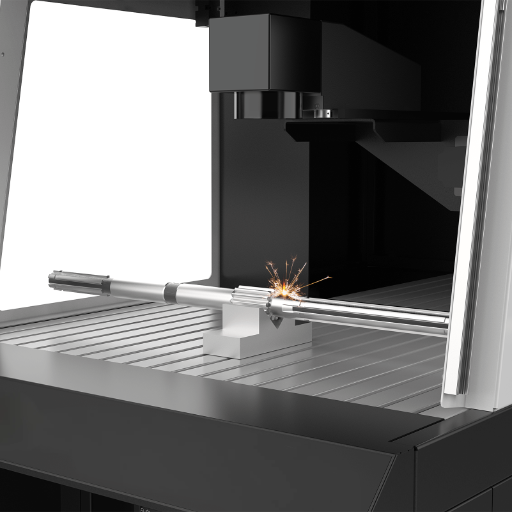
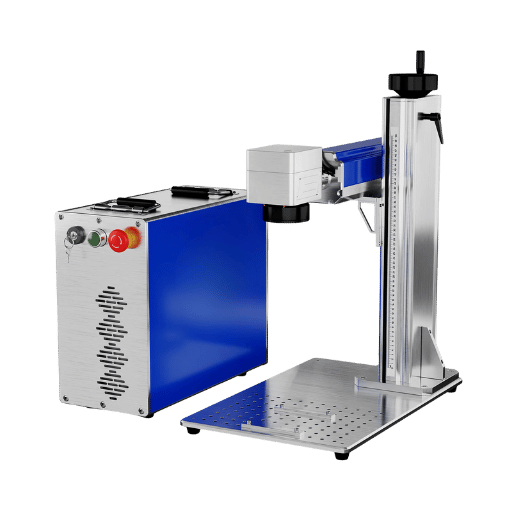
The process of laser marking has found applications in countless industries. One of the practical applications of laser marking in the automotive industry is enabling the traceability of components by inscribing serial numbers and barcodes, which is vital for quality control. The medical industry uses it for marking devices to meet extreme regulatory standards. With its versatility, any type, ranging from CO2 to fiber lasers, can be used in various industries, such as electronics, aerospace, and consumer product manufacturing.
Overview of Laser Technologies Used
Laser technologies have undergone several stages of evolution, offering various solutions tailored to specific marking needs. With each laser technology, you gain an edge in performance, such as enhanced marking quality, increased versatility, or improved automation of the marking process; hence, these have become an integral part of modern industrial applications.
| Laser Type | Common Uses |
|---|---|
| Fiber Lasers | High precision and marking speed, commonly used for metal marking and deep engraving. |
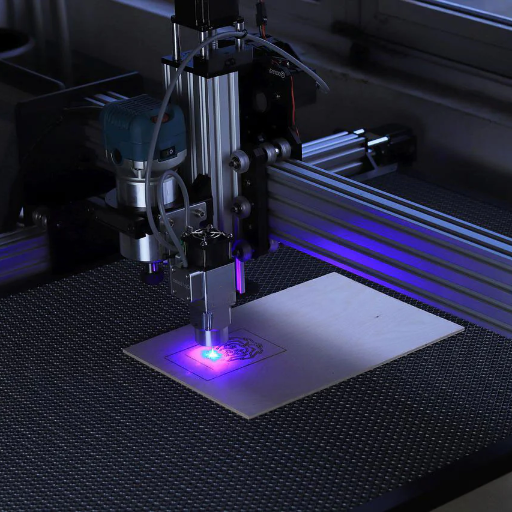
| CO2 Lasers | Preferred for marking and engraving non-metal materials like plastic and wood. |
| UV Lasers | Employed for high-contrast markings on sensitive materials where minimal thermal impact is required. |
Benefits of Laser Marking Machines
High-Speed Processing
Ultra-fast marking capabilities with speeds up to 20,000 mm/s for maximum productivity
Precision Accuracy
Detailed and accurate engravings with ±0.01 mm precision for quality assurance
Permanent Marking
Tamper-proof and permanent markings crucial for traceability requirements
Automation Ready
User-friendly interfaces and automated solutions for seamless integration
Laser marking machines offer numerous benefits that, if leveraged, can enhance production efficiency and product quality. Due to the marking technique used in laser machines, the marks that are traceable in industries must be permanent and tamper-proof. Additionally, laser marking systems can be customized to meet specific marking requirements, providing more value for less cost, which is why manufacturers worldwide trust them.
Top Laser Marking Machine Manufacturers
1UDTECH
Over a decade ago
China
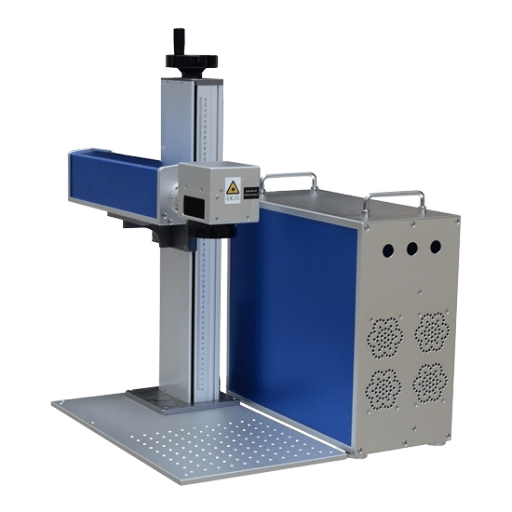
Introduction: A leading Chinese manufacturer specializing in advanced laser marking machines for industrial and commercial applications.
Main Products: Fiber, UV, and CO2 laser marking machines; handheld, portable, and desktop models.
✅ Key Advantages
- Ultra-precise marking with ±0.01 mm accuracy
- High-speed marking (up to 20,000 mm/s)
- Customizable solutions for various industries
- Comprehensive support and cost-effective pricing
⚠️ Disadvantages
- Limited global distribution network compared to some competitors
2Trotec Laser
1997
Austria
Introduction: An Austrian company known for premium laser cutting, engraving, and marking solutions.
Main Products: SpeedMarker series, Speedy series.
✅ Key Advantages
- High-quality, durable machines
- Eco-friendly solutions with reduced energy consumption
⚠️ Disadvantages
- Higher price point
3Trumpf
1923
Germany
Introduction: A German leader in industrial laser technology and machine tools.
Main Products: TruMark series, TruMicro Mark.
✅ Key Advantages
- Reliable and user-friendly machines
- Global presence and strong support network
⚠️ Disadvantages
- Expensive for small businesses
4Epilog Laser
1988
United States
Introduction: A U.S.-based pioneer in CO2 laser technology.
Main Products: Fusion Pro, Fusion Edge, Zing series.
✅ Key Advantages
- High-speed and precision engraving
- Strong customer support and training programs
⚠️ Disadvantages
- Limited focus on fiber laser technology
5Videojet
1969
Global
Introduction: A global leader in high-speed laser coding and traceability solutions.
Main Products: CO2, fiber, and UV laser markers.
✅ Key Advantages
- Designed for continuous operation in large-scale manufacturing
- Extensive global service network
⚠️ Disadvantages
- Primarily focused on coding and traceability
6Raymond Laser
2010
China
Introduction: A Chinese manufacturer offering versatile laser marking solutions.
Main Products: Fiber, CO2, and UV laser marking machines.
✅ Key Advantages
- Cost-effective and durable machines
- Strong global presence
⚠️ Disadvantages
- Limited advanced features compared to premium brands
7TYKMA Electrox
Over 50 years ago
United States
Introduction: A U.S.-based expert in industrial laser marking systems.
Main Products: Minilase, Zetalase, Vereo series.
✅ Key Advantages
- Customizable automation solutions
- High-speed and deep engraving capabilities
⚠️ Disadvantages
- Higher initial investment
8HeatSign
2010
China
Introduction: A Chinese company specializing in industrial marking solutions.
Main Products: Fiber, UV, and CO2 laser marking machines.
✅ Key Advantages
- Durable and efficient machines
- Customized solutions for various industries
⚠️ Disadvantages
- Limited product range for high-power applications
9HANTENCNC
2005
China
Introduction: A Chinese manufacturer with expertise in laser marking and engraving.
Main Products: Fiber, UV, CO2, and MOPA laser marking machines.
✅ Key Advantages
- CE and FDA-certified machines
- Affordable pricing with high-quality performance
⚠️ Disadvantages
- Limited global service network
10FOBA Laser
1969
Germany
Introduction: A German company known for high-precision laser marking systems.
Main Products: Fiber, CO2, and UV laser markers.
✅ Key Advantages
- Integrated vision systems for precision
- Ideal for medical and automotive industries
⚠️ Disadvantages
- High cost
11Beamer Laser Systems
2000s
United States
Introduction: A U.S.-based provider of high-quality industrial laser solutions.
Main Products: Fiber, CO2, and green laser systems.
✅ Key Advantages
- High precision and reliability
- Customizable features for specific needs
⚠️ Disadvantages
- Limited product range
12OMTech
2010s
United States
Introduction: A U.S.-based company offering affordable laser marking solutions.
Main Products: Fiber and CO2 laser marking machines.
✅ Key Advantages
- Budget-friendly options for small businesses
- User-friendly systems
⚠️ Disadvantages
- Limited advanced features
13Keyence
1974
Japan
Introduction: A Japanese leader in industrial automation and laser marking.
Main Products: MD-F, MD-U, MD-X series.
✅ Key Advantages
- AI-powered laser marking solutions
- Comprehensive automation capabilities
⚠️ Disadvantages
- High cost for advanced systems
14Mecco
1889
United States
Introduction: A U.S.-based company with over a century of experience in marking solutions.
Main Products: Smartmark series.
✅ Key Advantages
- Durable and maintenance-free machines
- Strong focus on industrial applications
⚠️ Disadvantages
- Limited focus on non-industrial markets
15Laserax
2010
Canada
Introduction: A Canadian company specializing in industrial laser marking.
Main Products: Fiber and CO2 laser markers.
✅ Key Advantages
- High-performance solutions for harsh environments
- Economical and efficient systems
⚠️ Disadvantages
- Limited product range for small businesses
Key Features of Laser Marking Machines
Technology Advancements in Laser Marking
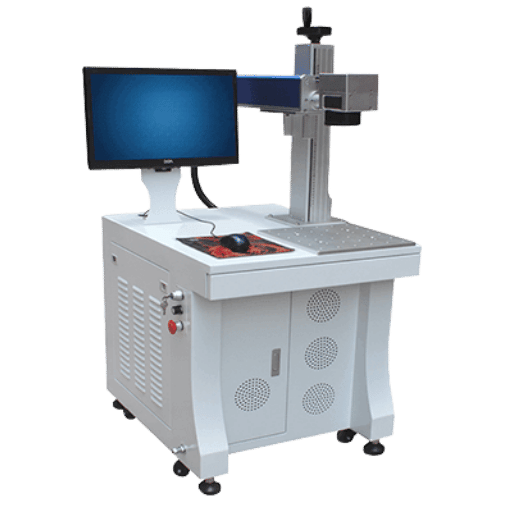
In recent years, laser marking technology has undergone several advancements, which have in turn enhanced the capabilities of laser marking machines. Laser systems are now equipped with high-speed marking technologies, enabling faster and more accurate engraving to meet the ever-growing demands of industries. Improvements in laser power and control systems have further enhanced the marking quality, allowing laser markers to produce clear and precise markings on a wide range of materials, from metals to plastics.
| Advancements | Benefits |
|---|---|
| Energy-efficient solutions | Cost-effective for businesses |
| Improved marking quality | Clearer and more detailed markings |
Comparative Analysis of Fiber Lasers vs. CO2 Lasers
Among the various types of laser marking technologies, fiber lasers and carbon dioxide lasers are considered prime, offering distinct advantages in different applications. Fiber lasers are associated with precision attenuation and marking operations on metals, enabling their use in applications where the industrial automotive and aerospace sectors require traceability and durability. They are also preferred for deep engraving and extensive annealing of metal surfaces.
Conversely, CO2 lasers are best suited for marking and engraving non-metallic materials, such as plastics and wood, due to their longer wavelength. The applications covered impinge on the packaging, textile, and signage industries. This is how these two types of lasers offer different solutions, enabling industrialists to select the laser marking technology that best meets their specific requirements.
Customization Options in Marking and Engraving
With the flexibility and customization possibilities available in modern laser marking machines, do manufacturers find these machines to be working tools toward increasing their production capabilities? Advanced laser marker systems offer options for customizing markings to meet various marking requirements, including serial numbers, barcodes, complex logos, and graphic artwork. For example, the medical device industry uses one-of-a-kind markings to provide proof of compliance with regulatory standards. Automated laser machine solutions enable seamless interfacing with existing production lines and further facilitate customization. Thus, they help manufacturers become more efficient and differentiate their products, providing them with a competitive advantage in the market.
Buyer’s Guide: Choosing the Right Laser Marking Solution
Understanding Your Marking Applications
Key Questions to Consider:
- What materials will you be marking? (metals, plastics, wood, etc.)
- What type of markings do you need? (serial numbers, barcodes, logos, graphics)
- What level of precision is required for your application?
- Do you need high-speed marking or deep engraving capabilities?
- What are your industry’s regulatory compliance requirements?
- How will the laser marking system integrate with your existing production line?
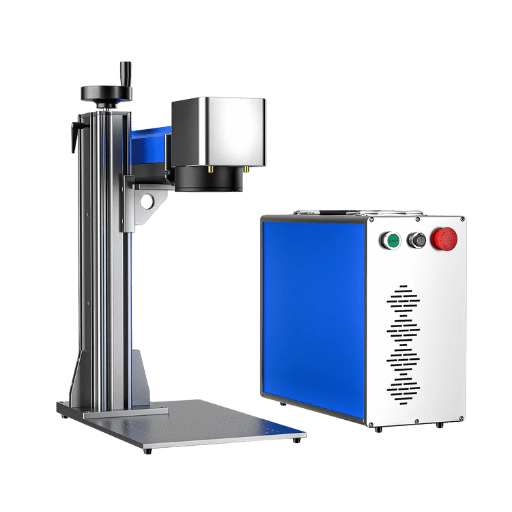
When selecting a laser marking solution, it is essential to understand the specific marking applications and needs that pertain to your industry. Different industries may require various services from one another, ranging from etching serial numbers and barcodes for traceability to creating intricate designs on metals and plastics. Whether you need high-speed marking or deep engraving can narrow your choices down to fiber laser marking machines or CO2 lasers. Fiber lasers have superiority in marking metals with high precision, including deep engraving, whereas CO2 lasers are suitable for marking non-metal materials, such as any kind of plastic or wood.
Factors to Consider When Selecting a Manufacturer
Manufacturer Evaluation Checklist:
- Evaluate marking technology and laser power capabilities
- Assess marking speed and quality specifications
- Check the availability of customization options
- Review the user-friendly interface and automation features
- Research the manufacturer’s reputation and customer reviews
- Evaluate customer support and service quality
- Compare warranty and maintenance programs
- Assess global service network coverage
- Consider the total cost of ownership, including training
- Verify compatibility with existing production systems
Several factors should be considered when selecting a laser marking machine manufacturer to ensure the right laser solutions for your needs. Look for manufacturers that offer custom systems with easy-to-use interfaces, making integration into your production line as straightforward as possible. Manufacturer reputation, customer reviews, and the type of support they provide are critical in ensuring the marking systems run reliably and efficiently. It is also a great idea to look for manufacturers who can provide you with various technologies, such as fiber lasers and UV lasers, so that you can address different marking applications.
Industry Applications and Use Cases
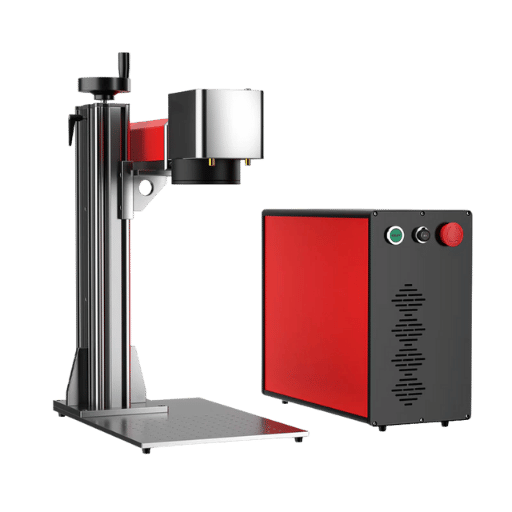
Automotive Industry Applications
- Engine component marking for traceability
- VIN engraving on the chassis
- Part identification and serialization
- Quality control markings
- Safety compliance labeling
Medical Device Manufacturing
- Surgical instrument identification
- Implant marking for FDA compliance
- Medical device serialization
- Biocompatible marking solutions
- Regulatory compliance labeling
Electronics and Semiconductors
- Circuit board component marking
- IC chip identification
- Connector labeling
- Cable and wire marking
- Product authentication
Aerospace and Defense
- Critical component traceability
- Military specification marking
- High-temperature resistant markings
- Precision part identification
- Security and authentication features
Future Trends in Laser Marking Technology
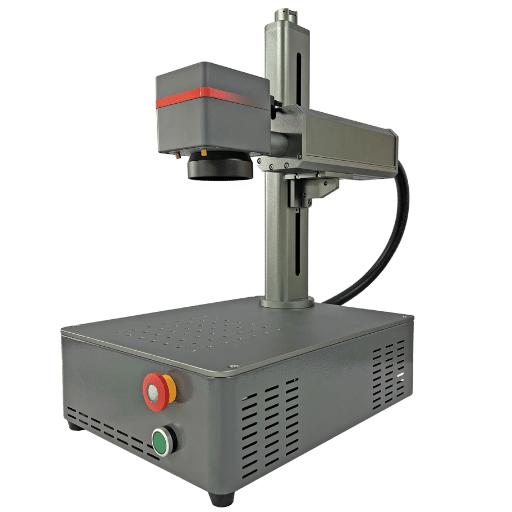
Emerging Technologies
- AI-Powered Systems: Intelligence for automated quality control and adaptive marking parameters
- Industry 4.0 Integration: Smart factory connectivity and concurrent monitoring capabilities
- Advanced Materials Compatibility: Ability to mark new composite and advanced materials
- Environmentally Friendly Solutions: Low energy-consuming and green marking processes
- Miniaturization: Small systems, functional in factory layout-constrained environments
Market Growth Projections
The global laser marking machine market has been experiencing strong growth, driven by increased demand for product traceability, anti-counterfeiting, and the automation of manufacturing processes. Primary growth drivers include the rise of applications in emerging sectors, technological advancements in laser systems, and increasing regulatory requirements across various sectors.
Conclusion and Final Thoughts on Laser Marking Machines
Modern marking and engraving technologies have enabled companies in the industry to transform the way they mark and engrave across various sectors. From fiber lasers, which will allow high-precision metal marking, to CO2 lasers for marking non-metals, the selection of laser marking technology should align with industrial requirements and specific marking needs.
With effective marking systems, companies will achieve superior product traceability and quality assurance, which in turn contribute to operational efficiency and market competitiveness. As the industrial landscape evolves, being one step ahead in terms of technological developments—and relying on manufacturers with proven track records—will enable your operations to produce good results when laser mark solutions are installed.
Key Takeaway: The successful implementation of laser marking depends on a thorough analysis of the application and setting requirements, careful consideration of the technology type that meets these requirements, and a manufacturer that can provide total application support and demonstrated reliability.
Frequently Asked Questions (FAQ)
What is the difference between laser marking and laser engraving?
The laser marks or engraves only at the surface level, meaning no material is removed during marking. With engraving, marking occurs through ablation, which is done to create deeper marks that feel tactile. Marking processes are faster and tend to be used for identifying parts, while engraving is more suitable for achieving durable and permanent results.
How do I choose between fiber, CO2, and UV lasers?
Fiber lasers are used on metals and where high-speed operation is required. CO2 lasers are for nonmetals such as plastics and wood. UV lasers are used when the materials are sensitive and may not tolerate any heat exposure or when high-contrast markings are desired.
What maintenance is required for laser marking machines?
Window cleaning and alignment checks for lasers, optical cleaning, replacement of consumables, and adherence to manufacturer-recommended service intervals are some of the required maintenance tasks. And the newer generation typically requires very little maintenance.
Can laser marking machines be integrated into existing production lines?
Yes, they do, as modern laser marking systems are designed to integrate with existing production lines through automation features, compatibility with various conveyor types, and industry-standard communication protocols.
What safety considerations are essential for laser marking operations?
The key safety considerations include laser safety training, correct use of protective equipment, implementation of safety interlocks, and compliance with local laser safety regulations and standards.