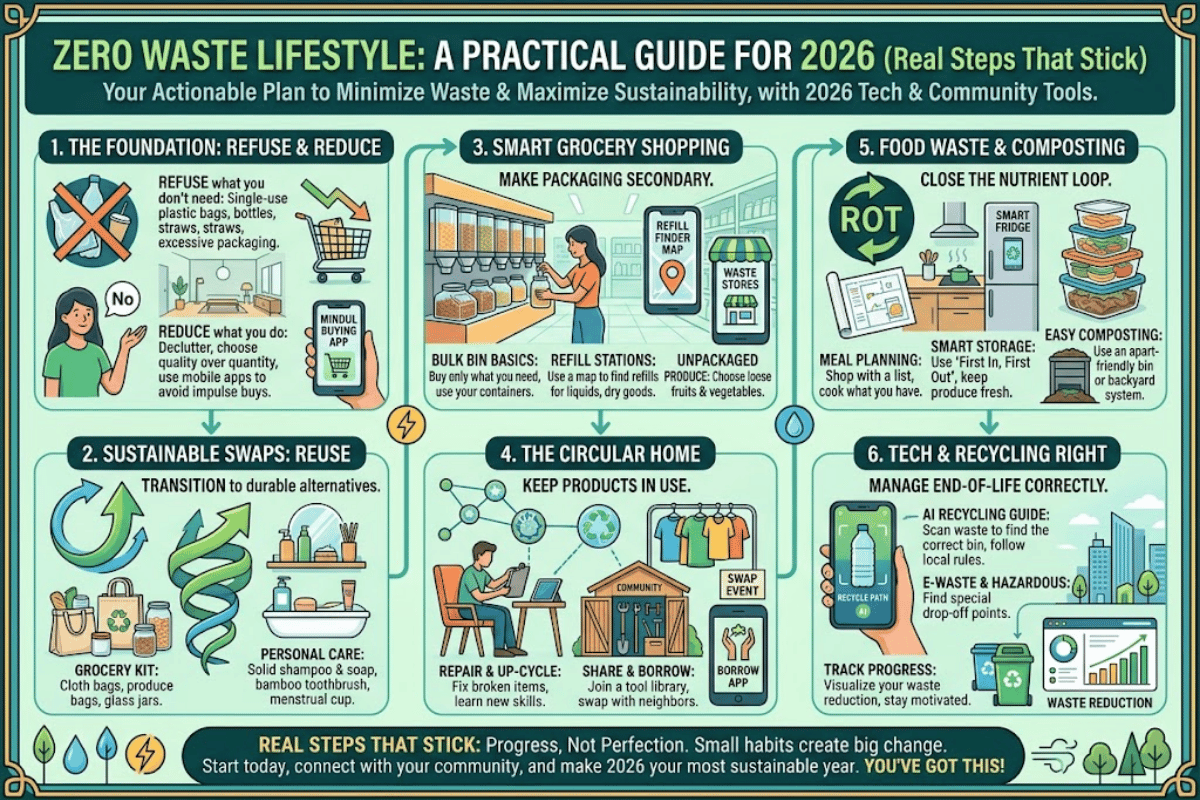
A zero waste life might seem black-and-white, but in reality it’s more about guiding from a compass point: avoid as much as possible going to the landfill and settle into the reality that indeed, zero is not the goal. This resource begins at the five R’s and moves through room-to-room swaps that turn into habits, the fate of your plastic beyond the truck, and the pragmatic compromises glossed over by most tidy listicles. Every reference point listed below comes from EPA, UNEP, USDA or academic journals—no unverified material or shame selling.
Quick Specs: Zero Waste Lifestyle at a Glance
| Definition benchmark | ≥90% diversion from landfill (Zero Waste International Alliance) |
| US recycling rate (MSW) | 32.1% of 292 million tons — EPA national overview |
| PET / HDPE bottle recycling | 29.1% / 29.3% — EPA plastics data |
| Household food waste cost | $1,500 per year per US family of four — USDA |
| Key deadline for 2026 | EU PPWR general application — August 12, 2026 |
What Zero Waste Living Actually Means (And Why It’s Not Literally Zero)
A zero waste lifestyle is not a strict policy to destroy everything in the world, that would not make sense! It is a design philosophy, it considers waste as a failure of upstream choices, packaging choice, the longevity of a product, recovery systems etc, and seeks how each home or business can reduce that failure to a realistic minimum.
The EPA’s sustainable materials management framework presents zero waste as a transition to circular material flows, rather than an all-or-nothing pass/fail criterion. The Zero Waste International Alliance (ZWIA) proposal offers what can be counted as 90% diverted from land fill, incinerator, and environment solid waste within the current mechanisms. That 10% margin is intentional – accounting for things like medicinal waste, soiled packaging, and “corner” conditions where reuse and recycling are unlikely to close the life cycle.
The Waste Hierarchy — What Priority Order Looks Like
- Reduce — do not buy or produce waste in the first place (highest impact, hardest to measure)
- Reuse — keep an item circulating in its original form
- Recycle — break the item down for reprocessing into new material
- Compost (Rot) — return organic matter to soil through biological breakdown
- Landfill / incinerate — last resort, not a step to work around
Read left to right, this sequence also corresponds with the steps of environmental payoff. Opting for reuse instead of wasteful disposable life cycles; recycling efforts reclaim from what we have; solid waste landfills gain nothing back. Having a zero waste life style is simply reaching up that ladder—household by household, product by product—not making a public announcement about your trash can.
The Five R’s and Your 4-Week Starter Roadmap

Bea Johnson, whose family brought the contemporaryzero wasteintocountry with her 2013 book zero Waste Home, summarized it into its five Rs inorder of precedence:Refuse, Reduce, Reuse, Recycle, Rot. The order is important – the most common approach (startingatRecycleand then asking why the trash is full) is doomed.
| R | What It Means | Common Example |
|---|---|---|
| Refuse | Say no to what you do not need | Conference swag, junk mail, free promotional plastics |
| Reduce | Buy less, buy better, keep longer | One good pan, not three mediocre ones |
| Reuse | Extend life through repair or repurposing | Reusable bags, jars, cloth napkins, refill containers |
| Recycle | Send recoverable material to a processor | Clean PET bottles, aluminum cans, cardboard |
| Rot (Compost) | Return organics to soil | Vegetable trimmings, coffee grounds, yard debris |
So What Is a Trash Audit?
A trash audit is an annual (1 week) inventory of everything you throw away or recycle. You keep a running count in categories (produce bags, coffee cups, packaging, food scraps) and after seven days you have a data-driven view of where your garbage actually originates. Most people, to their own disbelief, find that it is not plastic water bottles but food packaging, takeout containers, and food scraps.
Reddit’s r/ZeroWaste community consistently recommends starting here because it replaces abstract guilt with a specific intervention list.
- Week 1 – Audit: Keep a kitchen-counter account of all items going into your household trash and recycle bin. Sort by type at the end of the week.
- Week 2 – Refuse: Pick top three volume items from Week 1 and define a refuse rule with which to avoid those items (e.g., no new plastic produce bags; no disposable coffee cups).
- Week 3 – Reduce: Audit your pantry and bathroom. Remove three duplicate or unnecessary items. Don’t replace them.
- Week 4 – Reuse systems: Purchase two or three durable replacement items (reusable shopping bags, water bottle, food containers). Do not purchase more. Use them for a month before review.
The most harmful issue in the first month is to attempt to change everything simultaneously. A commentor on Reddit’s r/ZeroWaste summarized this well: “Life-changing wasn’t really a purchase, but the mind set of living zero-waste.” The change is mind before it is matter.
The Plastic Problem — Why It Matters Now
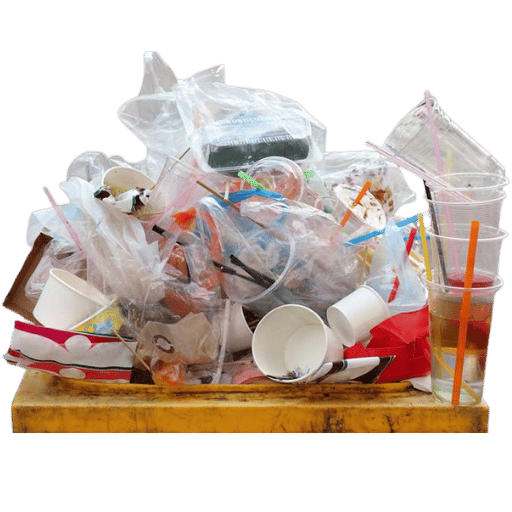
The magnitude is difficult to grasp. According to the EPA national overview, the US discards approximately 292 million tones of municipal solid waste annually, where only 32.1 percent finds its way to recycling or composting. Worldwide, the UN Environment Programme (UNEP) reports the number of plastics produced exceeds 430 million tons per year, most of which is discarded the year of consumption.
Here is the reality most people overlook: food – not plastics – comprise the most significant category of material disposed of into landfills in the US. EPA estimates, food accounts for approximately 24 percent by weight within municipal solid waste, while plastics feature at roughly 12 percent. That doubles most zero waste expectations. Prior to purchasing reusables, the first step for many households should be taking less food to the landfill.
The plastic recycling rate is significantly lower than the MSW average due to packaging plastic being either extruded in multi-layer or contaminated. The EPA gives a rate of just 29.1 percent for PET bottles and 29.3 percent for HDPE bottles – but indicate film plastic and multi-layer packaging exceeds that figure exponentially.
Inside the Recycling Process — From Sorted Flake to Extruded Pellet

Five individual stages separate a bottle from a new product once dropped into your recycling bin. The limiting steps occur in stages three and four rather than at your curb. Understanding the process helps you better avoid contamination, rinse more effectively, and decide which items are that worth recycling versus reducing.
What Happens to Plastic After I Put It in the Recycle Bin?
Your recycle bin contents travel to a material recovery facility (MRF), where they get sorted by resin type — PET, HDPE, PP, film — using a mix of optical scanners, eddy-current separators, and increasingly AI-driven vision systems. According to TOMRA, sensor-based AI sorters now reach 95%+ accuracy in resin identification. From sorting, the material moves to a reclaimer: shredded into flake, washed in hot caustic baths at 60–85 °C to dissolve labels and adhesives, dried, then melted and re-extruded into pellets that resin buyers purchase as post-consumer recycled (PCR) feedstock.
- Collect — curbside or deposit program
- Sort — material recovery facility (MRF) separates by resin
- Wash and shred — flake production with caustic wash
- Melt and filter — extrusion through melt filters (screen packs, 80–200 μm mesh) to remove residual contamination
- Pelletize — re-cut into uniform pellets for downstream manufacturing
The extrusion stage — step four — is where a surprising share of material is lost. A peer-reviewed study by Rashwan et al. (2023) documents that recycled PET needs its die temperature raised toward 280 °C to compensate for the reduced molecular weight caused by thermal history. If a reclaimer cannot hold tight process control, degraded pellets get rejected and routed back to waste. HDPE melts at a more forgiving 180–220 °C, but contamination still drives rejects through the melt filter.
📐 Engineering Note
Typical extrusion parameters for recycled streams: HDPE melt 180–220 °C, PET melt 260–280 °C, melt filter mesh 80–200 μm, screen-changer pressure tolerance ±30 bar. A plastic compounding machine is often paired with a underwater pelletizing system to keep pellet geometry consistent for downstream resin buyers — irregular pellet shape jams feed throats on injection molders and disqualifies the lot.
This is the Info Gain point: collection is not conversion. Material enters the recycling stream but may still be lost at the melt-extrude stage due to contamination, thermal degradation, or economics. Industry reporting such as plasticreimagined.org estimates that up to 30% of correctly sorted plastic never becomes a new product. That gap is why brands demand food-grade PCR pellets with documented provenance — and why equipment like a recycled plastic extruder with proper melt filtration sits at the center of the circular chain. To go deeper on the mechanics, see our overview of the plastic extrusion process.
“Reclaimer capacity is not currently a barrier to increasing plastics recycling rates or using more recycled content in products – these existing assets are underutilized. The bottleneck sits upstream, at collection and policy.”
— Association of Plastic Recyclers, 2025 US & Canada Capacity Report
That APR result – published October 2025 – changes the entire debate. If mills have capacity but not enough clean bales to process, then individual recycling behavior (rinsing, sorting resins properly, avoiding contaminated waste) immediately opens up existing industrial capacity rather than demanding new investment.
Zero Waste at Home: Kitchen, Bathroom, and Shopping
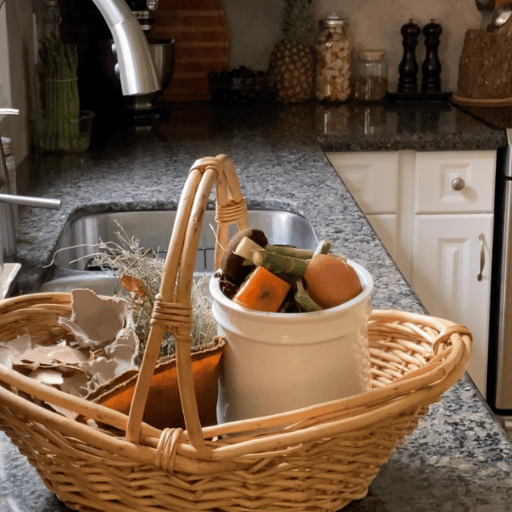
Most zero waste guides load this section with 50 product suggestions. They won’t work. The problem is not lack of options – the problem is that buying even more things to try to be less wasteful in the end has its own waste pattern. Adopt the 3-Swap Rule: identify three swaps per room and only implement them after experiencing them for a month before adding more. Less than three and you experience no momentum; add more and the tendency to give up increases.
Zero Waste Kitchen — Including the Food-Waste Loop
Kitchen is the highest-impact room. The USDA reports the average US family of four loses $1,500/year to food waste. Three behaviors, before any product swap, reduce waste significantly:
- ✔
Keep an “eat me first” bin in the front of the fridge. Anything within three days of spoiling goes there. A Reddit r/ZeroWaste commenter who popularized this habit reports it cuts household food waste dramatically with zero cost. - ✔
Plan meals backward from the fridge, not forward from a recipe. Scan what needs using first, then decide dinner. - ✔
Compost scraps — either municipal pickup, backyard bin, or bokashi for apartments. Organics in landfills generate methane; composted, they become soil input.
There is an industrial mirror of the kitchen food-waste loop worth noting. Food processors close similar loops at scale: stale bread becomes bread crumbs production through extrusion rather than landfill; meat and grain byproducts feed pet food extrusion lines that turn secondary streams into primary products. The home version of this – your “eat me first” bin, your compost – follows the same logic at a smaller scale.
Zero Waste Bathroom
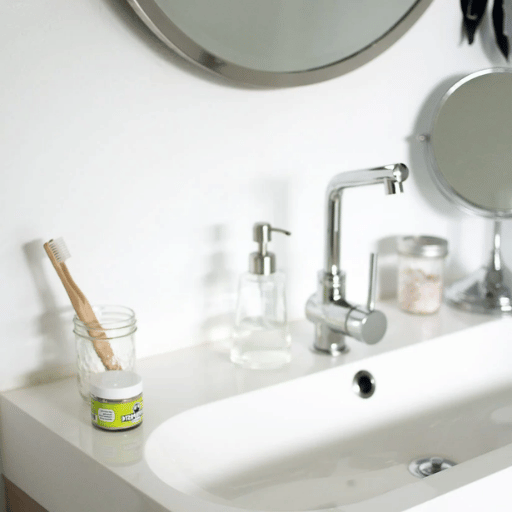
Three swaps that pay off without a shopping spree: bar shampoo and bar soap (one $8 bar replaces three to five plastic bottles), a safety razor (upfront $30-50, then $0.10 per blade forever – a decade of shaving saves $400+ in disposable cartridges), and a bamboo or recycled-plastic toothbrush (not zero-impact, just lower-impact; bamboo handles still need disposal). Do not replace these items until your current ones are used up – throwing away a functional plastic toothbrush to buy a “zero waste” one is not an improvement.
Zero Waste Shopping — BYO Bulk Basics
Bulk stores let you bring your own produce bags and jars and fill them from bins of grains, legumes, oils, and spices. The workflow is simple: weigh the empty jar at the counter (tare), fill at the bin, and pay for the contents only. It sounds niche but over 4,500 bulk retailers operate in North America as of 2024.
What is bulk shopping and why aren’t zero waste stores zero? Bulk shopping removes single-use packaging between producer and consumer – but the producer still ships bulk product in large containers, and the store still disposes of those containers. “Zero” in this context means “much less,” not “none.” Honest zero waste stores publish their own waste audits; skeptical ones greenwash.
✔ Advantages of Reusables
- Lower lifetime cost once break-even is reached (typically 3-6 months for kitchen items)
- No curbside recycling dependency
- Ellen MacArthur Foundation estimates reuse systems can cut packaging waste by up to 70%
⚠ Limitations
- Higher upfront cost; break-even can take months
- Requires behavior change (cleaning, carrying, remembering)
- Not all regions have bulk retailers or refill infrastructure
A quick note on how zero waste living saves money: USDA’s $1,500/year food-waste figure is the big one, but stacking a $30 safety razor, $40 reusable water bottle, $20 shopping bags, and $50 of bulk-bin savings per year adds another $200-400. For a typical family, the net annual savings after swap investments usually land between $500 and $1,200 within the first 12 months.
Common Myths, Mistakes, and the Honest Trade-offs
Four things most zero waste content gets wrong or skips:
Myth 1 – Zero waste means literally zero. It does not. ZWIA’s 90% diversion threshold is the benchmark, and even ZWIA-certified facilities rarely hit 100%. Treating the movement as pass/fail drives people out of it.
Reality: there is no federal FDA rule permitting or prohibiting customer containers for bulk and deli items. Instead, state and county health codes vary widely. Some states permit BYO at bulk bins but not at hot bars or deli cases for food-safety reasons. The Counter has reported on the post-COVID retreat from many BYO programs. Check your local health department before assuming your jar is welcome.
Myth 3 — All bioplastic composts at home. Most PLA bioplastics need industrial composting at roughly 140 °F (60 °C) and controlled humidity — conditions a backyard compost pile does not reach. Unless the packaging says “home compostable” (an accredited label), assume it goes to landfill. For more on material-specific breakdown behavior, see our guide to PLA bioplastic decomposition.
Myth 4—Perfection or failure. The emotional reality is more muted than the Instagram stories suggest. A story on Reddit s r/ZeroWaste entitled “feeling miserable- am I doing this right?” summed it up: becoming more eco friendly is making me miserable.” The better response is not to give up, nor to swing farther toward perfectionism…but to aim for 90%, make mistakes, and stay the course.
What’s Next for Zero Waste: EU PPWR, AI Sorting, and Food Loops (2026 Outlook)
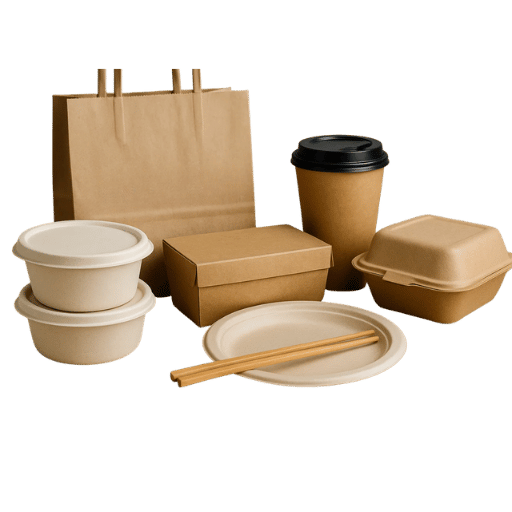
Three trends are redefining zero waste at policy, technology, and supply-chain levels each one surging ahead by 2026.
Policy- EU PPWR. European regulatory bodies are implementing the Packaging and Packaging Waste Regulation (PPWR). As of August 12, 2026, all packaging sold within the EU must meet specified rules of chemical safety (including PFAS restrictions), recyclability framework, and recycled-content standards. US companies that still export to the EU are preparing now. US state governments – including California, Colorado, Maine, Oregon, and Minnesota- have adopted a similar framework for EPR legislation.
Technology- smarter sorting, more chemical recycling. Advanced laser-beam sensors/Sorting technology has shown 95+% accuracy at leading Plants. Industry projections predict chemical recycling- using depolymerization or solvents to breakdown plastics previously thought unrecyclable- to grow from a volume of roughly 629,000 metric tons in 2026, to over 5 million metric tons by 2035 an average annual growth rate above 26%. This will not be a small tweak; it will be a new plastics recycling infrastructure overlay existing mechanical recycling.
Food loops go industrial. The same logic behind a home “eat me first” bin operates at billion-dollar scale in food manufacturing. Stale or visually imperfect bread becomes food-byproduct extrusion into crumbs or breader; grain and meat trimmings become pet-food kibble through twin-screw extrusion systems. The industrial food-waste-to-product loop — linked to equipment such as industrial recycling extrusion on the plastic side — shows how the circular-economy concept is already real at a manufacturing level, and hints at where consumer-brand packaging is heading: less single-use plastic, more reuse-refill, more recycled-content mandates.
How this applies to you—specifically—in 2026. If you are a consumer: the products on your shelf will be marked with recycled-content percentages, compostability claims, and reuse-system options that were unavailable three years earlier. Learn to scrutinize product claims. If you are a brand manager: August is your last chance to reformulate packaging to meet EU regulations. If you work anywhere along the recycling chain: APR’s 2025 Capacity Report dictates that collection quality and policy—not downstream capacity—is the limiting factor, and emptying the bank of feedstock will generate returns more quickly than adding reclaimer lines.
Frequently Asked Questions
Q: What is the zero waste lifestyle?
View Answer
Q: Is a zero waste lifestyle practical for everyone?
View Answer
Q: What are the five R’s of zero waste living?
View Answer
Q: Can zero waste living work in urban areas?
View Answer
Q: Why are you going zero waste?
View Answer
Q: How does zero waste living actually save money?
View Answer
The Bottom Line
A zero waste lifestyle is a direction, not a destination. There is no magic number of R’s you can turn into, no single product you can buy, no perfect path to zero waste: the five R’s in priority order, a one-week trash audit, the 3-Swap Rule per room, and a second mindset of settling for 90% rather than running after 100% – four co-relations do as much as a whirlwind tour of eco-labeled consumerism. Remember that collection is not yet conversion: there’s sorting, washing, and extruding one stage ahead where the losses are significant. Bringing the chain cleaner at your side starts with the rinse and separate at home side. Policy and advanced technology and the cycles of industrial food and plastics are all simultaneously running what may be the decade-long race through 2026, along with the modifications on your kitchen and bathroom counter that you help execute today.
Need Industrial Extrusion Equipment for Recycled Plastic or Food-Byproduct Lines?
UDTECH researches and develops extruders and food production lines, including recycled plastics extruders, underwater pelletizers, and bread crumb manufacturing systems, serving over 100 international markets.
References & Sources
- National Overview: Facts and Figures on Materials, Wastes and Recycling – US Environmental Protection Agency
- Plastics: Material-Specific Data – US Environmental Protection Agency
- Plastic Pollution – United Nations Environment Programme (UNEP)
- Food Loss and Waste — Consumers — US Department of Agriculture
- Zero Waste Definition – Zero Waste International Alliance
- Packaging and Packaging Waste Regulation (PPWR) — European Commission
- 2025 Plastic Recycling Capacity in the US and Canada – Association of Plastic Recyclers
- Extrusion and characterization of recycled polyethylene terephthalate – Rashwan et al., PMC / NCBI, 2023
- Global Commitment 2025 Progress Report – Ellen MacArthur Foundation
- Sensor-based sorting technology — TOMRA
- The Counter — reporting on BYO container regulations
Related Articles
Why We Wrote This Guide
Since 2012, U D T E C H has sold industrial extruders, underwater pelletizing systems, and food production lines to food reclaimers and processors in more than 100 countries. This analogy explains what we observe at the far industrial end of the plastic and food loops, where the sorted flakes are extruded and where the stale bread is converted into pet-food and animal-feed instead of excess in landfill. Connecting this industrial reality to the everyday zero waste options available at your home countersis what inspired us to publish this guide for Earth Day 2026.