Top 15 Best Welding Robot Manufacturers to Know in 2025 (Updated List)
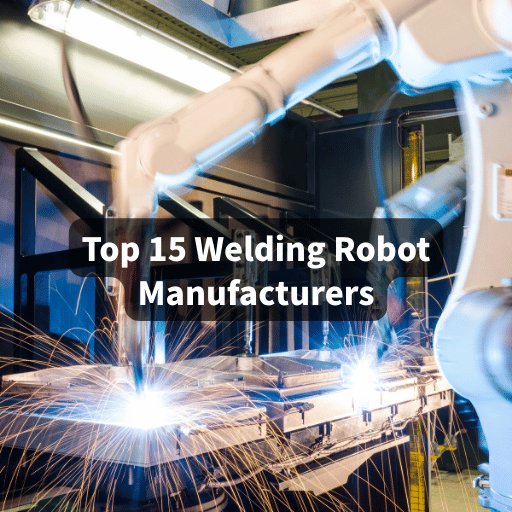
In an environment that is constantly changing, welding robots are surely the pivotal units in industrial automation. These machines have changed traditional welding processes for better productivity and quality in a manufacturing setting. Leading welding robot manufacturers are capitalizing on the very essence of innovation with their constant efforts to develop new and improved robotic welding systems for every industrial requirement out there. This exhaustive guide discusses the top manufacturers that are spearheading this technological revolution and their interest in welding robotics.
Introduction to Welding Robots
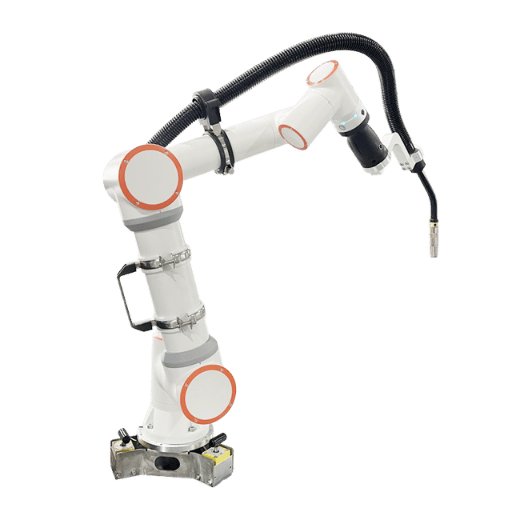
Welding robots are changing industries with a promise of much higher efficiency and precision. Unlike manual welding, robotic welding uses automation to make the welding process consistently high quality. By bringing robotics into welding operations, manufacturers can optimize production lines, reduce errors, and promote workplace safety.
Not only does the evolution of welding robots aim at enhancing traditional arc welding techniques, but it also works as a base for advanced welding techniques such as laser welding and TIG welding.
Overview of Welding Technologies
In the world of welding, all sorts of techniques exist, including:
- Arc Welding: Used for precise welds in diverse types of material
- TIG Welding: Used for high-quality finishes in places where extreme precision is required
- Spot Welding: Used in the automotive and sheet metal industries
- Laser Welding: Ultra-modern technology for the finer applications of welding
Importance of Robotic Welding in Modern Industry
Combining robotics with welding is the present-day industrial phenomenon. It is of paramount importance to enhance productivity in any other manufacturing situation while maintaining constant output. Robotic welding permits a manufacturing house to go for complicated applications with more precision and speed than manual methods.
Enhanced Precision
Robotic systems, due to their precision and consistent repeatability, ensure that the weld quality is not varied at all. This guarantees the least number of defects with rework.
Improved Safety
In keeping with safety, robots proceed with hazardous welding tasks to eliminate workplace injuries and create a safer working environment.
Increased Productivity
With the ability to work endlessly, these robots minimize downtime and maximize output on the production lines.
Cost Efficiency
With decreased labor costs, material losses, and better quality control, the cost-effectiveness is achieved in the long run.
Leading Welding Robot Manufacturers
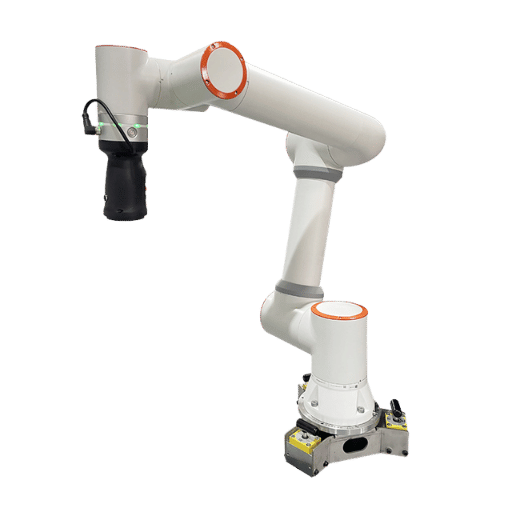
A select group of manufacturers is noted in the merging of the welding robot market for their innovation and reliability. These companies provide a wide variety of welding solutions from robotic welding cells to welders and granite welding equipment.
UDTECH
Introduction: UDTECH is a leading innovator in welding robotics, known for its cutting-edge technology and customer-centric solutions.
Main Products:
- Advanced arc welding robots
- Laser welding systems
- Collaborative welding robots
Advantages:
- High precision capabilities
- User-friendly interfaces
- Robust customer support
Disadvantages:
- Premium pricing may not suit small-scale businesses
Standard Bots
Introduction: Focuses on affordability and democratizing robotics with AI-driven solutions.
Main Products:
- RO1 six-axis robotic arm
Advantages:
- Affordable pricing
- Easy setup process
- No coding required
Disadvantages:
- Limited to small-to mid-sized operations
ABB
Introduction: A global leader in industrial automation and robotics.
Main Products:
- IRB 1520ID
- IRB 2600
Advantages:
- High precision
- Exceptional durability
- Outstanding flexibility
Disadvantages:
- High initial investment required
FANUC
Introduction: Known for high-speed and precision robotic solutions.
Main Products:
- ARC Mate series
Advantages:
- Exceptional speed and accuracy
- Ideal for high-volume industries
Disadvantages:
- Complex programming for beginners
Yaskawa Motoman
Introduction: Renowned for adaptable and versatile robots.
Main Products:
- MA1440
- MH50
Advantages:
- Handles variety of welding tasks
- Excellent adaptability
Disadvantages:
- Higher maintenance costs
KUKA
Introduction: Specializes in high-precision welding for complex tasks.
Main Products:
- KR AGILUS
- KR QUANTEC
Advantages:
- Exceptional accuracy
- Outstanding reliability
Disadvantages:
- Expensive for small businesses
Miller Electric
Introduction: A trusted name in durable welding robots.
Main Products:
- Auto-Continuum™ 350
Advantages:
- Rugged construction
- Reliable for heavy-duty tasks
Disadvantages:
- Limited advanced features
OTC DAIHEN
Introduction: Offers affordable yet high-quality welding robots.
Main Products:
- FD-V8
Advantages:
- Cost-effective solutions
- Reliable performance
Disadvantages:
- Limited advanced automation features
Kawasaki Robotics
Introduction: Known for heavy-duty and versatile robots.
Main Products:
- BA06L
Advantages:
- Handles large-scale projects
- Excellent precision
Disadvantages:
- Bulky design for compact spaces
Wolf Robotics
Introduction: Specializes in custom robotic systems for challenging tasks.
Main Products:
- Fab-Pak XFT
Advantages:
- Robust performance
- Reliable in harsh environments
Disadvantages:
- High customization costs
Path Robotics
Introduction: Combines AI with robotics for intelligent welding solutions.
Main Products:
- Path Welding Robot
Advantages:
- Self-learning technology
- Adaptive capabilities
Disadvantages:
- High initial cost
Nachi-Fujikoshi
Introduction: Offers a wide range of industrial robots.
Main Products:
- Arc welding robots
Advantages:
- Integrates well with machine tools
Disadvantages:
- Limited global support
ESAB
Introduction: A pioneer in welding and cutting equipment.
Main Products:
- Fabricator EM 400i
Advantages:
- Reliable performance
- Durable construction
Disadvantages:
- Limited advanced robotics features
Universal Robots
Introduction: A leader in collaborative robots (cobots).
Main Products:
- UR series cobots
Advantages:
- Easy to program and deploy
- User-friendly interface
Disadvantages:
- Limited payload capacity
Acieta
Introduction: Specializes in robotic automation solutions.
Main Products:
- FastARC weld cells
Advantages:
- Customizable solutions
- Efficient performance
Disadvantages:
- High customization costs
Emerging Technologies in Robotic Welding
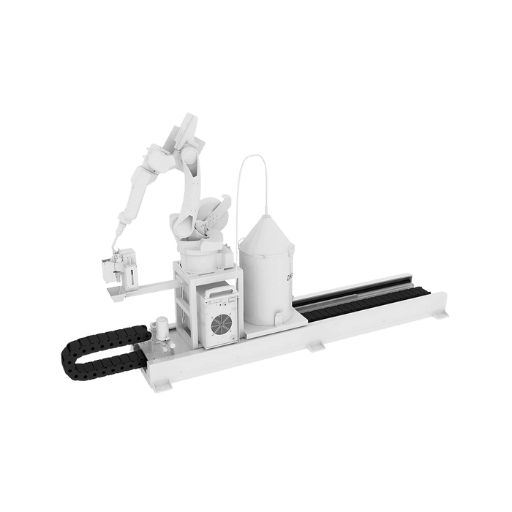
Advancements in Arc Welding Robots
The development of this arc welding robot is given credit for the profound revolution in the entire industry, hitherto allowing more precision and reliability in welding processes. These welding robots form the key to the state-of-the-art technology applied to achieve better efficiency and quality of welds in conjunction with the materials involved.
The Role of Collaborative Robots (Cobots)
Since cobots can work alongside human welders, thus increasing productivity and safety, they are becoming more and more important in welding operations. Industrial robots, however, are generally designed to operate without the presence of a human being; hence, extensive guards may be necessary for their application.
Advantages of Cobots in Welding:
- They can safely interact with the human operators.
- Quickly adapt to evolving production lines.
- Perfect for customized and small-batch production.
- Greater workflow optimization.
Automation Trends in the Welding Industry
With the introduction of and continued demand for, productivity and efficiency, the automation trends in the welding industry are ever-evolving. The prime movers of this transition are robotic welding systems that offer scalable solutions to be integrated within the manufacturing process.
Cost-Benefit Analysis of Welding Robots
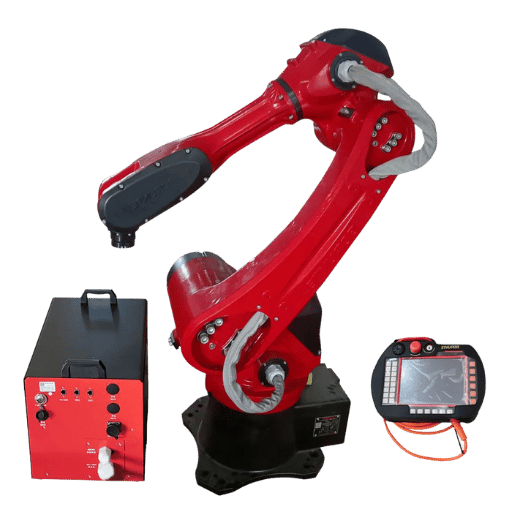
Initial Investment vs. Long-Term Gains
Investment in welding robots requires a heavy initial investment, but in most cases, long-term benefits are worth the costs. Remember, the price of robotic welding systems can be offset by huge enhancements in productivity and a reduction in labor costs.
| Investment Aspect | Initial Cost | Long-term Benefits |
|---|---|---|
| Equipment Purchase | High upfront investment | Reduced labor costs over time |
| Installation & Setup | Professional installation required | Streamlined production workflow |
| Training & Programming | Staff training expenses | Improved weld quality and consistency |
| Maintenance | Regular maintenance costs | Reduced material waste and rework |
| Productivity | Initial production adjustment | 24/7 operation capability |
Factors Influencing the Cost of Robotic Welding Systems
Several relevant factors influence the cost of robotic welding installations that manufacturers must carefully consider before making the purchase decision:
Primary Cost Factors:
- Complexity of welding application: Advanced applications require more sophisticated equipment
- Type of robotic equipment: Six-axis robots vs. simpler configurations
- Level of automation desired: Fully automated vs. semi-automated systems
- Advanced features: Laser welding capabilities, integrated sensors, and AI features
- Customization requirements: Tailored solutions for specific applications
- Software and programming: Proprietary software and advanced control systems
- Support services: Training, maintenance, and technical support packages
Case Studies: Successful Implementations
The case studies of successful projects involving welding robots portray the potential transformation these technologies can bring to manufacturing. Different companies maintain that they were able to enhance efficiency and welding quality after installing robotics in their production processes.
Automobile Industry
In automotive production lines, robotic arc welding offers faster cycle times and better welds; thus, the overall vehicle quality is improved.
Small-Scale Production
Collaborative robots allow small-scale manufacturing to uphold a certain level while lessening the manpower costs.
Heavy Industry
Large-scale welding robots have managed to herald the age of shipbuilding and construction by executing intricate welds like never before.
Aerospace Sector
The incredibly accurate welding robots make sure the safety standards are adhered to quite critically in manufacturing aerospace components.
Choosing the Right Welding Robot
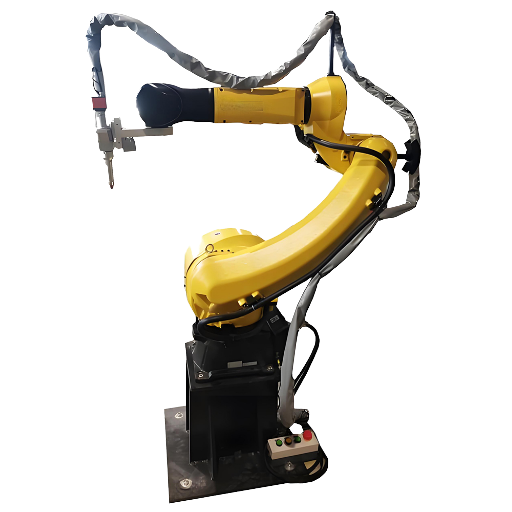
Assessing Your Welding Needs
When it comes to choosing a welding robot, it is important to be really clear on your welding needs so as to satisfactorily complete the task. Such an insight lays a firm foundation for the ultimate decision that best serves the set of goals one has for the operations.
Key Assessment Areas:
- Welding Process Requirements: Arc welding, TIG welding, spot welding, or laser welding
- Material Specifications: Types of metals and materials to be welded
- Production Volume: Daily, weekly, and annual welding requirements
- Complexity Level: Simple joints vs. complex geometries
- Quality Standards: Precision requirements and acceptable tolerances
- Integration Needs: Compatibility with existing production lines
- Workspace Constraints: Available floor space and ceiling height
Key Features to Consider in Welding Robots
The selection of welding robots should be informed by key features that enhance welding operations and ensure optimal performance.
| Feature Category | Key Considerations | Impact on Performance |
|---|---|---|
| Robot Arm Precision | Repeatability, accuracy, and reach | Weld quality and consistency |
| Welding Torch Capabilities | Heat management, accessibility, and durability | Application versatility |
| Control Systems | Programming ease, interface design | Operational efficiency |
| Safety Features | Collision detection, emergency stops | Workplace safety |
| Integration Compatibility | Existing systems, future upgrades | Scalability and flexibility |
Evaluating Robot Models and Their Applications
While assessing the suitability of different robot models for a variety of welding applications, it should take into account the reputation of the manufacturer and its history in providing dependable robotic welding systems.
Criteria for Robot Model Evaluation:
Check for the robot’s capabilities of welding, with arc welding, TIG welding, and spot welding being some. It is equally required to check the flexibility of these robotic welding cells to fit into industrial settings and the use of collaborative robots (cobots) for further adaptability.
The Future of Welding Automation
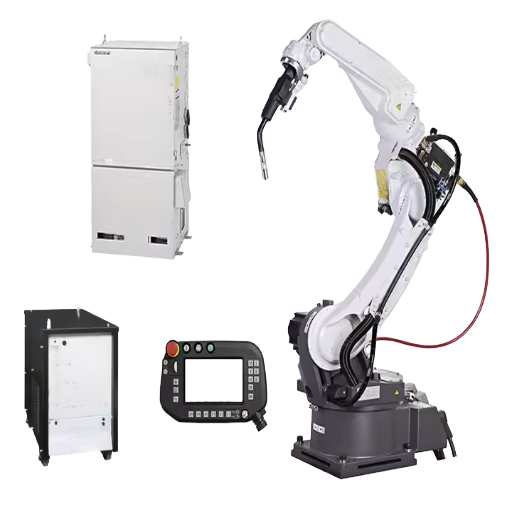
Predictions for Robotic Welding Innovations
Welding automation is on the verge of significant innovations brought about through advances in robotics and welding technology. Currently, the latest trends point to the emergence of highly intuitive robotic welding systems that can: optimize themselves and learn.
Areas for Future Innovation:
- Artificial Intelligence Integration: AI-based systems for adaptive welding processes
- Machine Learning: Self-improving capabilities for weld quality assessment and optimization
- Advanced Sensor Technology: Real-time monitoring and adjustment
- Cloud Connectivity: Remote monitoring and predictive maintenance
- Enhanced Collaboration: More sophisticated interactions between humans and robots
- Sustainability: Energy-efficient, green systems
How Robotics Will Shape the Welding Industry
By bringing levels of automation and precision never seen before, robotics is all set to change the welding domain. Using such highly advanced robotic welding facilities will dextrously handle the logistics of production lines.
Welding robots, with the introduction of smart technologies, will assess real-time data and make online process variations, giving higher welding power and levels of quality; by virtue of the developments in robotics, welding would be carried out in a far greener and cheaper way, thus changing the competition for welding robot suppliers.
Skills and Training for the Future Workforce
In the realm of welding automation, the demand will require labor with specialized skills and training in robotics and welding technologies. Now, as robot systems grow, operators skilled to operate and maintain these welding machines come into demand.
Technical Skills Development
Training in robotic programming, automation systems, and advanced welding processes.
Safety Protocols
Understanding of robotic safety systems and human-robot collaboration principles.
Maintenance Expertise
Skills in robotic system maintenance, troubleshooting, and performance optimization.
Continuous Learning
Exceptionally keen to absorb emerging
Conclusion
The welding robotics industry continues to evolve at an unprecedented pace, with each manufacturer driving innovation through advanced technologies and customer-focused solutions. From the well-known giants like ABB, FANUC, and KUKA to the newer disruptive players such as Path Robotics and Standard Bots, each manufacturer casts its own set of strengths in the market. With artificial intelligence, machine learning, and collaborative robotics being heralded in industrial welding, it is expected that welding robots will become a means for manufacturers to ensure productivity, quality, and safety to keep themselves competitive in the market today.
Manufacturers should consider such factors as application needs, budget limitations, and technical support, plus the long-term view toward scalability, when selecting their welding robot manufacturer. The investment in robotic welding technology gives businesses their immediate advantage and positions them for long-term growth and innovation.
For the future, while welding automation continues to get better, even more efficiency, precision, and safety should be attained in manufacturing operations. The manufacturers in this guide stand for all the best things the industry has to offer, each one continuing with the transformation in robotic welding technology.