Among all fasteners, M6 screws are the most versatile and widely applied ones. They find use in various industries and applications like assembling furniture and machines, vehicle and electronic structural support, and many more. However, the M6 screws vary in quality; it is necessary to know the different types of threads, sizes, and applications to get the right screw for your use. This guide goes extensively into the M6 screws world and gives the reader insights to make better choices. Thus, if you happen to be an experienced engineer, a do-it-yourselfer, or just plain curious, this article is going to enable you to conquer your upcoming project with confidence as it provides you with all the required information.
M6 Screw Overview

The M6 screw is considered an ordinary piece of hardware by many, but in reality, it is a highly flexible and important accessory whose usage is hardly acknowledged. The screw’s often unnoticed presence still, in the end, will be the one that holds the whole process together whether it is furniture making, machine manufacturing, or merely fulfilling a DIY project. But what exactly makes this screw so essential? The present blog will unravel the mysteries surrounding the M6 screw by highlighting its uniqueness, describing different threads, and listing many applications. Moreover, it will provide a thorough explanation of selecting the best M6 screw for a particular task and some tips for using it to the fullest. You will definitely be able to see the reason behind the popularity of this small but powerful fastener in various projects once you complete the reading.
What is an M6 Screw?
An M6 screw is a metric fastener that has a diameter of 6 millimeters as the measurement is taken by the outer thread. This screw belongs to the ISO metric screw thread system, which is the global standard for fastening and hence, it is recognized and used everywhere in the world. The ‘M’ indicates ‘metric’ and ‘6’ shows the nominal diameter in millimeters. The distance between threads, called thread pitch, can vary with the standard being coarse (1.0 mm pitch) and fine (0.75 mm pitch). The M6 screw is commonly used in various areas due to its standard size and precision-based engineering, such as the assembly of machines, electronics, furniture, and car parts. Its versatility, excellent mechanical strength, and availability in several materials like stainless steel, brass, and alloy steel make the M6 screw an unbeatable choice not only for the industry but also for daily life.
M6 Screw Size Chart
| Diameter (mm) | Thread Pitch (mm) | Head Types Available | Typical Uses |
|---|---|---|---|
| 6 | 1.0 (coarse) | Hex, Pan, Flat, Button | General construction, furniture |
| 6 | 0.75 (fine) | Hex, Socket, Countersunk | Electronics, precision machinery |
This simple chart outlines the key dimensions and applications of the M6 screw for ease of reference.
Common Thread Pitch for M6 Screws
The thread pitch of 1.0 mm for M6 screws is the most standard one and it is called a coarse thread. It is the most applied pitch in the construction and general assembly because of its strength and versatility. However, there is also a finer thread pitch of 0.75 mm which is more commonly used for specialized purposes like precision instruments and electronics as it provides greater thread engagement and fine adjustments. The decision about the thread pitch depends on the particular needs of the project.
Types of M6 Screws
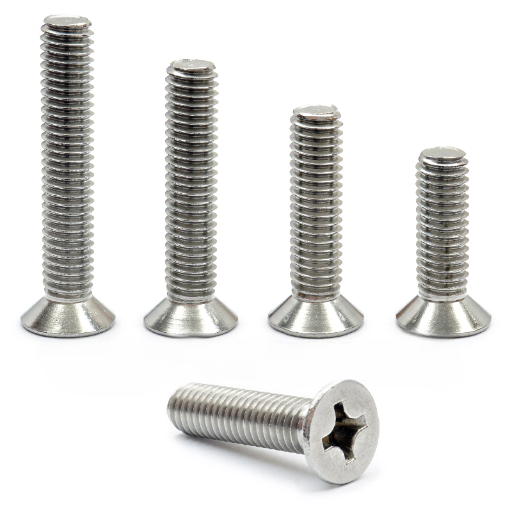
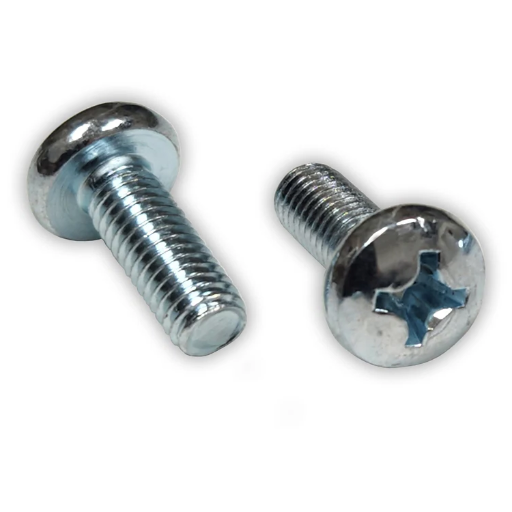
M6 screws are available in various types, including button-head, socket-head, flat-head, pan-head, hex-head, and countersunk screws.
| Type | Material | Thread | Length | Use Case |
|---|---|---|---|---|
| Button Head | Steel/SS | Coarse/Fine | 6-100 mm | General Use |
| Socket Head | Steel/SS | Coarse/Fine | 6-100 mm | Structural |
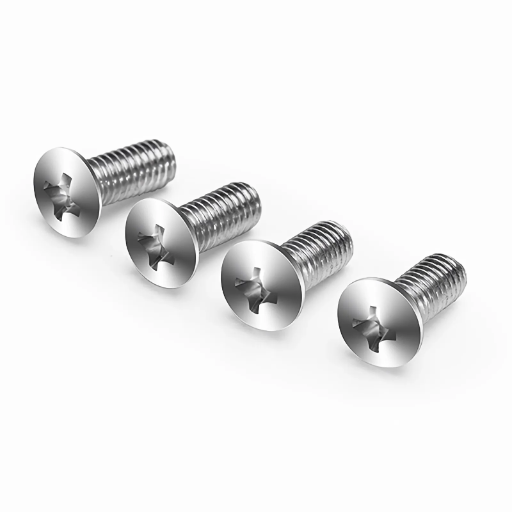
| Flat Head | Steel/SS | Coarse/Fine | 6-80 mm | Flush Mount |
| Pan Head | Steel/SS | Coarse/Fine | 6-80 mm | Electronics |
| Hex Head | Steel/SS | Coarse/Fine | 10-150 mm | Heavy Duty |
| Countersunk | Steel/SS | Coarse/Fine | 6-100 mm | Aesthetic Use |
Note: SS refers to stainless steel, and the mentioned dimensions and use cases represent common examples that may vary based on manufacturer specifications.
Flat Head vs. Cap Head Screws
Flat-head screws and cap-head screws have different functions based on their look and use. Flat-head screws are intended to be applied fully in such a way that they are invisible from the surface, therefore, they are best suited for such uses that demand a non-prominent finish, for example, in furniture assembly or decorative projects. In contrast, cap-head screws, which have a rounded head that projects above the surface, are usually placed in applications where high torque and durability are required, such as in the case of mechanical or structural projects. Each kind has its respective benefits depending on the needs of the work.
Socket Cap and Socket Head Cap Screws
Socket cap and socket head cap screws are famous for their versatility and effectiveness in various fields. In the case of fasteners requiring compact and secure, high strength, and precision socket cap screws are undoubtedly the best choice. Their recessed hexagonal socket does indeed plan easy tightening or loosening with an Allen key even in tight spots.
On the contrary, socket head cap screws are recognized mainly for their durability and good performance even in the most demanding situations. Mainly used in machinery and construction, these screws provide a great grip and can withstand a lot of torque without getting stripped. Their ability to handle heavy loads while still providing tightness is the reason for their popularity in the industrial sector.
The choice of screw types should depend on the project’s requirements such as load, condition, and assembly.
Button Head Socket Cap Screws
Button Head Socket Cap Screws have a very low and rounded head, which is the main feature of these screws, which also gives a smooth and a nice look at the same time. These screws are great choice in conditions where the space is tight or where the protruding fasteners can disrupt the work. They are strong and reliable, yet still look good, so they can be used in light to moderate load applications. Such screws are widely used in the fields of furniture, electronics and machinery due to their versatility and secure fit that guarantees performance in different environments.
Materials Used for M6 Screws
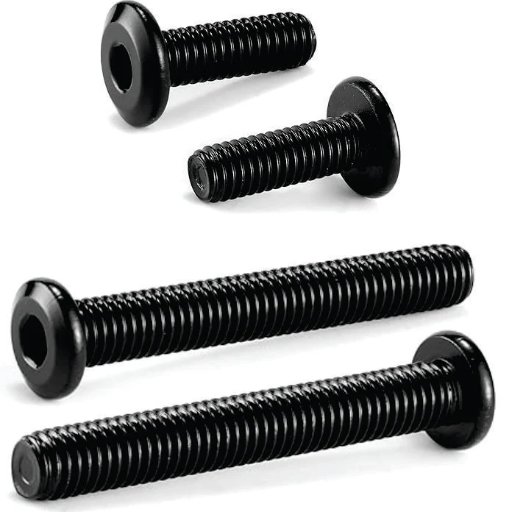
M6 screws are usually manufactured using various materials according to the application. The most widely used material is stainless steel owing to its resistance to corrosion, carbon steel is picked for its strength and long life, brass is used because of its attractiveness and electrical conductivity, while alloy steel is selected for its exceptional toughness. Moreover, certain M6 screws are coated with zinc or nickel that prevents rust and increases the life span of the screw. All these materials make the M6 screws reliable in different environments and applications.
304 Stainless Steel vs. Carbon Steel
In terms of M6 screws made of 304 stainless steel, side-by-side distinctions can still be found in reference to the benefits provided for certain applications from both materials.
304 Stainless Steel: One of the many reasons why we find such stainless steel as 304 wonderful hydrogen concentration material is its proof against corrosion. Therefore, it is highly suitable for locations that are mostly moist, damp, or chemically exposed for most of the time. Major industries include marine, food processing, and construction. On a later note, in addition to excellent durability, non-magnetic properties of the material and the ratio of so great strength compared to that of weight, have rapidly so caught the eye of all involved parties. With the success in pioneering applications of long-life and rust resistance, however, the cost duration of 304 stainless steel is relatively high in comparison to carbon steel, thus testifying that it has no tensile or yield strength.
Carbon Steel: On the other hand, carbon steel is the one that lured people due to its higher strength and cheaper price. It varies enormously from being very soft to being a little harder with great wear and surface resistance, etc. Many of the carbon steel M6 screws then find use in heavy-duty applications requiring high mechanical strength for example in car or building projects. The downside is that they do not cope well with corrosion—thus they need to be coated with zinc to ensure better life in moist or outdoor locations.
A choice between the 304 stainless steel and carbon steel for M6 screws will come down to the specific demands of the application. If certain corrosion resistance holds a key as an issue along with appearance, 304 stainless steel is likely to get the nod; but for high-tensile strength applications and cost-effectiveness in lesser-corrosive areas, carbon steel would be more appropriate.
Benefits of Zinc-Plated and Black Phosphate Finishes
- Corrosion Resistance: Zinc plating forms a barrier that stops rusting and corroding, thus the screws can be used in places that have high humidity or even outside.
- Enhanced Durability: M6 screws get a longer life due to zinc-plated and black phosphated finishes, as these give a strong layer which can withstand daily use.
- Improved Appearance: The screws are fitted with these finishes that give a neat and shiny look, zinc plating providing a glimmering metallic finish while black phosphate offering a sophisticated matte look.
- Lubrication: Black phosphate coating causes less friction making installation of screws easier and also helps in avoiding damage during the process of assembly.
- Cost-Effectiveness: The finishes do not cost much but they work like a charm in making carbon steel screws high-performance, thus, the overall cost of the project is not impacted much.
Alloy Steel M6 Screws
Alloy steel M6 screws have the remarkable property in holding up to the most challenging conditions. Being crafted from a very strong alloy steel, these screws not only have the best wear resistance but also can be used at high temperatures, which thus makes them perfect for the difficult applications. They are a favorite choice in such sectors as automotive, construction, and manufacturing mainly because of their endurance even in the toughest conditions and under heavy loads. Moreover, alloy steel M6 screws guarantee performance that never fails and durability that lasts for a long time, thus providing the much-needed strength in critical joints.
Applications of M6 Screws
- Automotive Industry: It is applied in the assembly of engine parts, fastening of components, and manufacture of vehicle frameworks.
- Construction Projects: It is perfect for joining the major construction parts like hills, supports, and framework.
- Manufacturing Equipment: It is widely used in industrial assembly and anchoring of mobile parts in robust equipment.
- Electronics: It is mostly used in the mounting of circuit boards, panels, and enclosures.
- Home Improvement: It alleviates the burden of DIY projects, furniture anchoring, and home repairs through its versatility.
M6 Screws in Automotive Industry
M6 screws are essential fasteners in the automotive sector because of their ability to adapt to different uses, remarkable strength, and exact measurements. The screws are widely employed for fastening engine parts together, joining outer panels, and fixing interior components like dashboards and seats. The equivalent thread size supports use in different car parts eliminating the necessity of replacing parts lessening the time for production and maintenance. Recent search data indicates that the queries related to M6 screws have frequently pointed out their high-stress capacity and vibration resistance which make the screws suitable for critical vehicle applications. Such a wide range of applications only reiterates how much these screws are needed in the modernization process of cars considering both security and performance aspects.
Furniture Assembly with M6 Screws
When it comes to furniture assembly, the M6 screw assumes a lot of significance; one reason being, they are incredibly strong and reliable. I have seen numerous M6 screws in most flat-pack furniture, whether it is consisted of tables, chairs, or shelves. Not only do they provide an extra grip, but they are also user-friendly. As my experience and study have suggested, M6 screws are versatile and can work with various woodworking tools, making assembly quite straightforward; they can carry substantial loads, with the furniture thus being stable through the years. The right tools, for instance, an Allen key/ hex wrench, could make the furniture installation much easier if furnished.
Electronics and M6 Fasteners
M6 fasteners are used often in electronics for installation of parts like circuit boards, power supply units, and server racks. The standard size of these fasteners makes them perfect for not only safe connections in different devices but also easy installation and uninstallation during maintenance or upgrades. Thanks to their strength and adaptability, M6 screws are a preferred choice for constructing and securing electronic enclosures and equipment. Nevertheless always check the compatibility between the materials and the loads to get the best performance out of them.
Selecting the Right M6 Screw
When seeking the appropriate M6 screw, length, material, thread type, and application are among the major considerations. The length of the screw should be at most or least equal to the thickness (that which binds the two raw materials together) of the two materials in concern. Material selection depends on the environment and load requirements (stainless steel for corrosion resistance or alloy steel for strength). Thread selection should be in accordance with the specific assembly of material compatibility. It is a clever idea to see that the selected screw meets the project-specific standards and specifications before fixing.
Choosing the Correct Thread Pitch
When choosing the thread pitch for an M6 screw, it should be needed to bear several factors in mind that would find the correct implementation regarding the application. Most certainly, there are the two most typical thread pitches for M6 screws- one is a coarse pitch and the other is fine. The coarse pitch is 1.0 mm in regard to the M6 screws- basically, this (as an application) is the most favorable choice, providing the best return in general use as it has multiple usages as any installation. However, fine thread pitches- like 0.75 mm and 0.5 mm- are viable options for any specific use that requires relatively higher levels of thread engagement or possibly frictional resistance to loosening caused by vibrations.
The choice between coarse and fine threads will depend on the material being joined, strength requirements, and environmental conditions. Coarse threads are a good match for softer materials, plastisol, or an application in which speed of assembly is a top concern, while fine threads are superior in strength and precision-machined assemblies, especially those that are assembled on hard materials. A little consideration and checking your specifications ensure you can make the choice of thread pitch confidently for M6 screws.
Determining the Appropriate Length
The proper length should be assessed according to thicknesses of materials to be connected and the depth of hole or thread within the receiving material. As a general rule, the length should be at least equal to the sum of the thickness of material plus the useful depth of thread inside receiving material. The screw then needs to go beyond one of the materials and engage the thread in the other material and not bottom. Generally, you should make sure of minimum engagement between 2-3 full turns to make a good connection. Another consideration is when the holes are throughout, for cases where the screw length must allow some extrusion on the opposite side for nut attachments at some other time. Always measure to confirm the compatibility and resist the temptation to compromise with either too-short or too-long screws, as it might impair an assembly or lead to interference causing damage.
Best Practices for Installation
The installation of M6 screws must be done properly so that the screws last long and are safe. Start by choosing the right material and finish for the screw according to the application, such as stainless steel in case of outside where moisture is an issue. The compatibility of M6 screw and hole diameter always needs to be checked, which should be 6mm for a snug fit. A torque wrench is used to tighten the screw to the recommended torque values, which are usually between 8 Nm to 10 Nm, as overtightening can strip the thread or damage the material.
With through-holes, the screw length is such that there is enough thread engagement and at the same time, a compatible locking nut can be used if required. While fastening in softer materials, insertion of the screw is recommended to prevent wear and also to make sure that the threads are strengthened. Also, cleaning should be done of the threads on the screw and receiving hole to get rid of debris before installation. Thread-locking compounds should be used in applications where vibration is expected so as to prevent loosening over time.
Installation data contemporary to the day recommends that automated torque monitoring systems be used in critical applications for achieving precision and repeatability. Besides, the use of these technologies together with strict compliance to the manufacturer’s guidelines will help to ensure the reliable performance of M6 screws in the desired application.
Reference Sources
-
Fastener Handout
University of Florida’s resource on fastener thread series, nominal sizes, and thread pitch. -
Threads and Unified Inch Screw Threads
A detailed document from De Anza College covering thread classes and specifications. -
ISO Metric Screw Threads
A technical document on ISO metric screw threads, including symbols and explanations. -
Fastener Design Manual
NASA’s manual on fastener material selection, thread types, and other design considerations. - Food Machine and Extruders Provider in China
Frequently Asked Questions (FAQs)
What is an M6 metric screw, and how does the metric thread M6-1.0 relate to the diameter and pitch?
M6 is a metric screw whose nominal fabric diameter is 6 mm. The designation M6-1.0 shows a change of 1.0 mm between two contiguous threads. Thus any M6 x 16 mm or M6 x 20 mm signifies an M6 diameter thread of the required length. The M6 thread designation (M6-1.0) surely includes a description of the diameter as well as the pitch that must go with a selected nut or larger tap holes.
Which drive types are there for M6 screws — hex socket head, phillips, allen hex, and hex drive explained?
To make use of tools and accesses, M6 screws come with different types of drive: hex socket head (also known as Allen hex or hex drive) that gives high torque with a large surface for hex keys, Philips screws for use with cross-head screwdrivers, and finally the recessed hex key drives available via socket-button drives or socket head cap screws. Make sure to choose from the options for the driver that will give required torque, clearance, and aesthetics.
What are the standard sizes for an M6 bolt, such as M6 x 16mm, M6 x 20mm, M6 x 30mm, and M6 x 40mm, and what other purposes can they serve?
More or less, it is the thread length being the yardstick besides a sheet metal or the fastening of M6 x 16mm and 12mm—regarding general machine screws or into brackets, why not use M6 x 20mm and 25mm. With 30mm and 40mm, all of them could be used for assembling or at depths beyond 60mm to 80mm. More could also arrange for having a hole that would engage the nut or a tapped hole, sufficient for tensile strength, not causing the threaded section to go into the nut completely.
Are stainless steel 18-8 M6 and black oxide screws fit for the anti-rust protection and corrosion resistance needs?
Black oxide M6 screws are mild in terms of expected corrosion, so they can be rendered black. Users sometimes choose to combine this finish with stainless. Another good consideration is to use an anti corrosion-infused-wax or penetrating oil for longer service life and minor resistance to corrosion.
What does selecting hex socket head cap screws or threaded M6 fasteners indicate, putting the standard of ISO, DIN 912, and grade 10.9 in mind?
DIN 912 and ISO (for example, ISO 7380 for socket button head) set down the different grades of hex socket head cap screws and their dimensions and tolerances. The grade 10.9 means that it is a high-strength steel fastener with a tensile strength greater than that of the usual grades—an adequate choice for structural or heavy-load applications. The aforementioned specification, material (stainless steel 18-8 vs. black oxide steel), and grade must be engaged in fine tuning with regard to safety and robustness.