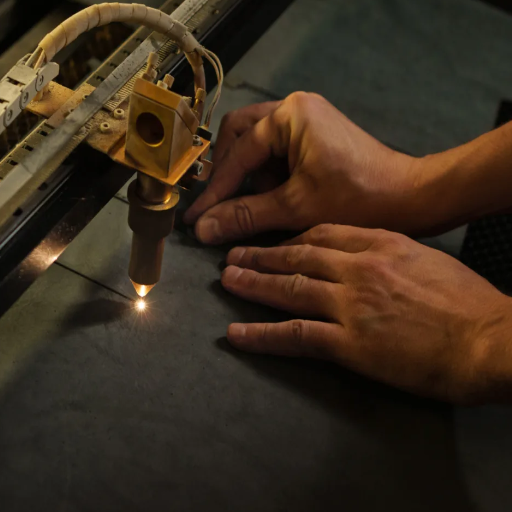
Leather laser cutting is about precision, efficiency, and creativity to make complex design items along with usable pieces of art. Gun to your head, if you are an experienced leatherworker, laser cutting allows you to push the envelope; for any hobbyist, it is a wide-open avenue for converting concepts into reality. This guide has almost everything related to laser-cutting leather, including material and equipment selection, and design techniques for the best results.
Introduction to Laser Cutting Leather
What is Laser Cutting?
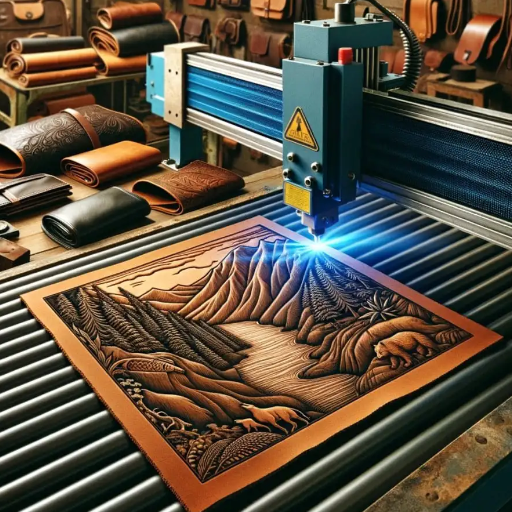
Laser cutting technology is the highest precision and most adaptable method for manufacturing things that need to be finely cut, engraved, or etched with the utmost accuracy. The technique is employed by industries where detailed work is needed: Fashion, design, engineering, and manufacturing.
Key Performance Indicators: According to the latest studies, CO2 lasers have been cutting organic materials, including leather, at speeds of 1.5-2 in./sec., depending on the thickness of the leather; thus limiting deformation in the material and wearing of tools that occur during traditional means of cutting.
Basically, UV, CO2, or fiber laser beams are focused on some material to vaporize, melt, or burn the surface along a stipulated path that corresponds to a design file. All modern laser cutting machines are CNC controlled and work in conjunction with CAD software, delivering the highest precision.
Why Use Laser Cutting for Leather?
High Precision
From the machining point of view, this process with a tolerance of ±0.01 mm assures laser cutting generates the least wastage by using as much area as possible. High-quality leather being very very expensive, this is an important factor.
Increased Efficiency
Production efficiency can, by laser cutting, be increased by 30% over manual cuts. Greater efficiency means lower labor costs and relatively faster turnarounds.
Cost-Effective Technology
CO2 laser machines have dropped in price through the years, thus becoming a real option for small-scale businesses and custom artisans, with entry-level machines starting at $5,000.
Understanding Laser Cutter Technology
Laser cutters have seen major advancement in the last decade, with their power for precision cutting and engraving being wanted in most industries. High precision is achieved in laser cutting with a focused laser beam used in cutting leather, acrylic, wood, metal, even fabric.
Market Growth: According to the latest Market Research Report, it is anticipated that the global laser cutting machine market will hit a top of $5.7 billion by 2030, fuelled by the increasing demand from automotive, electronics, and textile industries.
Benefits of Laser Cutting Leather
Precision and Accuracy in Cuts
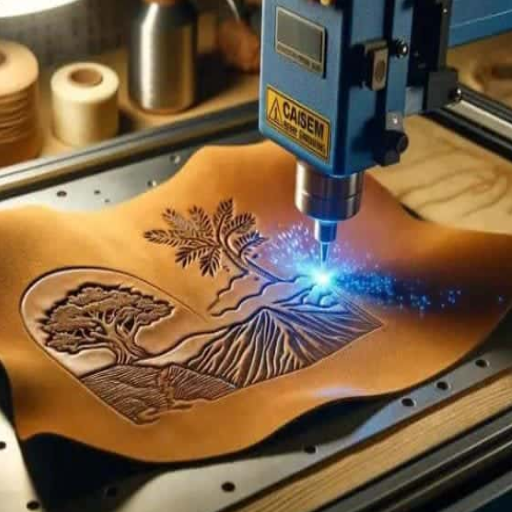
Laser cutting gives leather artisans and manufacturers the utmost precision and accuracy. Since it is so accurate, the designer may even schedule a tolerance of ±0.001 inches for their cut, allowing every intricate detail of a complicated design to be carried out precisely.
- Less wastage of material, which is important for business profitability
- Non-contact cutting eliminates mechanical distortion or warping
- Software integration allows for repeatable and consistent designs
- Speed up cuts of intricate patterns on leather by 30% compared with drills
Efficiency in Production
Laser-cutting has changed to incorporate developments in technologies-here the production of leather at a much finer precision and pace. Studies of recent years showed that automated laser-cutting systems reduce waste during manufacturing by up to 20%, as the system nests the patterns exactly to make full use of the materials.
Speed Advantage: Laser-cutting systems can travel at speeds of over 10 inches per second, much faster than by conventional means. Industrial application where CAD software couples to laser-cutters reveal almost a 35% gain in overall throughput.
Intricate Designs and Patterns
Laser cutting has changed the dynamics of creating intricate designs and patterns within the leathergoods industry. With the utmost precision of 0.1 mm, laser cutters would empower any leather artisan to put in details that could not be otherwise made with traditional methods.
Market Growth: According to recent market research, global laser cutters are expected to grow at a CAGR of slightly more than 9% between 2023 and 2030.
Tools and Equipment Needed for Laser Cutting Leather
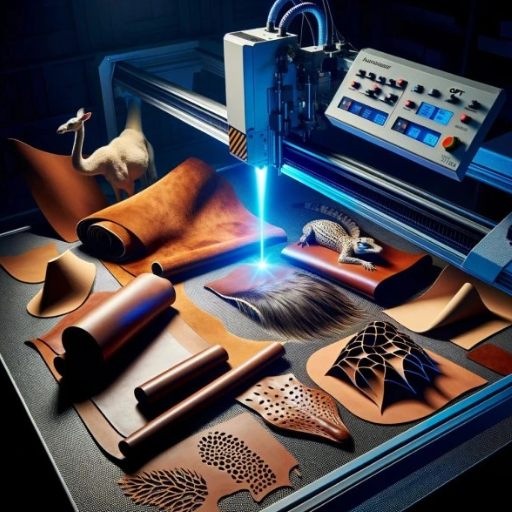
Types of Laser Cutters for Leather
Choosing laser cutters for leather requires inspection for precision and working conditions. The three common types of laser cutters for leather include CO2 laser cutters, fiber laser cutters, and hybrid laser cutters.
1. CO2 Laser Cutters
CO2 laser cutters being considered efficient and less costly than fiber and hybrid varieties are, therefore, prevalent in use in leather cutting and engraving.
- Operate at speeds up to 1,200 mm/sec
- Great machines for production use
- Most come with touchscreen interface and design software
- Allow artisans freedom of expressively designing complicated patterns
2. Fiber Laser Cutters
Fiber laser cutters are generally used for metals but have also been recently adapted to thinner leather sheets. For fine and intricate designs, especially in high-value leather work, they provide better precision.
- Low power consumption
- Low maintenance requirements
- Eco-friendly machines
- Practical tool for fine engraving on leather goods
3. Hybrid Laser Cutters
It is really the putting together of CO2 and fiber laser technologies that makes hybrid laser cutters one wherein the manufacturer can switch from one job to the other. They are used when a more complex multi-material project is to be handled.
Pricing and Market Data
| Laser Cutter Type | Market Share | Starting Price | Industrial Grade | Best For |
|---|---|---|---|---|
| CO2 Laser Cutters | 65% | $2,000 | $30,000+ | General leather work |
| Fiber Laser Cutters | 25% | $15,000 | $50,000+ | Precision applications |
| Hybrid Laser Cutters | 10% | $25,000 | $80,000+ | Multi-material projects |
Essential Software for Designing
In laser cutting design, the right software assists you in working with very precise and detailed designs. Below are the main kinds of software used by professionals in the industry:
| Software | Price | Best For | Key Features |
|---|---|---|---|
| Adobe Illustrator | $20.99/month | Vector graphics | Scalable designs, precise control |
| CorelDRAW | $269/year | Laser cutting | Intuitive interface, wide driver support |
| LightBurn | $60 (one-time) | Laser control | Multiple file formats, laser integration |
| AutoCAD | $220/month | Technical drawing | Precision engineering, 2D/3D CAD |
| InkScape | Free | Open-source | Vector editing, industry formats |
Additional Accessories and Tools
The laser engraver would perform excellently with the appropriate arrangement of different accessories and complementary tools, which will speed up project implementation with precision and versatility.
- Rotary attachment: For engraving on pipes and for engraving on cylindrical objects ($300-$1,200)Air Assist Systems: Increase cutting ability up to 30% and prevent heat distortion
- Fume Extraction Systems: For safety, starting from $500
- Lens-Bleaching Kits: Keeping full power and precision
- Honeycomb Work Tables: Enhanced airflow and precision ($50-$300)
- Material-Specific Jigs: For batch operations and repeatability
Step-by-Step Guide for Beginners
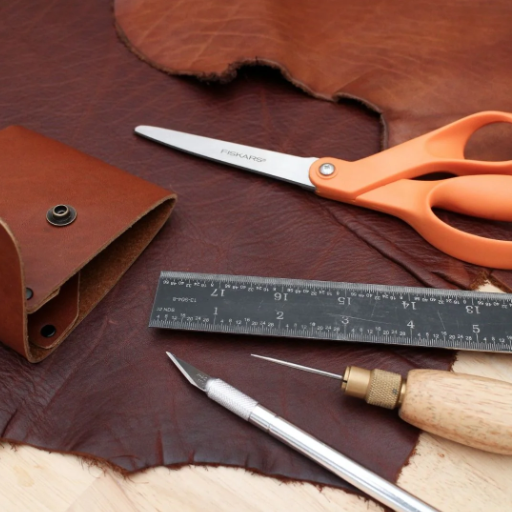
Preparing Your Leather for Cutting
Material Selection: Choose leather according to project specifications. In general, for very crisp cuts, vegetable-tanned leather is preferred. Chrome-tanned leather shades are rather used for softer lines.
1Cleaning the Leather
Dust must not interfere with the cutting. The surface of the leather should be wiped off with a damp lint-free cloth. The more water is used upon leather, the more alteration it will cause to the texture, and the least conducive it would be for cutting.
2Flat Surface
Make sure the surface is flat on the bed of the laser cutter; otherwise, part of the leather may get uneven cuts. Put some weight on the curled edges. Masking tape, or magnets, could help in this case for bigger pieces.
3Test Settings
Speed, power, and focus must all be perfectly balanced on the laser cutter for cutting leather.
| Leather Thickness | Power Setting | Speed Setting | Application |
|---|---|---|---|
| 1.5mm | 40-60% | 20 mm/s | Cutting |
| 1.5mm | 15-25% | Variable | Engraving |
4Safety Considerations
Fumes and odors coming from leather cutting can be injurious. Do work in an environment with good ventilation, where your exhaust system and air filter of the laser cutter are working well. Be especially respectful to a vegetable-tanned leather, in that chrome tanned could produce harmful gases.
Setting up the Laser Cutter
Choose the proper ventilation system.
Safety and performance require ventilation. Typical airflow for a Class-1 or small Class-2 machine would be anywhere between 500 and 600 CFM in order for the workstation to be considered safely ventilated.
Align the Laser Beam
A laser beam that is misaligned often leads to uneven cutting or wastes the material. Make sure to align the beam along both the X and Y axes of the cutting bed using the calibration tool.
Choose Settings Appropriate for the Materials
| Material | Power | Speed | Application |
|---|---|---|---|
| Vegetable-tanned leather | 40% | 300 mm/s | Engraving |
| Vegetable-tanned leather | 50% | 200 mm/s | Cutting |
| Acrylic (3mm) | 60% | 400 mm/s | Cutting |
Tips for Achieving Precise and Clean Cuts
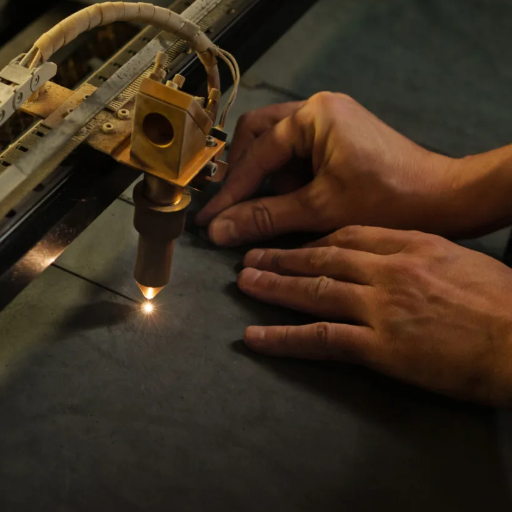
Adjusting Speed and Power Settings
Proper calibration of speed and power must be adjusted in order to achieve precision and clean cut with laser cutting. The right combination depends on the material you are working with, its thickness, and desired cut quality.
| Material | Thickness | Power | Speed |
|---|---|---|---|
| Acrylic | 3mm | 50% | 15mm/s |
| Plywood | 4mm | 80% | 10mm/s |
| Cardstock | – | 30% | 20mm/s |
| Stainless Steel | 1mm | 95% | 6mm/s |
Troubleshooting Common Issues
Incomplete Cutting or Low Power Output
- Adjust laser focus according to the material thickness
- Try altering power and speed settings
- Keep lenses and mirrors clean
Burn Marks or Overheating
- Lower power and raise speed settings.
- Apply masking tape to the surface of the material.
- Ensure proper air assist function.
Misaligned Cuts or Poor Accuracy
- Check the alignment of the laser beam.
- Check the tension of the belts on the drive mechanisms.
- Conduct alignment tests and calibration.
Common Mistakes to Avoid
Critical Safety Warning
Never cut PVC or other chlorine containing plastic, as they release toxic fumes that are injurious to both your equipment and your health. An absolute must is to cross-check the material compatibility before starting the project.
- Maintenance ignored: clean critical parts every 40-50 hours of operation.
- Incorrect selection of materials: not all materials are apt for laser cutting.
- Inappropriate machine setting: wrong power/speed settings will yield poor results.
- Poor ventilation: insufficient air circulation causes increased hazards of fire.
- No practice tests: always test on scraps.
- No software updates: regular updates enhance ease of usage.
Innovative Applications of Laser-Cut Leather
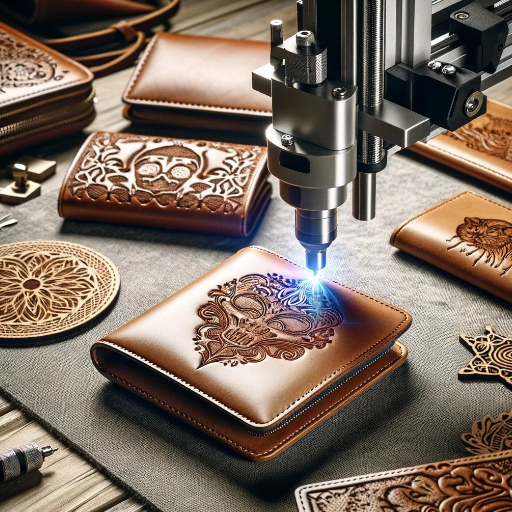
Fashion Industry: Custom Handbags
Indeed, laser-cut leather has gained all the attention of the fashion industry, particularly in the customization of handbags. This technology is enabling complicated designs, precise cut-outs, and finishes that had never before reasonably been possible within a timeframe or had at all.
Market Growth: With regard to optimum potential, studies forecast the growth of the primary global luxury handbag market at a CAGR of around 5.3 between 2023 and 2028. Customization and sustainable trends stand as key propellers to this growth.
Interior Design: Decorative Furniture Pieces
Because decoration and furniture are necessary for interior design. The global furniture market is expected to grow at a CAGR of 4.79% between 2023 and 2028 as demand for customized and more functional applications rises.
Crafting: Unique Art Installations
Unique art installations in fact remain pivotal to modern design, encompassing creativity, technology, and environmental consciousness. Recent industry reports state that 74% of potential art buyers are leaning toward purchasing even artworks that somehow promote sustainability.
Frequently Asked Questions
What are the advantages of laser cutting in leather?
The laser cutting process has many benefits. Because of the great precision and speed, a laser beam is capable of cutting leather into complicated patterns that conventional mechanical macho methods would seldom attempt. CO2 lasers give clean edges, no fraying, and work for all kinds of leather. The process is highly time-efficient and allows for laser engraving logos to give a very professional finish.
Which type of leather is considered to be best for laser-cut applications?
Natural leather and thicker leather usually give better results. Various kinds of leather react in different ways; synthetic ones may emit fumes that should be dealt with caution. Setting alterations are in order when cutting thicker leather; i.e., laser speed and power may need changes. Always run a few tests on your samples to establish the best working option for your projects.
How do I set up the laser cutter for leather?
Setting up the laser cutter for leather involves choosing the right laser (generally CO2 lasers for organic materials), power output, and speed for cutting leather so that thicker pieces require slow speeds and high power but thin pieces require the opposite. Always perform a test cut on scrap material to perfect your settings.
Can diode lasers cut leather?
Diode lasers can definitely cut leather, although they may pale in comparison to CO2 lasers. They are not as powerful, thus would have a hard time cutting through thicker leather materials. However, for thin leather sheets or engraving, a 20W diode laser will suffice. Just consider the laser power rating and the associated leather thickness before making your choice.
What about laser-cut leather applications that are famous?
Engraving and laser cutting are commonly used for leather jewelry, wallets, and bags for personalization. Other areas include decorative pieces with names and the like. Especially when working with an artisan who is trying very hard to produce elaborate patterns and designs. For a small-time business or hobbyist, this is a major plus since the machine can produce massive quantities of products in a very short time.
Ready to Start Your Laser Cutting Journey?
With the right tools, techniques, and safety precautions, laser cutting leather opens up endless possibilities for creativity and precision. Whether you’re a hobbyist or professional, this technology can transform your leatherwork projects with unparalleled accuracy and efficiency.
Reference Sources
-
Laser Cutting of Leather: Tool for Industry or Designers?
This study explores the applications of laser cutting in leather processing, focusing on its use in both industrial and design contexts.
Link to source -
The Role of Laser Cutting Technology in Enriching Aesthetic Values and Highlighting Artistic Formulas on Leather Fabrics
This paper investigates how laser cutting enhances the aesthetic and artistic aspects of leather fabrics.
Link to source -
A Comprehensive Study on Advanced Laser Cutting Technology in Leather Industry
This research provides an in-depth analysis of advanced laser cutting technologies and their economic benefits in the leather industry.
Link to source -
Laser Cutting and Etching Textiles and Apparel Design
This experimental study examines the implementation of laser cutting and etching in apparel design, including applications for leather.
Link to source -
Comparative Study of Ultrasonic and Laser Assisted Machining for Sustainable Leather Cutting
This research compares ultrasonic and laser cutting techniques for leather, emphasizing sustainable practices in the industry.
Link to source