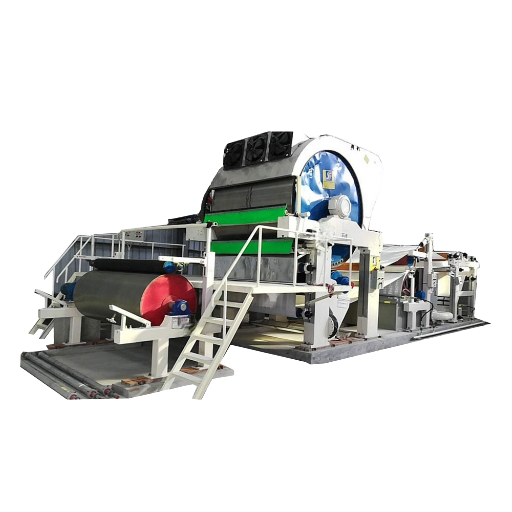
The machinery used in paper mills is the major player in the paper-making process; it takes raw materials like wood pulp and turns them into the various paper products that the world uses every day. The paper-making process, which is the shortest, is concealed by the whole network of highly developed machines. To ease the industry, the paper mill has achieved the highest efficiency, quality, and sustainability in a sequential order. In this text, we will discuss everything there is to know about the components and procedures that are present in the modern application of paper mills. If you are an untutored person or want to visit the industry, or even a curious one who tries to figure out how the daily paper products are made, then this excursion will at least give you a flood of insights into the creative and cutting-edge technology driving the paper-making industry.
Overview of Paper Mill Equipment
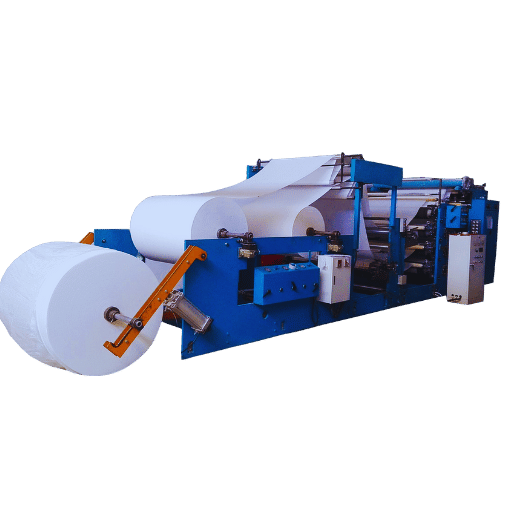
Paper-making machinery includes the specific machines that are mainly used to process the raw materials and end up with finished paper products with a high level of reliability and efficiency. The most important parts are:
- Pulping Equipment – The process begins with digesters and refiners, which are the main machines used for breaking down the raw materials, like wood chips or recycled paper, into pulp fibers that can be processed into paper.
- Paper Machines – The Fourdrinier or cylinder machine that forms, presses, and dries the pulp into continuous sheets of paper is one of the machines included under this category.
- Drying Systems – The drying process that involves either high-efficiency drying cylinders or coated rollers is aimed at removing moisture from the paper to producethe thickness and texture that meets the desired level.
- Calendering Equipment – The paper smoothening and thickness controlling process, where the paper is made more printable and more attractive, is done by calendering.
- Finishing Machines – The machines that include slitters, winders, and cutting systems, etc., take the paper and prepare it for packaging by slicing and formatting it to the exact sizes and formats.
The forming and shaping of the paper is done through the machines and each piece of equipment is vital in the process of production, delivering, consistency, quality, and high output rates. The integration of technology in modern paper mills for improving efficiency and sustainability is increasingly becoming a trend.
Types of Paper Mill Machinery
The various machine types used in a paper mill consist of Fourdrinier, Twin-Wire, Cylinder Mould, Multi-ply Formers, Top Former, Specialty Paper Machines, Packaging Paper Machines, Writing Paper Machines, Living Paper Machines, and Coated Paper Machines.
| Type | Purpose | Key Features |
|---|---|---|
| Fourdrinier | General paper grades | Continuous wire mesh |
| Twin-Wire | High-speed production | Dual-sided dewatering |
| Cylinder Mould | Specialty papers | Rotating cylinder mesh |
| Multi-ply Formers | Multi-layered boards | Combines pulp layers |
| Top Former | Lightweight papers | Enhanced drainage |
| Specialty Machines | Unique paper types | Custom configurations |
| Packaging Machines | Kraft, corrugated | Durable paper output |
| Writing Machines | A4, culture paper | High-grade paper |
| Living Machines | Tissue, napkins | Soft paper production |
| Coated Machines | Coated, specialty | Smooth, glossy finish |
Key Components of a Paper Machine
The principal elements of a paper-making machine consist of the forming part, press part, drying part, calender part, and reel part, every single one being crucial for the conversion of pulp into paper of the desired quality.
| Key Component | Function |
|---|---|
| Headbox | Distributes pulp evenly |
| Forming Section | Form a wet paper sheet |
| Press Section | Removes water, strengthens |
| Drying Section | Evaporates the remaining water effectively during the drying process |
| Calender Section | Smoothens, adjusts thickness |
| Reel Section | Rolls of paper for processing |
Importance of Paper Mill Equipment in Production
The production of paper with efficiency and high quality is greatly dependent on the paper mill machinery. The equipment not only determines the consistency, texture, and strength of the end product but also supports the large-scale production that meets the market demand. The sophisticated machines guarantee accuracy in the processes of pulp making, sheet forming, coating, and drying, which in turn determine the productivity and cost-effectiveness of operations. Dependable and properly serviced machines will also have an impact on the production stoppages, the quality of the output, and the ability of the paper makers to produce custom-made paper for different industries and consumers.
Role of Pulp in the Paper Mill Process
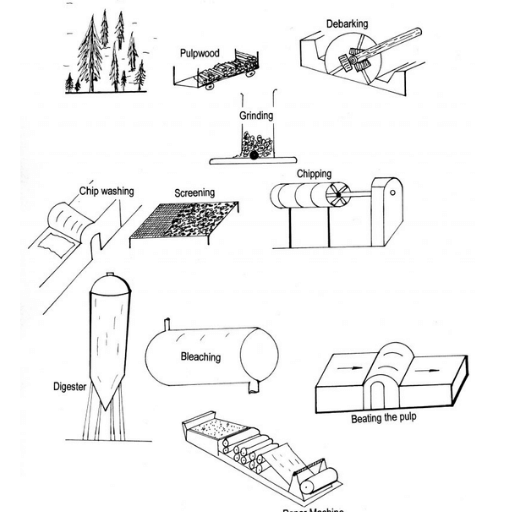
Pulping Methods and Technologies
Pulping is an important stage in the paper manufacturing process, which consists of extracting cellulose fibers from the raw materials that are wood, recycled paper, and non-wood sources (e.g., hemp, bamboo, and agricultural residues). The decision on the method of pulping at the pulp mill plays a significant role in determining the quality of the paper product, the production efficiency, and the impact on the environment. The following are the main pulping methods together with their technologies:
1. Mechanical Pulping
Mechanical pulping is a technique that involves the use of mechanical processes to grind or tear the raw materials into pulp. The main methods involved in this process are:
- Stone Groundwood (SGW): This process makes use of the grinding of wood logs by a rotating stone, thereby separating the fibers. The process is economical but results in the production of pulp that has lower strength than the others.
- Thermo-Mechanical Pulping (TMP): The process of TMP is the combination of grinding and treatment with steam. This method yields the pulp that is of the highest quality and has the greatest fiber bonding strength.
- Refiner Mechanical Pulping (RMP): A process that involves the use of mechanical refiners for the processing of wood chips. It is the most preferred method for applications like printing and packaging owing to the pulp’s strength properties.
Mechanical pulping, although it usually results in a higher yield of up to 90-96%, due to retention of the wood’s original content, is also quite energy-intensive; for the whole process, it may consume energy in the range of 2,000-3,000 kWh per ton of pulp.
2. Chemical Pulping
In chemical pulping, cellulose fibers are subjected to the action of chemical solutions, which result in the removal of lignin and other contaminating substances. The fiber obtained is of a higher purity, less colored, and stronger in terms of paper making. The most noteworthy technologies in this area of research are:
- Kraft (Sulfate) Pulping: The process, which is the cost-effective and the most widely used sodium hydroxide and sodium sulfide as cooking chemicals. Kraft pulping has about 45-55% yield and is very strong and durable pulp,p which is then used for making cardboard and industrial paper, etc.
- Sulfite Pulping: It is a process where the sulfide forms an acidic compound and the breaking-down agent is calcium, magnesium, or sodium bisulfite. Sulfite pulp is particularly appropriate for applications demanding high brightness, such as fine writing and printing papers.
As a rule, chemical pulping is less energy-consuming than mechanical pulping, but it produces lower amounts. On the other hand, the implementation of energy recovery techniques like black liquor recycling at the pulp mill has significantly minimized the ecological footprint of chemical pulping activities.
IIn papermaking, the main types of pulp are mechanical pulp, chemical pulp, recycled pulp, and specialty pulp; their different characteristics and uses mainly depend on strength, brightness, and so forth, determine their utilization.
Summary Table:
| Pulp Type | Key Features | Applications | Examples |
|---|---|---|---|
| Mechanical Pulp | High yield, low strength | Newsprint, magazines | Groundwood, TMP, CTMP |
| Chemical Pulp | Strong, bright fibers | High-quality papers | Kraft, sulfite, soda |
| Recycled Pulp | Eco-friendly, cost-saving | Tissue, cardboard | Deinked pulp (DIP) |
| Specialty Pulp | Tailored properties | Filters and textiles | Fluff, dissolving pulp |
| Non-Wood Pulp | Renewable, eco-friendly | Packaging, specialty paper | Bamboo, bagasse, straw |
Environmental Considerations in Pulp Production
The production of pulp has a considerable impact on the environment mainly because of the energy used, the resources consumed, and the emissions released. Some aspects need to be considered:
- Deforestation and Resource Use: The collection of raw materials, especially wood for paper, may cause deforestation and the destruction of animals’ and plants’ living places. The implementation of sustainable forestry practices and a higher dependency on alternative sources like non-wood or recycled pulp are fundamental to minimizing the impact.
- Water and Energy Consumption: The pulp industry uses a lot of water and energy, which can lead to the resources being used up. The adoption of practices like water recycling and utilizing renewable energy can reduce the impacts considerably.
- Pollutant Discharge: The chemical processes of pulp production can lead to the emission of pollutants into the air and water, such as dioxins and greenhouse gases. The use of cleaner technologies like elemental chlorine-free (ECF) bleaching can significantly reduce pollutants.
The pulp and paper industry will be able to cut its ecological footprint in half by employing sustainable sourcing, refining its production methods, and switching to eco-friendly technologies.
Fourdrinier Machine and Its Significance
How the Fourdrinier Machine Works
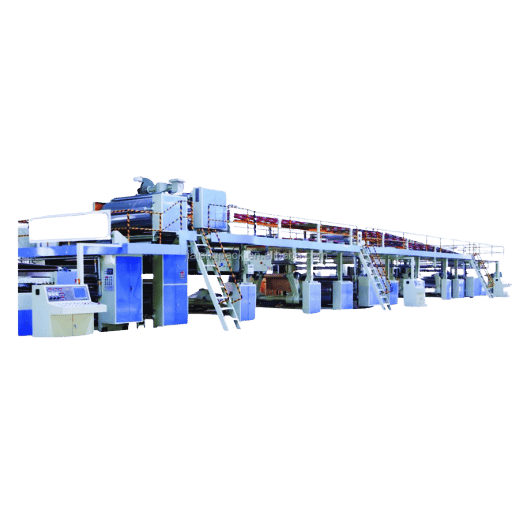
The Fourdrinier machine works by converting a slurry of pulp and water into a paper sheet that is continuously fed. Initially, the pulp mixture gets evenly spread over the moving wire mesh, which indicates the forming section, where the water gets slowly sucked out through the mesh by gravity and suction, thus leaving a wet mat of fibers. Subsequently, this fiber mat is moved through a line of press rollers that not only removes more water but also increases the sheet’s thickness. Water is then evaporated from the sheet as it goes through heated drying cylinders; the result is a roll of paper ready for use. This efficient process makes it possible to produce large volumes of paper at a very high speed while still controlling the quality of the paper.
Benefits of Using Fourdrinier Technology
- High Production Efficiency: The Fourdrinier machine is a real powerhouse that produces paper at breakneck speed, thus, it is the principal way for large-scale manufacturing to be realized.
- Consistent Quality Output: The paper sheet’s thickness and density are tightly regulated, so only the best quality can result from this process.
- Versatility: This technology can easily switch between different types of fibers, and thus, paper products are produced, which makes it highly efficient for the industry’s varying needs.
- Improved Water Removal: The system effectively removes water by using gravity, suction, and press rollers that work together, and this shortening of drying time results in less energy being used.
- Automation Capabilities: The Fourdrinier machine uses high-tech automation options that allow for accurate settings and efficient operation.
- Reduced Labor Requirements: The technology that comes with its automation features requires less manual intervention and thus leads to lower labor costs.
- Scalability: The modular design of the equipment allows for upgrades and expansion to meet increased production demands without extensive overhauls.
- Energy Efficiency: By removing water early in the process, the Fourdrinier system has a lower energy consumption for drying, which results in cost savings and a smaller environmental impact.
Comparing Fourdrinier and Other Paper Machines
The Fourdrinier machine is perfect for making even, light papers at fast rates, whereas the cylinder machine is best for making thick, multi-layer papers with different kinds of fibers.
| Parameter | Fourdrinier | Cylinder |
|---|---|---|
| Paper Formation | Single-layer, uniform | Multi-ply, layered |
| Speed | High (up to 1800 m/min) | Low (200-600 m/min) |
| Paper Grades | Lightweight, fine | Thick, specialty papers |
| Fiber Orientation | Aligned, machine dir. | Balanced, all dir. |
| Pulp Consistency | 0.8%-1.2% | 0.5%-1% |
| Applications | Printing, writing | Packaging, boards |
| Advantages | Smooth, versatile | Strong, cost-efficient |
| Limitations | High cost, complex | Limited to thick paper |
Trends in the Pulp and Paper Industry
Emerging Technologies in Paper Machinery
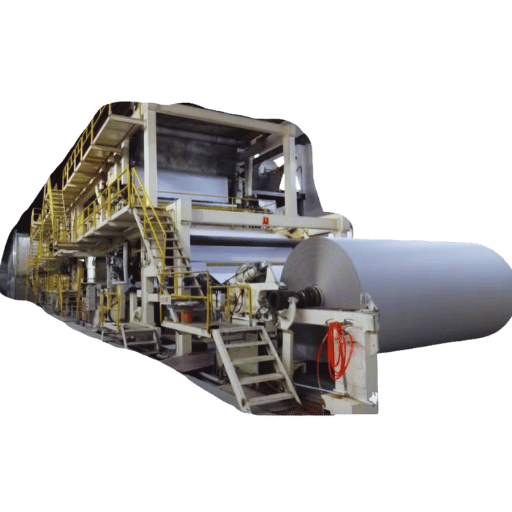
Paper machine new technologies are AI, IoT, nanotech, digital printing, and smart paper, with the aim of improving efficiency, innovating, and being environmentally friendly.
Impact of Sustainability on Paper Manufacturing
The eco-friendly aspect of paper production is the use of fewer raw materials, better disposal of waste, and recycling, which altogether result in a much lower environmental impact. Besides, the industry is still dependent on the renewable resource of trees.
Market Trends Affecting Paper Mill Operations
Market trends impacting paper mill activities in 2025 are the following: a drop in the use of regular paper products caused by the rise of digital technology, increased operational costs due to tariffs and supply chain disruptions, a transition to eco-friendly and specialty packaging, and merger-driven consolidations with investments made in the direction of improving efficiency.
Frequently Asked Questions (FAQs)
Q: What role does machinery play in the paper mill?
A: Machinery in a paper mill plays a vital role in producing paper items of all kinds. The machinery comprises a plant and pulping machines, paper machines, and dryers. Together, they convert raw materials, including wood pulp and recycled paper, into usable products, taking efficiency and quality into utmost consideration during the process.
Q: How does the pulp and paper industry utilize recycling?
A: Recycling is hugely important in the pulp and paper industry as it offers an alternative source of raw materials. The used papers are collected, processed, and cleaned to produce a very good-quality pulp. This recycled pulp can then be used in manufacturing several grades of paper, thereby reducing dependence on virgin fibers and promoting environmental sustainability.
Q: What are the main parts of a paper-making machine?
A: The paper-making machine has generally diverse components, including the headbox, wet end, press section, dryer section, and calender, with each assigned to perform one task from treating the slurry to creating a continuous paper web and also give the final finish to the product as per the specifications.
Q: What paper products are made with the paper mill machine?
A: With paper mill machinery, a wide range of paper products can be made: kraft paper, tissue paper, printing paper, and specialty paper. Each type of paper has its unique characteristics and production requirements. Hence, specialized machinery would usually be used to secure the required quality and proper characteristics.
Q: How does the preparation of stock affect the quality of paper?
Stock preparation is one of the most important processes in paper-making as it gives the determination to the final quality of the paper produced, especially when using deinking methods. It includes fiber refining, fiber mixture, and control of consistency. Good stock preparation results in better paper properties such as strength, brightness, and printability.
Q: What are the advantages of employing a Fourdrinier paper machine?
A: It is best known for continuous sheetmaking. It allows an uninterrupted run, reducing waste and increasing output. Such machines are especially good for producing large quantities of paper in all grades, thus commanding much favor in the trade.
Q: What is the function of conveyors in pulp and paper machinery?
A: To put it simply, conveyors are an indispensable part of pulp and paper machinery as they help in moving materials around during production. They link various segments of the paper mill so that pulp is moved either to the headbox or finished paper products to packaging, thus enhancing the operations.
Q: What kinds of industrial machinery are used in pulp manufacture?
A: Industrial machinery such as pulpers, refiners, and dewatering equipment is used in the pulp manufacturing process. The breakdown of raw materials, fiber refinement, and excess water removal are all done by these machines so that wood can be turned into pulp for use in the manufacture of paper.
Q: How does Andritz operate in the paper machinery field?
A: The products of Andritz are paper machines of the highest category, supplying the pulp and paper industry with all that is required in terms of advanced solutions and machinery. Mainly set to increase efficiency and promote sustainable paper production, their technology and equipment cover stock preparation, pulp processing, and paper making, fitted to the needs of the contemporary paper mill.
Reference Sources
1. The Lost Paper Mill at Locks 11–12 of Canal de Castilla: Graphical Reconstruction
- Authors: José M Geijo-Barrientos et al.
- Publication Date: June 17, 2025
- Journal: The Heritage of paper making machines includes contributions from notable manufacturers like Voith and Valmet.
- Summary: Reconstruction of an 18th-century paper mill dismantled in 1983 is at the heart of the discussion. The research follows an analytical-synthetic method, examining various kinds of sources and material evidence to build an understanding of the layout, characteristics, and operation of the building itself and the paper mill operations. Among the most important findings are that the plans for the entire factory, including all its machinery and means of production, were worked out; further, the study proceeded to conclude that the mill was constructed to be innovative with respect to its time-it sought increased working conditions and optimization of production processes.
- Methodology: The study employed an analytical-synthetic method, whereby diverse sources and their graphic representations were examined in detail to validate the various hypotheses concerning the design and construction of the factory and its operation(Geijo-Barrientos et al., 2025).
2. Design of Risk Control for Workplace Accidents Using HIRARC at Production Areas of PT Papyrus Sakti Paper Mill
- Authors: Alya Qotrunnada et al.
- Date of Publication: 4 August 2025
- Journal: Bandung Conference Series: Industrial Engineering Science
- Summary: This paper concerns workplace safety in PT Papyrus Sakti Paper Mill, specifically the control of risks posed by workplace accidents. In the stock preparation section, a total of 29 hazards are identified, of which numerous them fall under the high-risk category. The authors suggest certain measures to control such risks: installing emergency stop buttons, ensuring good ventilation, and conducting training sessions.
- Methodology: The research applied Hazard Identification, Risk Assessment, and Risk Control (HIRARC) methods to study the conditions at the workplace and to recognize hazards (Qotrunnada et al., 2025).