Updated June 2026
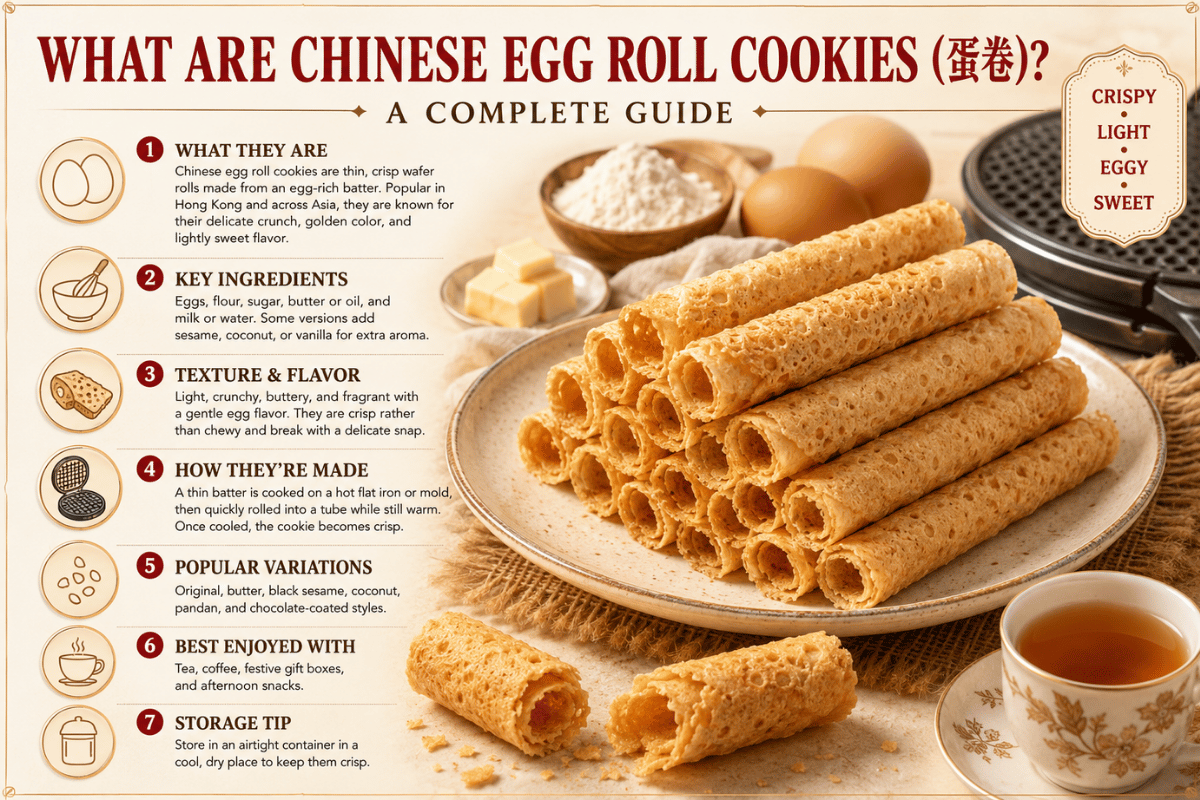
Chinese egg roll cookies are thin, sweet wafer cookies rolled into hollow, crispy cylinders, known in Chinese as xiāng sū dàn juǎn, literally “crispy egg rolls”. Made from a simple batter of eggs, sugar, and flour cooked on a hot surface and rolled while still warm, they’re light, shatteringly crunchy, and only lightly sweet. Despite the name, they’re a cookie, not the savory deep-fried egg roll you order at a restaurant.
Quick Specs
| Chinese name | xiāng sū dàn juǎn |
| Category | Sweet rolled wafer cookie (biscuit roll) |
| Texture | Light, crispy, hollow tube |
| Core ingredients | Eggs, sugar, flour (often butter or coconut milk; sesame) |
| Sweetness | Low — “not too sweet” |
| Typical length | 7–14 cm |
| When eaten | Year-round snack; gift staple at Lunar New Year |
What Are Chinese Egg Roll Cookies?
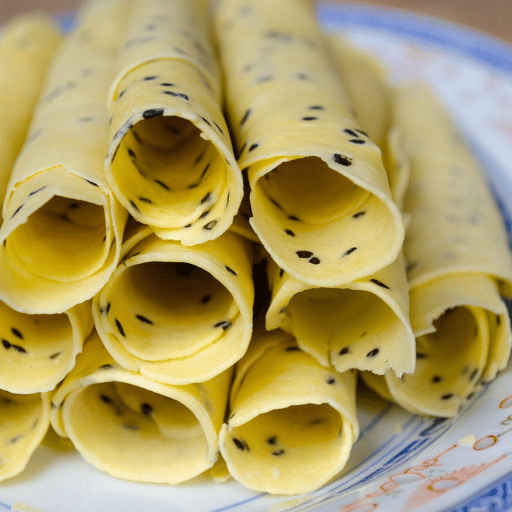
Chinese egg roll cookies are a rolled wafer made by spreading a thin egg batter on a hot surface, cooking it pale (not browned), and curling it around a thin stick while still hot. The result is a delicate, hollow tube that snaps cleanly and tastes of egg and toasted sesame. They sit in the lightly-sweet tradition of Chinese desserts, the highest compliment a Cantonese grandmother gives a sweet is not too sweet.
Also called egg roll biscuits (aka biscuit rolls), this crispy treat is a classic Chinese biscuit, light, flaky, and not terribly sweet, often given as a gift and popular around the holidays. The cookies are sold in large gold tins at Asian supermarkets and are a fixture of holiday gift-giving. In practice you’ll spot them as pale, hollow tubes about 7–14 cm long with a glossy snap. The recurring problem for English speakers is the name itself: because the Chinese simply means “egg roll,” readers expect something savory, which brings us to the most common point of confusion.
Egg Roll Cookie vs. the Savory Egg Roll: Don’t Confuse Them
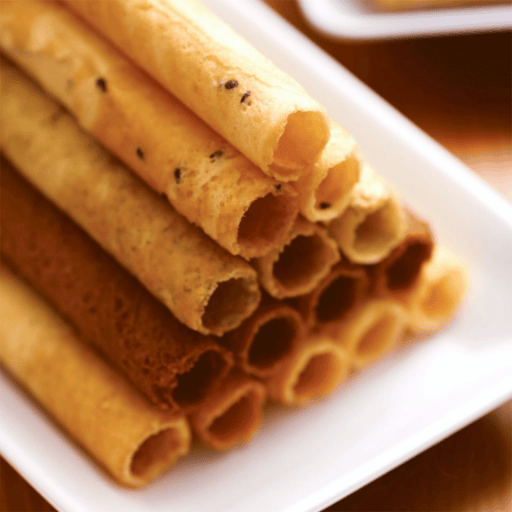
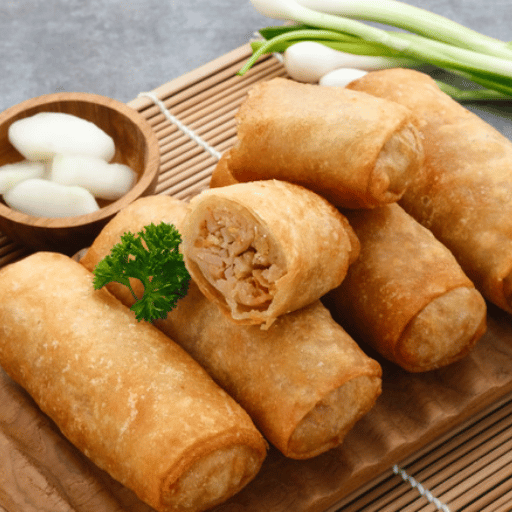
They share a name and almost nothing else. The egg roll cookie, the original egg roll in the sense of the Chinese crispy egg roll wafer, is a sweet biscuit; the “egg roll” served at American Chinese restaurants is a deep-fried, savory wrapper around pork and cabbage, an adaptation of fried spring rolls, which themselves appear at New Year because their gold-bar shape symbolizes wealth. Same two words, two completely different foods.
| Feature | Egg Roll Cookie (蛋卷) | Savory Egg Roll |
|---|---|---|
| Category | Sweet wafer cookie | Savory fried appetizer |
| Base | Thin egg-sugar-flour batter | Wheat-flour wrapper |
| Filling | None, or sweet (sometimes pork floss) | Pork, cabbage, vegetables |
| Cooking | Griddled pale, then rolled | Deep-fried golden |
| Served as | Snack / New Year gift tin | Restaurant appetizer |
If a recipe calls for a wrapper, a deep fryer, or dipping sauce, you are looking at the savory egg roll. The cookie needs none of those — just batter, heat, and something to roll it around.
One Cookie, Many Names: Biscuit Rolls, Love Letters and Kuih Kapit
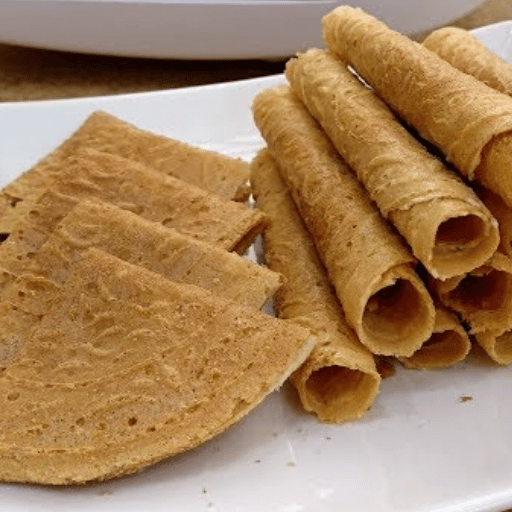
The 6-Name Map of One Cookie
Travel across Asia and the same rolled wafer turns up under a dozen names. This is The 6-Name Map of One Cookieand the map run all the way back to Europe. The Indonesian name kue Belanda literally means “Dutch cake,” a nod to the Dutch kniepertje and the Spanish barquillo wafer irons that traveled the trade routes. According to the encyclopedic entry on kue semprong, the same wafer is documented across Indonesia, Malaysia, Brunei, and Singapore.
| Region | Name | Note |
|---|---|---|
| Mainland China / Hong Kong | biscuit roll | Often with black sesame |
| Malaysia / Singapore | Kuih kapit, “love letters” | Folded in quarters; Nyonya specialty |
| Indonesia | Kue semprong, sapit, kue Belanda | “Dutch cake”; coconut-milk batter |
| Netherlands | Kniepertje | The wafer-iron ancestor |
| Spain / Philippines | Barquillo / barquillos | Same iron-pressed wafer |
| Taiwan | with pork floss | Savory-filled variation |
Names compiled from regional culinary records and the kue semprong encyclopedia entry.
The “love letters” name has a romantic backstory: the folded versions were said to once carry secret notes between sweethearts, a charming detail that adds to their gift-giving character.
Making Egg Roll Cookies: From Thin Batter to Crispy Roll
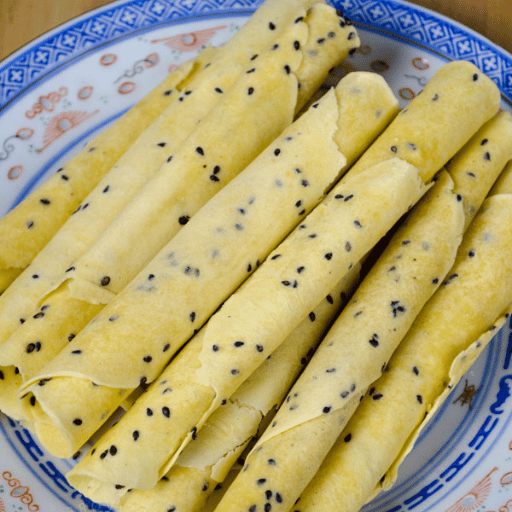
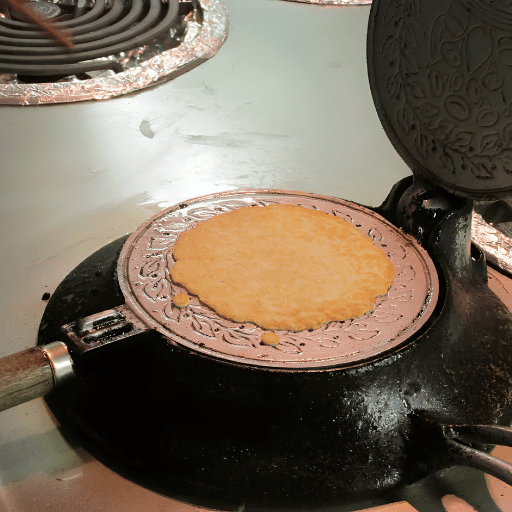
You don’t need fancy equipment, and that surprises people. Most Chinese recipes for these crispy egg roll cookies don’t require any specialty equipment: you can make a flaky egg wafer without specialized equipment, rolling the cookies (even rolled with chopsticks) straight off the heat, then finishing them on a baking tray in a low temperature oven until they set into a crispy biscuit. The street version is pressed in a hinged, two-sided cast-iron mold over charcoal, but every reliable home recipe skips the mold entirely and uses a griddle, a sheet of parchment, and a thin wooden dowel. Whatever the tool, crispness comes down to four things, call it The 4-Variable Crispness Formula:
The 4-Variable Crispness Formula
- Low, steady heat. The cookie should stay pale, not brown. A drop of water on the surface should evaporate quickly but not sizzle violently.
- A thin, even batter. Lay parchment over a tablespoon of batter and press from the center out, thin equals crisp; thick equals cakey and crumbly.
- Roll while hot. The wafer is only pliable in a brief window straight off the heat. Don’t move it to a board first, it cracks the moment it cool.
- Drive out moisture. Finish in a low oven (~80 °C / 175 °F) for 60–90 minutes, then seal airtight before the wafer reabsorbs humidity.
In practice the most common failure is a thick, cakey roll: because the batter keeps cooking while you press it, the problem is moving too slowly, so a batch of 18–20 cookies rewards a steady rhythm of press, lift, roll. Get the wafer to 0.8–1.4 mm and it shatters; leave it at 2–3 mm and it stays soft.
Do You Need a Special Machine or Mold to Make Them?
No. The traditional kuih kapit iron makes beautiful patterns and cuts cook time, but it isn’t required. Home bakers make excellent rolls with a non-stick frying pan or electric griddle, a broad spatula and parchment paper to press the dough thin, and a clean wooden dowel to shape the tube. Expect roughly 4–5 min per cookie without a mold versus about 1 min with a dedicated press.
📐 Engineering Note
The eating quality live in the skin. Aim for a wafer in the 0.8–1.4 mm range, thin enough to shatter, intact enough to roll without tearing. The same target governs factory lines, where the batter window and surface temperature are held tight so every roll lands in that band.
Flavors & Fillings: Sesame, Chocolate, Pork Floss and Beyond
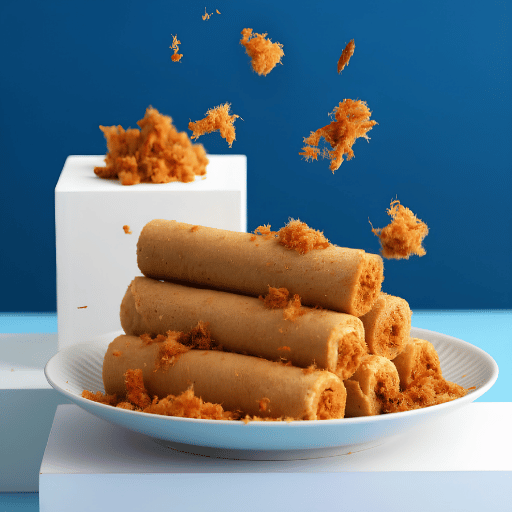
The classic is plain or black-sesame, but the format is a blank canvas. Southeast Asian versions lean on coconut milk and pandan; festive batches get folded around chocolate, custard, peanut, or citrus curd. The most surprising is savory: Taiwanese rolls are filled with pork or chicken floss , and modern bakers experiment with durian and chocolate-hazelnut. Because the wafer itself is barely sweet, it carries both sweet and savory fillings without clashing.
| Type | Flavor / Filling | Where you’ll see it |
|---|---|---|
| Classic | Plain egg wafer | Everywhere; the baseline |
| Classic | Black sesame | Hong Kong / mainland |
| Aromatic | Coconut milk | Indonesia (kue semprong) |
| Aromatic | Pandan | Malaysia / Singapore |
| Sweet-filled | Chocolate / hazelnut | Modern festive batches |
| Sweet-filled | Custard | Bakery versions |
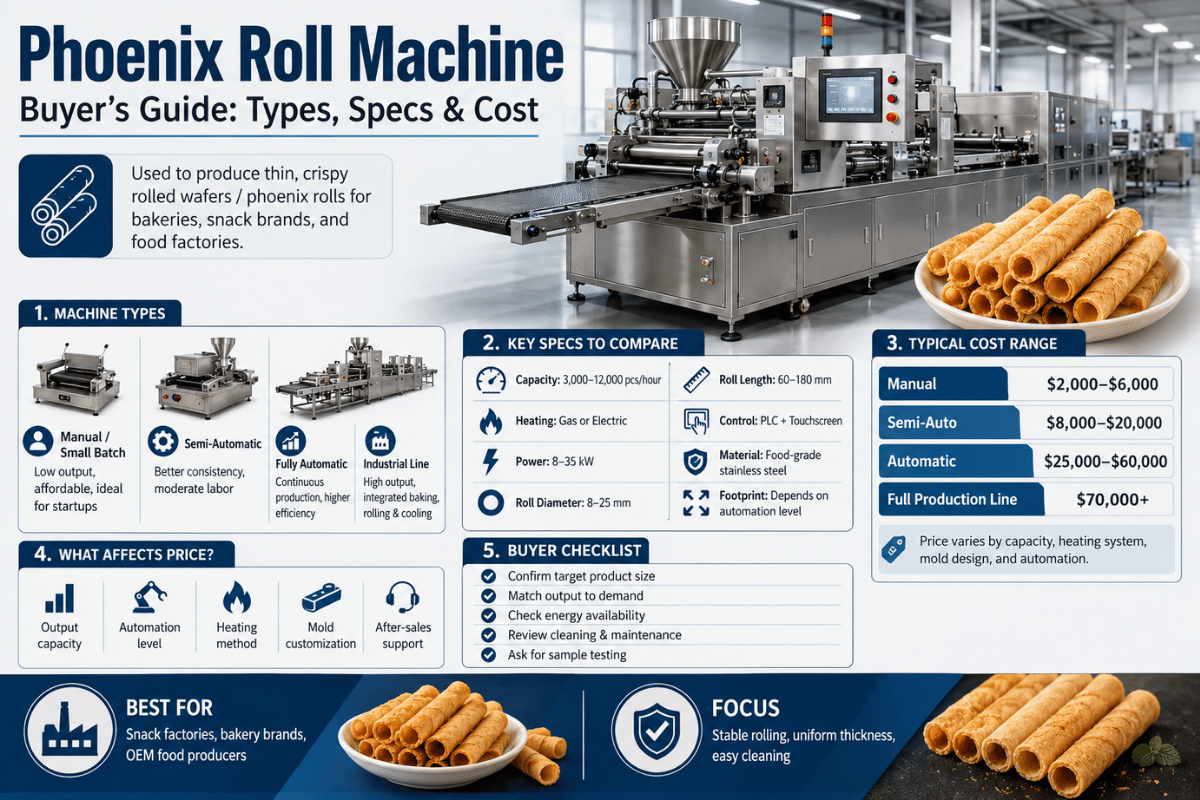
| Sweet-filled | Peanut | Phoenix egg rolls |
| Sweet-filled | Citrus curd | Contemporary twist |
| Savory | Pork or chicken floss (肉松) | Taiwan |
| Adventurous | Durian | Southeast Asia |
Lunar New Year Symbolism and the Gift-Tin Tradition
More than the taste, it’s the gesture that make these cookies special. Rolling them one at a time is slow, hands-on work, so a tin of homemade egg roll cookies reads as “I spent real time thinking of you.” That’s why they’re a staple of Lunar New Year visiting, light enough to nibble with tea through a long afternoon of guests, and not-too-sweet by design. The folded “love letters” carry the extra romance of notes once hidden inside. If you want to make or gift a batch, plan around Chinese New Year 2026, which falls on February 17. The tradeoff is time: because each wafer is rolled by hand, in practice a single tin of 30–40 rolls can eat up 1–2 hours at the stove, which is exactly why a homemade tin carries the weight it does.
“The eating quality is decided by the wafer skin and the roll-forming window. Hold the skin thin and even, roll it the moment it leaves the heat, and the crispness takes care of itself, at home or on a production line.”
UDTECH wafer line engineering team
Calories, Storage & Where to Buy
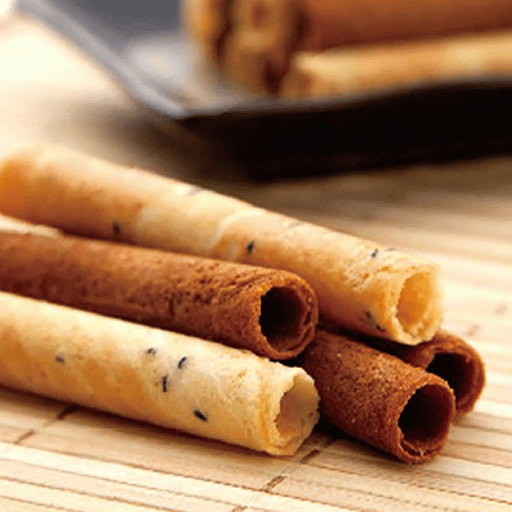
A single Chinese egg roll cookie runs roughly 120–134 calories, with only 2–7 g of sugar and 4–6 g of fat, low for a cookie, which is why they pair so well with unsweetened tea. For nutrition framing, the USDA’s Nutritive Value of Foods and the FDA reference serving amounts are useful baselines; exact figures vary by recipe and size.
Storage is the make-or-break step. In practice the risk is sogginess: these wafers are hygroscopic, so they pull moisture from the air and go soft within an hour (60 minutes) if left out. Seal them in an airtight tin as soon as they cool (a silica packet help), and they keep crisp for anywhere from 5–7 days up to 30 days. The same shelf-stable logic the USDA FSIS describes for shelf-stable foods and extension storage guidance applies: keep moisture and air out.
How Many Calories Are in an Egg Roll Cookie?
Most home and store versions land around 120–134 calories per rolled cookie, depending on whether the batter uses butter or coconut milk and how thin the wafer is rolled. Sugar is low (about 2–7 g), so the calories come mostly from egg and fat rather than sweetener.
Don’t want to make them? Well-known tins include Kee Wah Bakery, Serena, Ching Kee, and Macau Honghong; Japan’s Yoku Moku cigares and Western pirouette wafers are close cousins of the same rolled-wafer idea.
From Home Kitchen to Commercial Production
Here’s the tension nobody talks about: demand for these cookies spikes every Lunar New Year, but rolling them is one-at-a-time hand labor. For a home cook that’s the charm; for a bakery filling hundreds of gift tins, the constraint is people and consistency, not appetite. That gap, not market hype, is what pushes small producers up the ladder.
| Stage | Method | Typical output |
|---|---|---|
| Home | Pan/griddle + parchment + dowel | A few dozen per hour |
| Small batch | Hinged kuih kapit iron / mold | Faster, still hand-fed |
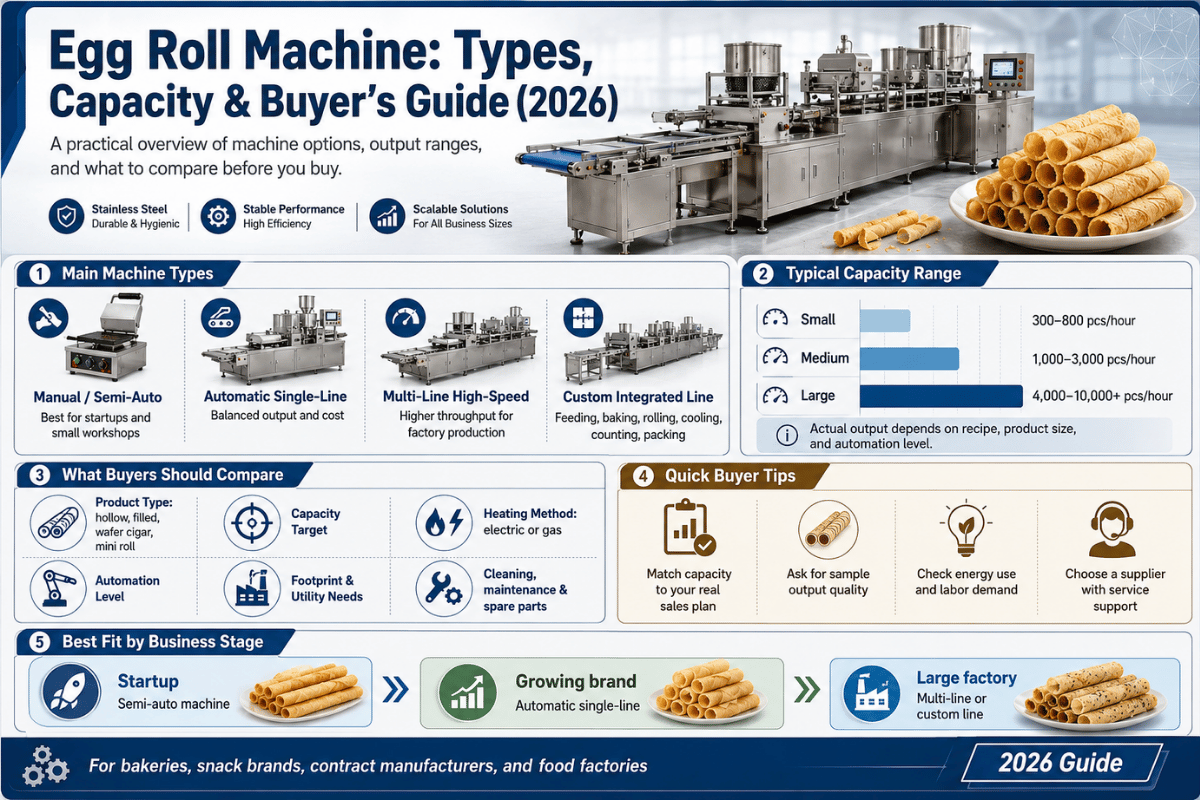
| Commercial | Automatic wafer egg roll line | Hundreds of kg per shift |
The numbers make the jump concrete. Hand and semi-automatic lines cap out around 30–60 kg per hour with 10–12 people; an automatic wafer line such as the UDTECH UD05-2 runs about 600 kg per 8-hour shift with 2–3 attendants at roughly 9.7 kW, holding the skin in that same 0.8–1.4 mm band at ±2–3 °C across a 15.5 m² footprint. The larger UD05-3 reaches 900 kg per shift at 12 kW, about 0.61 Wh per piece.
Worked example: labor per kilogram
Manual: about 11 people for ~12 hours to make ~540 kg ≈ 0.24 person-hours per kg. Automated UD05-2: about 2.5 people across an 8-hour shift for 600 kg ≈ 0.03 person-hours per kg. That’s roughly an 8× reduction in labor per kilogramthe real reason festival-season producers automate.
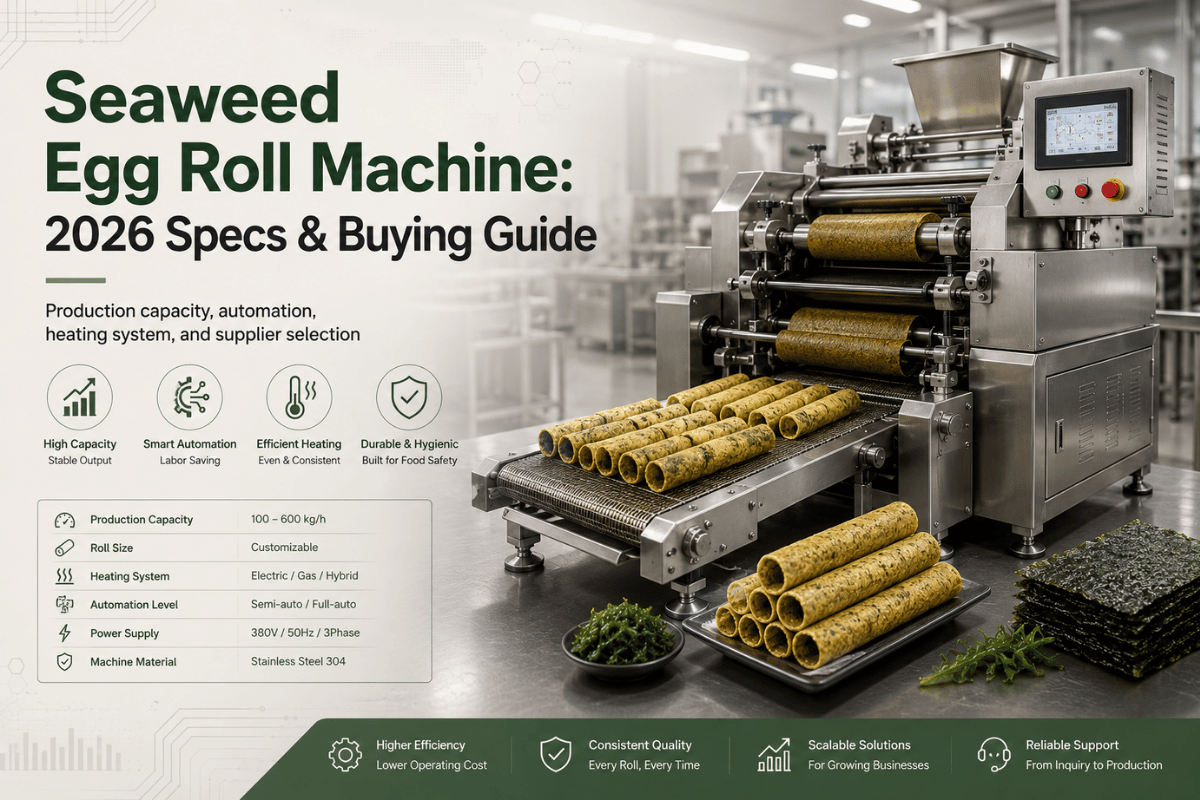
If you’re weighing that jump, UDTECH builds automatic wafer egg roll machines for exactly this category, alongside a broader range of food production machinery and snack food extrusion lines.
Frequently Asked Questions
View Answer
View Answer
Q: Do you need a special machine or mold to make them?
View Answer
View Answer
View Answer
View Answer
About This Guide
This explainer combines culinary research on Chinese egg roll cookies and their cross-cultural cousins with first-party production data from UDTECH’s UD05 wafer egg roll lines, including skin-thickness targets (0.8–1.4 mm) and the labor-per-kilogram comparison in the production section. Reviewed by the UDTECH technical team.
References & Sources
- Nutritive Value of FoodsUSDA Agricultural Research Service
- Reference Amounts Customarily Consumed (Guidance for Industry)U.S. FDA
- Shelf-Stable Food SafetyUSDA Food Safety and Inspection Service
- Storing Food Safely (E-118)New Mexico State University Extension
- Kue semprongcross-cultural name and origin reference