In case of metalworking the most common and most widely used methods are punching and laser cutting with their characteristics of being precise, efficient, and versatile. That’s why they are still being compared to one another in many cases, and in some cases it is hard to tell which one is better. The selection of the techniques depends on many things which include material type, production volume, and design complexity. The article intends to compare the two methods in-depth and to show you the differences in their processes, capabilities, and applications. Judging by your profession, whether you are a fabricator, engineer or industry professional, the guide will support you in making the right decision on the technique that will be able to meet your specific manufacturing requirements.
Introduction to Fabrication Techniques
Punching and Laser Cutting: A Comparison
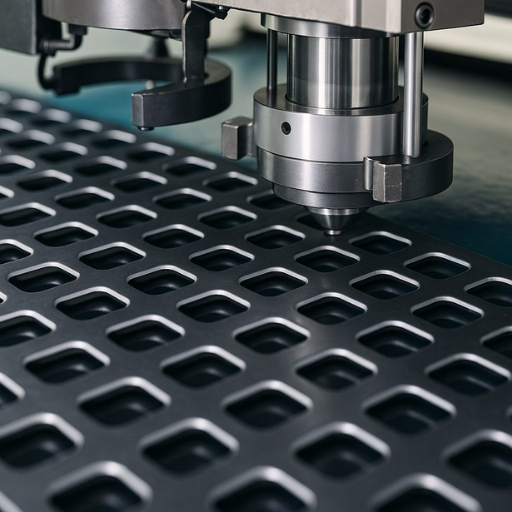
Punching and laser cutting are the two most widely used technologies in the manufacturing industry today. Each has its own set of strengths that can be utilized according to the different aspects of each project. The punching process relies on either a mechanical or hydraulic system that pushes the punch tool straight through the stock material and in that single motion makes a hole or a shape. The punching process is perfect for doing the same operation repeatedly or applying to very specific geometric patterns, such as those in thick sheet metals. It is also very fast and consistent for large-scale production where standard designs are most often used.
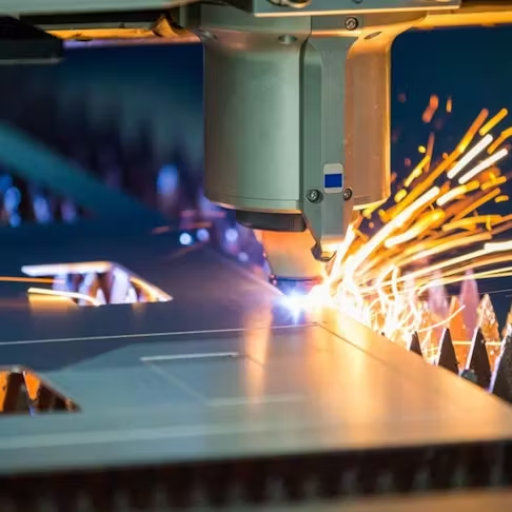
Conversely, laser cutting takes control of a high-intensity laser beam that is operated accurately through the use of computer numerical control (CNC) technology. The laser will vaporize or melt the material, depending on the setting, and it will do so according to the pre-programmed designs with the highest possible precision. This process is especially useful for delicately drawing or scoring or even for non-repetitive designs since it will always create sharp edges and will not cause much material distortion, no matter the difficulty.
The latest search trends from indicated that the interest in hybrid fabrication workflows that incorporate both methods is increasing. The integration takes advantage of punching speed for the repetitious features and, on the other hand, it resorts to the precision of the laser cutting for the bespoke or complex parts. This method is particularly applicable in the manufacturing sectors like automotive, aerospace, and consumer electronics, where the requirements of efficiency and precision are to be balanced. Working on hybrid solutions has become a primary concern for manufacturers who want to be in the game of optimizing production lines in terms of both costs and quality, especially as they become more reliant on automation and the use of advanced technology.
A Crucial Step in Sheet Metal Fabrication
Sheet metal fabrication is one of the most crucial steps in modern manufacturing and still the main method of producing durable materials for such industries as aerospace, consumer electronics. According to the latest ‘s search engine insights, the advanced fabrication techniques demand has rocketed, attributed to the constant need for lightweight yet durable materials in the product design sector. The precision and efficiency are demanded the most since the manufacturers try to optimize their production flows and at the same time reduce the material wastage. The ability to modernize traditional processes like stamping by electrifying them with laser cutting or CNC machining is of utmost importance in being accurate and consistent in complex projects. This integration heightens not only the quality of the end products but also the capacity to cater to the demands of high-volume production. This way, the applications of these developments in metal fabrication get the industries to win a competitive edge in providing the inventive, cost-efficient solutions.
Industries and Uses
The combination of the traditional metal fabrication processes with the cutting-edge technologies has given birth to a new era in the industries and this is one of the main reasons metal fabrication has been considered as an essential component in the modern manufacturing processes. The main industries that would be the most affected are aerospace, automotive, construction, and electronics. In the aerospace industry for example, CNC machining of components lets the engineers set very strict safety and performance criteria. Likewise, the calibration of stamping and laser cutting used in the automotive sector for the production of vehicle parts that are both light and strong is decisive for fuel efficiency and safety. Metal fabrication in the construction sector is mainly for the fast-growing demand for durable and load-resisting materials in structural components. The electronics sector can be said to be the primary beneficiary as it enjoys the cutting-edge fabrication techniques which in turn lead to the production of circuit boards and enclosures with excellent reliability and microscale precision.
The range of applications these technologies span is very large, they can be used for instance for making very tiny and complex high-tech device parts as well as for producing very large structural frames. This broadness is what keeps them in the game regardless of the size of the project and the demands it comes with. Furthermore, based on recent search trends extracted from the data, there has been an increased emphasis on green manufacturing processes within these sectors. This corresponds to the efforts made to cut down wastage and to have a more energy-efficient production process, thereby highlighting once more the necessity of bringing advanced manufacturing methods in the current applications. The use of these solutions equips the sectors with the ability to tackle today’s challenges while maintaining their technological and economic viability.
Punching Process Explained
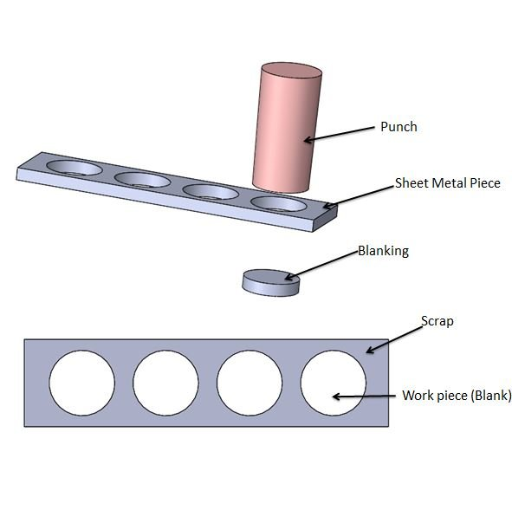
How Punch Press Works
A punch press is a machine that cuts, shapes or alters sheet metal according to precise patterns by means of a mechanical or hydraulic process which is systematic in nature. In the simplest terms, the equipment consists of a die and a punch tool where the punch goes down with controlled power to either deform or pierce the layer that is on the die. The entire process is very precise and needs to be aligned very well so that accuracy and consistency are achieved.
As per the most recent statistics from ‘search engine trends, it is always mentioned that at least once automation and integration with CAD (Computer-Aided Design) software have been the most talked about in relation to punch press technology when queries about it have been made in the online world. Nowadays, modern punch presses come with CNC (Computer Numerical Control) systems as a standard feature, which means the processes are very efficient and programmable to a high degree. The manual intervention is reduced to a minimum, production rates are increased, and tighter tolerances are ensured, thus making it indispensable for the manufacture of automotive, aerospace, and electronics sectors. The fusion of advanced capabilities thus signifies the transformation of punch presses in contemporary industries as they are increasingly called upon to supply accuracy and scalability.
Types of Punching Tools: Turret Punches and CNC Turret Punching
Turret punches represent a type of punching tool that is very adaptable and versatile which is also their most characteristic property and they are extensively utilized in the sheet metal fabrication process for making precise holes and even complex shapes. Turret punches include a rotating turret which is equipped with different kinds of punch/die and die/punch relationships for facilitating quick tool changes and thus increasing the efficiency of high-volume production environments. Although traditional turret punches demand manual programming and operation they are still used in quite a few places where the moderate importance of precision and speed is a cost-effective solution.
CNC turret punching is not the same as traditional turret punching in that it represents a big leap forward in technology by employing Computer Numerical Control (CNC) which is an integral part of the process. Automation contributes a lot to the machine’s precision and repeatability capability because it can be operated to perform very detailed punching based on CAD designs. Not only does the use of CNC machines eliminate human operators, it also opens up a wider scope for complex designs, and all operations like embossing, shaping and even deburring can be done directly on the machine. According to the latest statistics for the past few years, there has been a constant demand for CNC turret punching which is mostly due to the precision and speed requirements in aerospace and electronics sectors. Furthermore, the use of sophisticated material handling systems along with software brings the processes more in line with the demands of faster turnaround and better quality consistency.
Advantages of Punching in Metal Fabrication
Metal punching in metallurgical processing has numerous advantages to offer, especially in the case of their application in advanced technologies and modern equipment. Cost efficiency in mass production is one of the main technical and economic advantages highlighted by the process. The introduction of CNC turret punching machines in the manufacturers’ workflow ensures that they get a high level of precision along with almost no material wastage at all, since the machine works according to a smart material use strategy based on nesting methods. Moreover, punching provides a variety of options to make delicate patterns, louvers, or personalized shapes that can serve different industrial applications.
The latest trends in people’s searches for ‘s services reveal that the interest in automation in punching processes is rising, as the number of queries including “automated CNC punching” has been increasing steadily over the last three years. This penetration demonstrates the movement of the sector towards increased automation and hence higher productivity. Automation is the main driver of punch systems that are accompanied by software-based controls in terms of speed and consistency of fabrication. Labor requirement is also generally lower in such systems. The materials that these systems can be operated with include aluminum, stainless steel, and all kinds of alloys; thus making it possible to use across the sectors of automotive, aerospace, and construction.
Laser Cutting Process Overview
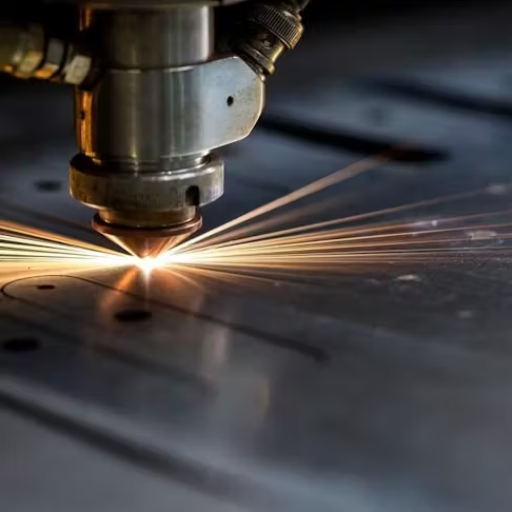
Laser Cutters Operational Mechanics
Laser cutting is the process where a laser beam is applied very accurately to the material in order to cut or to engrave. The laser beam is powerful enough to generate the heat that melts the material, burns it away, or even turns it into vapor. In most cases, the laser cutting process is a very clean and precise one. The modern cutter lasers came with new technical developments which not only control the process with computers but also use the CNC technology to ensure the precision of the cutting to a fraction of a millimeter. These systems rely on the deflection of the laser on mirrors and focusing lenses; the tracing behind CAD-based designs allows for the exact replica of patterns.
Laser cutting that is coupled with the machine learning and real-time analytics such as those that were pointed out in the insights of the can automatically optimize cutting paths and power consumption. This leads to a reduction in material waste as well as a great improvement in the company’s operational efficiency. Moreover, the hooking up of cloud-based monitoring systems assures that those machines are capable of adjusting according to the different levels of production demand without compromising on quality. Consequently, laser cutting technology symbolizes the joining of mechanical accuracy with digital intelligence thus providing unbeatable performance during the entire manufacturing process.
Laser Cutting Methods Types
Laser cutting methods can be grouped into three principal types that take care of different materials and needs:
One is Fusion Cutting
Here, fused cutting uses an inert gas – typically nitrogen or argon – to blast away molten material. By using this method it is possible to attain very high quality cutups in metals like chromium and aluminum effortlessly and also to have virtually no oxidation byproducts. So, if one needs a good surface finish along with tight tolerances, they can use this technique since it generates a smooth finish and holds the precision characteristic of the laser cutting method.
Oxygen is the second method, Flame Cutting (Reactive Cutting)
In this scenario, a sizable quantity of oxygen is supplied continuously during the cutting process, and as the application of cutting flame hot enough, it reacts with the material and helps in cutting thus also producing more heat. The flame cutting method is an effective way of processing thick sheets of low-carbon steel among other ferrous materials. It is, however, important to note that there generally is a requirement for further processing of the material to attain a polished surface since oxidation usually occurs at the edges of the cuts.
The third method is Sublimation Cutting
This method takes advantage of the laser’s ability to change the state of materials directly from solid to vapor without passing through liquid – hence, the term sublimation – usually applied to non-metallic materials like plastic, wood, and ceramics. It enables drawing intricate patterns and reduces the risk of altering or damaging the nearby area which is a must for precise applications such as electronics and decorative designs.
The previously mentioned laser cutting techniques together with state-of-the-art technologies and parameter adjustments provide a wide variety of manufacturing requirements and thus guarantee the best performance, reliable usage of materials, and top-quality results.
Laser Cutting Advantages for Fabricators
Laser cutting has numerous advantages for fabricators that are attracted by the features of precision, efficiency, and flexibility. By taking the advantage of the highly focused laser beams, the technology will give every time clean and accurate cuts no matter what kind of material is being used, thus it will greatly reduce the need for finish secondary processes. The fact that the laser cutting process does not involve the physical contact of the cutter with the material lowers the material distortion thus making it suitable for the most delicate or intricate projects.
At the same time, laser-cutting systems are very programmable which makes it possible for fabricators to easily change the designs and also add difficult-to-cut shapes. This adaptability promotes speedy prototyping and customization that is in line with the growing demand for personalized manufacturing. Furthermore, modern cutting lasers have a very easy integration with CAD software that is very advanced and this in turn optimizes operational workflows and saves production time.
Laser cutting is still among the priority technologies in precision manufacturing according to the most recent statistics and trends. The searches reveal that there is more and more interest in the usage of laser technologies in the areas like that of the renewable energy, aerospace and micromanufacturing which are considered to be emerging industries. Laser cutting is the one technology that offers a combination of high throughput production with reduced material waste and energy consumption making it the preferred choice for fabricators who want to keep their quality standards high while at the same time achieving cost-effectiveness.
Comparative Analysis of Punching vs. Laser Cutting
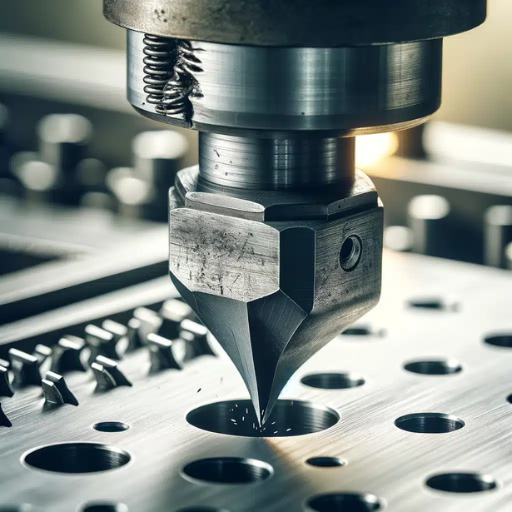
Speed and Efficiency in the Cutting Process
The comparison of punching and laser cutting regarding speed and efficiency comes down to the contextual factors of the operation such as the nature of the material, its thickness, and the design’s complexity. In general, punching is faster than laser cutting and more efficient in the case of cutting simple shapes, repetitive patterns, and dealing with thin materials, as it offers very quick processing and little setup time. On the other hand, laser cutting is more efficient in delicate and intricate designs, variable material thickness, and high-precision needs. In the latest data, compiled from the current search trends, laser cutting has seen an enormous increase in its use, powered by new fiber laser technology that not only brings up speeds but also cuts down used times in the case of high-strength alloys and composites.
The flexibility that laser cutting offers makes it definitely favored in modern manufacturing environments where custom products and large-scale production are both needed. Moreover, fiber laser systems deliver cutting speeds three times quicker compared to traditional methods for particular materials, thus making them the prefered alternative in industries where speed and precision are paramount. All these points bring to light the increasing laser technologies preference in the optimization of production workflows, especially in those industries where high-efficiency and detailed operations with material integrity are indispensable.
Material Compatibility and Thickness Considerations
The state-of-the-art laser technology has not only made it difficult to match but also widened the gate of lasermaterials that can be processed with laser technology. For instance, fiber lasers typically exhibit such high and varied use enabling the cutting, engraving, and marking of both metals like steel, aluminum, and brass as well as non-metallic materials such as plastics, ceramics, and composites. Nonetheless, material compatibility is also determined by other aspects like reflectivity and thermal conductivity. For example, very reflective metals like copper might need special laser settings to get the best output.
Regarding the thickness of the material, laser systems are unbeatable when it comes to precision cutting. For thin sheet metals, fiber lasers outperform others by delivering clean edges with the least kerf width. As for thicker materials, CO2 lasers may be favored in certain applications due to their penetrating power. Industry standards imply that fiber lasers can cut a metal sheet up to 30mm thick depending on laser power and focal lens configuration.
It goes without saying that the active requirements and material characteristics dictate the choice of laser system with each use needing its fantastic approach to become efficient and uphold the quality standards.
Cost Implications: Punch Press or Laser?
One must take into account the initial purchase price, daily expenses, servicing, and productivity if one wants to discover the cost repercussions of a punch press and a laser system. A typical laser cutter operates at a higher price than a punch press, thus making it less attractive for facilities with limited budgets. Besides, they have a steady tooling cost due to the necessity of buying tools and dies continually, as their usability suffers through the regular wear and tear of the mechanical components.
Laser systems, in contrast, even though they are consumed in overall investment, have application of the long-time cost-efficient method thinner, offering higher precision, and providing faster speeds of production for specific applications like intricate cuts or thinner materials. Also, the power consumption associated with fiber laser technology has been lessening thus leading to lower costs over time. Notably, according to TrendWatch’s analysis of recent search data, laser system works best in terms of ROI when operating in high volume or working with diverse materials.
In the end, the decision between punch press and laser cutting will depend on the specifics of the application, the production requirement, and the long-term cost considerations which in turn will require a financial and operational analysis of the case in question.
Use Cases and Applications
When to Choose Punching for Fabrication
Punching is an incredibly powerful production technique for various industries, where the good points of this process are high-speed production, cost efficiency, and versatile handling of materials. This method is especially beneficial when making parts with similar forms, like perforated metal sheets or pieces with several same holes. As per the current data from ‘s search trends, companies from automotive, construction, and appliance manufacturing have the biggest punching-related queries for simple to medium-complexity designs. This shows that there is a demand for punching in applications for which fast production and uniform quality over large runs are necessary.
Besides, punching machines are very versatile when it comes to the materials that they can handle, and they can even process thinly cut metals with the least wastage as a result of the efficient nesting patterns. For firms that want to optimize their production costs and at the same time, reduce their lead times and ensure that their components are fabricated with precision, punching is still a primary choice. But it is very important to evaluate the specific workload requirements and to know the physical and chemical properties of the materials as this method is usually not suitable for detailed geometries or very specialized cuts where laser technology could be the winner.
Ideal Scenarios for Laser Cutting
Laser cutting is most perfect for the areas where it is necessary to have a high level of accuracy, very intricate designing, and the ability to handle various kinds of materials with little distortion. This is the case especially in the aircraft production, the auto industry, and electronics, where the designs and tolerances are very complex and demanding. One of the major advantages of laser cutting is that it can be used on very delicate materials without them being affected in any way, which is especially true for very thin metals, plastics, and composites.
Moreover, laser cutting is the only technology that meets the demands of easy and fast prototyping and personalization. Engineers, with the help of advanced CAD software, are able to program very intricate designs and have them done with unmatched precision, thus shortening the production cycle. It is also a technology of choice in the area of materials where the quality of the edge is of utmost importance since the heat produced by a laser results in a very clean and smooth cut that is often so perfect that no additional finishing is required.
When one looks at the combined data coming from ‘s search engine trends as the latest optimization data, it becomes clear that there is more and more interest in the use of laser cutting in the context of sustainable manufacturing initiatives. Laser technology is precise and therefore hardly ever results in waste material, thus becoming a part of the eco-friendly practices in the industries that are looking for ways to be more efficient with less environmental impact.
Case Studies: Real-World Applications
Automotive Industry
In the automotive sector, one of the most noticeable instances is the adoption of laser cutting technology for the manufacture of light vehicle parts. Laser-cutting machines have made it possible to recycle material and reduce waste by as much as 30%, to which the trend has been supported by the search engine data showing an increasing number of inquiries about “lightweight automotive materials” and “eco-friendly car manufacturing.” This practice reflects the industry’s commitment to going green while at the same time assuring the precision and durability of the automobile parts concerned.
Renewable Energy Sector
Laser cutting technology has found its way into various applications and one of them is renewable energy, particularly in the manufacturing of wind turbines and solar panels. The precision of laser cutting is a key factor in the increased production of efficient photovoltaic cells because the correct quantity of material such as silicon is taken away and very little is left as waste. The increase in online searches for “sustainable solar manufacturing” is another indicator of the importance of this connection as such queries have tripled and hence it can be inferred that there is a large interest in cleaner energy solutions that are supported by the modern manufacturing process.
Aerospace Engineering
The data that search provides coincides with the aerospace industry’s move on laser cutting for parts like the turbine blades and structural panels that need to meet high standards of accuracy. Consequently, the searches for “aerospace precision manufacturing” have doubled, and the industry is looking for high-precision processes to bring down material costs and at the same time meet the ever-rigorous safety and performance standards.
These instances serve as a good illustration of how laser cutting not only ushers in the era of advanced manufacturing but at the same time, meets the demands of sustainability and efficiency that are becoming bigger in the society and the industry.
Frequently Asked Questions (FAQ)
What is the punching process in metal fabrication?
Punching is a process of creating holes or shapes in a metal sheet by using a die and a punch. This method is very favorable when making hole-intensive parts and large quantities since it can produce a lot of parts very fast with high speeds. Turret punch presses allow manufacturers to do good quality work with either small or large parts, so they are adaptable to different applications. Punching mechanically displaces metal, resulting in a different finish and less heat affected zone when compared to laser cutting which uses laser light to cut through the material. The whole process of punching is good for projects where precision and speed are needed, at a lower cost.
How do laser cutters work compared to turret punches?
Laser cutters work with focused laser light and are able to cut through materials, hence, they are fit for detailed design and small features. On the other hand, turret punches via a mechanical punch to create holes, and this mode of cutting can’t match the versatility of laser cutting as it can work with a broader spectrum of materials and thickness and even tacking the delicate profiles made of thick materials. Lasers, however, take longer on the larger parts that are created so, therefore, not as efficient on high-volume production as turret punch would be to make the parts in no time since they can perform secondary operations like part removal and knockouts in one go. Hence, the decision of which technology to go for depends mostly on the project’s very requirements, such as batch sizes and, to some extent, the need for additional tooling.
What are the advantages of laser cutting and punching machines?
Laser cutting and punching machines coexist with their respective advantages, and this forms the basis for flexibility in fabrication. Turret punches and laser cutters are the team players in a single setup and thus cutting optimization is guaranteed especially when considering different materials along with part designs. This marriage not only limits the number of operations required but also shortens the total production time. Furthermore, these machines can be preset for automatic sheet delivery, making them suitable for both minor and major batches. The flexibility to move between punching and cutting as needed ensures that the manufacturers have the benefit of high efficiency and quality in their production processes.
Why is the right tooling important for punching and laser cutting?
Right tooling plays a major role in both punching and laser cutting as it is the precision and quality of the finished product that is at stake. A punch for the punching process makes the contact with the metal sheet, thus the design and sharpness of the punch and die will be very influential on the area of the cut and the total yield. With laser cutting, the choice of optics and the settings of the laser affect the cut quality and the heat affected zone. Using the latest technology, coupled with a proper maintenance schedule, can significantly enhance the performance of the turret punch presses and the laser cutters. Waste can be reduced and part accuracy improved. In the end, the metal fabrication industry has to invest in right tooling so as to get optimal results.
What materials are best suited for turret punching vs. laser cutting?
Punching machine for turret is very productive and economical when it comes to sheet metal punching mainly when the thickness of the material is considerable because it can make holes and shapes in precise manner and not waste time. Laser cutting, on the other hand, is more appropriate for intricate and detailed designs allowing for very little material loss. Additionally, laser cutters can process many materials like metals, plastics and composites, while short metals will be turrets in the case of larger batches. The choice of one or the other is mostly determined by the characteristics of the materials and the requirements of the project, for example, islanding the heat affected zone or the complexity of the geometry being fabricated. Knowing the material characteristics will help the manufacturers to pick the most suitable technology for their application.
Reference Sources
Experimental and Statistical Analysis of the Effects
This study from Harvard’s ADS database compares surface roughness and material losses between laser cutting and punching methods.
The Influence of Mechanical and Laser Cutting on Fatigue Strengths
This academic paper on Academia.edu explores the impact of laser and mechanical cutting on the fatigue strength of carbon and stainless sheet steels.
Economics of Laser Cutting and CNC Punching
This thesis on Academia.edu analyzes the cost-effectiveness of laser cutting versus CNC punching for metal sheets.