Understanding 3D Laser Systems
What is 3D Laser Technology?
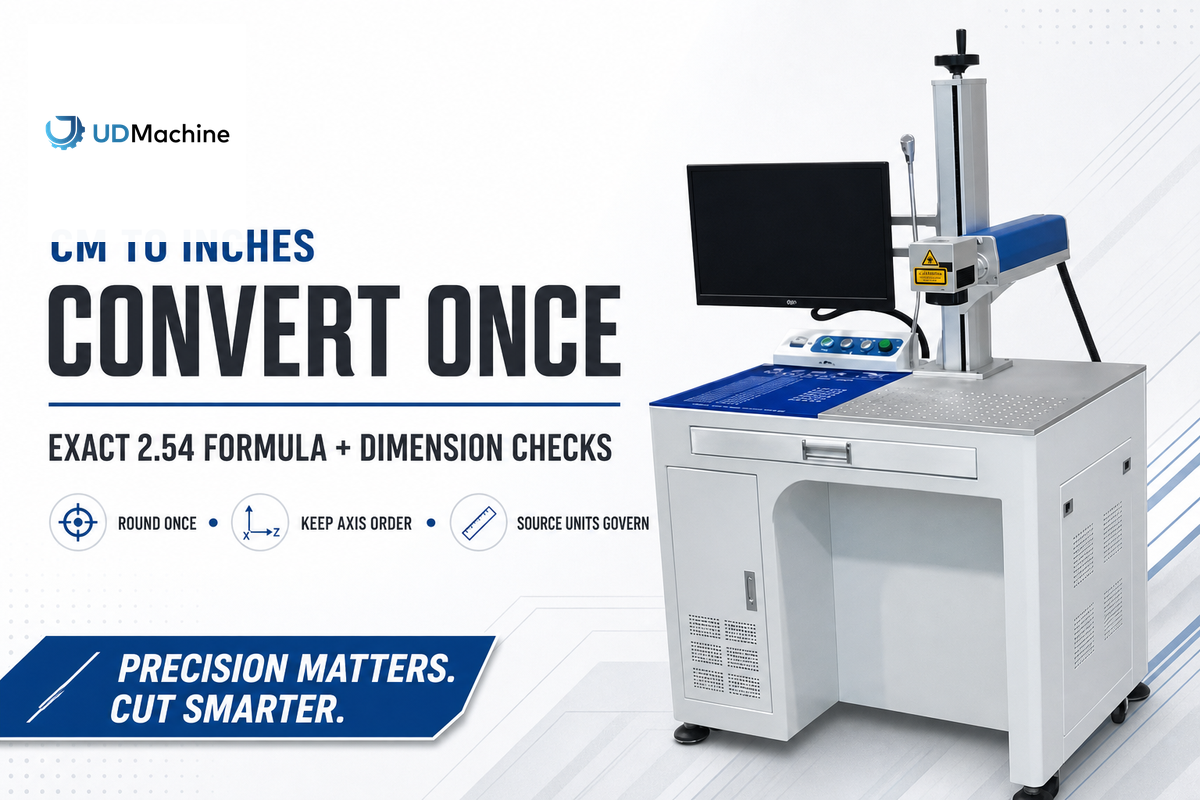
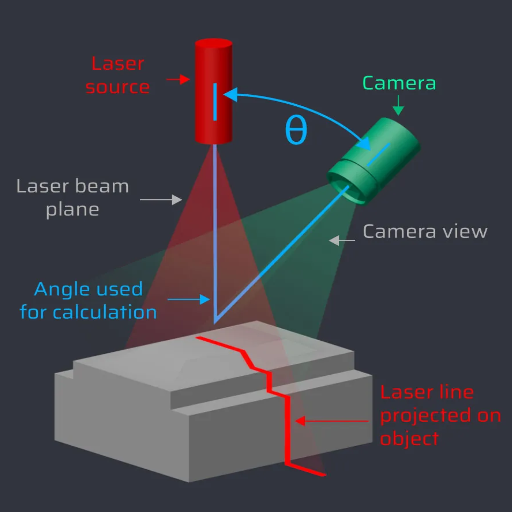
3D laser technology is an advanced system utilizing highly concentrated light beams to conduct intricate operations, including cutting, engraving, scanning, and welding on different materials. Unlike conventional techniques, 3D lasers use enhanced 3D coordination, allowing for the precise and highly detailed creation of designs. This technology is based on components such as laser diodes and scanners, including CAD software, to ensure the pinnacles of precision and control.
With such levels of precision, industries like aerospace, automotive, and medical can never tolerate the smallest breach of specs into bigger imperfections.
3D laser scanning facilitates rapid prototyping and reverse engineering processes. High-resolution scanners gather points at the rate of two million per second opposite to creating accurate 3D models of present objects. This data is vital when it comes to intricate iterations on design, quality control, and preservation of legacy systems.
Sustainability Impact: 3D lasers also contribute to sustainability efforts, as industrial laser systems reduce material waste by 25% compared to traditional manufacturing processes. This inventory level combined with faster turnaround times-that in certain cases approach the efficiency mark of 30% speedier than their conventional counterparts-makes 3D laser systems a desirable time-saving, and cost-effective way to spur industry developments across several sectors.
Types of 3D Lasers
There are various types of 3D laser systems, with each one fulfilling specific needs of industries and technologies. Here are the main types of 3D lasers with their capabilities and applications:
-
Fiber Lasers
These lasers, being believed to be among the most common varieties of 3D lasers, are very efficient and reliable. This system generates high-quality beams useful in cutting, welding, and marking applications. Fiber lasers are hence considered to be more energy-efficient than CO2 lasers by 50% and thereby adored by environmentally concerned manufacturers, according to current industry data. Actually, these types of lasers undergo heavy industrial usage in the automotive, electronics, and aerospace fields for performing precise processing of metals such as steel and aluminum.
-
CO2 Lasers
Being a gas mixture, a CO2 laser theory produces laser beams for excellent working on non-metallic materials, such as wood, glass, acrylic, and rubber. It ensures diverse cuttings with less damage to the texture, which accounts for its use in signage, furniture, and packaging applications. These CO2 lasers operate with cutting speed reaching 20 meters per minute depending on material thickness, assuring the speed of production.
-
Diode Lasers
Diode lasers, alternatively semiconductor lasers, are small, cheap, and versatile. They are primarily used in engraving, including marking, and medical applications. Using lesser power than the others, diode lasers are usually preferred for applications requiring less depth of penetration into material, for instance, engraving fine details on jewelry or electronics components.
-
Ultrashort Pulse Lasers
Through ultrafast femtosecond or picosecond pulses, it micromachines and delicately treats materials. The lasers can ablate materials without having any heat-related damage; hence, they find applications in electronics manufacturing, solar cell fabrication, and biomedical research. Recent developments have showcased ultrashort pulse lasers at ablation rates of 1.3 mm³/min for fine processing.
-
Excimer Lasers
Excimer lasers emit short-wavelength ultraviolet light used in extreme-precision applications such as lithographic semiconductor fabrication and laser eye surgery. They allow being resolved finer to feature sizes in the nanometer range, enabling further improvements to electronics and health technologies.
So overall, the differences in 3D lasers allow industries to select a system adapted to their operational requirements, optimization potential, sustainability, and precision.
Components of a 3D Laser Printer
A 3D laser printer is a complex machine comprising some major components, each of which is an absolute factor in the overall construction method. Below is a detailed dissection of the components:
| Component | Function | Key Features |
|---|---|---|
| Laser Source | Generate high-intensity infrared laser beam | Fiber, CO2, or diode lasers with high power efficiency |
| Optical System | Direct and focus laser beam | Mirrors, lenses, galvanometers with speeds >few meters/second |
| Build Platform | Support 3D object formation | Heat-resistant materials, ±0.02 mm accuracy |
| Control Systems | Manage laser and platform movement | AI-powered optimization, CAD data integration |
| Powder Delivery System | Spread material evenly | Layer thickness 0.02-0.1 mm, hoppers and recoater blades |
| Environmental Control | Prevent oxidation | Inert gas chambers (argon/nitrogen), filters, vacuum systems |
| User Interface | Control parameters | Cloud connectivity, remote monitoring capabilities |
| Cooling System | Prevent overheating | Water-cooled systems for better heat dissipation |
The Latest Developments: Therefore, from the latest developments in the field, implementation of newer advances in 3D laser printing such as adaptive optics and AI-based monitoring is further improving precision and scalability. For instance, some systems provide the utmost precision of ±10 microns, thereby aiding aerospace and medical device manufacturing in taking great technological strides. Therefore, continual improvement of these systems remains the forward path for faster, more reliable, and sustainable printing technology.
Applications of 3D Laser Cutting
Manufacturing and Industrial Uses
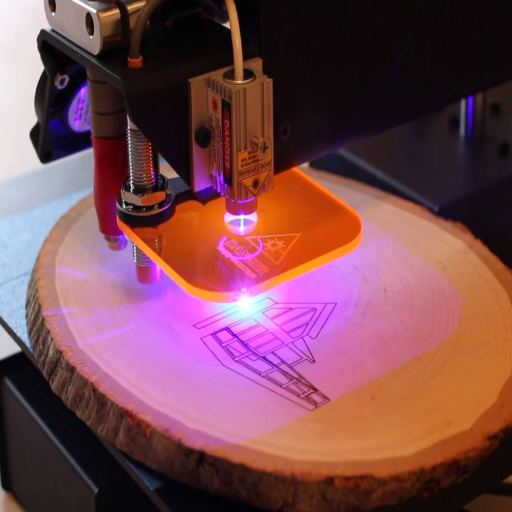
3D laser cutting has changed the manufacturing industry with its promise of unparalleled precision, incredible speed, and flexibility. This technology today is being exploited by manufacturers worldwide to create designs of utmost intricacy and complexity, something near impossible to do via conventional cutting methods.
In the manufacturing of automotive and aerospace vehicles, the biggest impact is felt in matters where precision and wastage of minimum amount of material are required. Directs laser should be able to cut metals such as stainless steel, aluminum, and titanium, with less error and thus more productive. Before the late modern-world scenarios wherein industries now marry laser systems with automation, smooth running and high throughput are granted! Fiber lasers are favored because of their utmost efficiency and low operational costs. The least impact of these developments is upon establishing high industrial standards while increasing their efforts to reduce energy consumption and waste materials.
Thanks to its scalability, 3-D laser cutting becomes a process that is really good for small-batch production or merely prototype making because it holds time and costs at bargain rates. Due to the recent advancements in technology, 3-D laser cutting will keep ascending an ascension course, redefining efficiency, and innovation in the industry.
3D Laser Technology in Healthcare
A 3D laser system has risen to be among the newer area instruments in healthcare, revolutionizing numerous medical applications and bringing quality patient care to its patients. One of the most important potential applications is in the establishment of medical implants and prosthetics. Using selective laser sintering and laser cutting techniques, implants are manufactured to suit the peculiar anatomy of the patient for better comfort, better function, and best efficacy.
Much 3D laser technology is used in medical imaging and diagnostics. The final laser scanner allows imaging for high-resolution images needing surgical planning with fine detail. Advanced 3D laser scanning techniques further allow complex procedures to be mapped out, such as cranial surgery and spinal reconstruction, with perfect precision to lessen risks and increase accuracy.
Recent statistics served only to show how fast 3D laser technology is engulfing the theatre of bioprinting, a process that implies creation of tissues and organs layer-by-layer. As per Allied Market Research, the global 3D bioprinting market stood at $1.3 billion in 2022 and is forecast to rise to $6.5 billion by 2032, at an approximate 17.6% CAGR.
Such growth shows that there is more and more reliance on laser technologies for manufacturing biomaterials for regenerative medicine.
Besides such, the field of 3D laser application has landed strongly in dentistry. Laser-guided production methods are presently utilized in restoration techniques for crowns and bridges with minimal turnaround time and maximum-enduring results. Also, the ability of laser-assisted design and cuts increase the value of dental care.
The combination of 3D laser technology into healthcare continues to evolve abundantly with no end-from producing restoration materials for patients to laser-aided surgery techniques. The 3D laser is a progressively influencing factor within the healthcare industry for efficiency, individualized care, and better patient outcomes.
Architectural Design Innovations
Architectural design saw revolutionary advances through the integration of their technological knowledge, sustainability efforts, and innovative materials. One such area of progress is in parametric design, whereby architects employ algorithms and digital tools to optimize building forms in terms of aesthetic grounds as well as functional performance.
Case Study: The Al Bahar Towers in Abu Dhabi feature a dynamic façade inspired by Islamic latticework that has been parameterically designed to reduce solar heat gain and consequently slash around 50% of energy consumption.
Another big incentive for the architecture world is sustainability. Green building certifications such as LEED (Leadership in Energy and Environmental Design) purportedly encourage the designer to work with at least some set of renewable energy resources, energy-efficient systems, and environmentally sustainable materials. The U.S. Green Building Council in 2022 has reported buildings with LEED certifications have earned an energy cost reduction of about 25% since compared with ordinary buildings.
Simultaneously, 3D-printing is revolutionizing monolithic construction, allowing faster timelines for projects and generating less waste of materials. For instance, the Office of the Future-3D-printed in Dubai was completed in just 17 days, with material requirements being 60% lesser than that of traditional construction. Modular construction methods are also gaining some considerable traction, particularly in the domain of addressing housing shortages. According to a report from McKinsey & Company in 2023, modular construction enables project build times to be reduced by 50% and cut cost by 20%.
These innovations in architectural practice are understood to enable the creation of more intelligent and greener having efficient buildings that promise to reshape urban space.
Benefits of 3D Laser Technology

Precision and Accuracy in Production
3D laser technology has essentially disrupted the way production is done, thus offering unmatchable precision and accuracy. It offers manufacturers a ±0.001-inch tolerance, dependent on the material and application, for the flawless execution of the most complex designs.
It gathers millions of data points every second to build incredibly detailed digital representations with unmatched clarity. This reduces human errors during measuring and cuts down material losses since it only cuts or shapes components precisely where it is required. MarketsandMarkets reported that the 3D laser scanning market should rise to $7.1 billion by 2028 from $4.4 billion in 2023 due to increased application areas across construction, healthcare, and industrial manufacturing. This indicates that the 3D laser technology is not only making precision levels finer but also making them sustainable and scalable in production environments in today’s world.
Efficient and Cost-Effective
3D laser scanning technology is changing the world, creating unique possibilities for the industries it is involved in by saving a lot of time and ensuring that the process is carried out efficiently. It can immediately capture precise data, so there is no need to wait for hours compared to traditional methods, reducing costly delays in measurement and surveying. For example, sites that were once designed and mapped in weeks are now finished in days, leading to faster project closure, thus saving on labor costs.
Construction and manufacturing industries benefit immensely, as accurate scans reduce costly rework and errors. Also, the technology can be integrated into CAD and BIM software to make work smoother with fewer interruptions, supporting whole teams to establish their own real-time changes.
Longer operational savings are what 3D laser scanning can add to beyond mere upfront cost efficiency. A hospital in the healthcare means is assisting a healthcare-enhancing spatial layout by promoting patient flow and lowering the cost of poor space utilization. This kind of precision combined with economic scalability explains why 3D laser technology is increasingly seen as a competitive tool for an advantage.
Flexibility and Customizability of Designs
According to studies, 68% of architecture and engineering firms that implemented 3-D scanning were able to reduce errors in timelines drastically.
The digitalization of spaces or objects creates a very accurate representation in the computer, and this lets the designer modify and iterate by precision so that waste is minimum and resources are used appropriately.
In construction, 3D scanning assures that models and layout are created exactly according to the project requirements. It is an advantage for retrofit and renovation projects wherein the existing structure has to be measured with extreme accuracy and then altered to the design requirements. Product manufacturers use 3D laser scanning to quickly change prototypes, thereby decreasing product development by almost 30% compared to traditional methods.
What makes 3D laser technology stand out is its affinity for 3D-Land across multiple software tools, where professionals can manipulate and view their designs with frightful ease. This indescribable and universal adaptability encourages stakeholders in architecture, engineering, manufacturing, and entertainment industries to deliver on their vision with confidence, knowing they will be able to keep costs and time down.
Recent Advancements in 3D Laser Technology
New Materials and Techniques
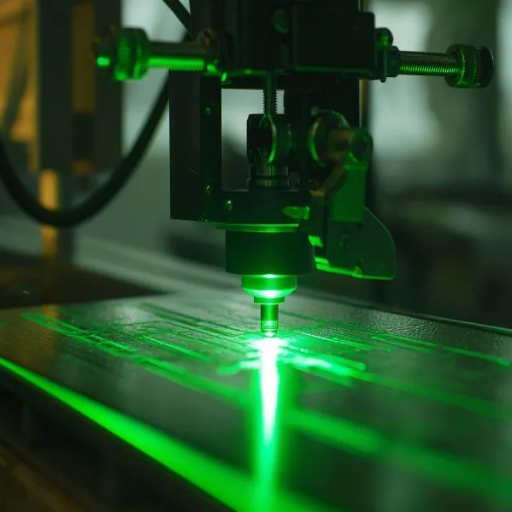
The evolution of materials and techniques in 3D laser technology has seen a huge increase in the field of application and scopes. One such advance lies in the introduction of composite materials such as carbon fiber-reinforced polymers which may offer light-weight yet strong alternatives. These materials are increasingly finding their use in the aerospace and automotive industries, where strength is a matter of uncompromising consideration.
On the other hand, nanomaterials on the ultra-fine scale are employed to maintain an even higher level of precision in laser-based operations. For instance, nanocomposite resins ensure that 3D laser printing can achieve design intricacies and complexities never before conceived in conventional processes.
Being the other technique entering femtosecond laser processing using ultrashort pulses and then revolutionizing the technique, this processing technique can desirable machining and shaping of delicate and heat-sensitive materials, say a medical-grade polymer and some metals, without thermal damage. Consequently, this technique is gaining acceptance in microelectronics and medical device manufacturing.
Hence these developments, supported by ongoing research, attest to the new materials and better techniques, claiming 3D laser technologies to force the industry toward efficiency, sustainability, and designs never conceived before.
Integration with Other Technologies
The integration of 3D laser technology with other emerging technologies has opened new horizons across various industries. For instance, combining 3D laser systems with artificial intelligence (AI) and machine learning enables greater precision and automation in complex manufacturing processes. AI-driven algorithms can analyze data in real time, constantly adjusting laser parameters to maximize efficiency and minimize emission.
The other way to create new potential for 3D laser technology is with robotics as a partner-agent. Packed with highly mobile systems, these robots could do laser-based activities that include cutting, welding, and engraving with precision, speeding their work and providing consistency.
The integration of 3D laser technology with other emerging technologies has enabled an entirely new host of applications across industries. For example, a 3D laser system combined with AI and machine learning can perform very fine and advanced automation of a complicated manufacturing task. AI-developed algorithms consider the data in real time and keep adjusting the parameters of lasers to get maximum efficiency and minimum emissions.
Full-Spectrum Laser Developments
The rapid progress in the full-spectrum laser field has unfurled multiple potentials for various industries. Indeed, these lasers perform at peak efficiency through their respective enormous wavelength domain ranging from ultraviolet to the infrared, thereby, offering accurate applications such as cutting, marking, engraving, and, in fact, the medical area.
Recent data estimated the global laser technology market to $25.6 billion by 2027, growing at a CAGR of 8.9% during 2022-2027. The heightened integration of full-spectrum lasers for advanced manufacturing processes and industrial automation has largely spawned this growth.
A key area of development is laser-based healthcare solutions: UV lasers are used in state-of-the-art dermatological solutions and surgery applications, whereas infrared applications shine in non-invasive imaging technologies such as optical coherence tomography (OCT). Full-spectrum laser systems are simultaneously fostering breakthroughs in electronics manufacturing, producing more complex and smaller components with absolute precision.
These systems are also transforming the clean energy industry. Laser-based precision—manufacturing is that new edge to make solar panels and other renewable technologies efficient. Thus, it brings another weight of ecological sustainability asking for more breakthroughs that will benefit industries and environment alike. Partnered with increasing system robustness, the diverse range of wavelength capability ensures that full-spectrum lasers remain at the forefront of technological development.
Future Trends in 3D Laser Applications
Growing Markets and Industries
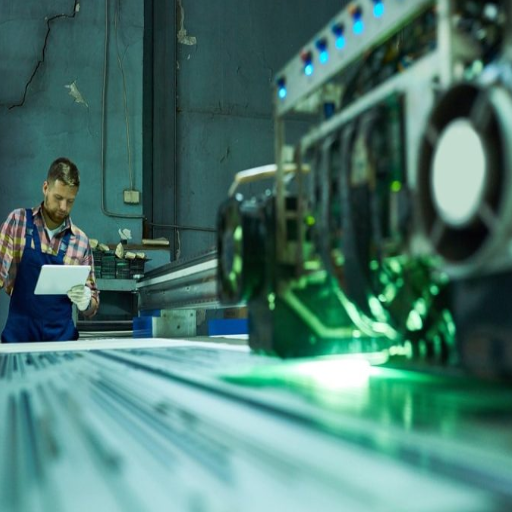
There are claims by industry analysts that the additive manufacturing sector at the global level will witness a CAGR of 21.1% for the time period spanning 2023-2030.
Another fast-developing sector is the automotive field, employing 3D laser welding, cutting, and quality-checking procedures in manufacturing processes, thereby increasing production efficiency and lessening wastage. Growth in the automotive laser market to $8.5 billion by 2026 forecasts further adoption of laser-based manufacturing.
In other facets, 3D laser applications in health are also progressing rapidly. The medical industry increasingly looks to lasers for the precise conduct of treatments, be it laser-guided surgery or the manufacture of customized implants and prosthetics.
3D laser scanning technologies further enable the construction and architecture industries to enhance their design and planning processes. By providing ultra-accurate 3D models of structures and sites, these laser technologies have revolutionized the workflow, drastically cutting down the project times and costs.
The burgeoning markets in environmental monitoring and renewable energy sectors are also discovering the potentiality of 3D laser systems. This is to say that lasers are being put to use for atmospheric measurements and assessments of renewable energy systems such as wind turbines and solar panels. These innovations are in tune with the global momentum toward sustainability in industrial processes.
With the continuous upgrading of 3D laser technology, there exist very huge opportunities that disrupt the traditional industries while unlocking new markets. It is, therefore, evident that the technology is a major driver of economic and technological progress in the years ahead.
Modular 3D Printing Solutions
Modular 3D printing solutions offer more flexibility than any other manufacturing method. They last the longest, are most scalable, and, therefore, are the most efficient. A modular printing system consists of modular units that are interchangeable and can be configured depending on the choice of the manufacturing process, which might be different for the aerospace industry, medical field, automotive sector, or consumer goods domain.
As per the latest market analysis, the global 3D printing market was accounted at $17.4 billion in the year 2022 and may stand at a volume of $44.5 billion by 2026 in view of the increased popularity of modular and customizable printing systems.
However, modular 3D printing is considered to be mostly inexpensive. Since a company may just update or replace one or a few modules of the overall 3D printing solution during its operational lifetime, the overall operational cost over time becomes even more affordable, and the enterprise retains the best of capabilities (for example, the present-day capability level). So the modular solution may be upgraded to include additional print heads, larger build volumes, or advanced material handling systems-without the need for a new setup. Because of such adaptability, much of the time that was lost with all this milling and resetting-down in terms of induced downtime and waste-has been reduced; hence, this has assisted production towards sustainability.
Along with various other advantages, modular systems provide the possibility of exploiting materials such as metals, composites, and bio-based polymers. This capability has majorly affected the health sector, where medical devices and implants of custom specifications can be created for the needs of an individual patient.
A report issued just recently in 2023 mentioned that the manufacturing cost for 3D-printed medical parts has had a stark reduction of up to seventy percent, thus really restricting the availability of these life-saving devices.
The modular 3D printing solutions, in a nutshell, are the foundations of a newer age of manufacture support and create. The integration of state-of-the-art technology with a scalable design renders industries to be flexible in their evolution, with ever-changing demands, cost-cut reduction, and green initiatives.
AI and Automation: Transforming 3D Laser Technology
AI and automation have been great changing agents in 3D laser technology, infusing efficiency and precision in manufacturing and industrial applications and making the industries scalable. Laser technologies empowered by AI systems analyze highly complex designs within seconds, optimize cutting paths, and flag any potential flaws in real-time. A recent advancement involves even machine learning algorithms that can dynamically adjust the intensity and focus of the laser, enabling better utilization of materials with less waste.
To give an example, AI-automated laser engraving machines have been applied in the automotive industry to manufacture high-precision complicated components with a tolerance of ±0.02mm. AI-based predictive maintenance systems keep track of laser equipment performance and will predict when a failure is imminent so that maintenance can be performed before the failure, thus reducing downtime significantly.
Automation and computer control have also made the production line more scalable. Automated 3D laser systems run all day long with limited supervision, thus allowing a company to keep up with demands of high volumes efficiently. This is quite noticeable in fields such as aerospace and medical where go-highly customized components are made with unmatched precision. This integration of automation and AI has also dramatically brought down the cost, and therefore producing better results, which paves the path for industrial lasers of tomorrow to be more intelligent and sustainable.
Frequently Asked Questions
What is 3D laser cutting, and how does 3D laser cutting?
3D laser cutting means the functioning of a high-powered laser beam onto cutting and engraving materials in three dimensions. It is the application of high-quality 3D laser cutting machines, which can handle materials with minute accuracy. This kind of cutting allows replicas of numerous exquisite designs and shapes that could hardly be recreated by any traditional kind of cutting. The laser beam can rotate and translate along several axes for the process of turning out some highly complicated three-dimensional thousands. With the advancement in Laser technology, such as CO2 lasers, the finishing could become much more precise, thus allowing better efficiency during cutting.
How is the laser cutting facility incorporated into a 3-D printer?
Incorporating laser cutting technology into 3D printers is supposed to be done through a laser head that allows 3D printing and cutting. The machine can prepare an object with intricate details joining cutting or engraving with a surface design. The combination of 3D printing and laser cutting really allows the best use of time during production and also beyond the capabilities of the machine. Being modular implies that swapping between 3D printing and laser processing is an easy and smooth experience, thereby disregarding production. This latest layout is ideal for small-scale manufacturers and hobbyists who seek to automate production processes.
What are the advantages of laser engraving using a 3D laser cutter?
The laser engraving process by a 3D laser cutter comes with a lot of advantages, notably generating the most precise results on a multitude of surfaces. The origin of the strength of the laser is at a very high level and can create the smallest detailed components to engrave on a surface with customized product designs. Another thing I like about it is that some types of machines can be transported for use anywhere, meaning they could be put to use inside the workshop or at the production site. With engravings occurring via this technology, it is easy to witness and analyze issues in real-time. In Summing up, engravings beautify the products and at the same time preserve functionality in the production process.
What can one work on through the processing of 2D and 3D laser technology?
2D and 3D laser technologies process wood, acrylic, metal, and textiles are just some of the sorts of materials. Inability to favor one function-engraving or cutting-also makes the mode of the laser cutter career-oriented for different applications in art and manufacturing. One can thus make use of different types of lasers, CO2 lasers, or fiber lasers, depending on the materials as well as the kind of work that needs to be accomplished. The technology ensures that elements are manufactured on a large scale while offering great measures of accuracy and detail. Therefore, companies take up laser processing in making cutting-edge products targeted toward specific market needs.
How does one calibrate the 3D laser printer for best operation?
One considers calibration very much to ensure that the 3D laser printer operates at its best performance with the highest quality results. The very first consideration is to check the alignment of the laser beam, which aims that it should be in focus on the work surface. You adjust the height of the laser head and check its alignment on both the X and Y axes to ensure proper functioning. Likewise, calibration settings for different materials should also be checked regularly for the sake of retaining accuracy during the cutting or engraving process. Monitoring its running performance in this regard would certainly allow him to pick out discrepancies and correct them towards the best running of the laser printer at all times. The ultimate benefit of this is the advancement in the quality of the three-dimensional parts.