Fraud Blocker
UDTECH

Automatic Phoenix Roll Machine — Seaweed and Pork Floss Snack Production Line by UDTECH (UD-02)

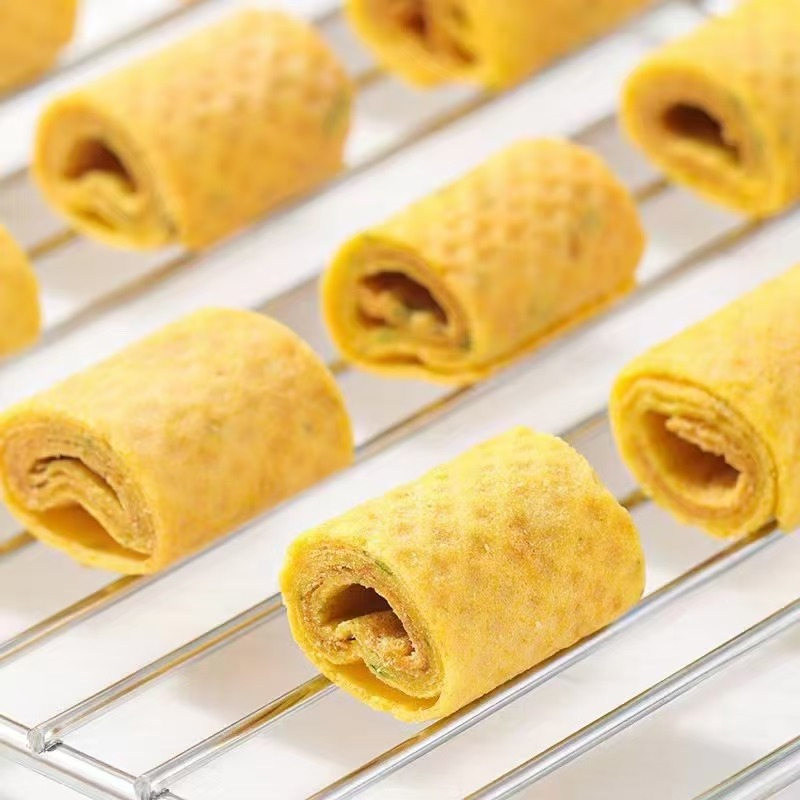
The UDTECH UD-02 can produce filled phoenix rolls-the seaweed-wrapped, pork-floss-and-granule-filled crispy wafer snack-at 720 pieces/hour with full-time automation from batter mixing to roll demolding. One smart controller manages the rotation at each step: laying the seaweed, dispensing the batter, heating the batter for baking, folding the dough sheet into a cake, rolling that cake around the fill, and demolding the roll. That process supplants hand-rolling.

  • CE-aligned 2006/42/EC
  • FDA 21 CFR 117 food-contact compliant
  • ISO 9001 quality management
  • Full stainless-steel construction
  • 10+ years in production
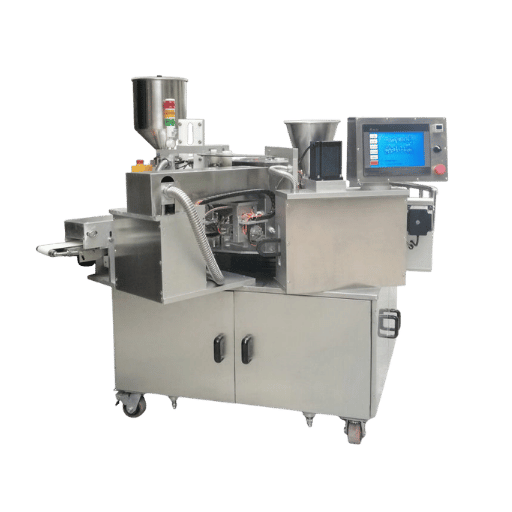
Automatic Phoenix Roll Machine UD-02 by UDTECH
720 pieces / hour, fully automatic
12 kW power, three-phase 380 V
2.3 × 2.0 m compact footprint (960 kg)
6 stations rotary place → inject → heat → fold → roll → demold
3+ fillings seaweed / nori, pork floss, granular powder
PLC + servo multi-channel servo, fiber-optic sensing
Get in touch with UD machine company
Contact Form 在用

Solving Production Bottlenecks in Phoenix Roll Manufacturing

There’s a labor problem in making phoenix rolls. On a typical line, food workers turn and shape individual savory, seaweed-and-pork-floss-stuffed wafers at rotary stages by hand, and output eventually maxes out where operators’ hands tire. It’s an inconsistent product, with variation in shape, fill weight, and the incidence of cracked rolls, as tired hands tend to do more damage to fragile wafers. For commercial food companies serving grocery, online shopping, or gifting marketplaces, hand-rolling has created an impasse between throughput and consistency.

UDTECH engineers addressed that impasse in designing the UD-02, a fully automatic phoenix roll machine in which the entire wafer is formed through six successive rotary stations operating under a single controller: seaweed layout, batter filling, heating, folding into a cake, rolling, and roll ejection onto the transport conveyor. Precisely controlled heat holds the wafer in a narrow window of rigidity and pliability for clean folding and rolling, which prevents premature cracking. Output is consistent, clean-tasting rolls at production speeds that satisfy retail packaging and contract-manufacturing needs: 720 per hour, with a clear gain in pieces produced per operator.
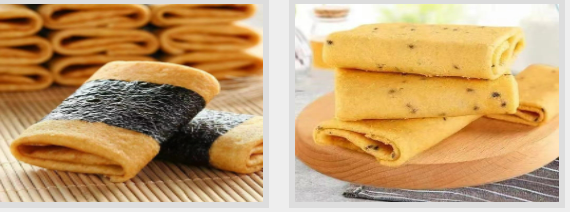
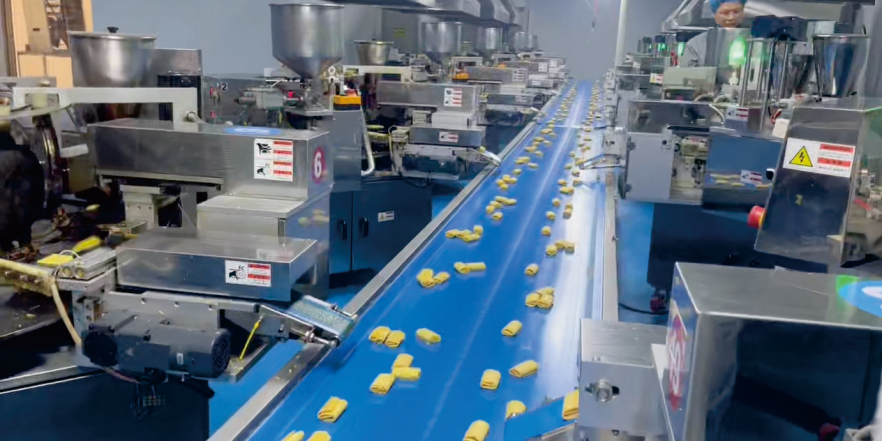
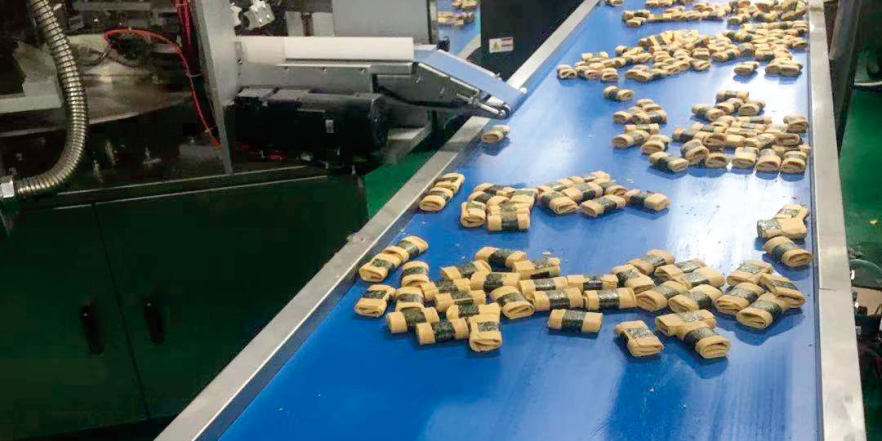
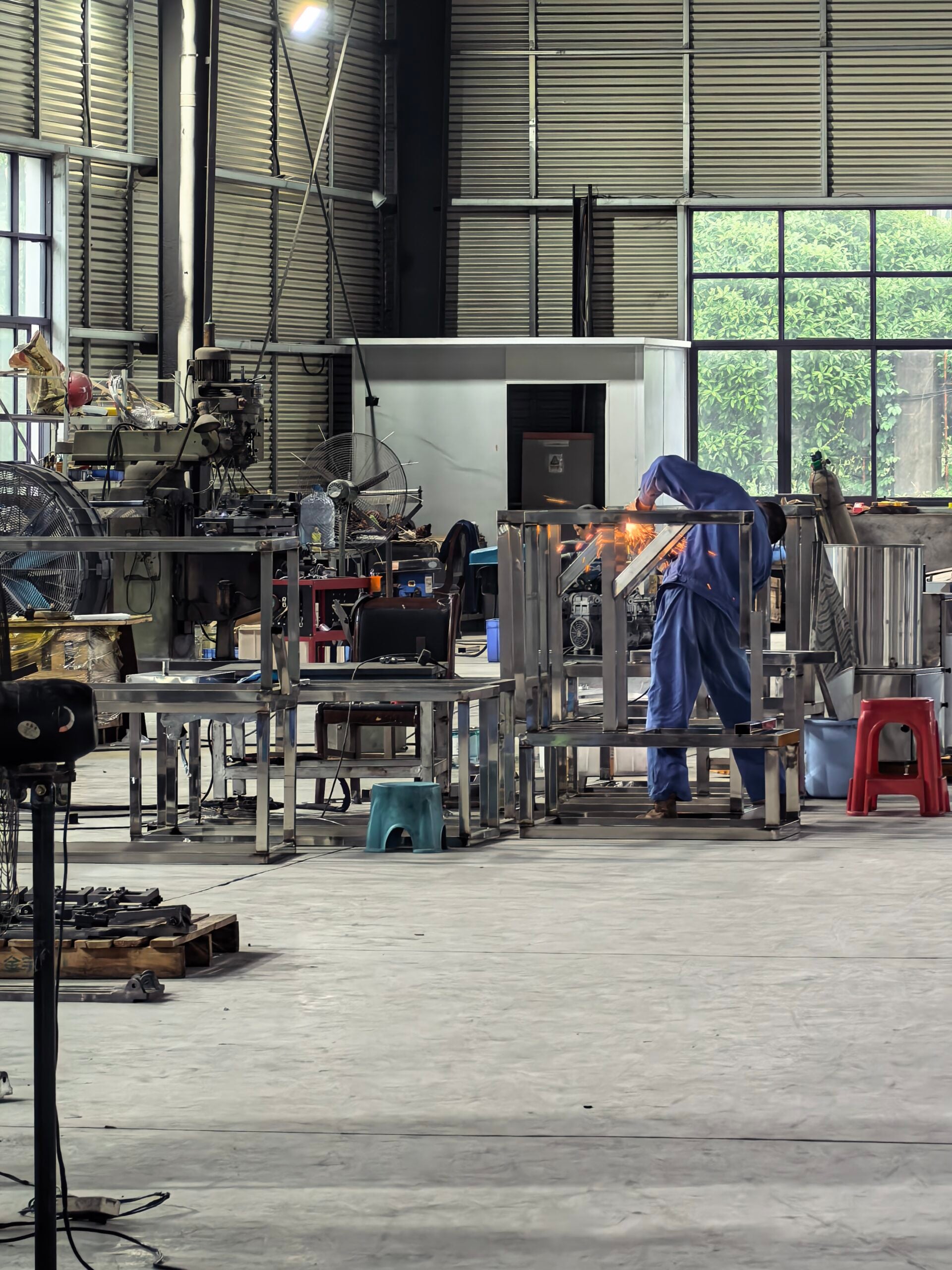
UD-02 Phoenix Roll Machine Factory Production Line
UD-02 Automatic Phoenix Roll Machine Components

For procurement managers in the industry, one item worth clarifying upfront is that a phoenix roll machine is unrelated to other “roll” manufacturing devices. That term doesn’t mean a cannabis pre-roll machine, for instance, or a food roll like sushi. It’s an equipment-defined product within the broader class of rolled wafer snacks, very close to wafer egg rolls, but distinctively different due to its savory seaweed and pork-floss filling instead of sweet cream or fruit. For that reason, having made wafer-rolled snacks for over a decade, UDTECH engineers focused on a dedicated phoenix roll production line from scratch in building the UD-02, as opposed to retrofitting a more general machine.

UD-02 Phoenix Roll Machine Engineering Details

ENGINEERING NOTE — WHY SEAWEED FILLING CHANGES THE MACHINE

A number of features are specific to fabricating the sandwich of seaweed sheet and pork-floss-and-granule filling. Its seaweed sheet must be laid evenly and held in alignment before the batter sets; because the floss is low-density and fibrous, a specialized depositor meters the mix without crushing the strands. UD-02 meets that with a dedicated seaweed layout station ahead of the depositor, where photoelectric sensors track sheet position as it advances with each step of the rotation. Switching roll type is a recipe adjustment for the granular fill materials rather than a hardware change, so the single, customizable UD-02 line can produce many varieties.

UDTECH UD-02 Phoenix Roll Machine — Specifications & the Rotary-Station Workflow

UDTECH offers a single model, the UD-02 — a fully automatic, single-line phoenix roll making machine. Its intelligent control system runs on CNC PLC programming, multi-channel servo linkage, and fiber-optic photoelectric sensing across a rotary table, with food-contact parts fully encapsulated in food-grade stainless steel. Aluminum-alloy members frame the machine for rigidity, productivity, and easy sanitation; every figure in the tables below is exact data from the UD-02 datasheet.

UD-02 · Fully Automatic

Designed for Food Companies making stuffed Phoenix Rolls for gift-market, e-commerce and retail outlets. Automated from lay of algae up to demolding thanks to Rotary Station working, with Recipe based stuffing swap between productions.

Capacity720 pcs / h
Power12 kW
Power supplyThree-phase, 380 V
Compressed air0.2 m³/min, ≥0.6 MPa
Dimensions (L×W×H)2300 × 2000 × 1400 mm
Net weight960 kg
ConstructionStainless steel + aluminum alloy
ControlCNC PLC + multi-channel servo
SensingFiber-optic photoelectric

Best solution for High End Food Companies making stuffed Phoenix Rolls for gifting and e-commerce purposes, in small, medium and large dimensions.

Filling Versatility — One Machine, Several Phoenix Roll Variants

UD-02 working system features both an interchangeable filling depositor and laying, as main distinguishing characteristic in opposition to the standard 1-product fixed line machines.

Seaweed / nori sheet
Laid & registered
Pork floss
Metered, no crushing
Granular powders
Recipe change
Custom blends
Configurable
Changeover
Recipe-driven
Skin
Crispy rolled wafer
Meaning For Makers

To be able to produce different filled Phoenix Rolls including seaweeds (chicken/pork flavor fillings) or powder (matcha/coffee/sugar flavor fillings) using the identical, flexible machinery by switching the product blended to seasonality & gifting marketplace demand-without needing another machine unit.

The Rotary-Station Workflow

Working on a Continuous rotary manner, every turn of the table moves the specific rolled cake with the next stage in sequence of the different machine parts in the production-thus as soon as one machine component completes, the next machine part starts the next working component in real-time of an entire line operation and vice-versa, e.g. a roll leaves the moulder as a subsequent one moves forward into mold, into folding, into heat-transfer module, etc..

1
Lay seaweed

Nori sheet placed and registered on the wafer base

2
Inject paste

Paste injection meters filling onto the sheet via the servo depositor

3
Heat

Automatic temperature control bakes to the forming window

4
Fold cake

Wafer folded around the filling

5
Roll

Tight crispy roll formed without fracture

6
Demold & convey

Finished roll discharged to the cooling conveyor

Driver The UD-02 fits when Talk to us about a line when
Output target Up to ~720 pcs/h on a single line You need parallel lines for higher volume
Product mix Seaweed / pork floss / powder-filled You add unrelated snack formats
Channel Retail, e-commerce, gift-box packaging You need integrated downstream flow-pack
Plant power Three-phase 380 V available You require a different supply voltage
Floor space ~4.6 m² footprint plus clearance You want a multi-machine cell layout

Engineering Note — Servo Linkage, Sensing, and Air

Multi-channel servo linkage drives the feeding, folding, and laying stations electronically rather than off a single mechanical cam, so the timing between stations can be programmed in the PLC for different fillings and wafer recipes. Position is checked at every point of the working table through fiber-optic photoelectric sensors, which keeps a misfed wafer or a missing seaweed sheet from turning into a jam. Power consumption is 12 kW on a three-phase 380 V supply, and a 0.2 m³/min compressed-air feed drives the demolding and discharge actuators — plants should size their air line and dryer to hold ≥0.6 MPa continuously during production.

Automatic vs Manual Phoenix Roll Production — Performance Comparison

An honest benchmark for a phoenix roll machine is not another supplier’s spec sheet — automated competition in this niche is thin. A more useful comparison is against the manual and semi-automatic methods most producers run today, as set out below. Those manual figures are industry-generic ranges; they shift with each crew’s spec and skill, and none were taken directly from UDTECH operations.

Metric UDTECH UD-02 (automatic) Manual / semi-automatic (typical)
Output per line 720 pcs / h Highly variable, operator-bound
Labor per line 1–2 attendants Several rollers per shift
Shape & filling consistency Servo-controlled, uniform Drifts with operator fatigue
Filling changeover Recipe-driven Re-train / re-set by hand
Hygiene Full stainless enclosure, less hand contact High hand-contact
Temperature control Automatic, closed-loop Manual judgement
Footprint ~4.6 m² Bench space + multiple stations
Power 12 kW (380 V) Mostly manual
UD-02 Automatic Phoenix Roll Production Output

Financial & Operational Insight

What finance wants to see is labor against output. Shifting filled phoenix roll production from hand-rolling to a single automatic line collapses the output of a full rolling crew onto one machine run by one or two attendants — a step-change in labor efficiency — while tightening the shape and filling-weight control that drives both consumer acceptance and lower giveaway. Across food-line automation, producers who invest on total cost of ownership rather than purchase price report much better ROI, higher plant uptime over the years, and fewer disruptions — as true for phoenix rolls as for the broader snack sector.

Would you like to know how a UD-02 line performs against the economics of your hand-rolled operation?

Get a line-side comparison sized to your situation →
Get in touch with UD machine company
Contact Form 在用

Customer Outcomes & ROI — Labor Down, Output Up

Automating hand-rolled snacks has a three-pronged impact on plant economics - all of it positive. These numbers reflect industry averages for the snack and biscuit industries, based on studies that measure total cost of ownership. They are sectoral, not equipment-specific benchmarks, and should serve as indicative figures rather than guaranteed, firm returns; the ROI from our UD-02 line is necessarily driven by the labour rate and output level at which your operation runs, and the efficiency of your utilization; for that reason, we prepare a bespoke ROI worksheet for each quote.

Industry-Wide Snack & Biscuit Automation ROI Pattern
18–24 mo

Typical payback period for snack / biscuit automation

25–45%

Annual savings on initial investment (labor + waste)

Up to 70%

Labor cost reduction with line automation + packing

< 2%

Waste rate achievable with closed-loop temperature control

+40%

5-year ROI advantage for TCO-based buyers vs unit-price buyers

Sources: Broadly comparable sector-specific reports from independent sources, including EverSmart, Qviro, Oxmaint, AMD Machines and Loyal Food Machinery. These are sector benchmarks, not UDTECH-specific data — request a custom ROI sizing for your phoenix roll operation.
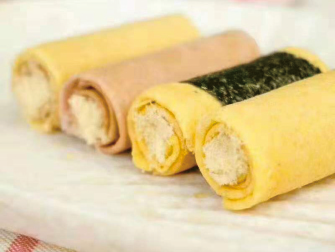
Hand-rolling to UD-02 Automation Transition

Pattern 1 — Hand-rolling to UD-02 (typical transition)

Switching from a hand-rolling crew to a single UD-02 line for filled phoenix rolls lets operations aggregate the throughput of many rollers into one machine run by one or two attendants, while holding tighter control on shape and filling weight across a shift. Payback on this kind of labor-led snack automation commonly lands in the 14–22 month range.
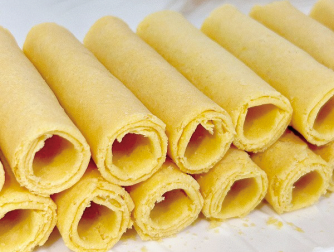
E-commerce and gift-market scale-up

Pattern 2 — E-commerce & gift-market scale-up

For many producers that supply the e-commerce and gifting channels, ensuring a uniform appearance across a very large production batch is critical, as visual inconsistency can result in rejected products on even a small delivery. Through consistent output shape, controlled by servo forming and closed-loop temperature control, our automated system dramatically reduces the incidence of both rework and giveaway in a gift presentation.
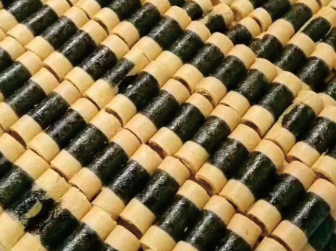
Multi-variant phoenix roll production

Pattern 3 — Multi-variant production

If your operations routinely produce and supply several varieties of phoenix roll, our recipe changeover function supports easy transitions from seaweed to pork floss, or powder fills - on the same line - which avoids investing in multiple dedicated lines and maximises the efficiency of a single UD-02 through-out the product range.

Each UDTECH quote includes a customized worksheet that accurately measures the economic returns at your operational level-incorporating your particular labour rates, target output, and level of asset utilization. Generic ROI metrics have their value in a high-level check; however, the data that actually gets signed off at finance centres on the specific kilogram/hour, attendant/line and waste/thousand pieces values that compound favourably over the years. The e-commerce/gift presentation requirement on phoenix rolls introduces another key metric that automation significantly influences; that is the percentage of product output passing visual inspection and control, and we can ensure that percentage improves on levels achievable by hand.

Food Safety Certifications & Compliance

UD-02 is engineered to the harmonized standards for food-contact materials, machine safety, and quality management. A full compliance set ships with every machine, and specific certificate numbers and issuing-body references are provided in the procurement package for your audit file. UDTECH builds every product to the regulations that apply across the food-processing sector as default scope rather than an optional upgrade, so a phoenix roll machine is held to the same framework as any other snack and bakery production equipment.
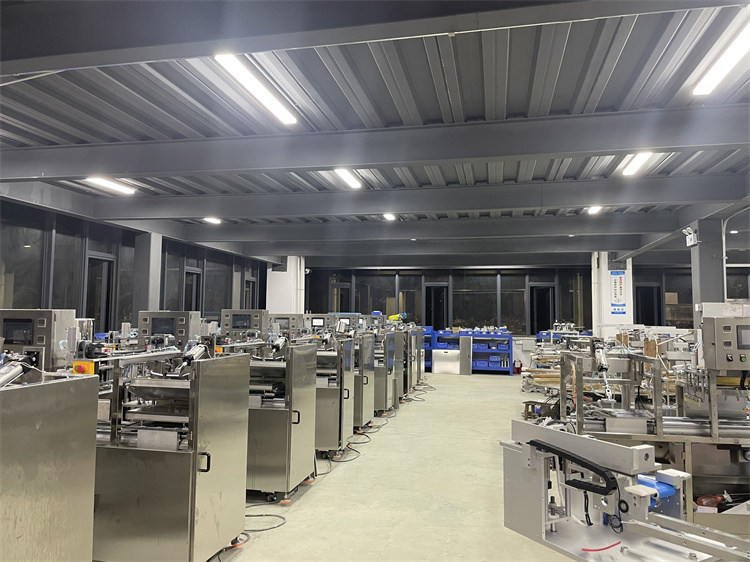
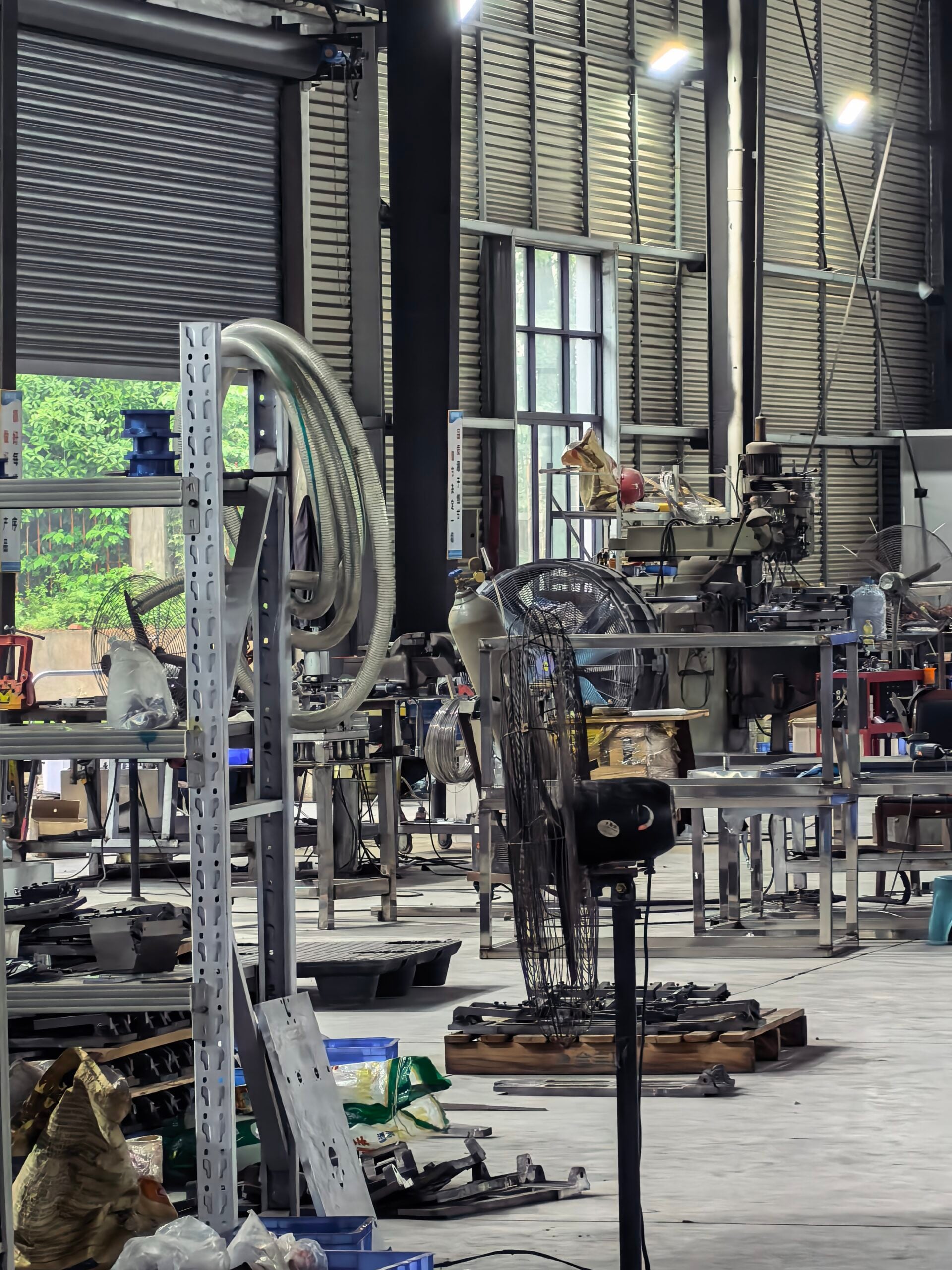
CE
Machinery Directive 2006/42/EC — transitioning to EU 2023/1230 (effective 2027-01-20)
FDA
21 CFR 117 food-contact surface compliance, 21 CFR 175.300 GRAS stainless steel
ISO 9001
Quality management system — design, manufacturing, after-sales
GMP
Good Manufacturing Practice — process discipline and traceability
HACCP
Hazard Analysis Critical Control Points — Codex Alimentarius aligned

Engineering Note — Food-Contact Surfaces & Hygienic Design

Food-contact surfaces of the UD-02 use stainless steel grades recognized by the FDA as Generally Recognized As Safe under 21 CFR 175.300, with the corrosion resistance and cleanability required by 21 CFR 117.40. Full stainless-steel encapsulation of the contact zone, combined with a largely hands-off rotary process, makes the UD-02 a clear step up in hygiene and cuts the contamination risk intrinsic to hand-rolled product — which matters not just for shelf-life but also for the audit file.

Procurement Guide — Pricing · Lead Time · After-Sales

UD-02 pricing will include your chosen specification and not just be quoted from a fixed price list - as is typical of such specialized food machinery and we provide full details to give your accounts department the breakdown for evaluation by section. You can then review the details and request your individually quoted price for a UD-02 system.

Pricing Factors

Configurable

A UD-02 quotation covers the equipment as specified at the contract point, and it varies with fill-system design, filling type (seaweed inlay or flavored filling), control architecture, warranty package, and integration options such as upstream dough-mixing or downstream cooling and packaging. Every factor is itemized in the quotation so your team can compare value line by line.

Indicative Lead Time

Configured per order

Your scheduled production from the signing of the contract, through the final acceptance testing to final packing ready for transit is coordinated by UDTECH. Please note, shipping and on-site installation is scheduled independently according to destination of client’s production site. UDTECH issues a definitive and dated schedule of projected machine completion at the point of order, typically proving significantly faster to produce and install the machine than an equivalent custom-built machine for similar application.

Minimum Order

1 line

Single-line orders are the standard at UDTECH. Producers scaling capacity in stages commonly add further UD-02 lines later, sharing spare-parts inventory and operator training across the deployment as production grows.

Installation

On-site commissioning

We deploy our engineers to your facility to carry out the setup of your machinery, tuning of any specified recipe settings and the certification of live production of your product on site. UDTECH matches the seaweed filling settings with the forming and baking parameters of your new UD-02 by working with the UDTECH formulation at the point of the plant installation stage rather than post-install, which avoids issues and complications at a later date.

Operator Training

Operations + maintenance

Our engineers carry out two levels of hands-on, face-to-face training on site. Level one concentrates on operation — recipe changes, daily start-up, and cleaning routines — while level two covers maintenance (routine tasks, calibration, troubleshooting). We supply full training and operating instructions in English and Chinese, with other languages available on request.

Warranty & Support

12 months + lifetime remote

A twelve-month warranty is applied to the basic parts and equipment included with your UD-02 installation starting from the day you perform the factory acceptance testing. UDTECH also provides unlimited lifelong remote assistance via phone or email so you can continue to rely on our expertise throughout the product’s service life. Recommended spare-parts kits ship with the machine from our facility, so critical components stay on hand within your factory.

Should you undertake a structured evaluation with our suppliers UDTECH can provide on request at no additional cost a reference list of similar installations, our factory acceptance test procedure, an inspection-notice procedure, and a quote breakdown per line item as required - all of which will assist in the speed of your bid evaluation.

Production Planning Suite

Phoenix Roll Engineering & Assessment Toolkits

Model your ROI, size your production capacity, compare machine architectures, and verify your facility's utility readiness. Select a diagnostic tool below to configure your specific operational parameters.

Knowledge Base

Phoenix Roll Machine — Frequently Asked Questions

A phoenix roll is a crispy rolled wafer snack wrapped tightly around a savory filling — most often seaweed (nori) and pork floss, sometimes with granular powder blends. Its wafer skin is baked and rolled while still warm so it sets into a crisp shell, which is what gives the snack its signature crunch. UDTECH's UD-02 produces this automatically across six rotary stations: it lays the seaweed sheet, injects the paste filling, heats, folds the cake, rolls, and demolds the finished roll onto the conveyor — no hand-rolling, and uniform shape from the first piece to the last.

Interchangeable fillings are the point of the UD-02: seaweed / nori sheets, pork floss, and various granular powders, plus custom blends. Seaweed is laid and registered at a dedicated station, floss and powders are metered by a servo depositor that won't crush the fibrous material, and switching variants is a recipe change rather than a hardware change — so one machine produces several phoenix roll variants for different channels.

UD-02 produces 720 pieces per hour, fully automatic. It draws 12 kW on a three-phase 380 V supply and needs compressed air of 0.2 m³/min at ≥0.6 MPa for its pneumatic stations. At 2300 × 2000 × 1400 mm (about 4.6 m²) and 960 kg, it fits compact production rooms while still running as a continuous rotary line.

UD-02 is quoted as a configured line, not a fixed catalogue price. Final pricing depends on filling-system configuration, control-system tier, certification scope, spare-parts package, and any upstream or downstream integration, each itemized in the quotation. Buyers who select on total cost of ownership rather than unit price tend to report higher multi-year ROI, and UDTECH supplies a TCO worksheet during quotation so your finance team compares on the same basis. Contact UDTECH for a configured quote.

Both form a crispy rolled wafer, but they differ by filling and recipe. A phoenix roll is savory — seaweed and pork floss — while a wafer egg roll is usually sweet, hollow or cream-cored. That changes the filling stations: a phoenix roll line needs a seaweed-laying station and a floss-friendly depositor. UDTECH builds both; if you produce sweet wafer rolls, see our automatic wafer egg roll machine.

Yes. Multi-channel servo linkage lets station timing be tuned in the PLC for different fillings and wafer recipes, and the depositor handles seaweed, floss, and powder through recipe settings. UDTECH calibrates your filling formulation to the UD-02 during on-site commissioning.

UD-02 is engineered to CE (Machinery Directive 2006/42/EC, moving to EU 2023/1230), FDA 21 CFR 117 and 21 CFR 175.300 GRAS stainless steel, ISO 9001, GMP, and HACCP. Specific certificate numbers come in the procurement package.

Standard support: a 12-month warranty on main components from factory acceptance test, lifetime remote engineering help by email, phone, and video, and spare-parts recommendations at delivery. Two-track operator training runs during on-site commissioning.

Ready to size a UDTECH UD-02 phoenix roll line for your operation?

Complete this form with your desired output volume, product filling recipe and the application, channels you serve (e-retail, e-commerce, gifts). We’ll provide a configured quote, ROI projections sheet, and a references list tailored to your application.

Start your UDTECH UD-02 procurement — Request Quote
Get in touch with UD machine company
Contact Form 在用

About This UDTECH Phoenix Roll Machine Guide

UDTECH specializes in producing automated rolled-snack manufacturing solutions. We offer the industry-leading UD-02 Phoenix Roll Machine along with automated Wafer Egg Roll and many other rolled snacks solutions that have been manufacturing for over a decade. All of our capacity figures, footprints and other performance metrics originate from the UD-02’s official product data sheet. Any ROI numbers shown on our page or on similar lines come from our analysis of published industry trends and studies on automation for snack and cookie making - not UDTECH-specific numbers. We have presented general industry best practice ranges for manual line output as a point of comparison, as output does vary. Production output is a per quote metric, not fixed; as is typical with our machines and other high-value industrial food machinery.

References & Data Sources

  • UDTECH UD-02 Phoenix Roll Machine - production datasheet (manufacturer specifications)
  • FDA 21 CFR Part 117 - Current Good Manufacturing Practice, Hazard Analysis, and Risk-Based Preventive Controls
  • FDA 21 CFR 175.300 - Resinous and polymeric coatings; food-contact stainless steel GRAS recognition
  • EU Machinery Directive 2006/42/EC - transitioning to EU Regulation 2023/1230 effective 20 January 2027
  • ISO 9001:2015 — Quality Management Systems Requirements
  • HACCP — Codex Alimentarius hazard analysis principles
  • EverSmart, Loyal Food Machinery, AMD Machines - Automation ROI & Payback Guides
  • Qviro, Oxmaint - Implementation Costs of Industrial Automation
  • Institute for Supply Management - Supplier Evaluation and Selection Criteria
Scroll to Top
Get in touch with UD machine company
Contact Form 在用