7月2026更新
選擇手動或自動威化蛋捲機,首先要考慮的是您必須保證的生產效率:每個班次能生產多少合格的蛋捲,有多少員工的生計與這些產量掛鉤,以及企業主願意承擔多少損耗或加班成本。本文主要討論威化蛋捲生產線,不涉及鹹味春捲成型生產線或家用小型電煮蛋器,除非相關結果會造成搜尋意圖混淆。
對於工廠經理來說,問題不是“哪台機器速度最快?”,而是“在滿足形狀、破損率、清潔計劃和能源預算要求的前提下,一名操作員每班能生產多少個合格的蛋捲?”對於財務經理來說,同樣的問題則變成了“如果我們繼續增加人工而不是轉向自動化生產線,每班生產1,000個合格產品的成本是多少?”
快速規格
| 最佳第一個問題 | 您是在製作威化蛋捲、鹹味春捲,還是小批量製作家常小吃? |
| 搜尋結果頁面中顯示的手動範圍 | 桌上型手動設備的產量約為每小時 150-180 件,具體取決於產品和操作員的技能。 |
| 氣動桌上型系列 | 根據已公佈的桌面比較數據,大約為每小時 200 件。 |
| UD05-2 晶圓生產線 | 每分鐘 220 件,每 8 小時班次約 600 公斤。 |
| UD05-3 晶圓生產線 | 每分鐘 330 件,每 8 小時班次約 900 公斤。 |
- 降低配方試驗和小批量生產的入門成本。
- 易於移動、清潔和短途運輸之間的更換。
- 當需求仍低於勞動供給水準時,此方法有效。
- 當輪班需求穩定時,每位操作員的產量較高。
- 更可重複的溫度控制、形狀和成型。
- 更適合有據可查的食品生產和出口訂單。
首先確定產品系列:威化餅、鹹味春捲或家用電器
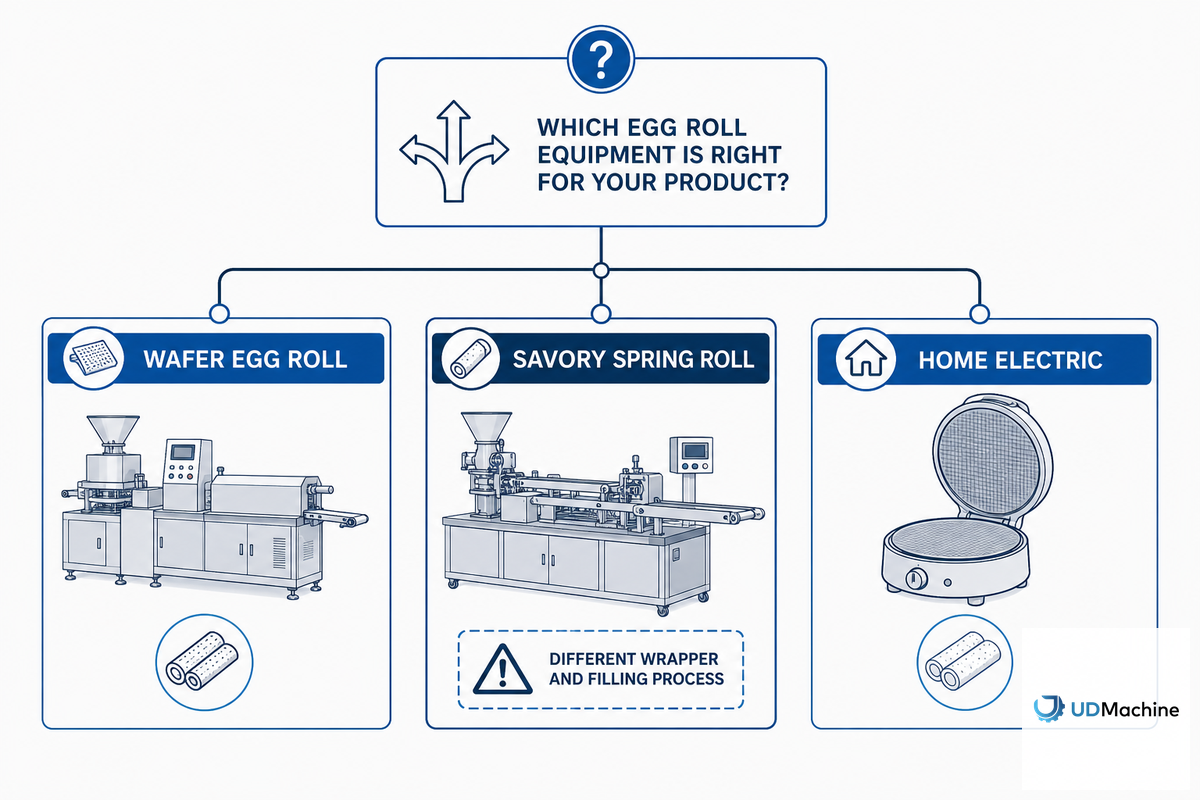
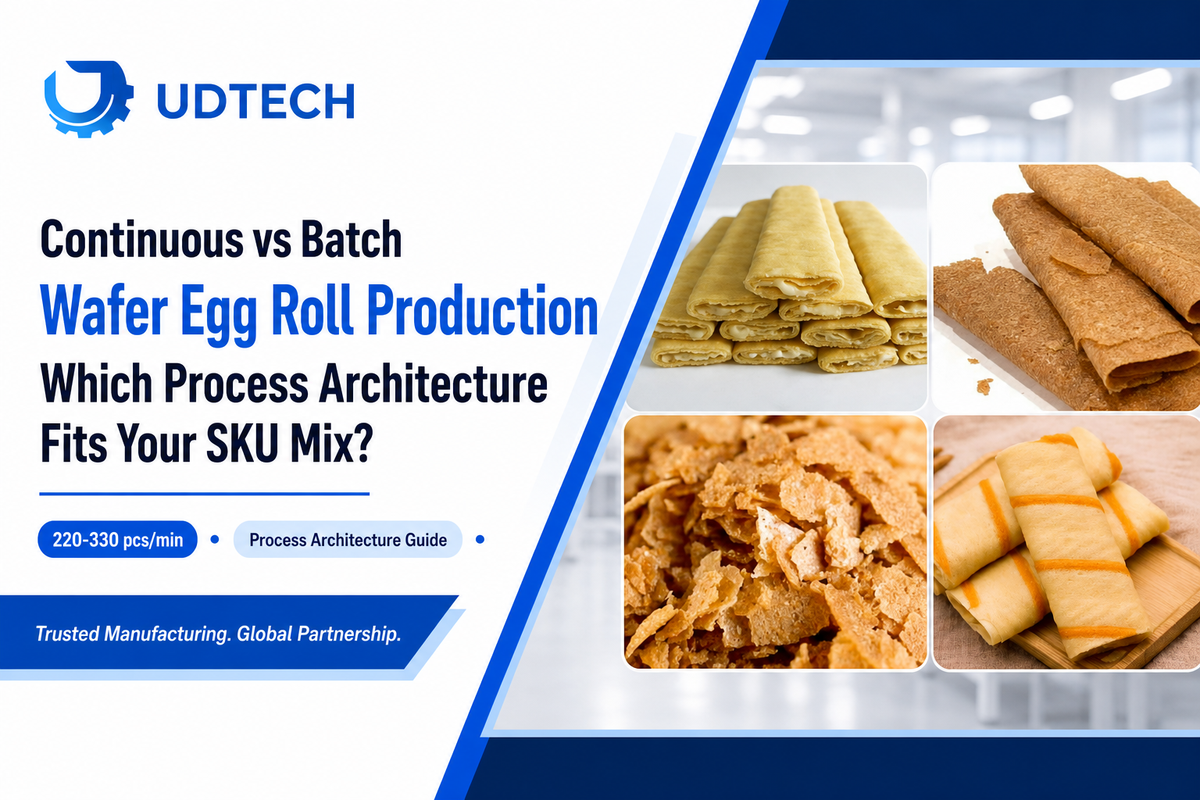
蛋捲機並非指一種普通的機器。威化蛋捲的生產過程包括將稀麵糊在加熱的模具上烹調,趁熱捲起。鹹味春捲機和蛋捲包裝機的設計原理通常包括麵團傳送帶的管理、餡料填充、折疊和捲製,之後再進行油炸、冷凍或包裝。 「家用電動蛋捲機」通常指的是帶有不沾塗層的小型桌上型電器,而非食品生產設備。
區分這兩種產品對買家來說至關重要,可以避免不恰當的比較。切勿將威化餅生產線與燒賣、薩莫薩三角餃、糕點或其他餡料食品的自動成型和包邊機進行比較。
在目前搜尋結果(SERP)中,ANKO ER-24全自動蛋捲機被歸類為鹹味/冷凍卷,而UDTECH的UD05則代表威化蛋捲生產線。買家在考慮價格或產能之前,應先比較同一系列的產品。
在詢價單 (RFQ) 中,術語至關重要。例如,「自動蛋捲機」可能指的是用於製作類似可麗餅麵糊的威化食品機、用於製作鹹味春捲的捲皮機,或用於製作餡料產品的自動包衣成型機。清晰的措詞能夠保障客製化工作的順利進行,並表明機器是否能夠生產買方所需的規格。
| 產品系列 | 過程 | 買家風險(如果混淆) |
|---|---|---|
| 威化蛋捲 | 麵糊倒入、烘烤、擀製、冷卻和包裝。 | 鹹味包裝設備無法生產出同樣酥脆的威化餅產品。 |
| 鹹味蛋捲或春捲 | 麵團傳送帶、餡料分配器、折疊、擀製,然後油炸或冷凍。 | 每小時產量和單片重量不能與晶圓產量進行比較。 |
| 家用電器 | 小型鋁合金或塗層烹飪表面,適用於家庭大量生產。 | 低成本看似有吸引力,但並不能解決商業勞動成本問題。 |
如需了解更全面的類型分類,請參閱 UDTECH 的蛋捲機指南。本文重點介紹升級點。
手動或氣動蛋捲機仍然適用的場合
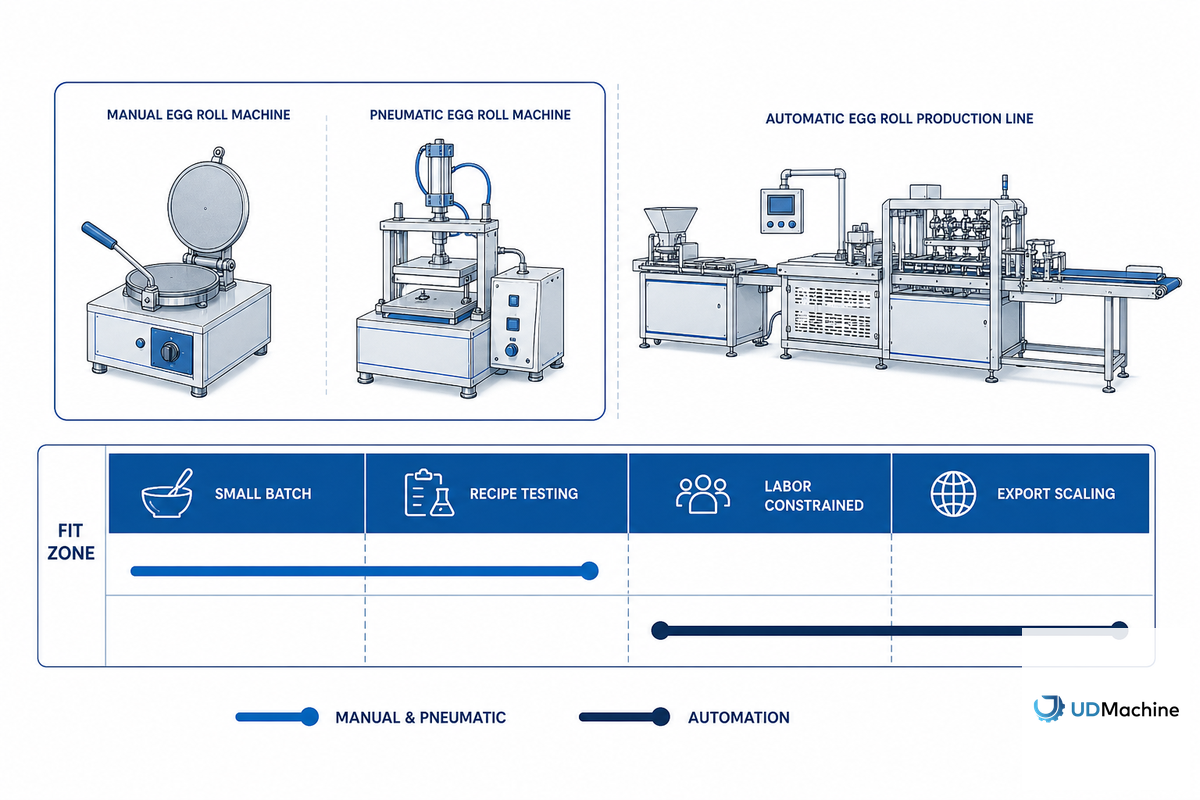
選擇傳統的手動蛋捲機並非一定錯誤。當企業正在測試配方、銷售本地產品或在投資生產設備前評估市場需求時,手動蛋捲機可能更具成本效益。桌上型手動和氣動蛋捲機可以讓操作人員直接控制麵糊的稠度、蛋捲的鬆緊度以及班後清潔。
當操作員成為瓶頸時,就會出現瓶頸。如果由一個人負責供應麵糊、監控烹飪表面、擀麵、檢查顏色、冷卻和包裝,那么生產線的速度就取決於人的能力。
氣動輔助可以減少某些動作,但並不能完全取代人工操作。這意味著即使產量略有提高,也可能無法解決勞動力短缺的問題。
| 用例類型 | 輸出信號 | 最合適 |
|---|---|---|
| 食譜測試 | 每次製作幾十到幾百件。 | 手動蛋捲機或小型電動蛋捲機。 |
| 咖啡館或當地麵包店 | 每小時大約生產 150-200 件就足以滿足服務需求。 | 手動或氣動捲筒成型機。 |
| 季節性市場驗證 | 需求仍然會隨每週或每次活動而變化。 | 在出現重複訂單之前,請保持較低的資金投資。 |
| 區域或合約生產 | 如果沒有足夠的人手,一個班次無法滿足需求。 | 自動蛋捲機評測。 |
當您改用自動蛋捲機時,會有哪些變化?

全自動蛋捲機將生產流程從人工操作轉變為以設定點為導向的食品機械操作。在這種情況下,購買一台機器不僅僅是為了獲得一台更快的滾軸;它還涉及可靠的加熱、分配、成型、冷卻系統,以及易於清潔、安全功能、備件、培訓和售後支援。
商業案例的關鍵在於生產效率,而不僅僅是速度。連續生產可以減少人工,降低人力成本,並能更精準地控制大規模蛋捲的生產。成本效益仍取決於廢品率、清潔時間、能源消耗,以及生產線在批次間是否易於清潔(這對於真正的食品企業)。
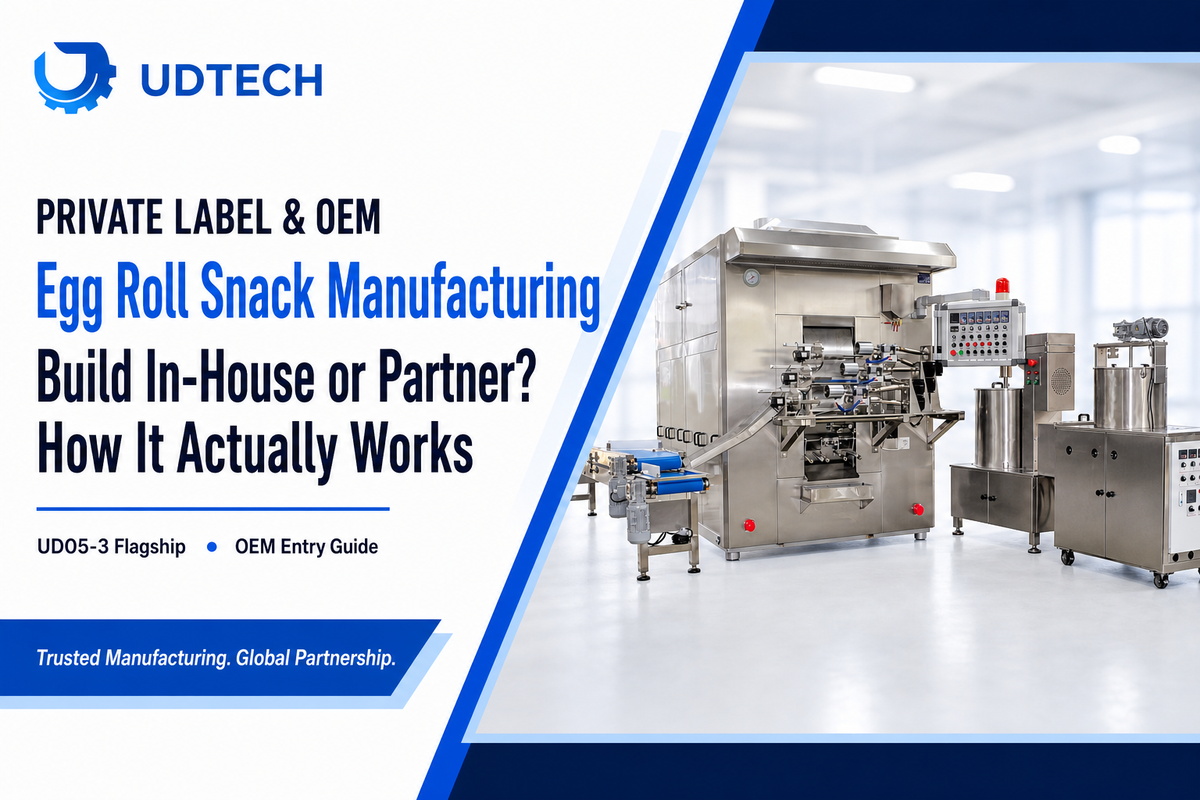
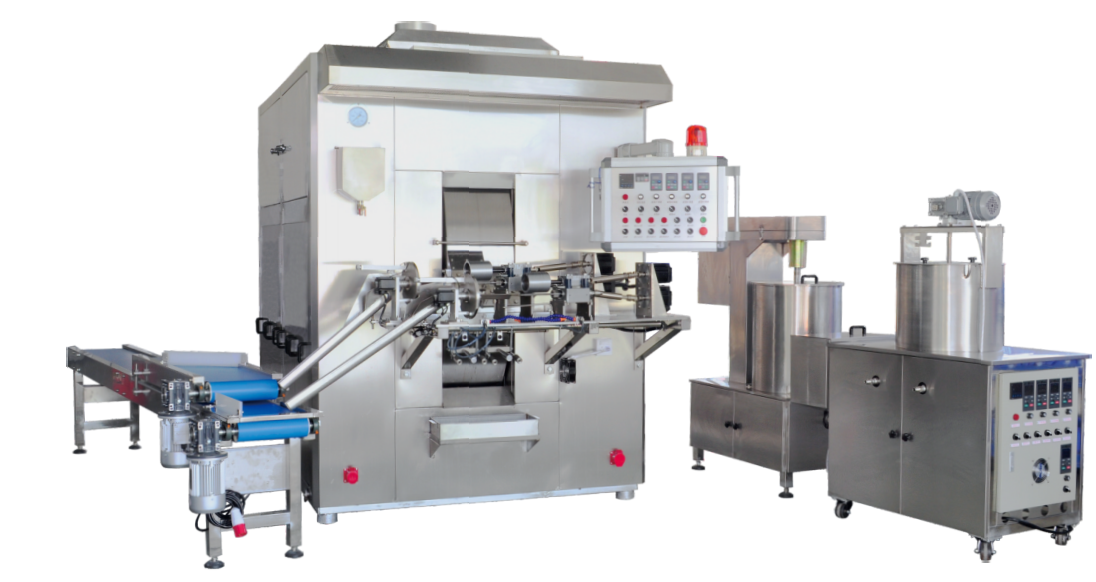
在威化蛋捲領域,UDTECH 的 UD05-2 的公開產能為每分鐘 220 個,或每 8 小時班次約 600 公斤。 UD05-3 的公開產能為每分鐘 330 個,或每 8 小時班次約 900 公斤。這些數據與桌上型手動機器以及 ER-24 型鹹味食品生產線有所不同,後者在搜尋引擎結果頁面 (SERP) 上的產能約為每小時 2,400 個,單價為 65-75 克。
切勿在未充分考慮重量、產品尺寸、加熱製程和成型後處理製程的情況下,直接比較威化餅和鹹味食品的每小時產量。因為65-75克的鹹味捲餅和酥脆的威化餅捲餅並非可以直接等同的單位。人工成本和產量計劃需要基於不同的基準進行製定。
自動化也改變了詢價流程。買家不僅需要討論價格,還需要討論:捲筒尺寸、麵糊或包裝類型、灌裝機(如有)、目標產量、電源類型、燃氣類型、食品級要求、防護裝置選項、安裝範圍和備件。缺少這些信息,買家最終可能會比較兩台看似相同的機器,但報價卻無法反映出相同的設備配置水平。
每位操作員的產量斷點曲線:勞動能力階梯
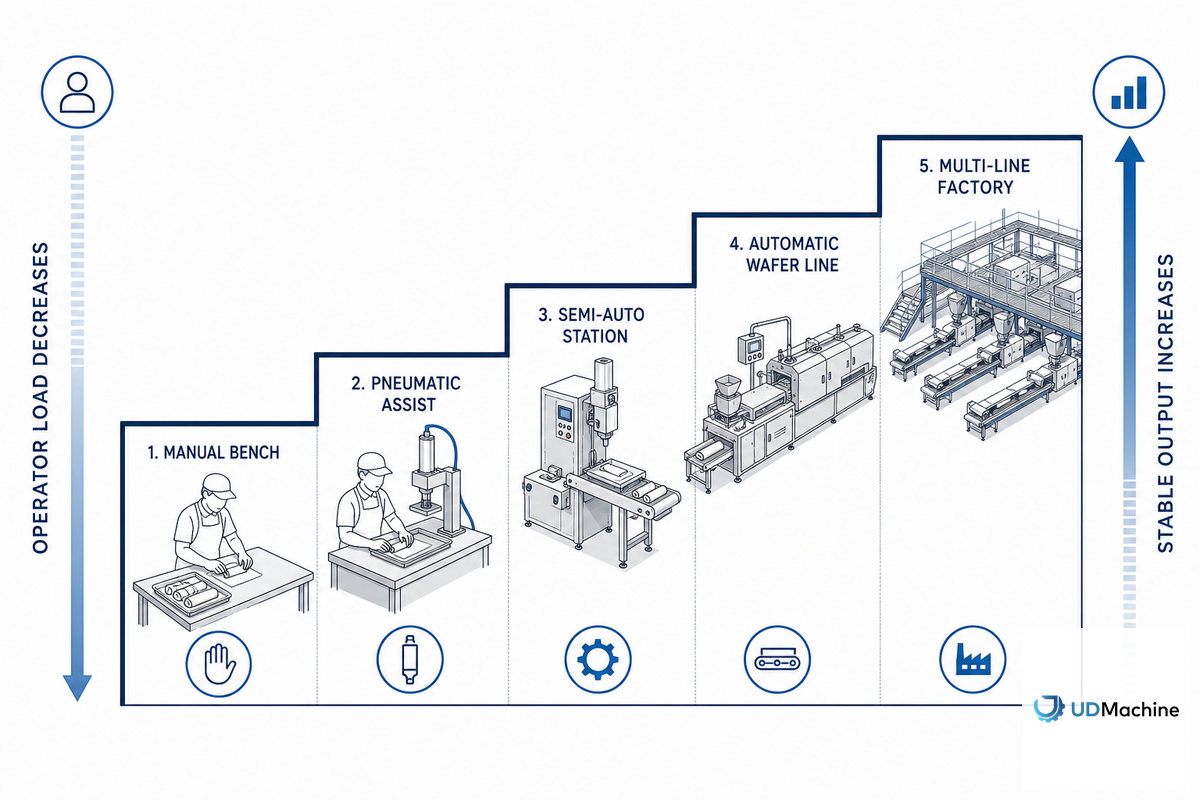
操作員人均產量斷點曲線顯示了人工生產不再是小型設備問題,而是勞動力產能問題的臨界點。它的作用在於使工廠經理和財務經理達成共識:一方關注人員壓力,另一方關注單件產品成本。
每班次可售件數 = 每小時件數 × 生產工時 × (1 – 不合格率)
每位操作員的產量 = 每班次可售商品數量 / 每班次操作員數量
每1,000件合格品的成本 = 總班次負擔 / 可售件數 × 1,000
僅使用扣除廢品、清洗停機、換型和試生產損耗後的可銷售產品。銘牌速度本身並非購買決策的依據。
假設範例:一家麵包店在一名操作員工作 4 小時的情況下,每小時生產 180 個麵包,但由於色差和麵包卷開裂,損失了 8%。每班次可銷售產量約 662 個。如果一位新的自有品牌客戶要求每班次生產 3,000 個可售麵包,採購方不應將「一名工人」與「一台自動化機器」進行比較。真正需要考慮的是增加的工位、增加的班次、加班、不合格品分揀、延遲交貨的風險,以及為了每週達到相同的產量目標,機器需要承擔的額外負擔。
| 決策層 | 手動狀態訊號 | 財務/業主問題 | 購買前的行動 |
|---|---|---|---|
| 試驗階段 | 一名操作員可以完成混合、烘焙、擀製、冷卻和包裝。 | 市場需求是否夠穩定,足以支撐固定的機器負荷? | 保持手動或氣動操作;記錄實際不合格品。 |
| 勞動期 | 同一個工人只有透過延長工時或跳過檢查才能達到產量要求。 | 每生產1,000件合格品,加班費和次品成本是多少? | 報價時請列出半自動或小型自動裝置的額外人力成本。 |
| 自有品牌壓力 | 買家要求每週產量穩定,生產記錄清晰完整。 | 工廠能否在不擴充人工團隊的情況下保證交貨日期? | 進行一次抽樣試驗,比較每班次 UD05 等級的產能(公斤/班次)。 |
| 自動化觸發器 | 人工產量上升,但可售率、勞動穩定性或客戶信心下降。 | 機器負荷會降低每件產品的總成本,還是會保障合約? | 比較自動線路報價和手動手動擴容方案。 |
| 當前狀態 | 輸出信號 | 勞動訊號 | 下一步最佳行動 |
|---|---|---|---|
| 測試批次 | 每小時產量低於150-200件 | 1 個工作進程可以處理該批次 | 手動或氣動機器 |
| 當地需求不斷成長 | 目標速度:30-60公斤/小時 | 高峰期需要多人手 | 半自動檢修或小型自動生產線 |
| 區域供應 | 每班100-600公斤 | 2-3名操作員目標 | UD05-2級晶圓生產線 |
| 出口或自有品牌 | 每班600-900公斤 | 2-3名操作員目標加上品質控制 | UD05-3級晶圓生產線 |
| 冷凍鹹味卷供應 | ER-24 型紙張每小時約 2,400 張 | 生產線團隊、填充員、包裝員、油炸員或冷凍員計劃 | 鹹味蛋捲或春捲機路線 |
| 高拒絕手排 | 產量上升,但可販賣價格下降 | 操作員花費時間進行返工、分類和重新包裝。 | 購買前請先進行樣品試用 |
| 新出口客戶 | 合約規定的交貨時間窗口 | 人工加班成了隱性成本。 | 自動報價線路加備用套件 |
| 產品規格不明確 | 沒有固定的捲筒重量、長度或包裝目標 | 採購部門無法對供應商進行比較。 | 首先完成詢價清單。 |
如需更複雜的計算,請參閱 UDTECH 的蛋捲機產能規劃指南。希望建立投資報酬率 (ROI) 模型的威化餅採購商應先研究 UDTECH 的蛋捲威化餅投資報酬率計算器。
產能比較:手動、氣動、Savory 自動和 UD05 威化餅生產線

依產品系列細分產能圖表最為實用。例如,搜尋「蛋捲機」可能會返回桌上型手動威化餅機、鹹味春捲機和全自動威化餅蛋捲生產線的結果。每種機器的加熱製程、成品和生產設備都各不相同。
| 機器類 | 典型輸出訊號 | 操作員簡介 | 產品系列 | 最合適 |
|---|---|---|---|---|
| 手動桌面 | 約每小時150-180件 | 1名工人 | 小批量或家庭式批量生產 | 測試批次 |
| 氣動桌面 | 大約200件/小時 | 1名工人 | 小批量晶圓生產 | 小麵包店 |
| 美味自動 ER-24 型系列 | 每小時約2,400個,每個重65-75克 | 一線隊 | 鹹味或冷凍蛋捲 | 中央廚房或冷凍食品生產商 |
| UD05-2 晶圓生產線 | 每分鐘 220 件,約 600 公斤/8 小時班次 | 2-3名目標操作員 | 威化蛋捲 | 中等產量生產商 |
| UD05-3 晶圓生產線 | 每分鐘 330 件,約 900 公斤/8 小時班次 | 2-3名目標操作員 | 威化蛋捲 | 工業生產商 |
如果您要生產酥脆的威化捲產品,請從UDTECH 全自動威化蛋捲機著手。如果您更傾向於生產餡料豐富的春捲類產品,請閱讀這篇威化捲機與春捲機比較指南。
每千件合格品的成本:自動化何時勝過人工生產
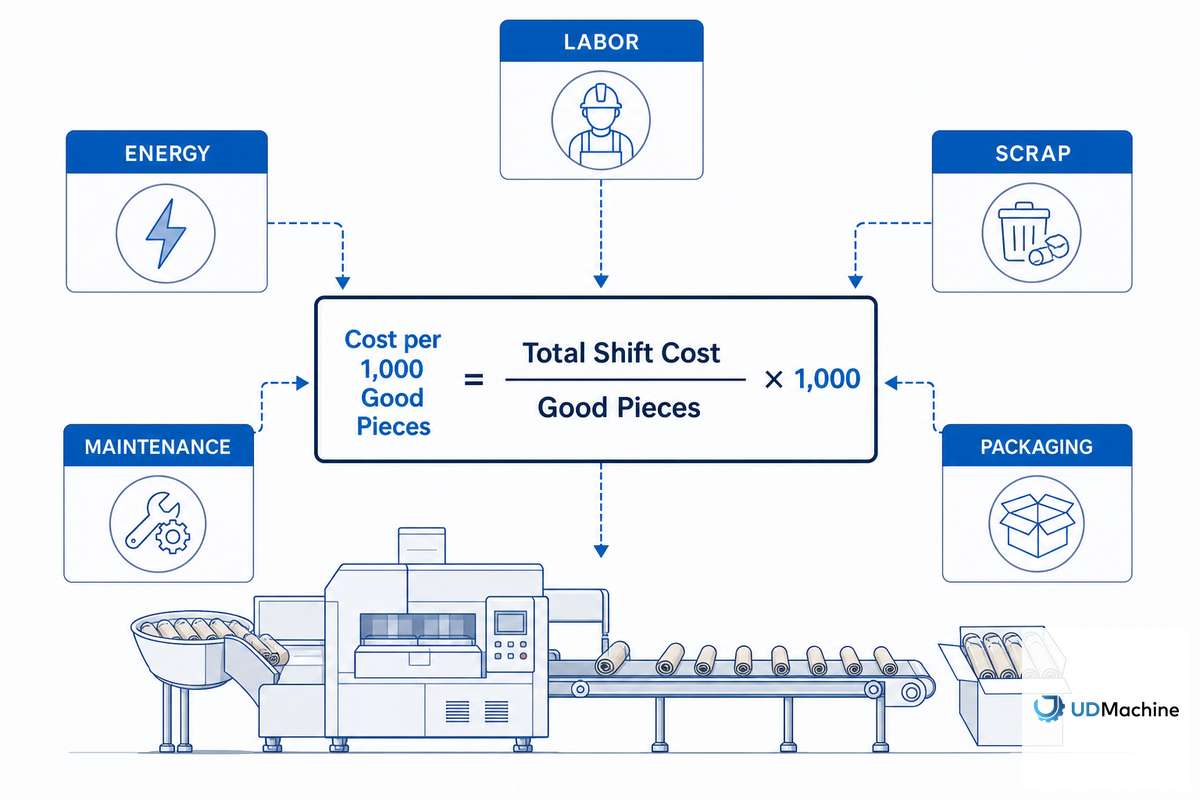
當人工生產的成本在投資回收期內超過機器帶來的負擔時,自動化就更具優勢。工廠主不應只考慮購置價格,還必須將人工、返工率、能源、清潔時間、備件、安裝、培訓以及錯過重複訂單的商業風險等因素納入考慮。
買家在不了解每班次需要多少合格產品之前,不應該問「商用自動蛋捲機的價格是多少?」。更好的問題是:“現在每1,000個合格產品的成本是多少?”以及“這些成本中有多少來自勞動力短缺、返工、延遲發貨或自有品牌風險?”
以下模型採用外部製造數據,而非僅依賴產品目錄速度。 NIST MEP 透過機器可用性、製程性能、產品品質和缺陷零件來衡量設備效率。 ASQ 將浪費、廢料、重工和故障分析視為品質成本中的內部故障成本。 BLS 食品製造業數據提供了一個勞動力基準,包括 2026 年 5 月的生產和非管理人員平均時薪為 24.38 美元(標記為初步數據),以及 2025 年單位勞動力成本增長 5.6%。對於一家蛋捲廠而言,這意味著採購問題不是“手動還是自動?”,而是“在計入停機時間、缺陷和人工成本後,哪種方案能使每個可售蛋捲的成本更低?”
以證據為依據的購買視角
- 工廠經理視角: 將經過停頓和剔除後的輸出視為合格品。 NIST MEP OEE 案例 說明了為什麼可用性、效能、產品品質和缺陷零件應該放在同一個操作視圖中。
- 品質經理視角: 開裂的捲筒和顏色不合格品不屬於外觀缺陷。 ASQ的品質成本框架 將廢料、廢料、重工和故障分析歸類為內部故障成本,因此廢料率應納入投資回收模型。
- 財務經理視角: 勞動成本應先以現行基準資料進行測試,再以當地工資資料取代。美國勞工統計局(BLS) 食品製造業概況 提供行業勞動力、收入、生產力和單位勞動成本的背景資訊。
| 成本桶 | 手動擴展輸入 | 自動線路輸入 | 決策訊號 |
|---|---|---|---|
| 勞動負擔 | 每班工人數 x 時薪 x 實際工作時數。 | 操作員、質檢員、裝卸工和清潔工。 | 當勞動力成長速度超過可銷售產出成長速度時,自動化程度會更高。 |
| 拒絕並重做 | 開裂的捲筒、顏色差異、手工分類和重新包裝時間。 | 配方、模具、加熱和冷卻設定確定後,試作不合格率。 | 比較投資報酬率時,要用優質單價,而不是單價總數。 |
| 機器負荷 | 手動設備的採購、維護和額外工作站。 | 機器付款、電力、液化石油氣或天然氣、備件、安裝和停機補償。 | 即使單件優質產品的負擔較低,較高的報價仍有可能勝出。 |
| 交付風險 | 出貨延遲、旺季供應不穩定或自有品牌訂單遺失。 | 穩定的每週產能、有據可查的生產情況和備件計劃。 | 合約比單純的勞動成本計算更能證明自動化的合理性。 |
| 報價範圍 | 通常不包括冷卻、包裝、清潔和品質控制所需的隱性人工。 | 必須列出模具、防護裝置、安裝天數、樣品試驗、訓練和備件。 | 在範圍標準化之前,切勿比較兩個價格。 |
手動擴展與自動線條:填滿斷點範例
一個有效的升級模型應該能夠顯示自動化何時尚不划算,而不僅僅是何時划算。在下面的例子中,低產量自有品牌訂單的目標是每班次3,000件可售商品。這說明了為什麼採購人員在將任何報價解讀為「昂貴」或「便宜」之前,應該計算人工方案、自動化方案以及機器損益平衡成本。
| 計算步驟 | 手動擴展箱 | 自動審判案件 | 決策意義 |
|---|---|---|---|
| 總產出假設 | 3 個工位 x 180 件/小時 x 6 個生產小時 = 3,240 件。 | 試驗目標設定為 3,300 片,遠低於高產能晶圓生產線的標稱產量。 | 比較作業目標速度,而不是最大目錄速度。 |
| 拒絕假設 | 假設因顏色差異、開裂和人工分類造成的次品率約為 8%。 | 假設經過供應商樣品調整和操作員訓練後,不合格率約為 4%。 | 拒稿率比標題輸出更能快速改變決策。 |
| 可銷售產出 | 3,240 x 92% = 2,981 件合格品。 | 3,300 x 96% = 3,168 件合格品。 | 這份人工計畫接近目標,但幾乎沒有交付緩衝。 |
| 每日可變負擔 | 例如:3 名操作員,支援包裝,加班風險,小型設備維護 = 每班 494 美元。 | 例如:2 名操作員、公用設施、清潔和計畫維護津貼 = 機器負擔前每班 360 美元。 | 將機器款項單獨列出,以便財務部門可以測試多個報價。 |
| 每1,000件合格品的成本 | 494 美元 / 2.981 = 每 1,000 件優質產品約 166 美元。 | 360 美元 / 3.168 = 每 1,000 美元約 114 美元(不含機器負擔)。 | 未計入資本成本前,每1,000件的差價約為52美元。 |
| 損益平衡機器負荷 | 人工基準:每 1,000 件優質產品約 166 美元。 | 3,168 件優質產品,這條生產線每天只能承載約 165 美元的利潤,超過這個數字,純粹的單位成本優勢就會消失。 | 在產量較低的情況下,自動化可能需要合約保護、品質風險或產量成長來證明報價的合理性。 |
當買家擁有穩定的訂單量時,同樣的等式就更有利了。如果每班次的合格品目標從大約 3,000 件提高到 15,000 件,那麼每 1,000 件合格品節省的 52 美元,在不考慮機器負荷的情況下,每天的生產成本就能節省約 780 美元。這就是為什麼擁有不斷增長的自有品牌合約的工廠,即使咖啡館或試菜廚房也需要自動蛋捲機,也可能更早採取行動的原因。
拒絕回報敏感度矩陣
廢品率是品質控制與投資回報之間的橋樑。工廠經理看到的是破損的捲材和返工;財務人員看到的是投入的人工成本卻未能轉化為可銷售的產品。 ASQ 的品質成本架構使得本表將廢棄物、邊角料和返工視為財務投入,而不僅僅是品質控制觀察結果。在詢價前使用此矩陣,以便供應商能夠進行樣品試驗,並與買方對實際破損率和色差的容忍度進行比較。
| 測量拒收率 | 虧損3,000件 | 通常是什麼原因造成的? | 升級意義 |
|---|---|---|---|
| 例如約4% | 120 件被拒收的物品。 | 正常的試驗損耗、邊緣開裂或操作員早期學習。 | 不要僅為了減少次品而採購;先測試勞動力和產能。 |
| 例如約8% | 240 件被拒收的物品。 | 手動控制加熱時間、麵糊不均勻、擀製過快或冷卻不均勻。 | 要求供應商提供樣品,並比較每個操作員的合格產品。 |
| 例如約12% | 360 件被拒收的物品。 | 人工操作站負荷過重、溫度重複性差或冷卻空間不足。 | 自動化帶來的回報可能不僅體現在減少工人數量上,還體現在提高產量和減少返工上。 |
| 合約關鍵拒絕 | 任何可能導致交貨期或檢驗驗收不合格的拒收率。 | 自有品牌規格、出口文件或客戶審核壓力。 | 將此決策視為風險保障加上每1,000件合格產品的成本。 |
7 天詢價前測量工作表
在索取最終報價之前,請先記錄一週的實際生產數據。 UDTECH 的投資回報率計算器需要您提供當前日產量、當前操作員數量、UD05 操作員數量、年度人工成本、生產班次、當前廢品率以及每公斤售價。產能規劃也取決於高峰月份的需求、清潔、換線、設備綜合效率 (OEE) 以及效率最低的工位。此工作表會將這些輸入資料轉換為可用於報價的基準資料。
| Day | 測量什麼 | 如何錄製 | 它如何改變引言 |
|---|---|---|---|
| 第 1 天基線 | 毛件數或公斤數、可售件數或公斤數以及班次時長。 | 一週內使用相同的單位:件、公斤或兩者都用。 | 將手動基準設定為 UD05-2(600 kg/8h)或 UD05-3(900 kg/8h)。 |
| 第二天產程圖 | 付費操作員、幫工時間、包裝時間、質檢時間和加班時間。 | 將直接軋製勞動與冷卻、分類和包裝勞動分開。 | 與目前操作員、UD05 操作員和已載入人工成本的 ROI 計算器欄位相符。 |
| 第 3 天拒絕代碼 | 捲筒開裂、顏色不符、重量不符、捲筒鬆脫或包裝損壞。 | 要按原因統計退貨數量,而不僅僅用一個百分比來衡量。 | 告訴供應商該修復是熱控制、電池控制、冷卻還是包裝交接。 |
| 第四天停止計時 | 清潔時間、換班時間、等待時間和計劃外停車時間。 | 每次停留超過5分鐘,都要註明原因。 | 防止報價中出現將標稱速度誤認為所有 8 小時都是有效工作的情況。 |
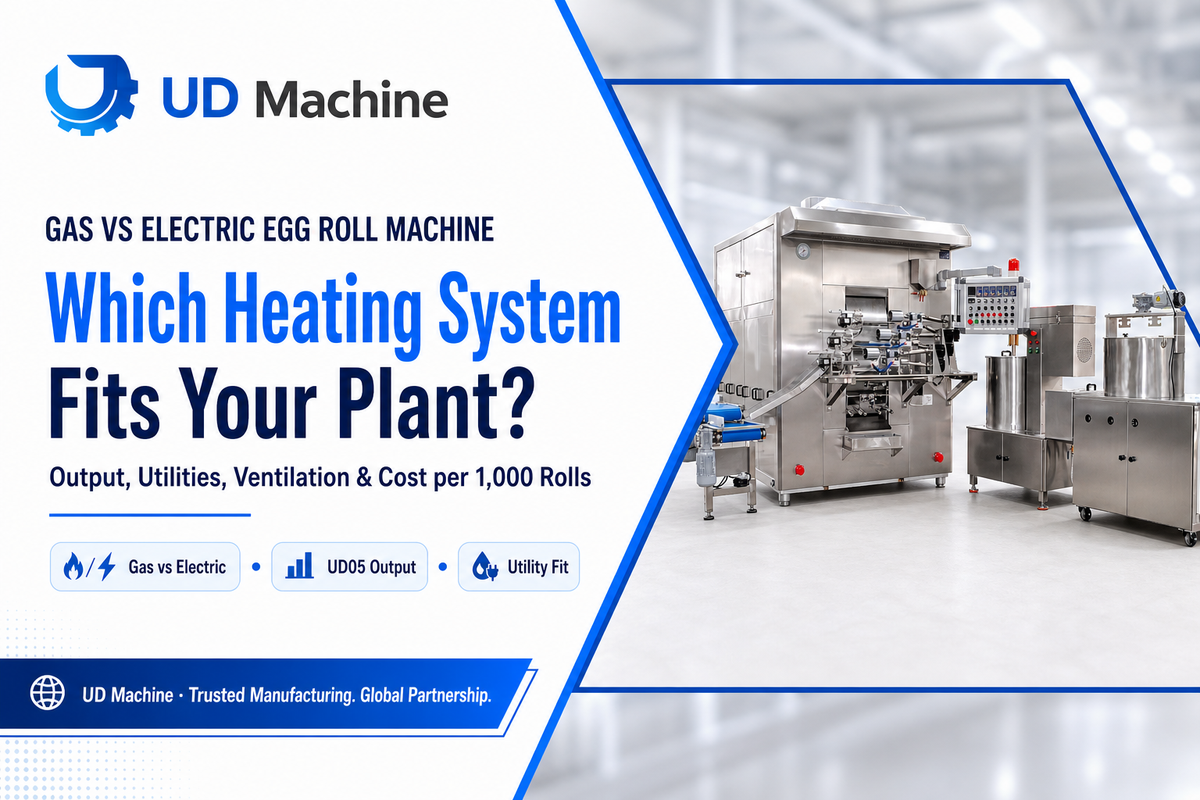
| 第 5 天 公用事業 | 電壓、頻率、燃料類型、當地液化石油氣價格、當地天然氣價格和每日運行時間。 | 記錄工廠的實際產能,而不僅僅是所需的機器型號。 | 為燃料計算器提供數據,其中 UD05-2 列出了 6 kg/h 液化石油氣或 8 m3/h 天然氣,UD05-3 列出了 8 kg/h 液化石油氣或 10 m3/h 天然氣。 |
| 第6天壓力峰值 | 訂單高峰日、緊急批次或自有品牌公差測試。 | 選擇難度最高的常見 SKU,而不是最簡單的配方。 | 顯示買家需要的是中型自動化生產線還是更高容量的生產線。 |
| 第 7 天語錄包 | 總結目標公斤/班次、次品率、人力成本、公用設施、佈置、配方和產品系列。 | 將同樣的包裝寄給所有供應商。 | 建立標準化的詢價單,以便比較價格、備用零件、安裝和保固。 |
30分鐘樣品運行驗收協議
樣品試運行應測試買方最難處理的常規產品,而不是供應商最簡單的演示配方。 UDTECH 的公開頁面詳細介紹了安裝、包裝機配方與烘焙參數的校準、操作員培訓和調試。利用樣品試運轉來驗證產品系列、可銷售產量、不合格原因以及從烘焙和軋製到冷卻和包裝的交接流程。
| 試驗階段 | 買方應提供 | 供應商應證明 | 接受/拒絕訊號 |
|---|---|---|---|
| 開始前 | 成品照片、目標長度、目標重量、麵糊特性,以及產品是烘焙威化餅還是鹹味外皮。 | 正確的設備系列和刀具路徑。 | 如果將晶圓和彈簧捲工藝視為同一機器系列進行比較,則拒絕該報價。 |
| 前5分鐘 | 熱身廢料記錄和預期顏色範圍。 | 設定完成後,進行穩定的烘烤、軋製和芯材注入。 | 不要將熱身作品計入可銷售作品中。 |
| 中間15分鐘 | 毛件數、合格件數和不合格件數的計數方法。 | 按照約定的產品尺寸和配方進行可重複的生產。 | 只有當每個操作員的優質棋子數量能夠支持收益模型時才接受。 |
| 最後10分鐘 | 買方工廠採用的冷卻、包裝、托盤或推車方式。 | 滾動後進行乾淨俐落的交接,以免下游區域負荷過重。 | 如果冷卻或包裝造成排隊,即使滾軸速度快也無法滿足商業需求。 |
| 停止後 | 清潔要求、輪班計劃和操作員技能水平。 | 清潔、培訓範圍、備件推薦、保固和調試計劃的存取權限。 | 報價若遺漏安裝、培訓、備件或安裝後支持,則為不完整報價。 |
來自 UDTECH 公共資料的隱藏瓶頸地圖
隱藏的瓶頸往往存在於機器框架之外。從 UDTECH 的公開頁面來看,顯而易見的限制因素包括產量等級、功率、燃料、佔地面積、產品系列、培訓、備件、保固和交貨週期。買家在支付定金前應該逐一分析這些限制因素,因為即使晶圓生產線的產能達到 220 片/分鐘或 330 片/分鐘,冷卻空間、包裝人工、公用設施或對產品系列的錯誤假設仍然可能限制其產能。
| 潛在瓶頸 | 網站使用的數據 | 為什麼它仍然可以限制輸出 | 買方在詢價前採取行動 |
|---|---|---|---|
| 輸出層 | UD05-2:每分鐘 220 件,每 8 小時 600 公斤。 UD05-3:每分鐘 330 件,每 8 小時 900 公斤。 | 如果冷卻或包裝環節落後,那么生產線的高產量並不等於包裝後的產品能夠銷售。 | 將目標公斤/班次與 7 天測量的可銷售基準進行比較。 |
| 能源和燃料 | UD05-2:9.7 千瓦,液化石油氣 6 公斤/小時,天然氣 8 立方公尺/小時。 UD05-3:12 千瓦,液化石油氣 8 公斤/小時,天然氣 10 立方公尺/小時。 | 電力或燃料供應不足會導致作業速度減慢或需要額外的現場作業。 | 使用燃料計算器輸入當地液化石油氣和天然氣價格,然後確認工廠供應情況。 |
| 樓層和通道 | UD05 公佈的佔地面積:4.2 米 x 3.7 米,或約 15.5 平方米。 | 佔地面積不包括操作員移動、冷卻架、托盤、包裝台或維護通道。 | 在存放前,繪製機器以及通道、冷卻區、包裝區和清潔區。 |
| 配方和產品系列 | UDTECH 將酥脆的捲狀威化餅與鹹味外皮產品分離;威化餅採用烘焙麵糊,並在烘焙後注入芯料製成。 | 一台類別錯誤的機器,其輸出結果可能看起來很吸引人,但實際產品卻不合格。 | 發送成品照片、麵糊狀態、填滿位置和保存期限目標。 |
| 清潔和更換 | 產能規劃頁面將清潔、消毒週期和 2-3 小時的換班時間標記為規劃輸入。 | 時間的損失可能會抹殺手動輸出和自動輸出之間明顯的差距。 | 請供應商計算清潔和換班後的有效工作時間,而不僅僅是總班次時間。 |
| 人員和培訓 | UDTECH 頁麵包括目前操作員與 UD05 操作員的操作員培訓、調試和 ROI 欄位。 | 自動化減少了人工操作,但增加了設定、監控、品質控制和維護方面的紀律。 | 列出負責裝卸、監控、檢查、清潔、包裝和安裝後維護該線路的人員。 |
| 配送和服務時間 | UD05 公開頁面列出了 9-13 週的交貨週期、12 個月的保固期以及交貨期間的備件建議。 | 投資回報並非從支付訂金開始;而是在交付、安裝、調試和員工培訓之後才開始。 | 從報價日期到第一個穩定生產週,建立投資回收時間表。 |
使用商用蛋捲機成本指南建立完整模型,或使用UD05 模型決策助理根據所需的每班產量(公斤/班次)來確定設備等級。為了獲得可靠的報價,請供應商對同一場景進行兩次計算:人工操作的擴展方案與自動化的晶圓生產線方案。
替換人工生產前的詢價清單
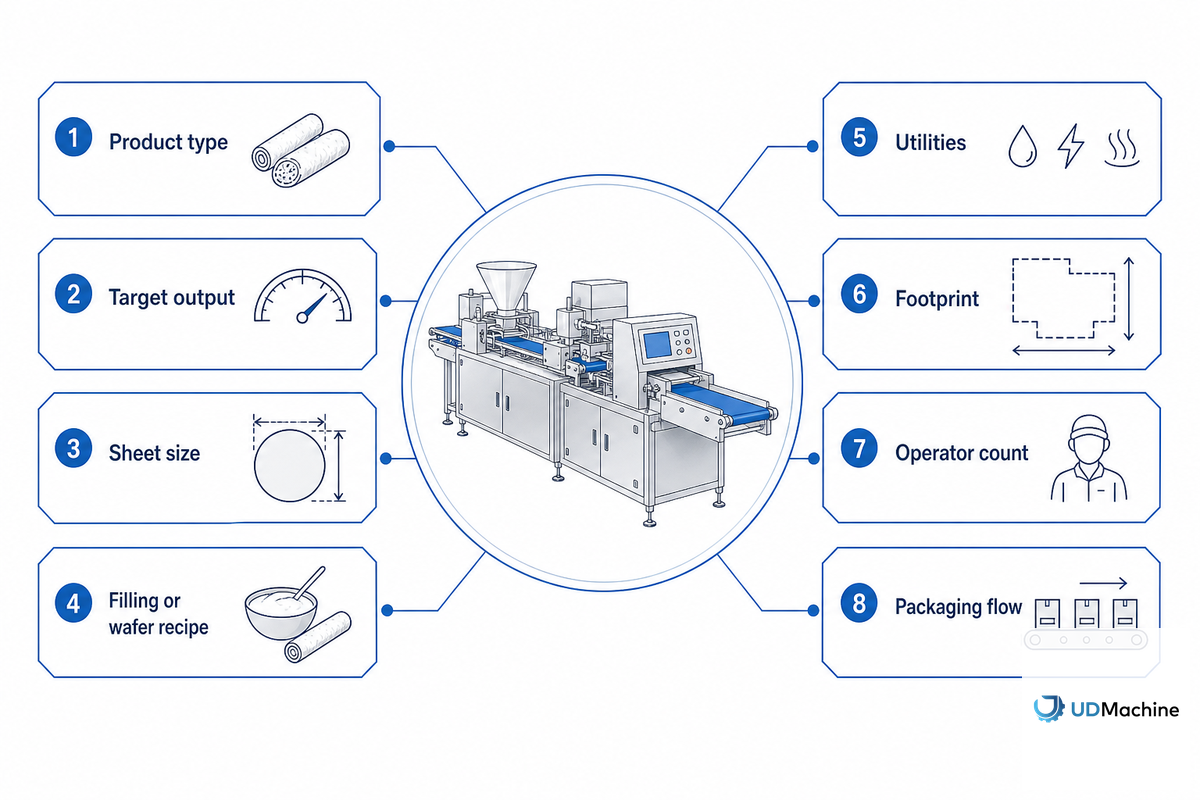
為了保障您的產品品質,供應商需要一份完整的詢問單(RFQ),以便報價範圍一致。這份文件還能保護您的生產流程免受問題困擾,因為僅憑銘牌無法評估食品機械的產能。買方在撰寫詢價單時,需要明確食品接觸區域、清潔通道、工廠公用設施、溫度控制、防護裝置、調試流程以及售後服務等資訊。
9點詢價類別圖
使用此圖為所有供應商提供相同的輸入資訊。部分資料為已發布的 UD05 參考點;其他資料為詢價單範例字段,買方應將其替換為自己的產品資料。
| 詢價類別 | 待發送數據 | 為什麼它改變了引言 |
|---|---|---|
| 產品類別 | 威化餅、美味春捲或家用電器。 | 不同的成型製程需要不同的生產設備。 |
| 輸出類別 | 目前手動基準,600 公斤輪班目標,或 900 公斤輪班目標。 | 每個操作員的產量決定了手動操作和自動操作的界限。 |
| 尺碼類別 | 例如,目標長度可以是 80 毫米、100 毫米或 120 毫米。 | 卷材尺寸會影響成型、冷卻、包裝和樣品檢驗。 |
| 重量類別 | 設定目標卷材重量、次品率和可接受的公差。 | 重量會改變生產線速度、冷卻負荷和包裝數量。 |
| 功率類別 | UD05 參考點包括 9.7 kW 和 12 kW。 | 電力負載變化、工廠準備和安裝成本。 |
| 電氣類別 | 州級地方供電標準,例如 220 伏特、380 伏特、50 赫茲或 60 赫茲。 | 電壓和頻率會影響馬達、控制和調試。 |
| 燃料類別 | UD05 液化石油氣參考點包括 6 公斤/小時和 8 公斤/小時。 | 燃料選擇會影響日常運作成本和當地許可。 |
| 版面配置類別 | UD05 公佈的佔地面積約為 4.2 公尺 x 3.7 公尺。 | 佔地面積、通道和清潔路徑都會影響調試。 |
| 試驗類別 | 申請 30 分鐘的樣品運行或設定 2 天的遠端審查窗口。 | 試用條款可在存款前檢查麵糊、溫度和破損問題。 |
| 支持類別 | 請確認交貨週期為 9-13 週,並詢問是否有 12 個月的保固條款。 | 支援範圍會影響實際投資回收期,而不僅僅是機器價格。 |
- 家庭服裝-威化蛋捲、鹹味春捲或其他餡料產品,如薩莫薩三角餃或糕點。
- 產品-捲筒直徑、長度、重量、酥脆度,以及(如果是餡料)包裝紙厚度和食材。
- 生產能力-每小時產量(件)、每班產量(公斤)、可銷售產量和高峰月份產量。
- 公用設施-電壓、瓦斯、壓縮空氣和可用的工廠佈局。
- 食品安全文件-食品級表面、清潔規程和材料記錄。
- 機器安全-防護裝置、門、緊急停止裝置和操作員訓練。
- 產品證據-樣品運作、不合格記錄、成品圖片和包裝目標。
- 支援服務——安裝、培訓、備件、保固和遠端服務。
對於美國境內的運營,詢價函必須包含機器防護措施。防護措施應符合美國職業安全與健康管理局 (OSHA) 29 CFR 1910.212 的要求,例如在操作點、夾點和旋轉部件處設置防護裝置。食品生產需要詳細說明衛生程序,而 21 CFR 第 117 部分則規定了現行良好生產規範 (CGMP) 和預防性控制措施的要求。
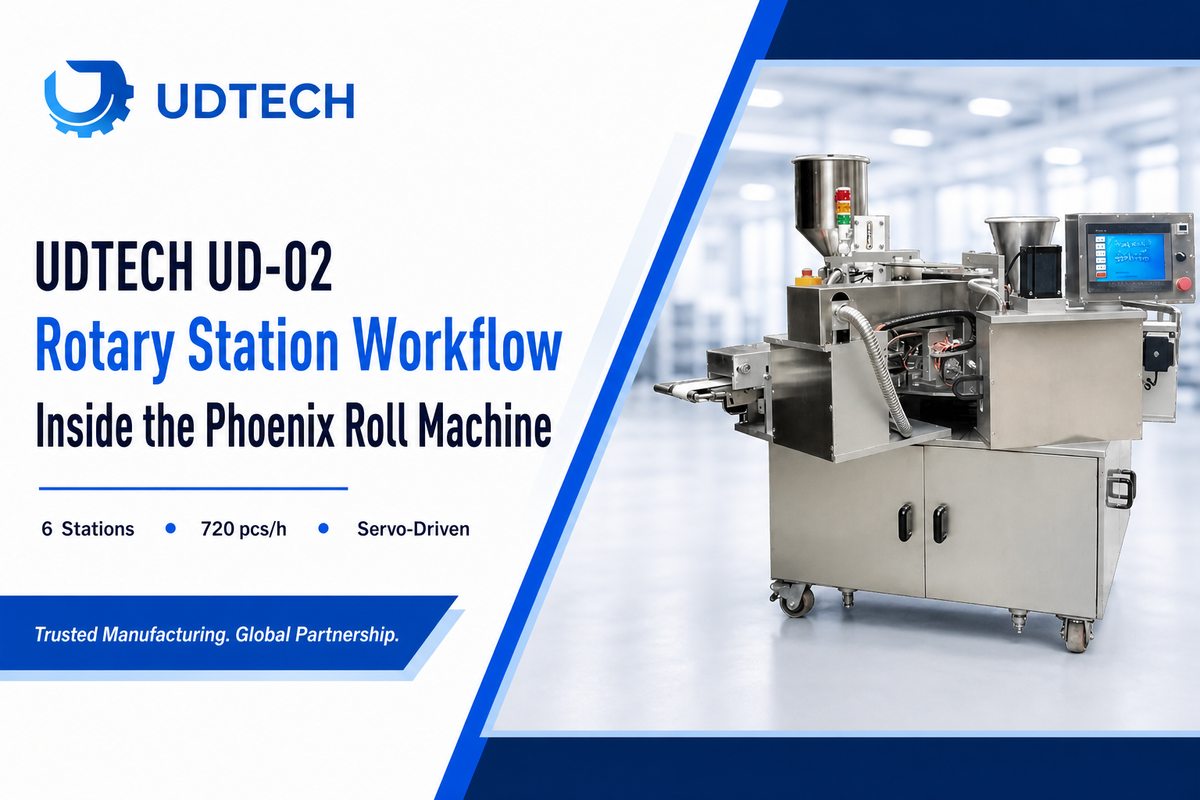
不確定威化蛋捲還是春捲更符合您的需求?在詢價前,請使用 UDTECH 的快速比較工具來區分這兩種產品。此外,您還可以查看海苔蛋捲機和鳳凰捲機等相關產品線。
2026 年展望:為什麼人工決策轉向自動決策的進程正在提前?
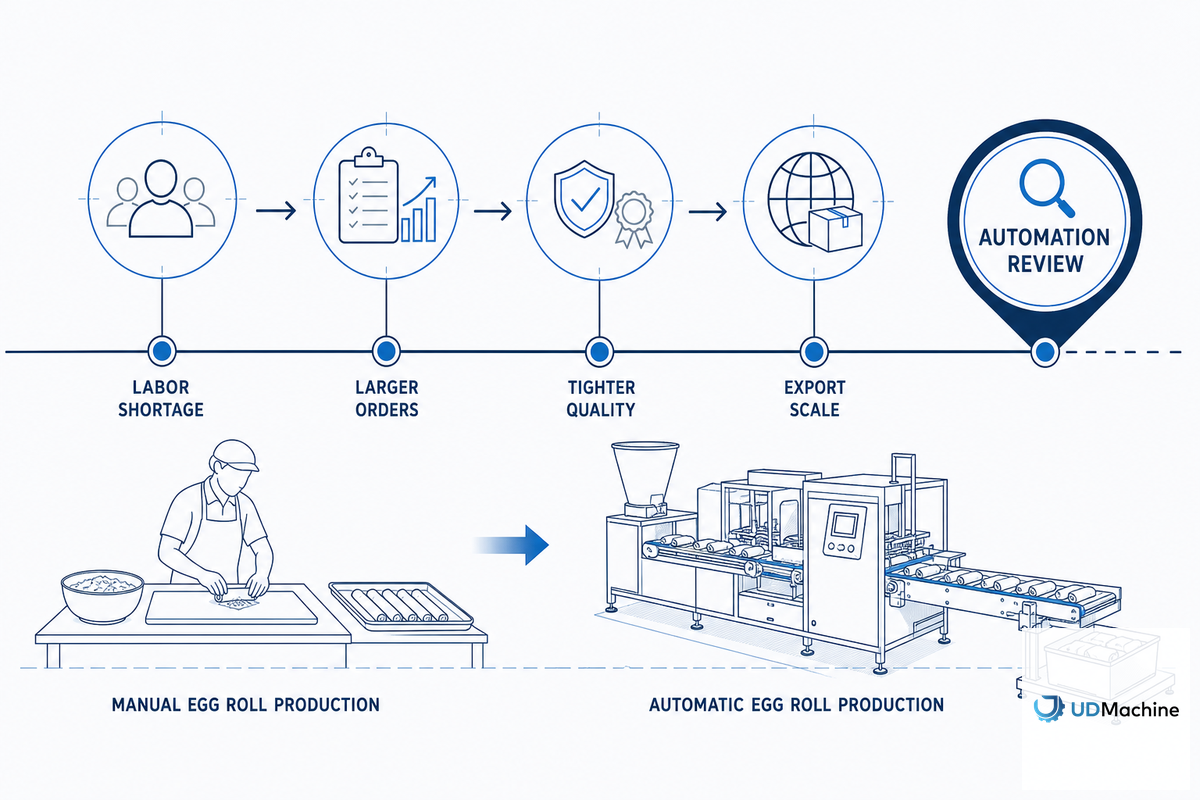
促使生產設備更早轉向自動化機械的因素顯而易見:勞動力短缺、對食品安全認證的要求日益提高以及新的機械合規法規。根據所在地區的不同,為受監管市場和出口市場供貨的買家現在面臨更大的壓力,需要提供更完善的生產記錄、更簡潔的設計和更強大的防護措施。
使用FDA關於食品接觸材料的指導文件和第117部分,檢查您的工廠是否正在從非正式生產方式過渡到更正式、更規範的生產流程。歐洲製造商需要遵守(EU) 2023/1230號法規,這是最新的機械安全法規,取代了舊的機械指令。該法規並未強制要求所有企業在2026年購買新生產線,但涉及出口的買家應在購買前討論服務範圍,包括支援、防護和文件編制。
勞動力規劃也應作為一項即時投入。美國勞工統計局 (BLS) 報告稱,2024 年食品加工設備工人的年薪中位數為 40,050 美元,即每小時 19.26 美元,並預測 2024 年至 2034 年間就業成長率為 5%。在更廣泛的食品製造業概況中,BLS 還報告稱,2026 年 5 月的初步數據顯示,生產和非管理人員的平均時薪為 24.38 美元,2025 年單位勞動力成本增長率為 5.6%。這些美國數據並非您工廠的工資水平,但它們說明了為什麼在買家比較手動工位和自動晶圓生產線之前,應該對勞動力成本、人員流動風險和輪班覆蓋率進行建模。
手動到自動決策概要
當需求不確定且一人即可完成生產時,可維持現有配置。當旺季需要多人同時操作生產線、產品品質不穩定或客戶要求提供食品安全記錄時,則應轉向自動化。對於威化捲而言,如果每班產量以數百公斤而非幾盤計,則應考慮採用 UD05 型生產線。
常見問題
與手工製作相比,自動蛋捲機是否更划算?
看答案
手動蛋捲機和自動蛋捲機的主要區別是什麼?
看答案
自動機器每小時能生產多少個蛋捲?
看答案
一台機器可以同時製作威化蛋捲和鹹味蛋捲嗎?
看答案
在取代人工生產之前,我應該檢查哪些方面?
看答案
對於小型麵包店來說,一台氣動式蛋捲機就足夠了嗎?
看答案
如果我已經知道自己需要威化蛋捲,接下來我該去哪裡?
看答案
相關文章
關於此分析
為了方便您選擇合適的機型,我們將威化蛋捲機、鹹味蛋捲機和家用電器機器分開列出,儘管它們都可能出現在同一搜尋結果中。 UDTECH UD05 系列機器的所有資料均來自我們產品頁面上的公開規格說明。外部方法支援包括:NIST MEP(用於 OEE 型設備測量)、ASQ(用於廢料和返工的品質成本處理)、BLS(用於勞動力和生產率分析),以及 OSHA、eCFR、FDA 和 EUR-Lex(用於安全和食品接觸合規性)。技術審核由 UDTECH 工作人員完成。
需要將您目前的手動輸出與晶圓生產線的輸出進行比較嗎?
請提供您目前的每小時產量(件數)、每班次產量(公斤)、產品尺寸和生產條件。下一步並非提供標準目錄報價,而是進行產量和成本計算。
參考文獻和來源
- 29 CFR 1910.212 – 所有機器的一般要求 – 職業安全與健康管理局
- 21 CFR 第 117 部分-人類食品的現行良好生產規範 (CGMP)、危害分析和預防性控制 – eCFR
- 包裝和食品接觸物質 (FCS) – FDA
- 關於機械的(歐盟)2023/1230 號條例 – EUR-Lex
- KEATS – 液壓機OEE系統 – NIST製造擴展合作計劃
- 品質成本 (COQ) – ASQ
- 2025年5月職業概況 美國勞工統計局
- 食品加工設備工人 美國勞工統計局
- 食品製造:北美行業分類系統 (NAICS) 311 美國勞工統計局